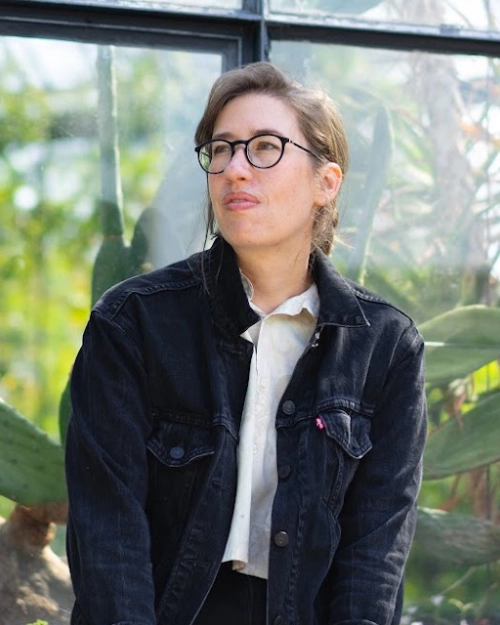
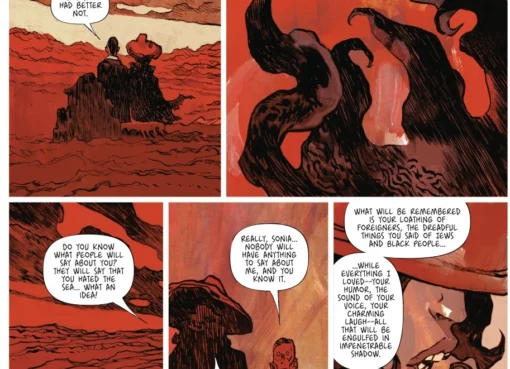
WHITE RIVER JUNCTION, VT — The Center for Cartoon Studies (CCS), a premier institution for the study of sequential art, has officially announced the appointment of Kit Anderson as its Fellow for the 2026-2027 academic year. Anderson, a highly acclaimed cartoonist known for her evocative storytelling and cross-genre appeal, returns to the Vermont-based institution where her professional journey began.
The CCS Fellowship is one of the most coveted residencies in the comics industry, providing a selected artist with the time, space, and resources to complete a major project while engaging with the school’s vibrant student body. Anderson’s appointment comes at a pivotal time for the medium, as graphic novels continue to gain mainstream literary recognition and academic prestige.
Main Facts: A Homecoming for a Rising Star
Kit Anderson’s selection as the 2026-2027 Fellow marks a significant "homecoming" for the artist. A 2022 graduate of the Center for Cartoon Studies, Anderson has spent the intervening years building a formidable reputation in the international comics community. Her work, which often bridges the gap between speculative fiction and historical inquiry, has earned her nominations for both the Ignatz Award—the premier honor for independent and small-press cartooning—and the Nebula Award, typically reserved for the highest achievements in science fiction and fantasy writing.
As the incoming Fellow, Anderson will be provided with a private studio in the historic village of White River Junction. During her tenure, she is slated to focus on three primary objectives:
The Medieval Project: A sophisticated adaptation of a medieval narrative intended for a major comics anthology.
Short-Form Exploration: The development of a series of short comics that experiment with visual language and narrative pacing.
Professional Development: Working in tandem with her literary agent to finalize and pitch several long-form graphic novel concepts to major publishing houses.
The Fellowship is designed to be a mutually beneficial arrangement. While Anderson focuses on her creative output, she will also serve as a mentor and presence within the CCS community, offering insights to current MFA and certificate students who are navigating the same halls she did just a few years ago.
Chronology: From CCS Alumna to International Recognition
The trajectory of Kit Anderson’s career offers a roadmap of the modern cartoonist’s path toward professional success. To understand the significance of her return to White River Junction, one must look at the timeline of her development:
2020–2022: The Formative Years at CCS
Anderson arrived at the Center for Cartoon Studies during a period of rapid evolution for the school. Under the tutelage of industry veterans like James Sturm and Jason Lutes, she refined her technical skills and developed a unique voice that combined meticulous linework with emotionally resonant themes. Her thesis work already showed signs of the genre-blending that would later earn her critical acclaim.
2022–2026: The Global Journey
Immediately following her graduation, Anderson moved abroad, spending the next five years immersed in various international comics scenes. This period of expatriation was crucial for her artistic growth. By engaging with European "bande dessinée" traditions and the diverse independent markets of the global stage, she expanded her visual vocabulary beyond the standard North American tropes.
During this time, she produced several self-published works and contributed to high-profile anthologies, eventually catching the attention of the Science Fiction and Fantasy Writers Association (SFWA). Her Nebula nomination signaled her arrival as a writer of significant depth, while her Ignatz nominations solidified her standing as a master of the craft of cartooning.
2026: The Return to Vermont
In August 2026, CCS officially announced Anderson’s return. This transition from student to fellow represents the completion of a professional circle, highlighting the school’s ability to foster talent that remains connected to its roots even as it achieves global reach.
Supporting Data: The Prestige of the Fellowship and Awards
The selection of a CCS Fellow is not a decision taken lightly. The institution receives applications from across the globe, and the choice of Anderson reflects the high caliber of her recent output.
The Weight of the Nominations
The awards mentioned in Anderson’s portfolio represent two different, yet overlapping, spheres of the literary world:
The Ignatz Award: Named after the character in George Herriman’s Krazy Kat, this award is a bellwether for the "indie" spirit. Winning or being nominated for an Ignatz suggests a cartoonist who is pushing the boundaries of the medium, focusing on personal expression and innovative design.
The Nebula Award: Historically focused on prose, the Nebula’s inclusion of graphic narratives in recent years highlights the increasing literary respect commanded by cartoonists. Anderson’s nomination puts her in the company of the world’s elite speculative fiction creators.
CCS Impact on the Industry
The Center for Cartoon Studies has become an outsized influence on the American comics landscape. Since its founding in 2005, its graduates and fellows have gone on to win every major award in the industry, including Eisners, Harveys, and even Pulitzer Prizes. By appointing a fellow like Anderson—who has already proven her mettle in the competitive marketplace—CCS reinforces its role as a hub for both education and high-level production.
Official Responses: Voices from the Community
The announcement has been met with widespread enthusiasm from both the administration at CCS and Anderson herself.
In a statement released by the Center for Cartoon Studies, the administration emphasized the value of Anderson’s international perspective:
"Kit Anderson represents the ideal of what a CCS graduate can achieve. She has taken the foundational skills learned here and applied them on a global stage, garnering accolades from the most respected bodies in literature and art. Her return as a Fellow will be an incredible asset to our students, who will benefit from her experience in navigating the international market and her sophisticated approach to storytelling."
For Anderson, the Fellowship is an opportunity to reconnect with a community that prioritizes the "labor of the hand" in an increasingly digital world. Speaking on her upcoming residency, Anderson stated:
"After spending the last five years abroad, I am thrilled to return to such a special community. CCS has always been a place where the focus is entirely on the work and the community of creators who make it. I look forward to getting to know the current classes, learning from them, and helping out however I can. There is a specific energy in White River Junction that you can’t find anywhere else."
Her agent also commented on the strategic importance of the Fellowship, noting that the concentrated time will allow Anderson to finalize "ambitious pitches" that aim to redefine her presence in the North American publishing market.
Implications: The Future of the Graphic Novel and Artist Sustainability
The appointment of Kit Anderson as the 2026-2027 Fellow carries broader implications for the comics industry and the nature of artistic careers in the late 2020s.
1. The Fellowship as a Safety Net and Launchpad
In an era where the cost of living and the volatility of the publishing industry make it difficult for mid-career artists to sustain long-form projects, the CCS Fellowship serves as a vital intervention. By providing a stipend and studio space, the institution allows creators to bypass the "gig economy" of freelance illustration for a year, focusing instead on "prestige" work that has the potential to move the medium forward.
2. The Rise of the "Graphic Historian"
Anderson’s focus on a medieval adaptation reflects a growing trend in the industry: the use of comics to interpret and revitalize historical and classical texts. As readers increasingly look for "literary" graphic novels, artists who can bridge the gap between academic research and visual narrative—as Anderson does—are becoming the new vanguard of the medium.
3. The "Brain Gain" of Returning Artists
Anderson’s return after five years abroad highlights a trend of American creators seeking international experience early in their careers and then bringing that expertise back to domestic institutions. This cross-pollination of styles and business models (comparing the European royalty-based system with the American advance-based system) strengthens the domestic industry and provides students with a more globalized worldview.
4. The Enduring Legacy of White River Junction
The fact that a Nebula-nominated artist chooses to return to a small town in Vermont for a year speaks to the "gravity" of CCS. It suggests that despite the rise of remote work and digital collectives, physical spaces dedicated to the craft of cartooning remain essential. White River Junction continues to serve as the "spiritual capital" of the independent comics world, a place where the past, present, and future of the medium converge.
As Anderson prepares to take up her residency in late 2026, the comics world will be watching. Her work on the medieval anthology and her upcoming pitches are expected to be among the most anticipated releases of the 2027-2028 publishing cycle, further cementing the Center for Cartoon Studies’ reputation as a factory for high-level artistic achievement.
The intersection of domestic life, public policy, and cultural evolution often finds its most poignant expression not in legislative halls, but in the subtle panels of the daily comic strip. As of mid
By Investigative Staff Published: June 26, 2026 Introduction: The Visual Communicator’s Great Irony In the burgeoning landscape of the 2026 creator economy, a striking paradox has emerged. While indep
The shadow of Howard Phillips Lovecraft looms larger over the 21st century than it ever did over the 20th. Once a marginal figure relegated to the yellowed pages of pulp magazines like Weird Tales, th