Unveiling the Depths of Everdell: Farshore – A Strategic Gem Beyond Its Whimsical Veneer
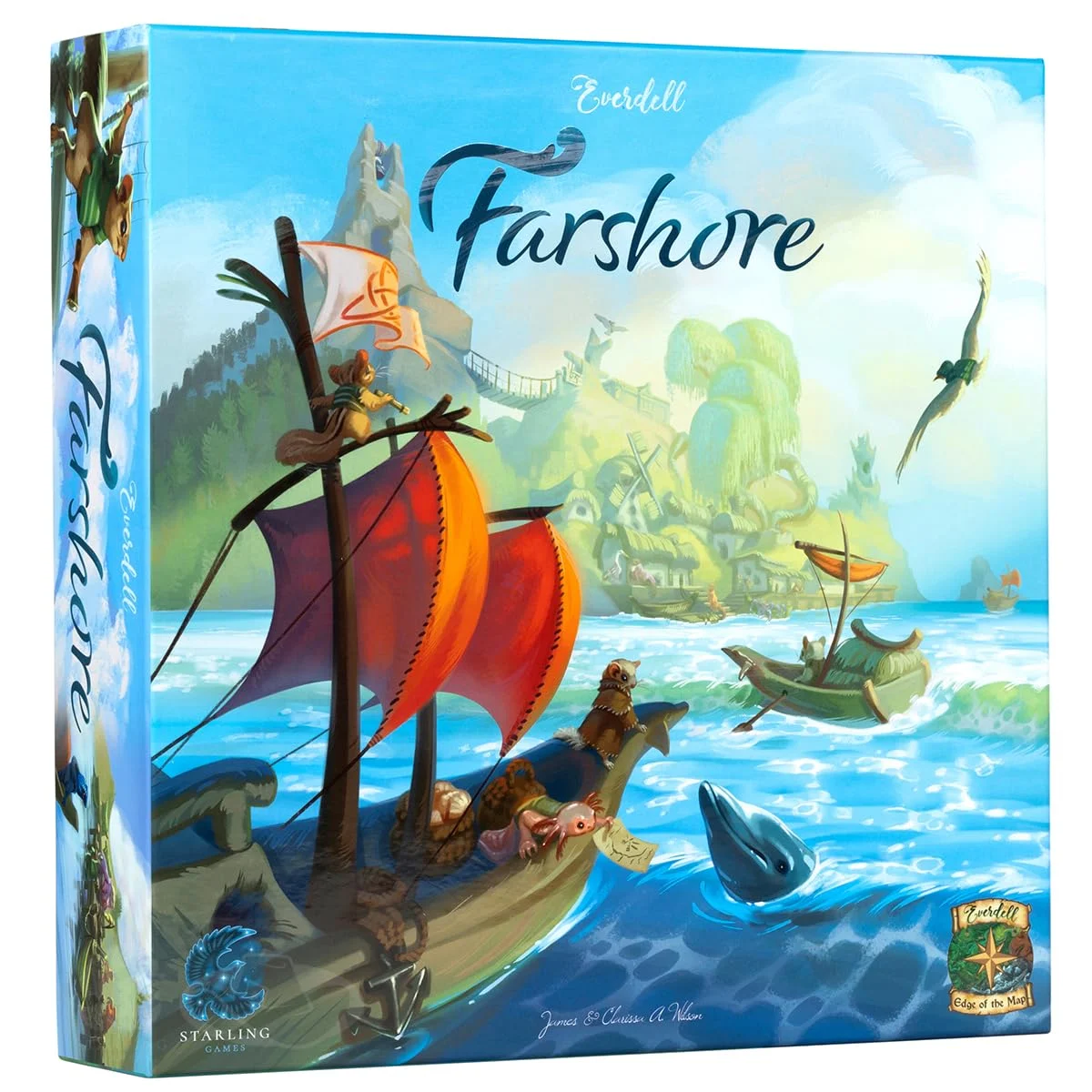
In the ever-expanding universe of board games, first impressions often dictate initial interest. A game’s aesthetic, its box art, and the immediate visual appeal of its components can powerfully draw players in or, conversely, cause them to dismiss a title outright. Such is the curious case of Everdell: Farshore, a recent addition to the critically acclaimed Everdell series from Starling Games. With its charming, anthropomorphic woodland creatures and vibrant, storybook-like illustrations, Farshore might easily be mistaken for a lighter, more family-oriented game. However, beneath this undeniably cute exterior lies a robust and strategically profound engine-building experience that challenges even the most seasoned board game enthusiasts.
Everdell: Farshore stands as a testament to the idea that true strategic depth can flourish within a visually inviting package. It is an intricate game of resource management, worker placement, and hand management, designed for 1 to 4 players aged 10 and up, with an average playing time of 40 to 80 minutes. Published by Starling Games, a company known for its commitment to high-quality components and engaging gameplay, Farshore quickly distinguishes itself within the competitive landscape. While its charming visuals might lead some "hardcore" gamers to overlook it, those who delve into its mechanics discover a deeply satisfying system of interconnected actions, where every decision ripples through the turns, culminating in a gratifying crescendo of productivity. This article aims to peel back the layers of Everdell: Farshore, exploring its design philosophy, gameplay intricacies, and the broader implications it holds for the board gaming community.
The Journey to Farshore: A Chronology of Development and Release
The narrative of Everdell: Farshore is inextricably linked to the success and evolution of its progenitor, the original Everdell. Released in 2018, Everdell quickly captured the hearts of players with its innovative blend of worker placement and tableau building, set against the backdrop of a fantastical woodland valley. Its unique "Ever Tree" component, evocative artwork by Andrew Bosley, and engaging gameplay led to numerous awards and a dedicated fanbase, spawning several expansions that further enriched its world.
Building on this foundation, Starling Games embarked on creating Everdell: Farshore, not merely as an expansion, but as a standalone experience. The design philosophy behind Farshore was to retain the core appeal of Everdell—the satisfying engine-building loop and thematic charm—while introducing fresh mechanics and a new thematic setting. Instead of the familiar valley, players are transported to a newly discovered archipelago, necessitating new strategies centered around exploration, sailing, and harnessing the unique resources of the coastline.
The development timeline for Farshore, while not extensively publicized in its minute details, would have followed a typical iterative process for complex board games. This involves initial conceptualization, extensive prototyping, playtesting with internal teams and external groups, and continuous refinement of rules and balance. The challenge was to innovate sufficiently to justify a new standalone title, yet remain recognizable as part of the beloved Everdell universe. This meant careful consideration of how to integrate new mechanics like the "dock" and "ship" elements, and how they would interact with the established worker placement and card-play systems.
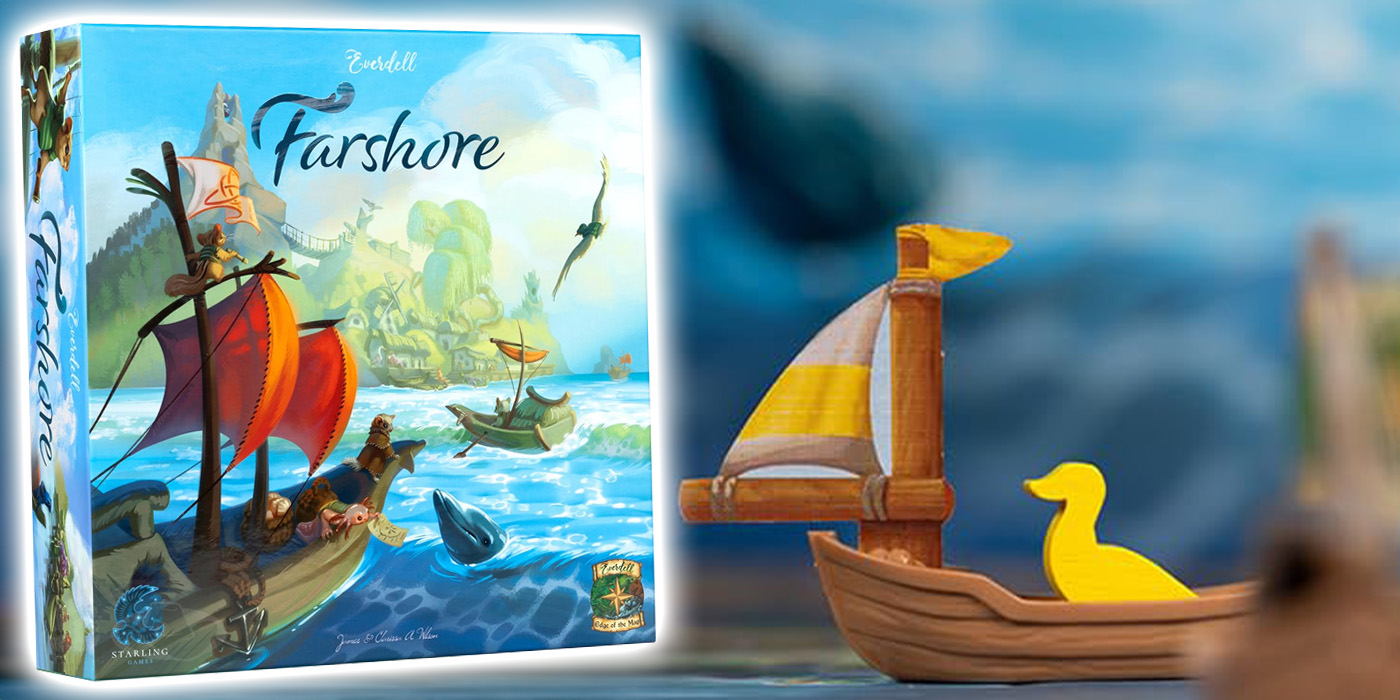
Everdell: Farshore was officially announced to the public, building anticipation through sneak peeks of artwork and gameplay elements. The marketing campaign highlighted its standalone nature while reassuring fans of the original game that the essence of Everdell remained intact. Upon its release, Farshore was positioned as both an entry point for new players intrigued by its visuals and a fresh challenge for veterans of the series. It demonstrated Starling Games’ commitment to expanding its most successful intellectual properties in meaningful ways, offering parallel experiences rather than simply incremental additions. This strategic positioning ensured that Farshore carved its own niche while benefiting from the established legacy of the Everdell brand, setting the stage for its deep strategic appeal to be discovered by players worldwide.
Dissecting the Engine: Supporting Data and Gameplay Mechanics
At its heart, Everdell: Farshore is an "engine builder," a genre characterized by players constructing synergistic systems of cards and actions that become increasingly efficient as the game progresses. The game elegantly weaves together several core mechanics: Worker Placement, Hand Management, and Open Drafting, each contributing to a rich tapestry of strategic choices.
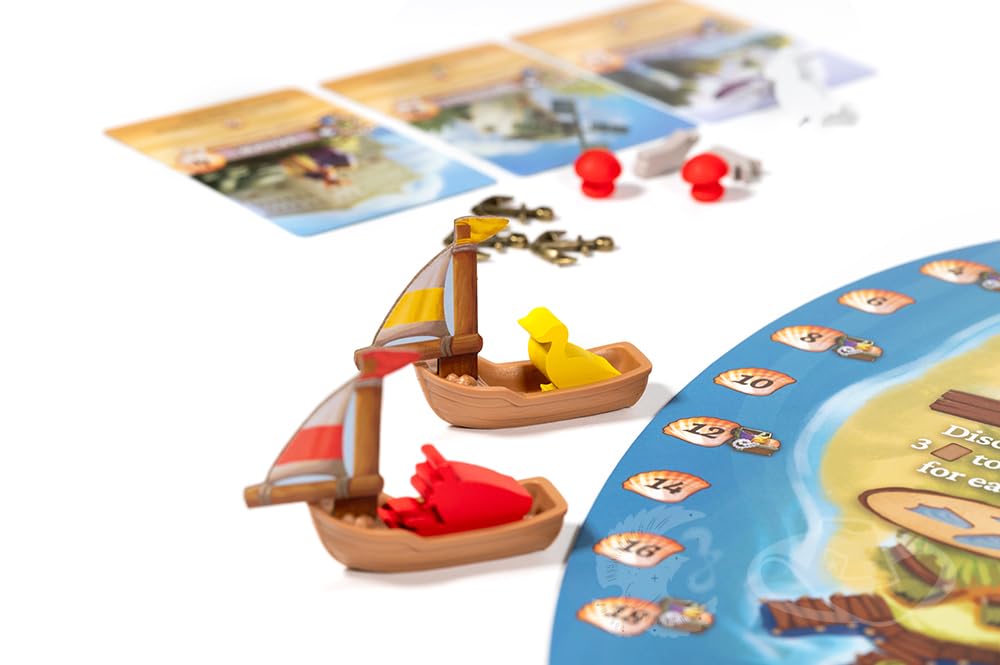
Worker Placement: Players begin with a limited number of workers (initially two), which they strategically place on various locations on the game board. These locations grant resources (twigs, resin, pebbles, berries), allow players to draw cards, or trigger special actions. What sets Farshore‘s worker placement apart is the dynamic nature of available spots. Some locations are always open, while others are limited, creating a race for crucial actions. The game also introduces the concept of "dock" locations and "ships," which expand the worker placement options, allowing players to sail to new islands for unique benefits and points. This adds a layer of spatial strategy and expands the decision space beyond a static board.
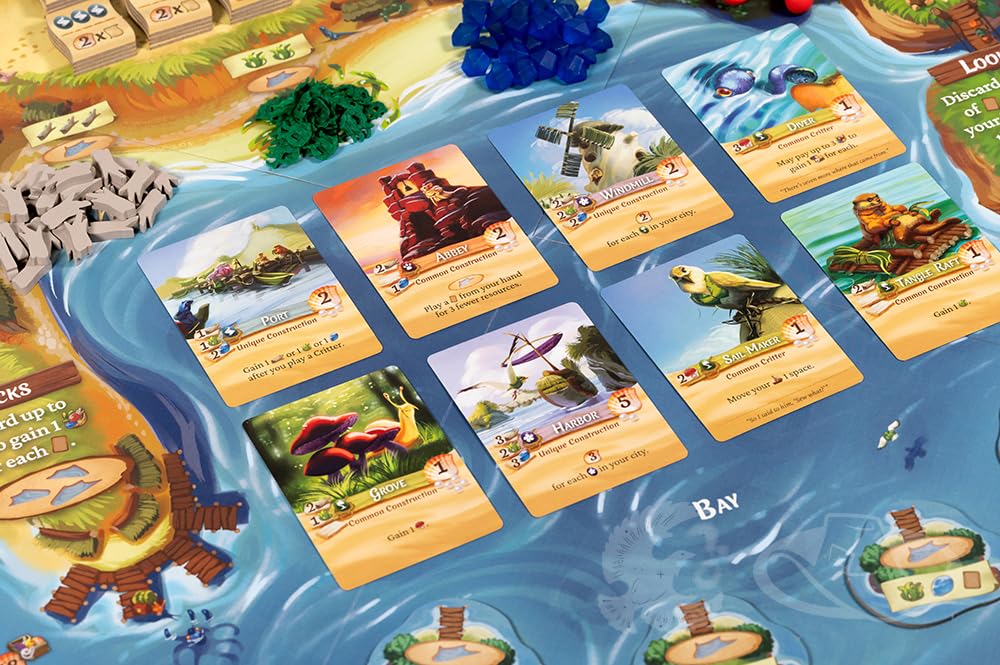
Hand Management: A central pillar of Farshore is the strategic management of a player’s hand of cards. These cards represent various Critters and Constructions that players can build in their personal tableau (their "city"). Each card has a cost in resources and often provides immediate effects, ongoing abilities, or end-game scoring opportunities. The art of hand management lies in knowing which cards to hold, which to play, and when. Players must anticipate future needs, identify powerful card synergies, and adapt their plans based on the cards they draw and those available for drafting.
Open Drafting: Complementing hand management, Farshore features an open drafting mechanism where a market of cards is available for all players to acquire. This shared pool introduces a competitive element, as players vie for desirable cards that fit their burgeoning engine or deny opponents crucial pieces for their own strategies. The constant refresh of the market ensures variety and forces players to be flexible, balancing long-term plans with opportunistic acquisitions.
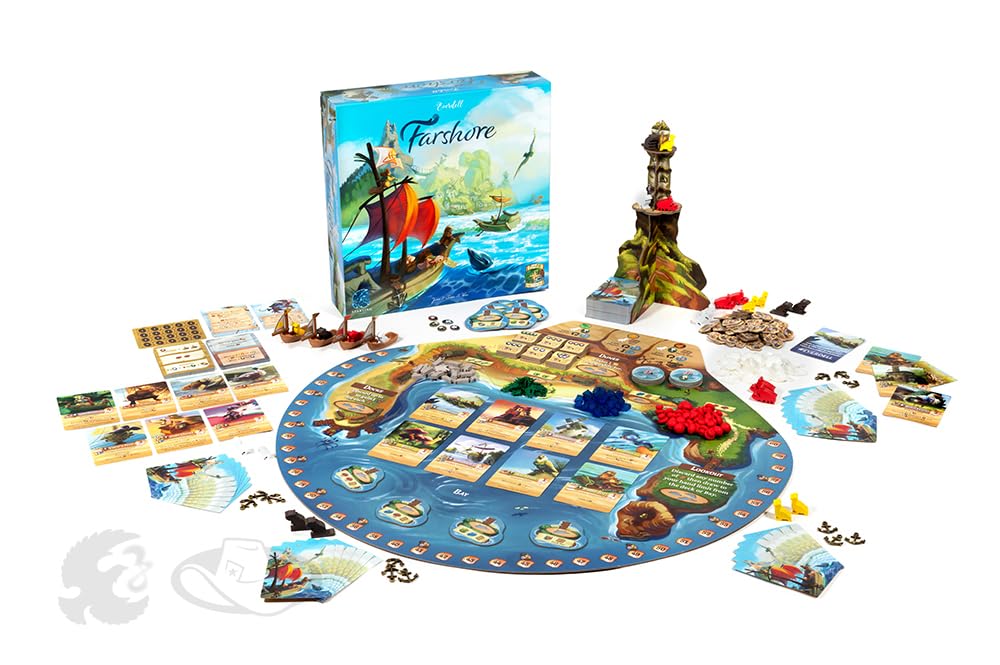
The "Overwhelm" Factor and the "A-Ha!" Moment: The initial experience of Everdell: Farshore can indeed be daunting, particularly for new players. As the original review highlighted, on a first turn, a player might face nearly a dozen worker placement options and a hand of eight cards, with no explicit guidance on optimal paths. This abundance of choice, while characteristic of engine builders, can be overwhelming. The absence of a clear "first move" tutorial means new players are thrown into the deep end, expected to discern the intricate connections between resources, cards, and actions.
However, this initial cognitive load is precisely what makes the game’s eventual clarity so rewarding. As the reviewer aptly describes, "once you make your first couple of moves, the gears finally catch and you start to see how each piece feeds into the larger whole." This "a-ha!" moment is a powerful psychological payoff. It’s the moment the abstract numbers and icons coalesce into a tangible, self-sustaining machine. For those who appreciate the elegant complexity of machinery—where individual parts work in harmony to produce a greater outcome—this click is pure "dopamine," a testament to the game’s sophisticated design.
Strategic Diversity: One of Everdell: Farshore‘s greatest strengths is the viability of multiple paths to victory. This ensures high replayability and prevents games from feeling rote. Players are not funneled into a single "best" strategy; instead, the game rewards adaptability and clever exploitation of current opportunities.
- Economy Build: Some players might focus on establishing a robust resource-generating engine early. By acquiring cards that provide a steady stream of twigs, resin, pebbles, and berries, they can rapidly build more expensive constructions and acquire high-scoring "treasure maps" from the board. This strategy emphasizes efficiency and long-term planning, aiming for a late-game surge of points.
- Card Draw Engine: Another approach involves prioritizing cards and actions that allow for extensive card drawing. By cycling through the deck more frequently, players increase their chances of finding powerful synergistic cards, specific Critters that unlock free constructions, or combinations that accelerate their engine. This strategy requires careful hand management and a willingness to adapt to the cards revealed.
- Full Sail Build: Unique to Farshore, players can focus heavily on the sailing mechanic. By building specific "ship" cards and placing workers on dock locations, they can move their ships around the Farshore board, claiming powerful end-game points, unique treasures, and unlocking exclusive actions on newly discovered islands. This strategy offers a distinct spatial element and a race for specific, high-value locations.
Each of these strategies, while distinct, is intertwined, requiring players to observe their opponents’ progress and adjust their own tactics. The interplay of these viable strategies, combined with variable card draws and board setups, ensures that every game of Everdell: Farshore presents a fresh puzzle to solve. The components themselves, from the beautifully illustrated cards to the custom wooden resource tokens, further enhance the immersion, proving that "cute" can indeed be a gateway to profound strategic depth.
Voices from Starling Games: Official Responses and Design Philosophy
While specific direct quotes from Starling Games’ designers or executives regarding Everdell: Farshore are not provided in the original text, we can infer much about their design philosophy and intentions based on the game’s mechanics and the publisher’s track record. Starling Games has consistently aimed to create games that balance aesthetic appeal with deep, engaging gameplay, and Farshore is a prime example of this commitment.
The inherent complexity of Farshore, particularly the initial "overwhelm" for new players, is likely an intentional design choice rather than an oversight. In the realm of engine builders, a certain degree of initial complexity is often a byproduct of the depth and replayability designers strive for. A game with too few options or overly simplistic choices often lacks the strategic meat that keeps experienced players engaged over multiple sessions. Starling Games likely understood that the target audience for an Everdell standalone sequel would include many players who appreciate strategic depth and are willing to invest time in learning a new system.
The design team’s goal appears to have been to strike a delicate balance: to create a game that looks inviting enough to potentially draw in new players (perhaps those who have enjoyed lighter family games), but which ultimately rewards those who delve into its intricate systems. This approach challenges the notion that visually appealing games must compromise on strategic substance. By retaining the charming artwork and thematic elements of the original Everdell, Farshore provides a familiar entry point, but the new mechanics—the dock, ships, and treasure maps—ensure that it offers a fresh and compelling challenge.
One can imagine the designers discussing the satisfaction of crafting a game where multiple paths to victory are not only viable but feel distinct. This commitment to strategic diversity is a hallmark of well-designed engine builders, ensuring that players don’t quickly discover a dominant strategy that trivializes subsequent playthroughs. The goal would have been to foster a sense of discovery and adaptation, where players continuously refine their understanding of card synergies and worker placement efficiencies.
Furthermore, Farshore represents an evolution of the Everdell universe. Rather than simply adding more cards to the existing game, Starling Games chose to explore new geographical settings and introduce mechanics that fit the theme of maritime exploration. This demonstrates a thoughtful approach to intellectual property management, ensuring that new releases contribute significantly to the franchise’s lore and gameplay, rather than merely serving as cash grabs. The existence of "My Lil Everdell" further underscores Starling Games’ understanding of their audience, providing a truly accessible entry point for younger players or those seeking a much lighter experience, while Farshore caters to the strategic enthusiasts. This dual approach allows the Everdell brand to appeal to a broader demographic without diluting the core strategic integrity of its flagship titles.
The Wider Implications: Farshore’s Impact on the Board Game Landscape
Everdell: Farshore is more than just another board game release; it carries significant implications for the broader board gaming landscape, particularly in how games are perceived and developed.
Challenging Perceptions: Perhaps the most profound implication of Farshore‘s success is its role in challenging the stereotype that games with "cute" or whimsical aesthetics inherently lack strategic depth. For too long, a segment of the "hardcore" gaming community has dismissed titles based solely on their visual presentation, equating intricate mechanics with grim, often fantasy or sci-fi themes. Farshore, much like its predecessor, stands as a powerful counter-narrative, demonstrating that complex decision-making and strategic mastery can be perfectly encapsulated within a charming, accessible visual wrapper. This helps to broaden the appeal of strategic gaming, making it less intimidating for newcomers while still satisfying veteran players.
Gateway Game Potential (with a caveat): While the initial learning curve can be steep, Farshore‘s inviting artwork and theme could serve as a unique type of "gateway game." Instead of introducing players to simpler mechanics, it could draw them into the idea of strategic depth, showing them that board games can offer profoundly satisfying intellectual challenges. Players drawn in by the visual appeal might persevere through the initial confusion, discovering a love for engine builders and worker placement that they might never have explored otherwise. It serves as a bridge, demonstrating that complexity is not to be feared but embraced for the rewards it offers.
Innovation in Engine Builders: Farshore contributes to the ongoing evolution of the engine-building genre. By integrating new elements like the dynamic Farshore board, sailing mechanics, and unique treasure acquisitions, it adds fresh dimensions to established concepts. It shows that there’s still ample room for innovation within popular genres, pushing designers to think beyond traditional setups and incorporate novel ways for players to construct their efficient machines. The interplay between building a tableau of cards and navigating a physical board with workers creates a richer, more dynamic experience than pure tableau builders.
The Everdell Legacy: Everdell: Farshore solidifies the Everdell franchise as a cornerstone of modern board gaming. It proves that the universe created by James A. Wilson and brought to life by Andrew Bosley’s art is capable of sustaining multiple, distinct game experiences. This success ensures the longevity of the brand and encourages further exploration of its thematic and mechanical potential, much to the delight of its growing legion of fans. The continued release of high-quality, innovative titles under the Everdell banner elevates the franchise to a status comparable to other beloved board game series.
Market Trends: The positive reception of Everdell: Farshore also reflects broader market trends. There’s a clear demand for games that offer a compelling blend of strong thematic integration, high-quality components, and deep strategic gameplay. Players are increasingly sophisticated in their tastes, seeking experiences that are both visually appealing and intellectually stimulating. Farshore‘s success underscores that publishers who invest in both aspects—art and mechanics—are likely to find a receptive audience in today’s diverse board game market.
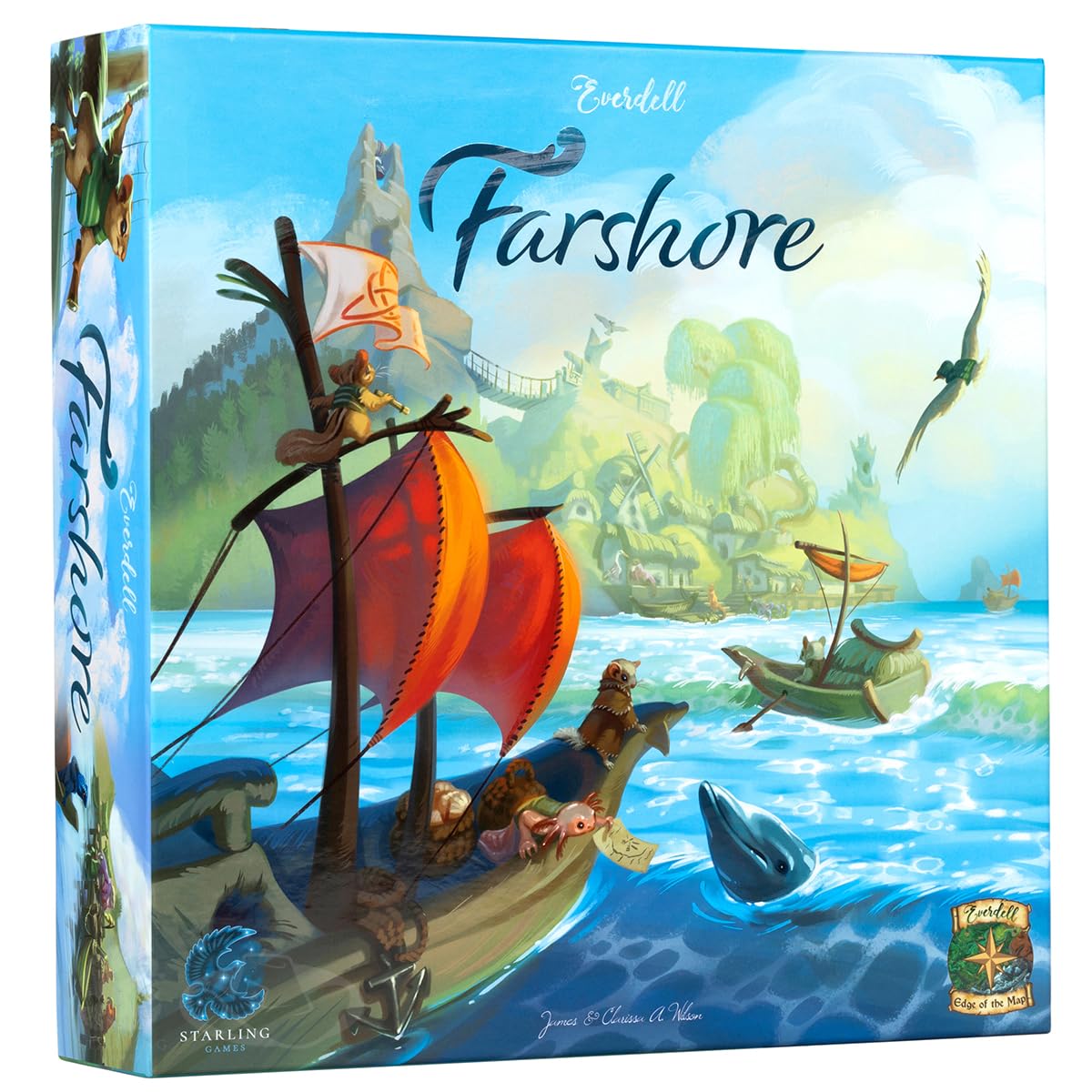
In conclusion, Everdell: Farshore is a brilliant example of a game that masterfully combines a charming aesthetic with profound strategic depth. It serves as a powerful reminder not to judge a game by its cover, urging players to look beyond the whimsical creatures to discover the intricate, rewarding engine-building experience within. For those willing to navigate its initial complexities, Farshore offers a truly satisfying journey, solidifying its place as one of the best engine builders available and a significant title in the contemporary board game landscape. It’s a game that doesn’t just entertain; it educates, demonstrating that beauty and brains can indeed coexist in perfect harmony on the tabletop.