Vietnamese Magical Realism Finds New Voice in Anglophone World with Nguyễn Bình Phương’s "The Young Die Old"
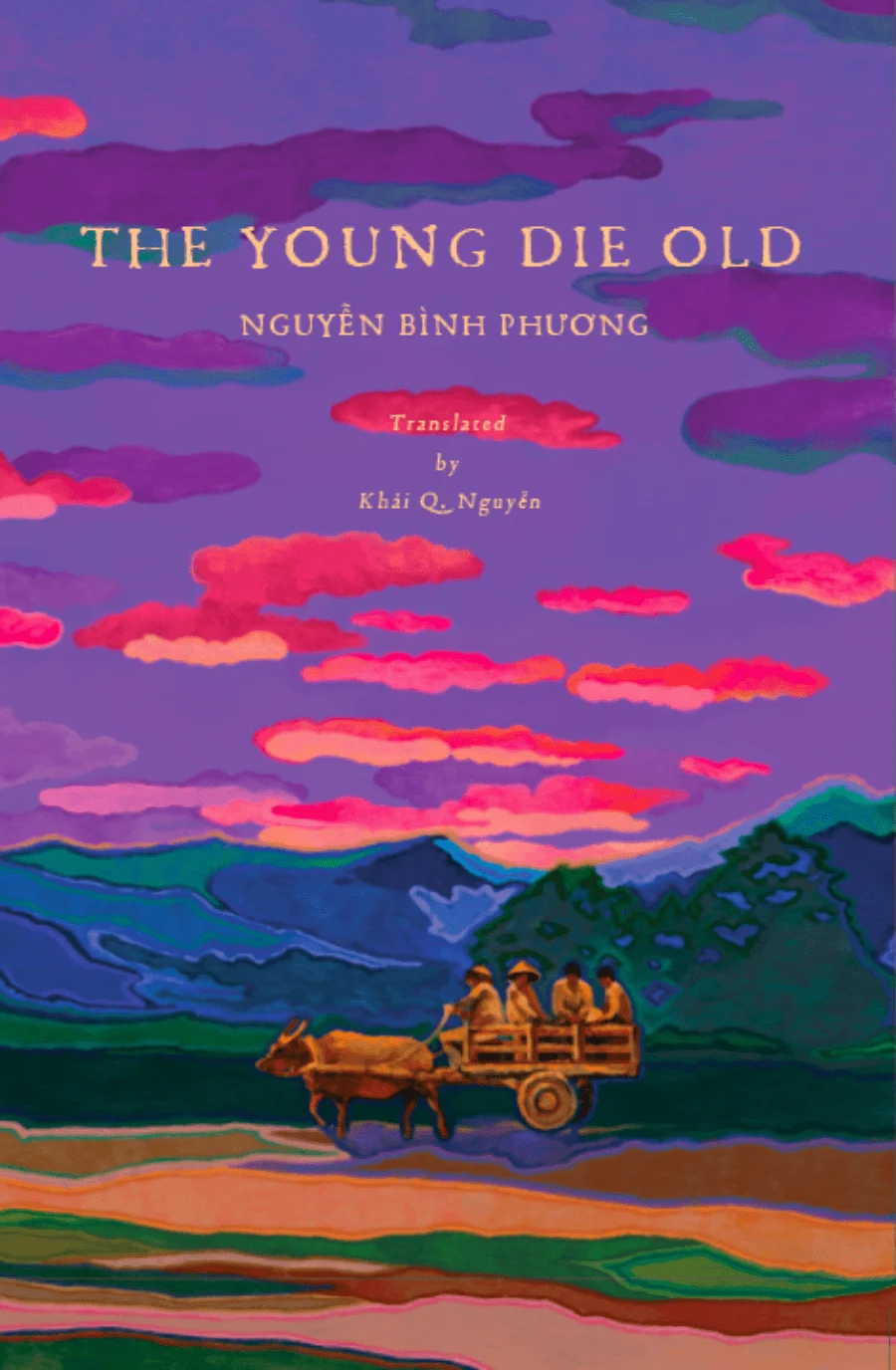
LONDON, UK – May 15, 2026 – Nine years after an ambitious Kickstarter campaign sought to bridge the linguistic divide, Major Books has officially released Nguyễn Bình Phương’s acclaimed novel, The Young Die Old, to Anglophone audiences. This landmark publication, a work of profound magical realism, not only introduces one of Vietnam’s foremost contemporary writers to a broader readership but also significantly enriches the landscape of translated speculative fiction, offering a crucial window into Vietnamese culture and history through a uniquely enchanting lens. Set in a village where the boundaries between fantasy and reality are perpetually blurred, the novel promises a deeply immersive and culturally resonant experience.
Main Facts: A Decade in the Making
The journey of The Young Die Old into English began in earnest almost a decade ago, fueled by a crowdfunding initiative aimed at translating significant Vietnamese literary works. Its arrival in 2026 marks a triumph for cultural exchange and a testament to the dedication of publishers like Major Books, who champion voices from often-underrepresented literary traditions. Nguyễn Bình Phương, celebrated in his native Vietnam for his lyrical prose and insightful narratives, brings forth a novel that defies easy categorization, weaving together the mundane and the miraculous with seamless artistry.
The Young Die Old plunges readers into Phan Village, a microcosm where everyday life is imbued with the extraordinary. Carnal desires intertwine with ancient myths, such as the anxieties surrounding a Nghê – a mythical lion-dog revered in Vietnamese culture. Family feuds escalate into allegiances born of necessity, as villagers confront internal strife and external threats. Phương’s narrative style is characterized by its rapid character introductions and overlapping storylines, creating a tapestry of interconnected lives and experiences that challenge conventional narrative structures. The novel’s intricate design and thematic depth have positioned it as a significant contribution to both Vietnamese literature and the global canon of magical realism.
Chronology: Tracing the Path of Vietnamese Magical Realism in English
While The Young Die Old represents a significant contemporary milestone, it is not the inaugural foray of Vietnamese magical realism into the English language. A lineage of pioneering translations has paved the way, slowly but surely introducing Western readers to the rich speculative traditions of Vietnam.
Early Forays: Curbstone Press and Post-War Narratives
Two pivotal collections, published by Curbstone Press (an imprint of Northwestern University Press), laid crucial groundwork in the late 20th and early 21st centuries. These anthologies offered early glimpses into the unique blend of realism and the fantastical that characterizes Vietnamese storytelling, often exploring the profound impact of the Vietnam War on the national psyche and individual lives.
-
"Behind the Red Mist" by Ho Anh Thai (1998): Translated by a collaborative team including Nguyen Qui Duc, Regina Abrami, Bac Hoai Tran, Phan Thanh Hao, and Dana Sachs, this collection introduced Anglophone readers to the works of Ho Anh Thai, a prominent figure in Vietnamese literature. The volume contained three particularly notable speculative stories that delved into the complexities of life during and after the Vietnam War. These narratives powerfully explored enduring themes such as the unbreakable bonds of family, the stifling grip of bureaucracy, and the lingering horrors of conflict.
- One story famously features a man who undergoes a literal, grotesque transformation into a goat after excessive exposure to pornographic material, a biting satire on moral decay and societal anxieties.
- Another poignant tale depicts a Vietnamese man, having spent a short time in the United States, finding his distinctive Vietnamese features inexplicably replaced by those of a white American, a powerful metaphor for cultural assimilation, identity loss, and the lingering psychological effects of post-war migration and Western influence.
- Perhaps the most overtly speculative narrative involves a man who embarks on a desperate journey through time, driven by the singular goal of ensuring his parents meet and fall in love, thus securing his own existence – a classic science fiction trope repurposed to explore themes of fate, legacy, and the desire for personal continuity amidst historical upheaval.
-
"The Cemetery of Chua Village and Other Stories" by Doan Le (2005): Translated by Rosemary Nguyen, Wayne Karlin, and Tuong Doung, this collection further solidified the presence of Vietnamese magical realism in English. Doan Le, known for her commitment to depicting post-war Vietnam through the eyes of ordinary citizens, presented four speculative stories that resonated with a unique blend of folklore and modern anxieties. These narratives were replete with supernatural occurrences and examples of profound transformation.
- Ghosts, far from being mere ethereal presences, engage in mundane gossip and intricate plotting, grounding the supernatural in the everyday social fabric of the village.
- Bureaucratic frustrations, a common theme in post-war societies, take a surreal turn when individuals attempting to navigate housing systems literally transform into flies, symbolizing their powerlessness and the dehumanizing nature of rigid administrative structures.
- In a striking twist, a man discovers that his supposed step-brother is, in fact, a clone of his own father, a narrative exploring complex familial relationships, the ethics of reproduction, and the blurring lines between natural and artificial existence.
These earlier translations were instrumental in establishing a precedent for Vietnamese literature that embraced the fantastic, demonstrating that the nation’s literary output extended far beyond purely realist portrayals of war and its aftermath. They paved the way for more ambitious projects like The Young Die Old, showcasing a literary tradition deeply rooted in its own cultural specificities, yet universally resonant in its exploration of the human condition.
Supporting Data: Unpacking the Layers of "The Young Die Old"
Nguyễn Bình Phương’s The Young Die Old is a masterclass in weaving complex narratives and profound cultural insights into a seamless literary experience. His standing as one of Vietnam’s "foremost contemporary writers" is evident in every meticulously crafted page, showcasing a unique voice that blends poetic sensibility with incisive social commentary.
Nguyễn Bình Phương’s Literary Stature
Nguyễn Bình Phương is not merely a novelist but also an accomplished poet, a dual mastery that profoundly informs his prose. His works are celebrated for their evocative language, rich imagery, and philosophical depth, often exploring themes of memory, identity, and the elusive nature of reality within the context of Vietnamese society. His ability to move effortlessly between the concrete and the abstract, the personal and the collective, marks him as a truly significant voice.
Thematic Richness and Narrative Innovation
The novel’s core strength lies in its fluid navigation of the continuum of fantasy and realism. Phan Village is not merely a setting but a character in itself, imbued with a life force that allows the supernatural to manifest as an organic extension of reality. This isn’t a world where magic is an external force; it’s a world where the magical is inherent, arising from the very fabric of existence and the collective consciousness of its inhabitants.
- Cultural Elements: The novel is deeply saturated with Vietnamese cultural specificities. The anxieties surrounding the Nghê, a mythical lion-dog figure often found guarding temples and pagodas, are not just folklore but active, palpable presences shaping the villagers’ fears and desires. Family dynamics, often fraught with generational conflict and unspoken histories, are central, mirroring the broader social complexities of a nation grappling with its past and future.
- Narrative Structure: Phương employs a dynamic and often disorienting narrative structure. Readers are dropped into Phan Village and swiftly introduced to a multitude of characters, their backstories emerging in fragments that often overlap and interweave. This rapid-fire introduction creates a sense of living within a bustling community, where individual stories are inextricably linked. The narrative often shifts perspectives without warning, creating a dreamlike fluidity. For instance, a scene depicting Phán’s grandfather’s dying moments might suddenly transition into the grandfather’s own memories, transporting the reader to a different time and consciousness, recalling a figure like Chan digging a pond. This technique mirrors the very nature of memory and oral tradition, where stories bleed into one another.
The Pervasive Role of Dreams
Dreams are not merely psychological projections in The Young Die Old; they are vital threads in the novel’s tapestry, acting as conduits to hidden desires, repressed anxieties, and even prophecies. Their intensity and vivid imagery often stun the dreamers themselves, revealing truths or possibilities not contemplated during waking hours. The casual recounting of a dream, such as a father blurted out, "Last night I dreamt about an old man flying a dragon through the village!" (p. 197), highlights how the fantastic is integrated into everyday conversation. The villagers, while sometimes surprised by the appearance of dragons or other strange creatures, do not dismiss these dreams as mere figments of imagination. This acceptance underscores a cultural understanding where the line between the tangible and the ethereal is permeable.
As Phương himself articulated in an interview with translator Khải Q. Nguyễn at the end of the book, "every people have their own magical literature. Vietnam also has its own folklore, which is magical and fantastic… The atmosphere and the supernatural haze in The Young Die Old don’t come from Latin America." This statement is crucial. It asserts the indigenous nature of Vietnamese magical realism, distinguishing it from the often-referenced Latin American literary movement and emphasizing its deep roots in local myths, legends, and spiritual beliefs.
Transformation as a Central Trope
Transformation, a ubiquitous element in fantastical literature across global cultures, is a fundamental pillar of The Young Die Old. It manifests in myriad forms, challenging conventional notions of identity, permanence, and reality itself.
- Physical and Temporal Metamorphosis: Beyond the natural process of aging, Phương explores its inverse. A striking example on page 205 describes an old woman who regresses in age, becoming a child before the very eyes of her follower. This profound reversal of time challenges linearity and evokes a sense of cyclical existence.
- Environmental Metamorphosis: Even the landscape participates in transformation. A banyan tree, a symbol of longevity and sacredness in many Asian cultures, takes on a mystical role, gathering the corpses of the disappeared. Periodically, one can peer into its depths and encounter these lost souls, suggesting a profound connection between nature, death, and memory.
- Kafkaesque Echoes and Genre Fluidity: In his interview, Phương references Franz Kafka, an allusion that subtly nudges readers to consider his work outside rigid genre boundaries. Phương admires Kafka’s dedication to writing for himself, without the imperative of external validation or market demands. For Phương, artistic creation follows an intrinsic path; if that path leads to a mythical creature intervening to reconcile a father and son, then so be it. The raw, physical violence of kicks and punches is rendered trivial in the presence of a Nghê, compelling the son to re-evaluate his martial arts knowledge against the backdrop of the otherworldly. This embrace of the extraordinary to resolve deeply human conflicts underscores the novel’s unique perspective on reality and reconciliation.
Sound, Silence, and the Fabric of Time
The novel’s structure itself reflects a profound engagement with sensory experience and linguistic philosophy. Phương alternates his chapters between conventional titles like "Chapter One" and evocative ones such as "Soundless One." These "Soundless" chapters diverge, focusing on a solitary man and his enigmatic traveling companions on a buffalo cart.
- "The Man" and the Sino-Vietnamese War: This character, known only as "the Man," is theorized by translator Khải Q. Nguyễn to be returning from the Sino-Vietnamese War of 1979. As the Vietnamese countryside unfolds before him, the Man drifts between the present and the past, his internal journey mirroring the physical one. The driver’s snippets of songs and the other travelers’ philosophical musings create a fragmented, contemplative atmosphere.
- Linguistic Philosophy and the Flow of Time: Nguyễn argues that readers "are like the Man in Soundless… the only thing we can do is to ‘flow’ in the present, like the characters in the buffalo wagon, without a hint of where we’re heading to." This observation is deeply insightful, drawing a parallel to the very structure of the Vietnamese language. As Nguyễn explains, Vietnamese grammar features almost no explicit tenses. While temporal markers can be added before verbs, they are often optional. Speakers typically "speak in the present tense," with context and specific adverbs conveying past or future actions.
This linguistic characteristic has profound implications for how stories are conceived and experienced in Vietnamese literature. What does it mean for a language to inherently center itself in the present, allowing past and future to flow outwards from it, rather than anchoring events to a rigid timeline? How does this fundamental difference in temporal perception shape narrative voice, plot progression, and character interiority compared to languages like English, which rely heavily on explicit tense markers?
For translators, this presents a significant challenge. How does one maintain this inherent "flow" and present-centricity when translating into a language that treats time so differently? The success of The Young Die Old in English speaks to the translator’s skill in conveying not just the literal meaning, but also the underlying philosophical and linguistic nuances that shape the original work. It highlights the art of translation as an act of cultural interpretation, demanding a deep understanding of both source and target cultures and their respective worldviews.
Vibrant Imagery and Poetic Prose
Nguyễn Bình Phương’s poetic background shines through in his prose, particularly in the evocative imagery that often inaugurates his chapters. Chapter Five, for instance, opens with a scene of breathtaking visual power, where the immaterial becomes tangible: "Winter came, dropping its veil over the landscape. Gusts of wind took away remaining leaves in the forests. The sky hung low, about to fall, gigantic clouds ripe with water… The cold squeezed humans and animals into sorrowful ragged piles." These vivid passages are not mere descriptions; they are sensory experiences, painting landscapes that reflect internal states and imbue the environment with a profound, almost sentient presence. It is in these moments that Phương is at his absolute best, demonstrating the rich tapestry of his literary capabilities.
Official Responses: Championing a New Literary Landscape
The publication of The Young Die Old is not merely a literary event but a significant moment for cultural dialogue, driven by the vision of independent publishers and the dedication of literary translators.
Major Books’ Vision: The commitment of Major Books to bringing Vietnamese literature to English-speaking audiences underscores a crucial trend in global publishing: the recognition of diverse literary traditions beyond established Western or East Asian markets. This initiative is a proactive "official response" from the publishing world, signaling a desire to broaden literary horizons and enrich the global narrative tapestry. Major Books’ mission is to be commended for its courage in investing in works that, while critically acclaimed in their home countries, may require significant effort to introduce to new linguistic and cultural contexts. Their support is vital for the continued growth and recognition of Vietnamese literary voices.
The Translator’s Indispensable Role: Khải Q. Nguyễn, the translator of The Young Die Old, plays an indispensable role not only in rendering Phương’s complex prose into English but also in acting as a cultural ambassador. His insightful interview with the author, included at the end of the book, provides invaluable context, bridging potential cultural gaps for Anglophone readers. Nguyễn’s deep understanding of both Vietnamese language and culture, as well as the nuances of English literary expression, is evident in the novel’s seamless transition. His commentary on Vietnamese linguistic philosophy, particularly regarding the concept of time, elevates the reading experience, transforming it into a journey of both literary appreciation and cultural education. The translator, in this context, becomes an interpreter of worldviews, ensuring the author’s voice resonates authentically across borders.
Critical Anticipation: While specific critical reviews are still emerging for this 2026 release, the long anticipation since the Kickstarter campaign suggests a strong interest within literary circles. Early buzz points to the novel’s potential to be a significant talking point, not just for its literary merit but for its role in the broader conversation about global literature and cultural representation. The very existence of this translation is, in itself, a form of positive critical reception, acknowledging the work’s inherent value and its potential impact.
Implications: Broadening Horizons and Fostering Global Understanding
The publication of The Young Die Old carries significant implications, promising to enrich Anglophone literary landscapes, elevate Vietnamese literature on the global stage, and broaden the scope of speculative fiction worldwide.
Enriching Anglophone Literature: For English-speaking readers, the novel offers more than just a captivating story; it provides a crucial window into Vietnamese thought, folklore, and contemporary anxieties. In a world increasingly interconnected yet often culturally siloed, such translations are vital. They challenge Western-centric literary canons, inviting readers to engage with alternative narrative forms, philosophical perspectives, and cultural mythologies that expand their understanding of the human experience. It’s an opportunity to see the world through a different lens, informed by a unique history and spiritual framework.
Elevating Vietnamese Literature Globally: The success of The Young Die Old could serve as a powerful catalyst for greater international interest in Vietnamese literature. Historically, creative output from Vietnam has been underrepresented in English translation, often overshadowed by geopolitical narratives. This novel, and the efforts of publishers like Major Books, can help rectify this imbalance, bringing more diverse Vietnamese voices – particularly those in speculative fiction – to a global audience. Increased visibility can lead to further translations, critical attention, and academic study, establishing Vietnamese literature as a vibrant and essential component of the global literary scene.
Expanding the Global Speculative Fiction Landscape: The rise of speculative fiction from Asian countries like Korea, Japan, and China since the 2010s has significantly diversified the genre, introducing new narrative tropes, cultural mythologies, and thematic concerns. Vietnam, with its rich history of folklore, mythology, and a society undergoing rapid change, possesses an equally fertile ground for speculative storytelling. The Young Die Old demonstrates how Vietnamese authors can contribute distinct forms of magical realism, science fiction, and fantasy that are deeply rooted in their own cultural context, rather than simply echoing Western models. The "supernatural haze" that Phương describes as intrinsically Vietnamese enriches the global speculative fiction tapestry, offering fresh perspectives on transformation, reality, and the human condition.
A Call to Action for Curious Minds: For all who are curious about what motivates writers in Vietnam, what stories they yearn to tell, and how they perceive the world, The Young Die Old is an essential read. It is a testament to the power of storytelling to transcend borders and time, inviting readers to embark on a journey that is both deeply personal and universally resonant. Supporting publishers dedicated to this vital work of cultural exchange ensures that more such unique and powerful voices will find their way to us, fostering a more inclusive and richly textured global literary conversation. The Vietnamese voice should not just be heard; it should be welcomed, understood, and celebrated for its distinct contribution to the world of letters.