Shay Kauwe’s "The Killing Spell": A Post-Apocalyptic Hawaiian Urban Fantasy Confronts Colonial Echoes and the Magic of Language
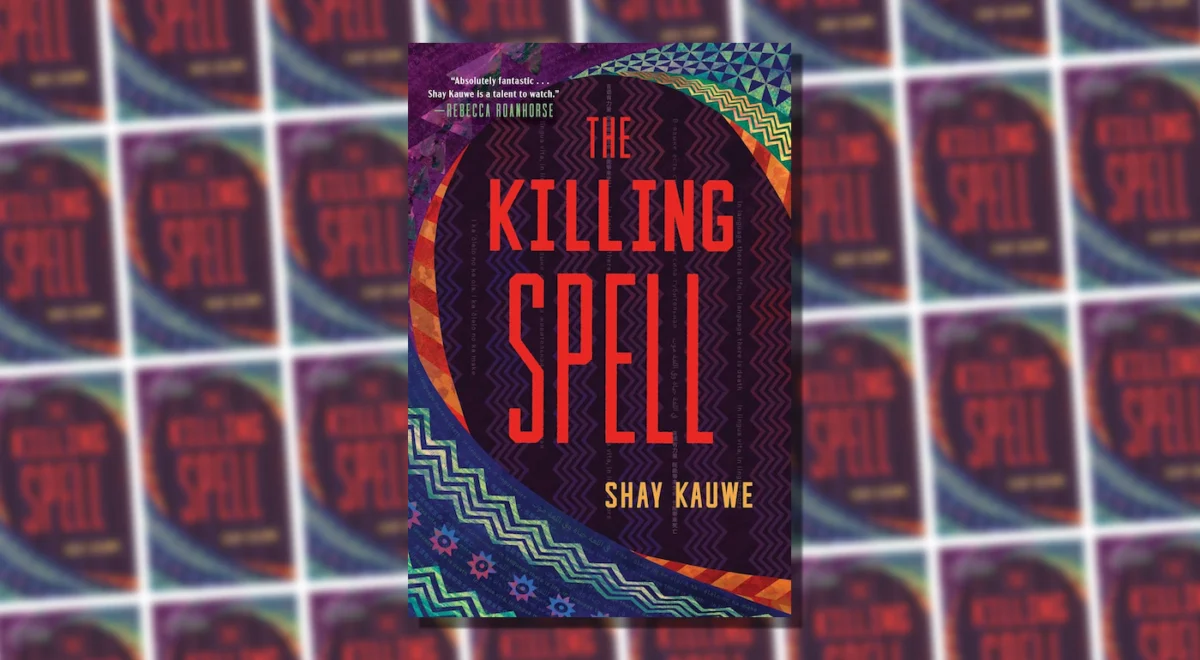
LOS ANGELES, CA – In a literary landscape increasingly hungry for diverse voices and genre-bending narratives, first-time Hawaiian writer Shay Kauwe delivers a powerful, albeit uneven, debut with The Killing Spell. Billed as the first adult Hawaiian urban fantasy, Kauwe’s novel plunges readers into a vividly imagined yet chillingly familiar future, set 200 years after catastrophic floods obliterated the Hawaiian islands. This cataclysm not only reshaped the Earth’s geography but also unleashed raw magic and terrifying monsters into a world struggling to rebuild. At its heart, The Killing Spell is a murder mystery wrapped in a compelling exploration of cultural identity, systemic oppression, and the inherent power of language, resonating deeply with themes of post-colonialism and indigenous resilience.
The narrative centers on Kea, a reluctant 25-year-old "smith"—a rare individual capable of crafting spells for others—from one of the surviving Hawaiian clans. These clans, displaced from their ancestral lands, now exist in a tenuous land-leasing agreement with the sprawling metropolis of Los Angeles. Their designated living area, ominously dubbed "the Homestead," functions as a thinly veiled reservation, a stark reminder of historical injustices perpetuated even in a fantastical future. When the shocking murder of Angelo Reyes, a prominent Filipino political activist, rocks the foundations of LA’s magical society, Kea finds herself unwillingly embroiled in a dangerous investigation. The death spell used is undeniably Hawaiian in origin, forcing the powerful, Eurocentric LA Casters Board to conscript Kea, leveraging her family’s crushing debts and her own illegal magic practices as irresistible blackmail.
A World Drowned, Magic Unbound: The Genesis of a New Reality
The meticulously crafted backdrop of The Killing Spell is defined by a pivotal, cataclysmic event: the Great Drowning. Two centuries prior, massive flooding consumed the Hawaiian islands, a devastating ecological shift that forever altered the global landscape. This traumatic event served as the genesis for the world’s current magical reality, cracking open conduits between realms and unleashing both potent mana and monstrous entities into existence. The very fabric of reality was torn, giving rise to creatures that occasionally crawl from the ocean depths to menace the precarious existence of the Hawaiian clans in the Homestead.
Following the Drowning, the surviving Hawaiian clans faced an existential crisis. Stripped of their homeland, culture, and sovereignty, they were forced into a desperate pact with the dominant power of the United States’ west coast: a land-leasing agreement with Los Angeles. This agreement granted them a segregated area, the Homestead, a geographical and social construct that mirrors the historical injustices of indigenous reservations. While not explicitly termed a reservation within the narrative, its function and the implied power dynamics leave no doubt about its symbolic weight. It is a place of forced assimilation, limited resources, and constant vulnerability, where the lingering trauma of displacement is a daily reality.
Kea’s Burden: Unsanctioned Magic and Clan Survival
Into this fraught world, Kea emerges as a protagonist burdened by responsibility and simmering defiance. At just twenty-five, she shoulders the weight of her entire clan – a small, struggling unit comprising her siblings, younger cousins, and her elderly grandparents. Their existence in the Homestead is precarious, marked by poverty and crippling mortgages, forcing Kea into a life of constant hustle. Her abilities as a "smith" are both a blessing and a curse. Smiths are rare individuals endowed with a unique command over language, allowing them to formulate and imbue spells with power, making them usable by others. However, Kea’s smithing is unregulated and unpredictable, her powers erratic and unrefined.
Her precarious situation is compounded by the rigid, discriminatory policies of the LA Casters Board. The board, the governing body of magic, refuses to formally recognize Hawaiian as a legitimate spell-casting language, despite its ancient roots and inherent magical resonance. Instead, they champion classical Romance languages, effectively disenfranchising Kea and other Hawaiian casters. This linguistic bias forces Kea to operate in the shadows, crafting and selling spells illegally to sustain her family. The irony is poignant: Kea’s native tongue, Hawaiian, holds the key to her power, yet generations of forced assimilation have rendered her—and many of her peers—less proficient in it, as English became the dominant language for survival within the broader LA culture. The narrative vividly portrays Kea’s internal struggle, her self-doubt intertwined with the collective memory of cultural erosion. The book’s opening sequences, while not directly tied to the main murder plot, effectively establish Kea’s world of relentless pressure: a broken ward, a monster attack, and a heated confrontation, all underscoring her desperate fight for her clan’s survival.
The Murder Investigation: A Forced Alliance and Unraveling Mysteries
The true catalyst for the novel’s central plot is the murder of Angelo Reyes, a prominent Filipino political activist in Los Angeles. His death, caused by a highly illegal death spell, sends shockwaves through the city’s magical elite. Crucially, the unique mechanics of language magic dictate that such a potent spell could only have been written in Hawaiian. This technicality immediately implicates the marginalized Hawaiian community and, specifically, draws the unwelcome attention of the LA Casters Board to Kea.
Recognizing her unique, albeit unsanctioned, ability to work with Hawaiian magic, the board hauls Kea into LA. They present her with an ultimatum: assist them in solving Reyes’s murder and prove her innocence, or face the full wrath of their legal and magical sanctions. The stakes are impossibly high. In return for her cooperation, Kea is promised the board’s favor, a blind eye to her illegal smithing, and, most importantly, the clearance of her family’s crushing debts. It’s an offer she cannot refuse, despite her deep-seated conviction that she is utterly unqualified for the task.
To ensure compliance and maintain control, the board partners Kea with Sora, a man they implicitly trust. Their alliance is fraught from the outset, marked by immediate mutual dislike. Kauwe hints at a future forced romance between them, a narrative device that some readers might find predictable or "stilted," as the initial review suggests. As Kea reluctantly navigates the intricacies of the investigation, the reader is gradually introduced to the deeper layers of Kauwe’s world and its intricate magic systems.
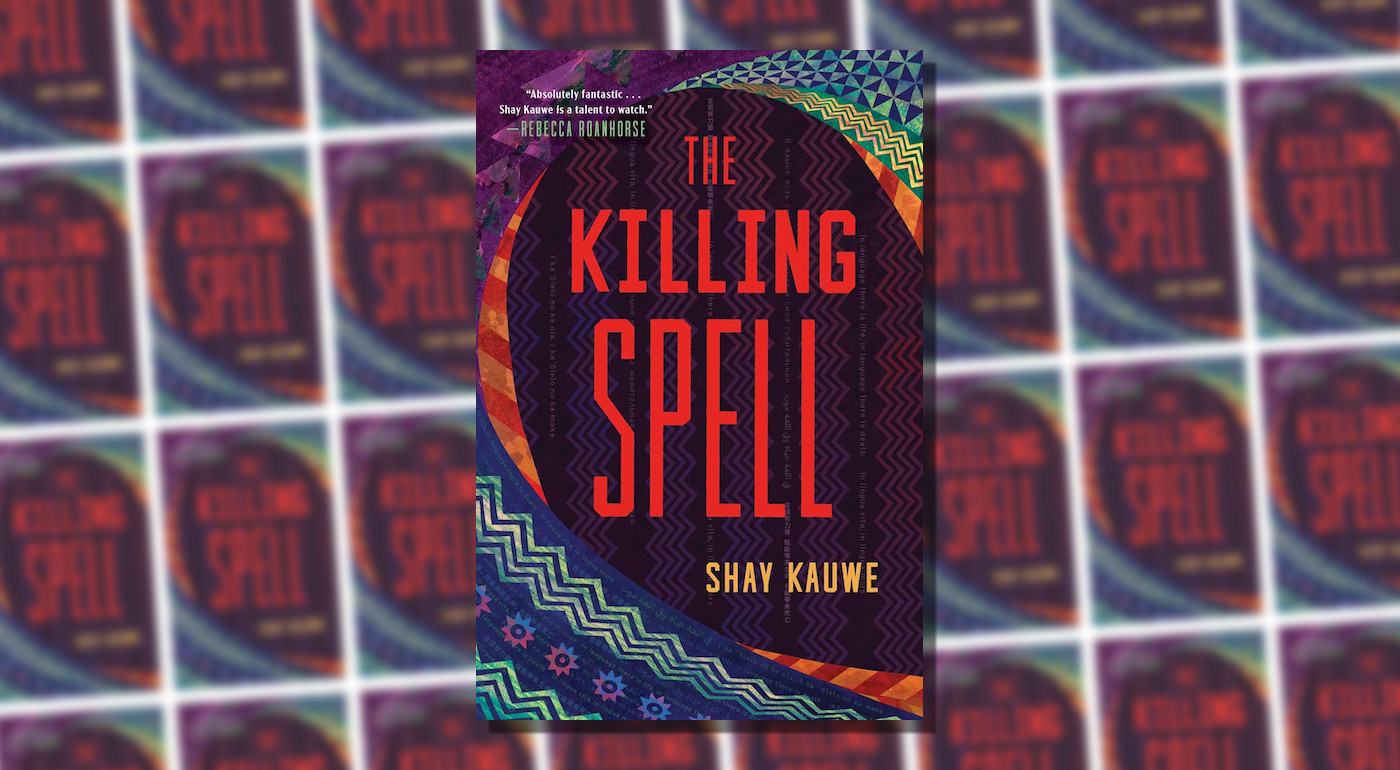
Mana and the Architecture of Power: Language as the Ultimate Conduit
Kauwe’s magic system, rooted in the concept of "mana," is both elegant and deeply symbolic. Mana is depicted as a pervasive energy, flowing through the world, which individuals can tap into and draw within themselves. As the text explains: "Casting required tapping into the mana that flowers through the world and drawing it inside oneself. Every person’s capacity for holding mana was different—it was like everyone had a little jar of predetermined size inside them… people stored mana in their core [but] it wasn’t something anyone could create on their own. Mana came from around us, and to access it, people had to pull it into themselves." This concept of mana being inherent and accessible to all, yet requiring specific linguistic keys for its effective channeling, lays the groundwork for the novel’s profound sociopolitical commentary.
The true power, therefore, lies not just in the capacity to wield mana, but in the command of specific languages deemed capable of channeling it effectively. This is where the LA Casters Board exerts its oppressive control. They operate under a purist ideology, insisting that only classical Romance languages are legally recognized and regulated for spell-casting. This policy is not merely an aesthetic preference; it is a calculated act of linguistic colonialism. The narrative explicitly highlights the blatant racism inherent in this stance, noting that many Asian languages, which are actively fighting for recognition, are as old if not older than the Romance languages (citing Chinese as an example). The board’s refusal to acknowledge these languages is a thinly veiled mechanism for maintaining Eurocentric power and control.
The Echoes of Colonialism: Cultural Erasure and Linguistic Control
This deliberate marginalization of indigenous and non-European languages forms the searing political core of The Killing Spell. Kauwe uses her fantastical setting to draw chilling parallels to historical and ongoing struggles against settler colonialism. The control over language and its magical application becomes a potent metaphor for systemic control over minority populations, cultural erasure, land grabbing, and forced assimilation. The policies of the LA Casters Board are not accidental; they are part of a deliberate, insidious strategy.
The narrative minces no words in exposing this strategy: "the slow, intentional strategy of places like Los Angeles had always been to starve us out, strip away our resources, and wait until the last of us died… No one cared about the stories of fallen societies. Their histories were overwritten with a false, shiny veneer… it would continue until we could no longer speak for ourselves—and the real way to kill a people was to cut out their tongue." This powerful declaration articulates the book’s central thesis: that the eradication of language is tantamount to the annihilation of a people and their history.
Kea’s personal journey mirrors this larger cultural battle. Her initial self-doubt and lack of proficiency in Hawaiian, a direct consequence of generations forced to assimilate, represent the internalized trauma of colonialism. Her path to becoming a true smith and a leader for her people is intrinsically linked to her reclaiming her language and cultural heritage. The novel posits that true power and resistance lie in community and the unapologetic ownership of one’s identity, even against overwhelming odds. As Kea poignantly observes: "We learned only the histories of people society deemed important, the ones that mattered. LA thought the Homestead didn’t matter, and if they had their way, that would be true—we’d become a blip violently erased from their history. The only way our history would survive was if our people continued to live. If we took up space unapologetically." This realization empowers Kea to speak truth to power, taking significant risks to challenge the oppressive system. This unwavering stance, driven by a deep commitment to cultural survival, stands as a strong point in an otherwise sometimes "lukewarm narrative," as the initial review notes.
Implications: A Powerful Message in a Developing Narrative
The Killing Spell distinguishes itself as a significant entry into the urban fantasy genre, particularly as the "first adult Hawaiian urban fantasy." Beyond its genre label, it functions profoundly as a coming-of-age story, tracing Kea’s arduous journey to forge not only her personal identity but also her vital role within her larger community. While the narrative is generally readable, its initial pacing can feel "jerky," and some supporting characters lack the depth of the protagonist. The plot, too, occasionally verges on "chaotic," particularly in its early, high-octane but somewhat disconnected scenes.
However, the novel’s undeniable strength lies in its profound and unflinching exploration of power dynamics, systemic racism, and the insidious nature of cultural erasure through linguistic suppression. Kauwe masterfully weaves these complex themes into the fabric of her magical world, creating a narrative that resonates far beyond its fantastical elements. It serves as a stark reminder of the enduring impact of colonialism and the vital importance of linguistic preservation as a form of cultural and personal resistance.
In her preface, Shay Kauwe encapsulates the very essence of her novel’s message: "languages are beautiful, special, and important, and your effort to cross cultures with nothing but a notebook and pen is a superpower. With every word, you are making magic." This statement not only celebrates the transformative power of language but also serves as a rallying cry for cultural empathy and understanding. The Killing Spell, despite its narrative imperfections, stands as a testament to this philosophy, a magical declaration that the words we speak, and the languages we cherish, are indeed the most potent spells of all. It is a vital and timely contribution to speculative fiction, urging readers to recognize the magic in every tongue and the power in every voice.
Buy the Book
The Killing Spell by Shay Kauwe is published by Saga Press.
Read an excerpt here.