The Ghost in the Machine: Why 1.4 Billion Windows Users Ignored a Critically Acclaimed Indie Title
The digital storefront has become the lifeblood of the modern independent video game industry. For a developer, being featured on a platform like Steam or the Nintendo eShop can mean the difference between a sustainable career and a shuttered studio. However, a startling revelation from independent developer Martin Nerurkar has cast a harsh spotlight on one of the industry’s biggest players: Microsoft.
Despite the Windows operating system boasting a staggering 1.4 billion monthly active users, Nerurkar revealed that his successful title, Nowhere Prophet, failed to sell a single solitary copy on the Microsoft Store over a multi-year period. This "zero-sale" phenomenon raises existential questions about Microsoft’s strategy for its PC marketplace and the disconnect between a massive OS install base and actual consumer purchasing behavior.
Main Facts: The Statistical Anomaly of Nowhere Prophet
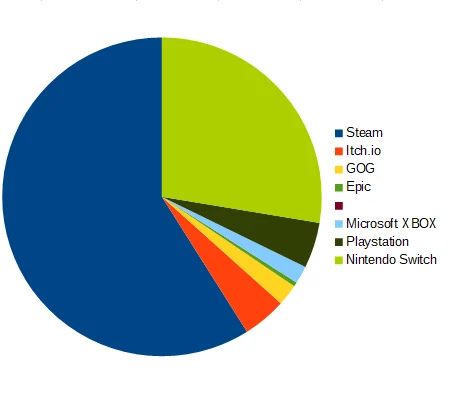
In August 2022, Martin Nerurkar, the founder of Sharkbomb Studios and creator of the deck-building roguelike Nowhere Prophet, shared a revenue breakdown of his game’s performance across various platforms. The data presented a healthy distribution of success: Steam led the pack, followed by strong performances on the Nintendo Switch, PlayStation, and Xbox consoles.
However, the outlier was not a platform where the game was absent, but one where it was officially listed: the Microsoft Store for PC.
The Zero-Sale Revelation
According to Nerurkar’s data, while Nowhere Prophet had moved approximately 20,000 units across all platforms—earning critical acclaim and a dedicated player base—the Microsoft Store accounted for 0% of those sales. In a follow-up statement, Nerurkar confirmed that the game had not made a single sale on the storefront during its entire tenure there.
This statistic is particularly jarring when contrasted with the ubiquity of the platform. Unlike the Epic Games Store or GOG, which require manual installation, the Microsoft Store is pre-installed on every Windows 10 and Windows 11 device. Theoretically, Nowhere Prophet was sitting on the digital shelves of 1.4 billion potential customers, yet not one person pulled the trigger on a purchase.
A Failure of Discoverability
Industry analysts point to this as a "pure-play" example of the discoverability crisis. While Steam uses complex algorithms to surface niche titles to interested players, the Microsoft Store has long been criticized for a cluttered interface that prioritizes first-party blockbusters or utility apps, leaving independent developers in a vacuum.
Chronology: The Long Decline of Microsoft’s PC Retail Ambitions
To understand how a platform with a billion users can fail to sell a single copy of a respected game, one must look at the turbulent history of Microsoft’s efforts to monetize the Windows desktop.
2012–2015: The Windows 8 Era and UWP
The modern Microsoft Store (originally the Windows Store) launched with Windows 8. It was Microsoft’s attempt to mimic the "walled garden" success of Apple’s App Store. However, it forced developers to use the Universal Windows Platform (UWP) format, which was restrictive, prone to technical glitches, and disliked by the gaming community because it made modding and third-party overlays (like Discord or Fraps) difficult.
2017–2019: The Launch of Nowhere Prophet
Nowhere Prophet launched in 2019, a period when Microsoft was attempting to pivot. They began moving away from the strict UWP requirements and allowed standard Win32 apps (traditional PC games) into the store. Despite these technical improvements, the consumer perception of the store remained negative. It was seen as a place to download Netflix or Calculator, not a destination for "core" gaming.
2020–2022: The Game Pass Shift
By the time Nerurkar shared his data in 2022, Microsoft had shifted its entire strategy toward Xbox Game Pass for PC. This subscription model fundamentally changed how users interacted with the Microsoft Store. Instead of buying games "à la carte," users paid a monthly fee to access a library. While this was great for player numbers, it effectively killed the "retail" aspect of the store for indie titles not included in the subscription or for those trying to sell individual copies alongside the service.
Supporting Data: The Retail Gap and the Competition
The failure of Nowhere Prophet on the Microsoft Store is not an isolated incident, but rather a symptom of a wider market trend. When we look at the supporting data for PC gaming, the dominance of Steam remains the primary hurdle for Microsoft.
Market Share and Consumer Trust
According to various industry reports (including those from Valve and Epic), Steam remains the destination of choice for over 75% of PC gamers. The reasons are multifaceted:

- Community Features: Steam offers reviews, forums, guides, and workshops.
- Library Consolidation: Gamers prefer to have their entire collection in one launcher.
- Reliability: The Microsoft Store has historically suffered from "download loops" and installation errors that have eroded consumer trust.
The 1.4 Billion User Myth
The "1.4 billion users" figure cited by Microsoft is often viewed by marketers as a "vanity metric." While there are 1.4 billion Windows devices, the vast majority are used for enterprise, education, or general productivity. The subset of those users who are "active gamers" is significantly smaller, and that subset has already been trained for two decades to use Steam as their primary storefront.
Conversion Rates
In digital marketing, a conversion rate of 0% on a base of 1.4 billion is statistically improbable unless the "funnel" is broken. For Nowhere Prophet, the breakdown suggests that the Microsoft Store’s search and recommendation engine simply never placed the game in front of a relevant user, or if it did, the friction of the checkout process was too high compared to the ease of Steam.
Official Responses and Industry Context
While Microsoft has not commented specifically on the sales of Nowhere Prophet, the company’s actions in recent years serve as a tacit admission that the store’s previous iteration was failing.
The "New" Microsoft Store
With the launch of Windows 11, Microsoft overhauled the store entirely. Phil Spencer, CEO of Microsoft Gaming, has frequently spoken about making the Windows platform more "open." They have since allowed the Epic Games Store and Amazon Appstore to be integrated into the Microsoft Store, effectively turning it into a "store of stores" rather than a direct competitor.
The Developer Perspective
Nicholas Lovell, founder of Gamesbrief, noted in his analysis of the situation that the Microsoft Store suffers from a dual identity. "It can’t work out whether it is a retail store for $59.99 games or an app store offering safe, free, quality-of-life apps for Windows," Lovell wrote. This identity crisis confuses the consumer. If a user opens the store to find a PDF reader, they are unlikely to impulsively buy a $25 tactical card game.
The Game Pass Defense
Microsoft’s internal defense often centers on the success of Game Pass. They argue that total "player engagement" is higher than ever. However, for a developer like Nerurkar, engagement doesn’t pay the bills if the game isn’t on the subscription service and isn’t selling copies individually. This creates a "binary" ecosystem on Windows: you are either in Game Pass and successful, or you are on the retail store and invisible.
Implications: The Future of Indie Publishing on Windows
The case of Nowhere Prophet serves as a cautionary tale for the independent gaming community. It highlights several critical implications for the future of the industry.
1. The Dangers of Platform Fragmentation
For a small team, the "cost" of porting a game to the Microsoft Store (handling certification, integrating Xbox Live APIs, and testing) may actually exceed the potential revenue. If the expected sales are zero, developers will eventually stop supporting the platform entirely, further weakening Microsoft’s ecosystem.
2. The Devaluation of Individual Sales
As subscription models like Game Pass and Ubisoft+ become the norm, the "unit sale" is becoming an endangered species on the Windows Store. This forces indie developers into a position of dependency on platform holders. If Microsoft doesn’t "greenlight" a game for Game Pass, that game may have no viable path to profit on the Windows OS, despite the OS being an open platform.
3. The Need for Curation
The "zero sales" issue is ultimately a failure of curation. Steam’s "Discovery Queue" and "Next Fest" events are designed to solve this. If Microsoft wants to utilize its 1.4 billion users, it must move away from a "utility" store design and toward a "content-first" design that understands the specific tastes of gamers.
4. The Monopoly of Mindshare
Microsoft’s struggle proves that owning the operating system does not grant an automatic monopoly over the commerce that happens within it. Consumer habit is a powerful force. Even with a pre-installed store, Microsoft has failed to break the "Steam habit" because it failed to provide a superior—or even equal—user experience.
Conclusion
The story of Nowhere Prophet and its invisible existence on the Microsoft Store is a sobering reminder that reach is not the same as impact. Having 1.4 billion monthly active users is a monumental achievement in engineering, but as a retail strategy, it remains a hollow victory if it cannot sell a single copy of a high-quality game.
For Nicholas Lovell and other industry observers, the path forward for Microsoft requires a choice: either commit to building a world-class retail experience that rivals Steam’s community features, or accept that the Microsoft Store’s only future is as a backend delivery system for Game Pass. Until that choice is made, indie developers may continue to find that on the world’s most popular operating system, their games are shouting into a very large, very empty void.