The Casablanca Conference: Forging Allied Strategy and Declaring "Unconditional Surrender"
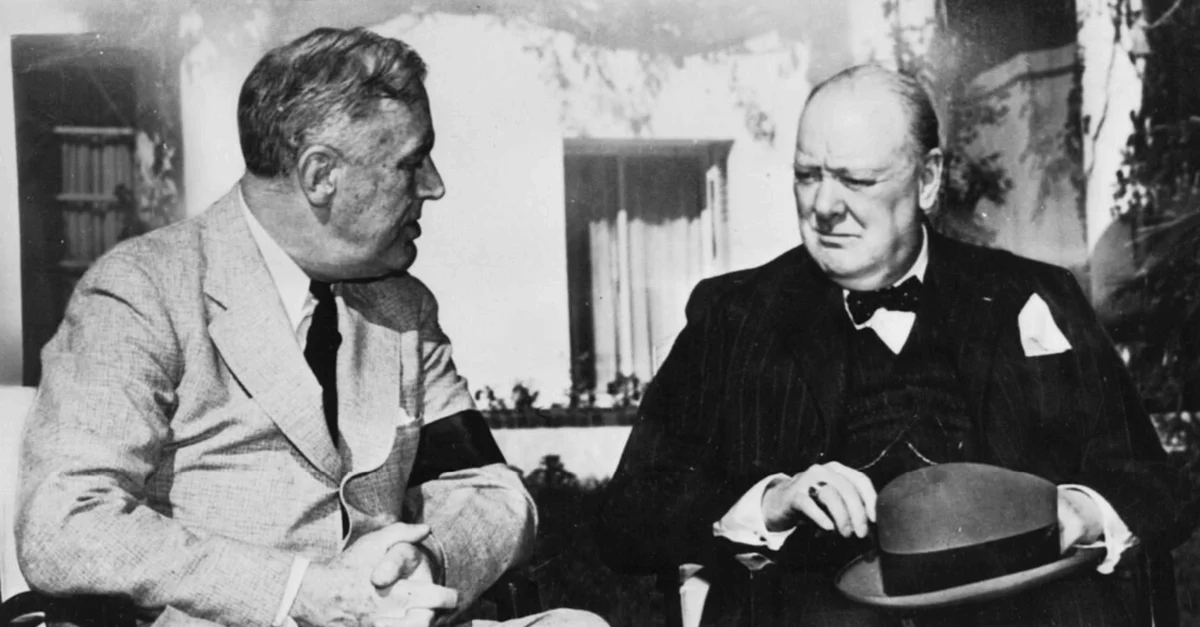
Casablanca, French Morocco – January 1943 – As the brutal winter of 1943 gripped Europe, the strategic landscape of World War II was at a critical juncture. From January 14 to 24, 1943, the clandestine "Symbol" conference convened in Casablanca, French Morocco, bringing together two of the Allied powers’ most influential leaders: U.S. President Franklin D. Roosevelt and British Prime Minister Winston Churchill. This high-stakes meeting, held amidst the Anfa Hotel and surrounding villas, aimed to chart the future course of the war against the Axis powers – Germany, Japan, and Italy. Though conspicuously absent, Soviet Premier Joseph Stalin’s shadow loomed large, occupied by the desperate fight at Stalingrad. The conference would ultimately produce pivotal strategic agreements and a momentous, albeit controversial, declaration: the demand for the unconditional surrender of the Axis. This policy, largely a unilateral American decision, would profoundly shape the war’s conclusion and the nascent post-war global order.
Main Facts: A Blueprint for Victory and a Controversial Demand
The Casablanca Conference served as a vital forum for Anglo-American leaders and their Combined Chiefs of Staff to synchronize military and political strategies. Key decisions emerging from the ten-day summit included:
- Delaying the "Second Front" in Western Europe: Despite Soviet pleas for an immediate invasion of German-occupied France, the Allies opted to postpone this ambitious undertaking, later known as Operation Overlord, until 1944.
- Focus on the Mediterranean: In the interim, the Allies committed to a major offensive against Italy, beginning with an invasion of Sicily (Operation Husky) in 1943, aiming to knock Italy out of the war and draw Axis resources away from the Eastern Front.
- Intensified Strategic Bombing of Germany: A coordinated Anglo-American air campaign, dubbed the "Combined Bomber Offensive," was launched to systematically dismantle Germany’s industrial and economic capacity, and undermine civilian morale.
- The "Unconditional Surrender" Doctrine: In a dramatic announcement by President Roosevelt, the Allies declared that they would accept nothing less than the unconditional surrender of Germany, Japan, and Italy. This policy, decided by the United States prior to the conference and sprung on Churchill, became a cornerstone of Allied war aims, though its implications for prolonging the conflict and shaping the post-war world remain a subject of historical debate.
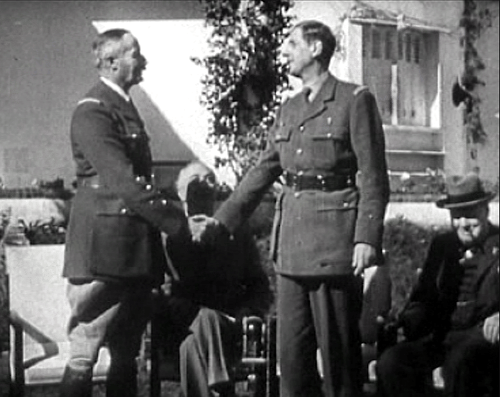
- Unified French Leadership: A public relations gesture saw a staged handshake between rival French generals Charles De Gaulle and Henri Giraud, symbolizing a united Free French front against the Axis.
These decisions underscored a strategic pivot, balancing the immediate demands of the European theater with the long-term goal of total victory, while also laying the groundwork for a post-war landscape that would see a dramatic shift in global power dynamics.
Chronology: War’s Ebb and Flow to Casablanca
By early 1943, the tide of World War II was beginning to turn, yet the path to Allied victory remained arduous and uncertain.
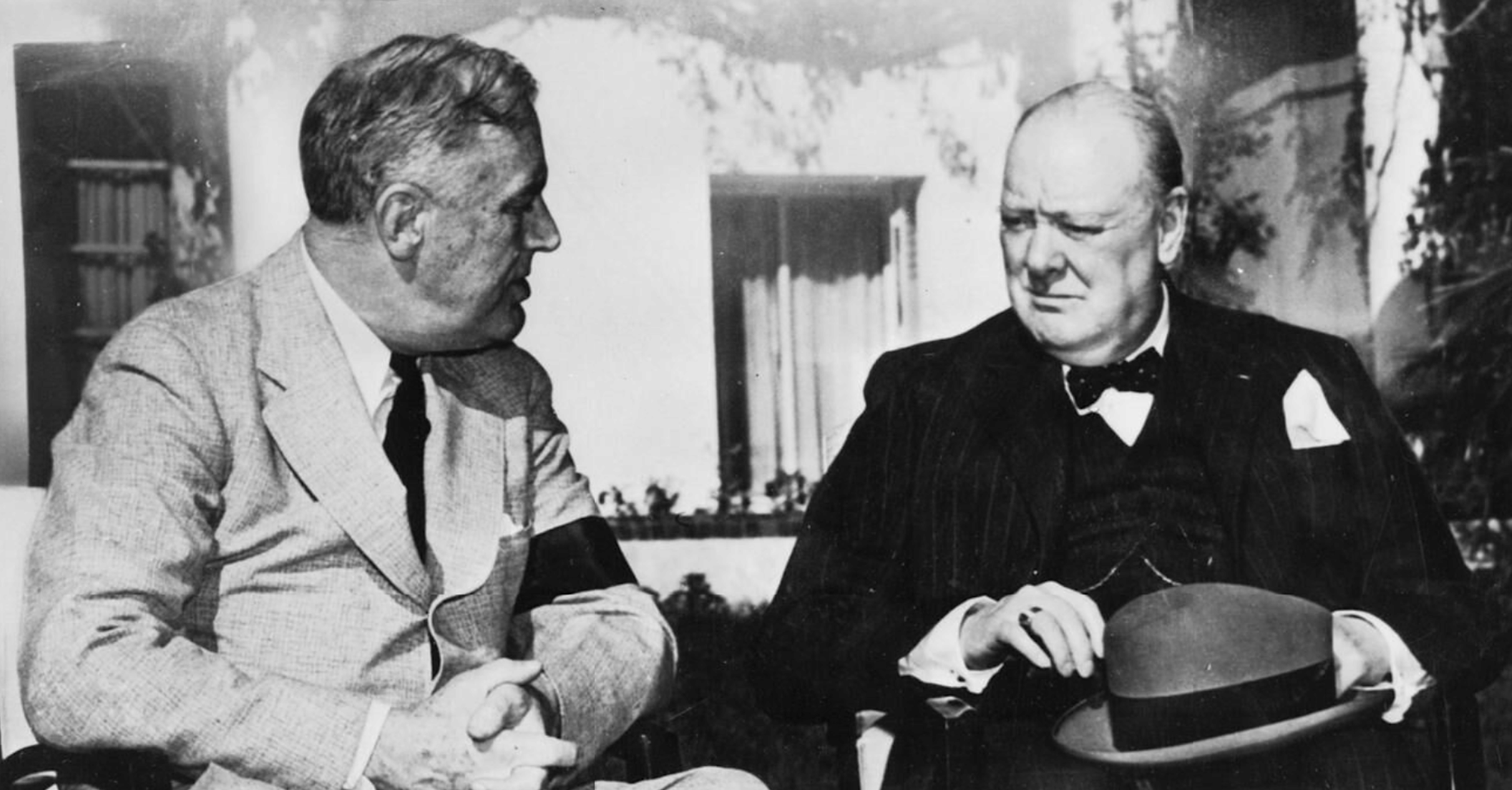
The Global Battlefield in Early 1943
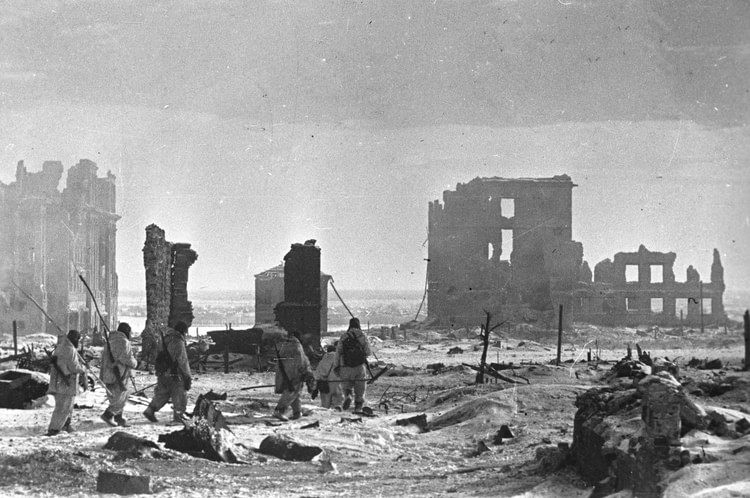
- Eastern Front’s Grinding Stalemate: Germany’s ambitious invasion of the Soviet Union, Operation Barbarossa, launched in 1941, had stalled. After initial rapid advances, the Eastern Front had devolved into a brutal war of attrition. The Red Army, though suffering immense casualties, had held firm, notably around Moscow. Joseph Stalin, the Soviet leader, was conspicuously absent from Casablanca, preoccupied with the climactic Battle of Stalingrad, a monumental and devastating siege that would soon culminate in a decisive Soviet victory. His absence underscored the immense pressure borne by the USSR and fueled his urgent demands for a "Second Front" in Western Europe to divert German forces.
- Western Europe Under Axis Control: Following the fall of France in 1940 and the abandonment of Operation Sea Lion (the planned German invasion of Britain) after the Battle of Britain, no significant Western Front existed. This allowed Germany to concentrate vast resources on the Eastern Front, a point of constant contention for Stalin.
- The Pacific War Engages the U.S.: Japan’s surprise attack on Pearl Harbor in December 1941 had irrevocably drawn the United States into the global conflict. The Pacific Theater, with its vast distances and complex amphibious operations, was a significant drain on Allied resources, requiring careful strategic allocation alongside the European priorities.
- North African Triumph: Crucially, the Allies had achieved a significant victory in North Africa. The Second Battle of El Alamein in November 1942 saw General Bernard Montgomery’s British Eighth Army decisively defeat General Erwin Rommel’s Afrika Korps. This victory, coupled with the Anglo-American landings in French North Africa (Operation Torch) in late 1942, effectively expelled Axis forces from the continent, providing a vital launchpad for future operations against southern Europe.
The Conference Unfolds: January 14-24, 1943
Against this backdrop, Roosevelt and Churchill, accompanied by their respective military and political advisors, convened in Casablanca. The setting, French Morocco, recently liberated from Vichy French control, symbolized the recent Allied successes. The ten-day conference was marked by intense discussions, particularly between the U.S. and British Combined Chiefs of Staff, who had met for several days prior to the arrival of the political leaders.
The primary agenda was clear: how to deliver ultimate victory against the Axis. The recent successes in North Africa presented a tantalizing opportunity to strike at the "soft underbelly" of Europe, specifically Italy. This Mediterranean strategy became a key focus, contrasting with the more direct, but logistically complex, proposal for an immediate cross-Channel invasion of France.
The final press conference on January 24, 1943, would prove to be the most dramatic moment, as President Roosevelt unveiled the Allies’ uncompromising stance on unconditional surrender, a policy that would echo through the remaining years of the war.
Supporting Data: Strategic Debates and Their Rationale
The Casablanca Conference was characterized by significant strategic divergences between American and British military and political leaders, reflecting their differing experiences, resources, and perspectives on the war.
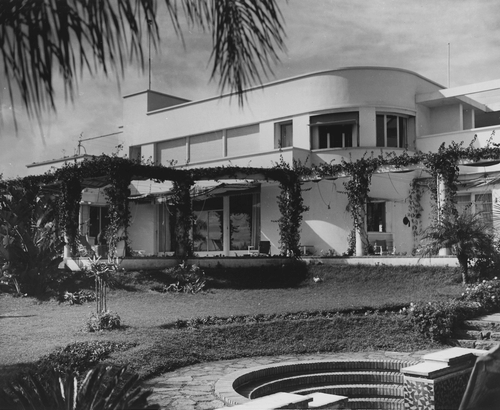
The Second Front Dilemma: 1943 vs. 1944
The most contentious strategic debate centered on the timing and location of the "Second Front"—the long-anticipated Allied invasion of German-occupied Western Europe.
- American Perspective: Senior U.S. military figures, particularly General George Marshall, advocated for a direct cross-Channel invasion of Northern France as early as 1943. Their rationale was rooted in the "Europe First" strategy, a desire to engage the main German forces directly, and to relieve pressure on the beleaguered Soviet Union, thereby demonstrating American commitment. They believed in concentrating overwhelming force for a decisive strike.
- British Perspective: British counterparts, led by figures like Field Marshal Alan Brooke, Chief of the Imperial General Staff, favored a more cautious approach, arguing for a 1944 invasion. Their experiences with amphibious landings (like Gallipoli in WWI) and the heavy casualties of trench warfare made them wary of a premature invasion. They emphasized the need for a massive buildup of men, material, and specialized landing craft, and preferred to exploit the recent North African successes by attacking Italy first. This "peripheral strategy" aimed to weaken the Axis on its flanks, draw off German resources, and potentially knock Italy out of the war, thereby creating more favorable conditions for a later, larger invasion of France.
Ultimately, the British arguments prevailed, primarily due to their superior preparedness and detailed planning for the conference. Albert Wedemeyer, a member of the U.S. delegation, observed: "They were a team with a game plan and well rehearsed in the plays… By contrast, our own American team was not well prepared." The compromise reached was to postpone Operation Overlord until 1944, with 1943 focusing on the invasion of Sicily (Operation Husky) and the subsequent campaign up the Italian peninsula. This decision, while strategically sound from a logistical perspective, disappointed Stalin and further strained Allied relations.
The Combined Bomber Offensive: "Progressive Destruction"
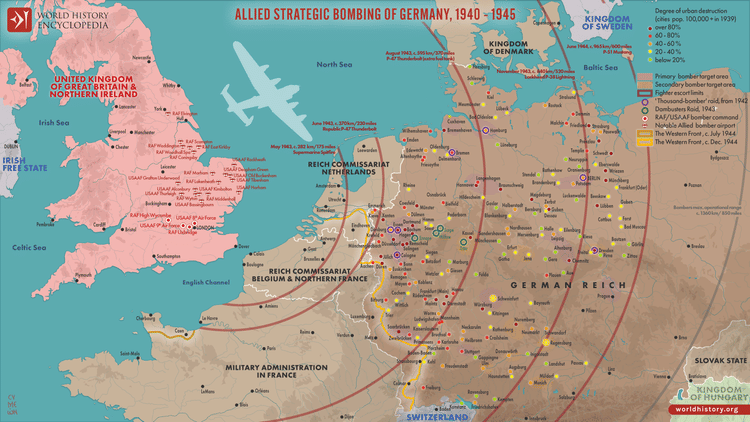
Another crucial agreement at Casablanca was the launch of the Combined Bomber Offensive against Germany. The objective, as articulated by the Combined Chiefs of Staff, was "The progressive destruction and dislocation of the German military, industrial and economic system, and the undermining of the morale of the German people to a point where their capacity for armed resistance is fatally weakened."
This strategy envisioned round-the-clock bombing: the Royal Air Force (RAF) would conduct night raids, focusing on area bombing of German cities and industrial centers, while the U.S. Army Air Forces (USAAF) would carry out daylight precision bombing of specific industrial targets, railway systems, airfields, and dams. The bombing campaign served multiple purposes:
- Direct War Effort: To cripple Germany’s ability to wage war by destroying factories, supply lines, and infrastructure.
- Morale Warfare: To break the will of the German populace, hoping to foster internal dissent or a desire for peace.
- Relief for the Eastern Front: To force Germany to divert resources (anti-aircraft guns, fighter aircraft, personnel) from the Eastern Front to defend its homeland, thereby indirectly assisting the Soviets.
While the bombing campaign did inflict significant damage on German industry and infrastructure, and forced a substantial diversion of resources, the belief held by some Allied commanders that air power alone could win the war proved unrealistic. It came at a tremendous human cost, with over 600,000 German civilians dying as a direct consequence of the bombing. Its long-term effectiveness in undermining morale is still debated, as it arguably stiffened German resolve in some areas.
Leadership and Unity: Eisenhower, Alexander, De Gaulle, and Giraud
The conference also addressed command structures and political optics. General Dwight D. Eisenhower, already commander of Allied forces in North Africa, was slated for a prominent role in future European operations, eventually becoming the Supreme Allied Commander for Operation Overlord. General Harold Alexander was appointed his deputy and commander of the British army group for the Italian campaign.
A particularly visible, though largely symbolic, moment involved two rival French generals: Charles De Gaulle, leader of the Free French forces, and Henri Giraud, commander-in-chief of French forces in North Africa, whom the Americans initially favored. To present an image of Allied unity and a coherent French resistance, Roosevelt and Churchill orchestrated a public handshake between the two, a gesture De Gaulle later described as humiliating, yet necessary for the broader cause.
Official Responses: The Shockwave of Unconditional Surrender
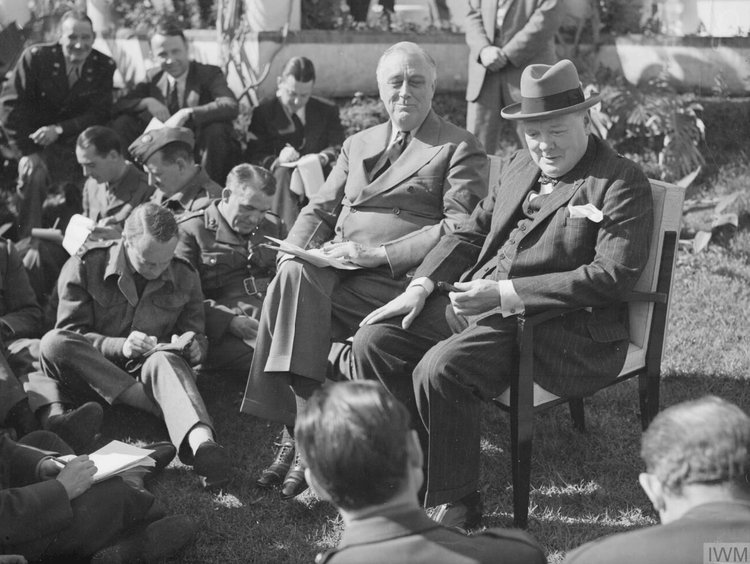
The most far-reaching announcement from Casablanca, delivered by President Roosevelt at the closing press conference on January 24, was the demand for the "unconditional surrender" of the Axis powers.
Roosevelt’s Rationale and Churchill’s Reservations
Roosevelt’s declaration stated: "The elimination of German, Japanese and Italian war power means the unconditional surrender by Germany, Italy, and Japan. That means a reasonable assurance of future world peace. It does not mean the destruction of the population… but it does mean the destruction of the philosophies in those countries which are based on conquest and the subjugation of other people."
Crucially, this was a decision Roosevelt had made prior to the conference, without explicit consultation with Churchill or Stalin. W. Averell Harriman, U.S. Special Envoy to Europe, recalled Churchill being "very much upset that this had been sprung on him without consideration." While British Foreign Secretary Anthony Eden suggested the British delegation had been informed of the concept, "Winston was taken aback by the actual moment of the announcement."
Churchill privately harbored significant reservations. He worried that such an uncompromising demand would stiffen Axis resistance, prolong the war, and make it impossible for more moderate elements within Germany to negotiate a separate peace, thereby increasing the overall cost in lives and destruction. He preferred a more flexible approach that might allow for political maneuvering in the endgame.
Axis Interpretation and Allied Unity
Despite Churchill’s misgivings, "unconditional surrender" became official Allied policy. Its exact interpretation, however, remained fluid. To many Axis leaders, it signaled total annihilation. Admiral Karl Dönitz, commander-in-chief of the German Navy, felt it left Germany in an "impossible situation," implying the end of an independent German government and the immediate imprisonment of all fighting men. This interpretation likely bolstered the resolve of hard-line Axis leaders to fight to the bitter end.
From Roosevelt’s perspective, the policy served several critical purposes:
- Reassuring Stalin: It explicitly guaranteed that the Western Allies would not negotiate a separate peace with Germany, a constant fear for Stalin, who suspected Anglo-American motives. It cemented Allied unity until absolute victory.
- Public Opinion: It addressed domestic concerns in the United States, particularly a negative public reaction to perceived "collusion" with the Vichy French government during the North Africa Campaign. An unconditional surrender policy offered a clear, unambiguous, and morally righteous war aim.
- Lessons from WWI: Some historians suggest Roosevelt was influenced by the aftermath of World War I, where Germany’s armistice was later spun by Nazi propaganda as a "stab in the back," fueling revanchism. Unconditional surrender aimed to prevent any ambiguity regarding who was defeated and why.
- Post-War Control: More cynical interpretations suggest it was a deliberate strategy to weaken European states (both victors and vanquished) and ensure total American economic and military dominance in the post-war world, as the U.S. was less directly ravaged by the conflict.
Implications: A War Prolonged, a World Reshaped
The decisions made at Casablanca, particularly the unconditional surrender doctrine, cast a long shadow over the remainder of the war and laid foundational elements for the post-war international order.
Prolonging the Conflict and Escalating Casualties
The most significant and debated implication of the unconditional surrender policy is whether it prolonged the war. Critics argue that by removing any incentive for negotiation or internal revolt, it forced Axis powers, especially Germany and Japan, to fight to the very last man. Had there been clearer terms for surrender, perhaps with guarantees for national sovereignty or political structures, it might have encouraged earlier capitulation and saved countless lives. Indeed, Germany did not surrender until Berlin was occupied, and Japan fought until the devastating atomic bombings of Hiroshima and Nagasaki. The removal of the Nazi regime was a non-negotiable minimum, but the policy left no room for distinguishing between the regime and the German state or people.
However, proponents counter that the fanatical nature of the Nazi and Japanese militarist regimes made any conditional surrender unlikely or undesirable. For many Allied leaders, WWII was not merely a conflict of national interests but an existential fight between good and evil, necessitating a complete eradication of the aggressive, expansionist ideologies. Some historians and diplomats, including Anthony Eden, also doubt that the policy appreciably extended the war, given the nature of the enemy.
Shaping Post-War Dominance and Allied Relations
The Casablanca decisions, particularly the emphasis on total victory and the American-driven unconditional surrender, played a role in shaping the post-war world. The United States, relatively unscathed by the war’s physical destruction and emerging with unparalleled economic and military might, was well-positioned to exert significant influence. The policy, by requiring complete Allied occupation and reorganization of defeated nations, guaranteed a direct hand in shaping their future, thus contributing to American global leadership.
The delay of the Second Front and the focus on Italy, while strategically sound from a British perspective, also meant that the Western Allies would only reach Berlin after the Soviets had already borne the brunt of the fighting on the Eastern Front, influencing the division of Germany and the balance of power in post-war Europe.
The Road to Future Conferences and the Cold War
Casablanca set the stage for subsequent critical Allied conferences, where Stalin would be a central, if often contentious, figure.
- Tehran Conference (November-December 1943): Here, with Stalin present, the commitment to a cross-Channel invasion of France in summer 1944 (Operation Overlord) was finally cemented.
- Yalta Conference (February 1945): As victory neared, the "Big Three" (Roosevelt, Churchill, Stalin) decided on the post-war division and joint governance of defeated Germany, and the reshaping of European borders, particularly Poland.
- Potsdam Conference (Summer 1945): Following Germany’s surrender, the new leaders (Truman, Attlee, Stalin) issued an ultimatum to Japan – the Potsdam Declaration – echoing the unconditional surrender demand, though offering slightly more detail. Its rejection ultimately led to the use of atomic bombs and Japan’s surrender on August 14, 1945.
The commitment to unconditional surrender, born in Casablanca, ensured that the war would end with the total collapse of the Axis regimes, leaving a power vacuum that the victorious Allies would fill. However, the inherent distrust between the Soviet Union and the Western Allies, exacerbated by differing visions for the post-war world, meant that the unity forged in the crucible of war would quickly dissolve. The grand conferences ended with the cessation of hostilities, as the world transitioned from global war to a new era of ideological confrontation: the Cold War. The Casablanca Conference, therefore, stands as a critical juncture, not just in the prosecution of World War II, but in the very genesis of the modern geopolitical landscape.