
The Friction of Modernity: Navigating Noise, Nature, and Neurodiversity in the 21st Century
The intersection of domestic life, public policy, and cultural evolution often finds its most poignant expression not in legislative halls, but in the subtle panels of the daily comic strip. As of mid-2026, a series of seemingly disparate social frictions—ranging from the cacophony of suburban maintenance to the hyper-sanitization of outdoor recreation—has sparked a broader conversation about how modern society balances progress with peace.
From the legal ramifications of "leaf blower rage" to the evolving diagnosis of neurodiversity in the classroom, these issues represent a collective struggle to adapt to an era defined by constant data and decreasing patience.
Main Facts: The Catalyst of Suburban Conflict
The primary catalyst for recent discourse involves the escalating tension surrounding noise pollution, specifically the ubiquitous leaf blower. Long a staple of suburban maintenance, the device has become a symbol of neighborly discord, leading to significant legal incidents in New York and Massachusetts.
In Wilmington, New York, a man was recently charged with felonious assault involving a leaf blower, while a separate incident on Cape Cod saw an individual facing armed assault charges after allegedly threatening a landscaping crew with a firearm to silence their equipment. These cases highlight a growing "noise rage" phenomenon that urban planners and legal experts are beginning to categorize alongside road rage.
Simultaneously, a shift in how society interacts with nature is becoming evident. The rise of "wild swimming"—a term popularized in the United Kingdom to describe what was once simply known as "swimming in a lake or river"—points to a commodification and "othering" of the natural world. This trend is mirrored in the educational sector, where "Class in the Grass" initiatives are being re-evaluated through the lens of Attention Deficit Disorder (ADD/ADHD), questioning whether the "great outdoors" is a sanctuary or a distraction for the neurodivergent mind.
Chronology: The Evolution of Domestic Discontent
The 1980s: The "Close Enough" Era
The roots of our current technological and social expectations can be traced back to the early 1980s. Long-running comic strips like Arlo & Janis, which recently celebrated its 41st anniversary, captured a world where "close enough was good enough." During this period, car maintenance relied on analog gauges that were often imprecise, and communication was tethered to landlines. The margin for error in daily life was wider, and the pace of information was governed by the morning paper.
The 2000s: The Digital Transition and the Safety Boom
By the turn of the millennium, the transition toward high-precision data began. Fuel gauges were replaced by digital range indicators, and the first generation of e-readers, such as the Kindle, began to challenge the physical book. Concurrently, a "safety-first" culture began to permeate childhood. Summer camps that traditionally utilized natural lakes for recreation started installing chlorinated pools, citing health concerns over "raw" water and parasites like Giardia lamblia (commonly known as "beaver fever").
2020–2026: The Age of Constant Data and Escalation
In the current decade, the "close enough" philosophy has been entirely supplanted by constant data. From smartphones tracking every step to cars providing exact mileage to empty, the tolerance for ambiguity has vanished. This precision has, paradoxically, increased social friction. The leaf blower, once a mere annoyance, is now viewed through the lens of environmental impact and mental health, leading to the aforementioned legal escalations.
Supporting Data: The Cost of Noise and the Shift in Recreation
Noise Pollution and Public Health
Data from the Environmental Protection Agency (EPA) and various acoustic ecology studies suggest that gas-powered leaf blowers can produce noise levels exceeding 100 decibels at the operator’s ear. More importantly, the low-frequency sound waves they emit penetrate walls and windows more effectively than higher-frequency sounds.
In response, over 100 cities across the United States have implemented either partial or total bans on gas-powered leaf blowers as of 2026. The legal cases in Wilmington and Cape Cod serve as extreme data points in a broader trend of "acoustic trespassing" lawsuits, where residents claim that intrusive noise constitutes a violation of property rights.
The Sanitation of the Outdoors
The "chlorination of the summer camp" is a measurable trend. According to industry reports from the American Camp Association, there has been a 35% increase in the installation of artificial aquatic centers at traditional "wilderness" camps over the last fifteen years. While this move is often justified by liability insurance requirements, it reflects a significant shift in the human relationship with the environment—one where the "raw" state of nature is viewed as a medical liability rather than a recreational asset.
Neurodiversity and Learning Environments
Recent studies in educational psychology indicate that for the approximately 10% of students diagnosed with ADHD, "unstructured" outdoor learning environments can actually impede the "executive function" required for academic focus. While "Class in the Grass" is intended to be a refreshing break, the sensory overload of birds, insects, and ambient movement creates a "distraction trap" that traditional desks—despite their perceived rigidity—help to mitigate.
Official Responses: Legal and Educational Perspectives
The Legal Standpoint
Legal analysts are currently debating the classification of landscaping equipment as "deadly weapons." In the Wilmington case, the use of a leaf blower in an assault raised questions about the "intended use" vs. "actual use" of industrial tools.
"When a tool capable of high-velocity air displacement and physical blunt force is used to threaten or harm, it crosses the line from a maintenance device to a weapon," stated New York legal consultant Johnathan Aris. Conversely, defense attorneys in the Cape Cod incident are exploring "provocation" defenses, arguing that the psychological distress caused by extreme noise can lead to a state of temporary diminished capacity, though this remains a controversial and largely unsuccessful legal strategy.

The Educational Response
School boards are increasingly moving toward "Flexible Learning Environments" rather than simply moving classes outdoors. Recognizing the ADD/ADHD challenges highlighted by Nate and other modern observers, educators are opting for indoor spaces that offer "natural light without natural distraction." The consensus among pediatricians is that while nature is vital for mental health, it must be separated from high-concentration tasks for neurodivergent students.
Implications: The Search for the "Alt-Ctrl-Del"
The current social landscape suggests a "system overload" in how we handle disagreement and data.
The Communication Breakdown
As seen in contemporary satirical commentary, relationship dynamics are suffering from a "winning vs. agreeing" syndrome. Psychologists refer to this as the "toothpaste cap" phenomenon—where a minor domestic disagreement is actually a proxy for a lack of conflict-resolution skills. In a world of constant connectivity, the ability to "disengage to avoid a fight" is often misinterpreted as a refusal to deal with the problem, leading to a cycle of confrontation that mirrors the "noise rage" found in the streets.
The Linguistic Divide
We are also witnessing a globalization—and a subsequent confusion—of language. The British "fringe" vs. the American "bangs," or the British "wild swimming" vs. the American "swimming," highlights a culture that is increasingly obsessed with labeling and categorizing every action. This "millennial life" commentary, as seen in the works of Becky Barnicoat and others, suggests a generation trying to find identity in small, ironic moments of self-correction.
Political Geometry
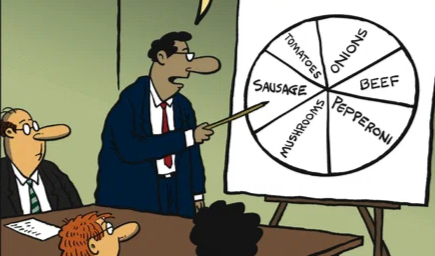
Finally, the implications of these social frictions extend into the political sphere. The use of the "pizza" metaphor to explain gerrymandering is particularly apt for 2026. Just as a board might "conspire" to order a pizza but fail to agree on toppings, the current political climate uses "gerrymandered slices" to ensure that no matter how the "pizza" is cut, the outcome is predetermined. This reflects a broader societal trend: the move away from consensus toward a system designed to "win" at any cost.
Conclusion
As we navigate the mid-2020s, the "Constant Reader" of society finds themselves at a crossroads. We have more data than ever—our cars tell us exactly when we will run out of fuel, and our e-readers hold thousands of volumes in a single pocket—yet we seem less equipped to handle the "noise" of existence.
Whether it is the literal noise of a leaf blower or the figurative noise of a political argument, the solution remains elusive. Perhaps the best advice comes from the early days of computing, as suggested by the comic strips of the era: sometimes, the only way to resolve a systemic crash in communication or culture is a hard reset—an "Alt-Ctrl-Del" for the modern soul. Until then, we continue to cut our own "fringes," swim in our chlorinated pools, and wonder why the world feels just a little too loud.



Leave a Comment