The Architecture of Speculation: Untangling the Four Pillars of the Web 3.0 Bubble
Main Facts: The Conflation of Digital Frontiers
The digital economy is currently navigating a period of unprecedented volatility and speculative fervor, often grouped under the umbrella of "Web 3.0." This movement is characterized by the convergence of four distinct technological and economic areas: cryptocurrencies, blockchain technology, non-fungible tokens (NFTs), and the "play-to-earn" (P2E) gaming model. While promoters and market participants often conflate these concepts to suggest a unified, inevitable future for the internet, critics argue that this synthesis serves primarily to mask the inherent risks and lack of substance in many underlying projects.
The current environment mirrors the dot-com bubble of the late 1990s, though it is inflating at a significantly higher velocity. Driven by a macroeconomic climate of historically low interest rates and a massive influx of investment capital generated during the COVID-19 pandemic, the search for yield has pushed investors toward high-risk digital assets. To understand whether this sector holds long-term value or represents a "Ponzi opportunity of epic proportions," it is essential to decouple these four elements and evaluate them on their individual merits and systemic vulnerabilities.
Chronology: From Digital Gold to Virtual Labor
The evolution of the current landscape can be traced through several pivotal phases:
- 2009–2012: The Genesis of Decentralization. The launch of Bitcoin introduced the world to the blockchain and the concept of a decentralized ledger. Initially a niche interest for cypherpunks, its value was negligible. A notable example from 2011 saw a Starcraft 2 tournament offer a 5th-8th place prize of 25 Bitcoins—worth roughly $25 at the time, but valued at over $1.4 million a decade later.
- 2013–2017: The Rise of Altcoins and Smart Contracts. The emergence of Ethereum expanded the blockchain’s utility by introducing smart contracts, allowing for programmable transactions. This period saw the first "Initial Coin Offering" (ICO) craze, which ended in a significant market correction but established the infrastructure for decentralized finance (DeFi).
- 2020–2021: The NFT and P2E Explosion. During the pandemic, digital scarcity became a mainstream obsession. The "Top Shot" NBA highlights and Beeple’s $69 million digital art sale brought NFTs to the forefront. Simultaneously, games like Axie Infinity popularized the "play-to-earn" model, particularly in developing economies, promising a new era where gaming could serve as a primary source of income.
- Present Day: The Synthesis and Scrutiny. Today, these technologies are frequently bundled together. Developers and promoters pitch "metaverses" that utilize cryptocurrencies for trade, blockchain for record-keeping, NFTs for asset ownership, and P2E mechanics to drive user engagement.
Supporting Data: Analyzing the Four Pillars
1. Cryptocurrencies: The Paradox of Value
At its core, a currency is a "human agreement"—a collective story we tell ourselves that a medium of exchange has value. As historian Yuval Noah Harari notes in Sapiens, the ability to create powerful myths like "the corporation" or "money" is what allows humans to cooperate at scale.
The primary failure of modern cryptocurrencies lies in their attempt to be three mutually exclusive things simultaneously:
- A Means of Trade: To function as a currency, an asset must be stable and widely accepted. The extreme volatility of Bitcoin and Ethereum makes them unsuitable for daily transactions; a merchant cannot easily price goods in a currency that might lose 20% of its value overnight.
- An Appreciating Asset: If an asset is expected to rise in value indefinitely, users are incentivized to hoard it rather than spend it (the "deflationary trap").
- A Store of Value: Unlike gold, which has centuries of history as a tangible hedge, cryptocurrencies lack a stabilizing anchor. Without a government or central bank to enforce policy or provide a "lender of last resort," they remain speculative assets rather than true stores of value.
2. Blockchain: The Trust Redistribution
The blockchain is often touted as a "trustless" system. However, cryptographer Bruce Schneier argues that blockchain doesn’t eliminate trust; it merely shifts it from human institutions (banks, governments) to technology (code, protocols).

The risk of this shift is the lack of recourse. In a traditional banking system, a fraudulent transaction can be reversed, and a lost password can be reset. In the "ultimate free market" of the blockchain, a bug in a smart contract or a lost private key results in the permanent loss of assets. The decentralization that enthusiasts praise also removes the consumer protections that have been the bedrock of financial stability for a century.
3. Non-Fungible Tokens (NFTs): The Enforcement Vacuum
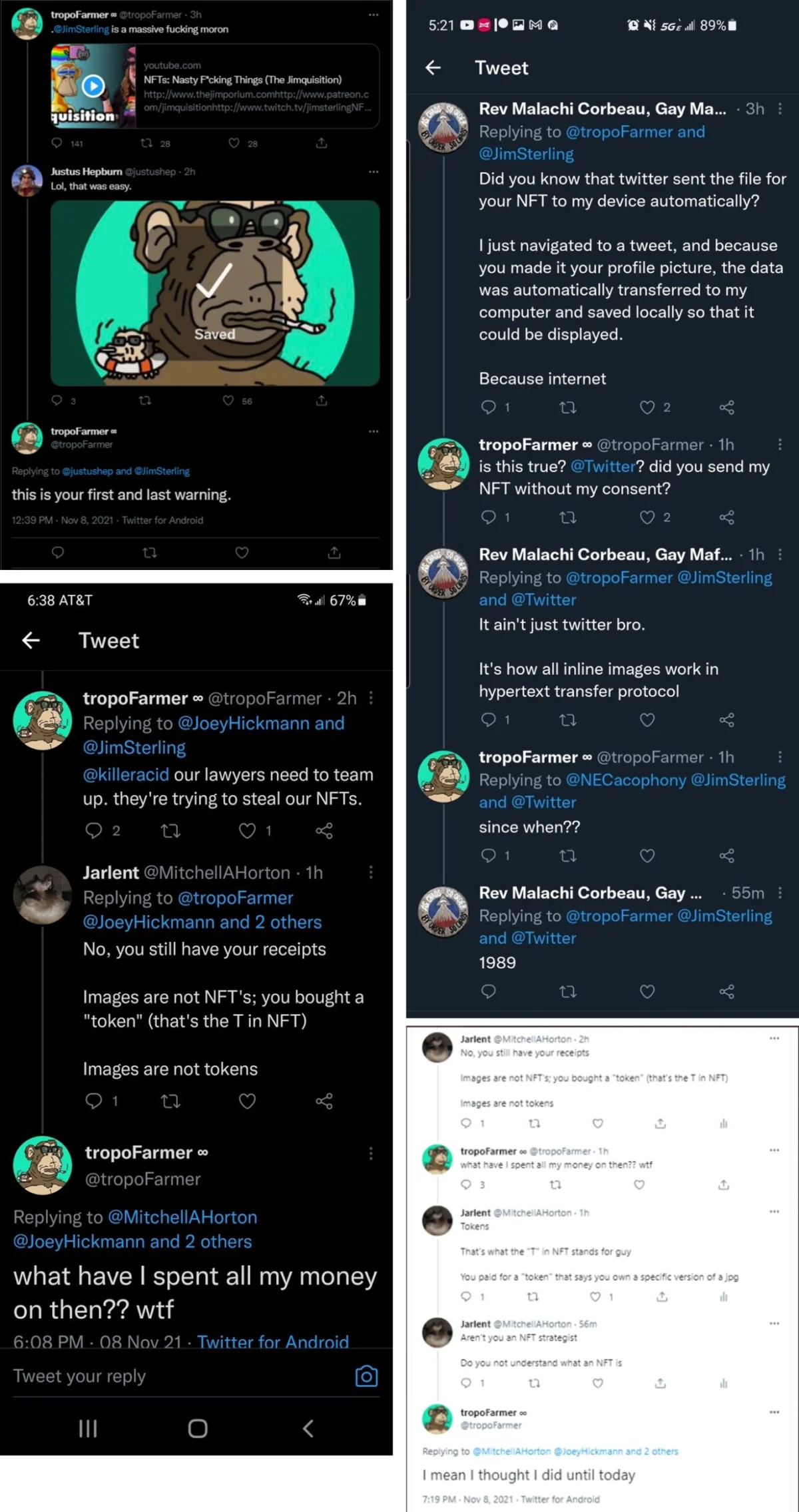
NFTs are marketed as digital deeds of ownership. However, the legal reality is far murkier. Ownership on the blockchain does not inherently grant intellectual property rights or the ability to prevent others from viewing or copying the digital file.
In the gaming sector, the promise of "interoperability"—taking a "purple lightsaber" NFT from one game into another—is a technical and commercial fallacy. Developers face immense hurdles in asset integration:
- Technical Constraints: Every game has a unique art style, engine, and animation rig. An item designed for Minecraft cannot simply be "pasted" into Call of Duty.
- Game Balance: Introducing external items with unknown stats can ruin the competitive balance of a game.
- Commercial Disincentives: Game developers operate mini-monopolies. There is little financial incentive for a major studio to allow players to use assets purchased from a competitor, effectively cannibalizing their own microtransaction revenue.
4. Play-to-Earn: The Commodification of Leisure
The P2E model suggests that players should be compensated for the value they add to a game’s ecosystem. While this sounds like an equitable rebalancing of power between labor and capital, it introduces the "Overjustification Effect." Psychological studies show that when people are paid to do something they enjoy, their intrinsic motivation wanes. Play becomes work.
Furthermore, P2E economies often resemble digital "sweatshops." In many cases, wealthy "managers" in developed nations lease NFT assets to "scholars" in developing nations, who grind for hours to earn tokens. This is not a revolution in gaming; it is the outsourcing of digital labor under a new name.
Official Responses and Regulatory Sentiment
The rapid expansion of this bubble has finally caught the attention of global regulators and industry leaders.

- Regulatory Bodies: The U.S. Securities and Exchange Commission (SEC) and the UK’s Financial Conduct Authority (FCA) have issued increasingly stern warnings regarding the "Wild West" nature of crypto-assets. Regulators are moving toward classifying many tokens as securities, which would subject them to rigorous disclosure and anti-fraud requirements.
- The Gaming Industry: The response from established game developers has been polarized. While companies like Ubisoft have attempted to integrate NFTs (meeting significant player backlash), others like Valve (Steam) have banned blockchain-based games entirely, citing the potential for fraud and the lack of oversight.
- Environmental Groups: The massive energy consumption required for "Proof of Work" blockchains (like Bitcoin) has led to official rebukes from environmental agencies and sustainability-focused investors, forcing a pivot toward "Proof of Stake" models.
Implications: The Future of Digital Value
The conflation of these four areas has created a "perfect storm" for promoters, but the long-term viability of the Web 3.0 vision depends on a fundamental "de-coupling."
If cryptocurrencies are to become actual currencies, they must prioritize stability over speculation. If blockchain is to become a foundational technology, it must find applications where it is demonstrably superior to a centralized database—a use case that remains elusive in the consumer space.
For NFTs, the future likely lies not in "digital art" or "gaming swords," but in the tokenization of existing regulatory frameworks—making the tracking of copyrights and titles more efficient within the bounds of the law, rather than outside of it.
The greatest risk remains the "Ponzi-like" structure of many current schemes, where value is derived solely from the arrival of new investors rather than any underlying utility. As the macroeconomic climate shifts and interest rates rise, the "music" of the speculative bubble may soon stop. For those who have conflated technology with value, the realization that they own nothing more than a digital entry on an unenforceable ledger may be a costly lesson in economic history.
In the final analysis, "Web 3.0" may offer significant technological advancements, but they will not be realized until the shysters are purged and the components are evaluated for what they are: tools, not magic beans.