"The Infinite and the Divine": A Masterpiece Revisited in an Annotated and Illustrated Edition
[Image credit: Games Workshop]
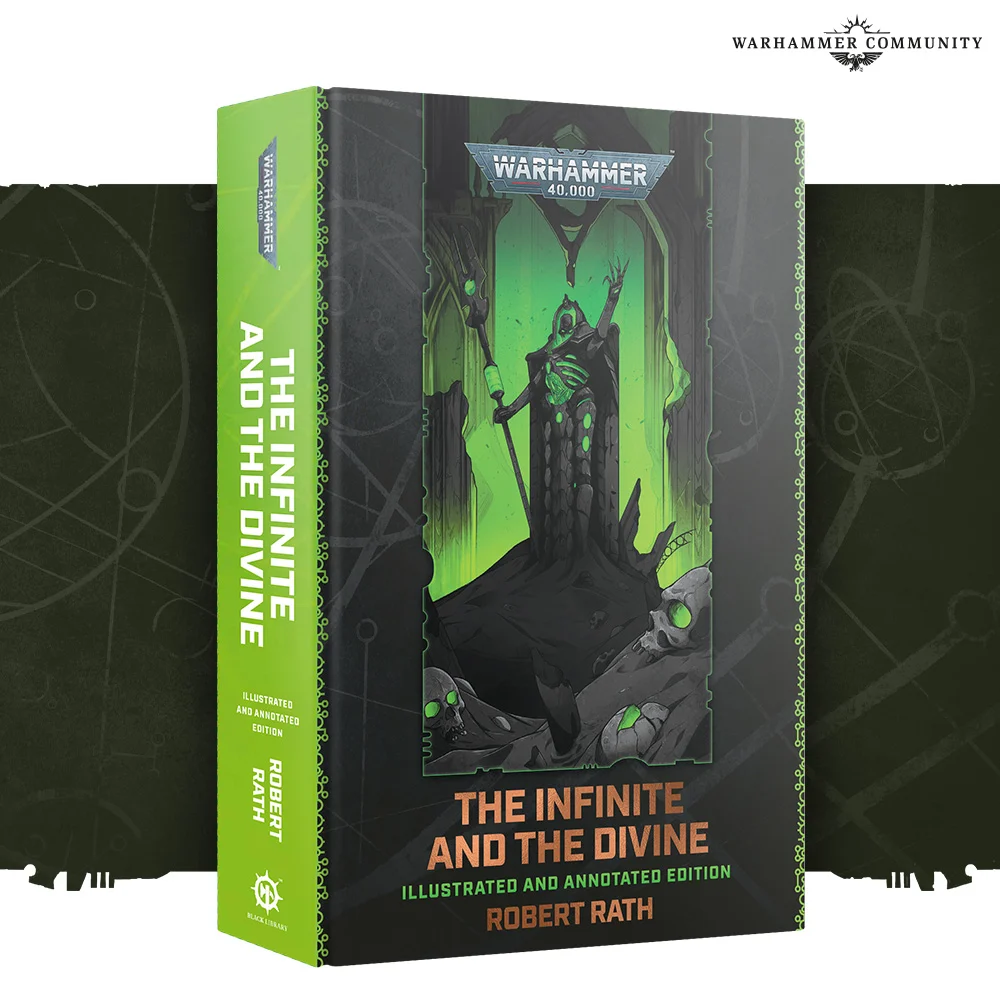
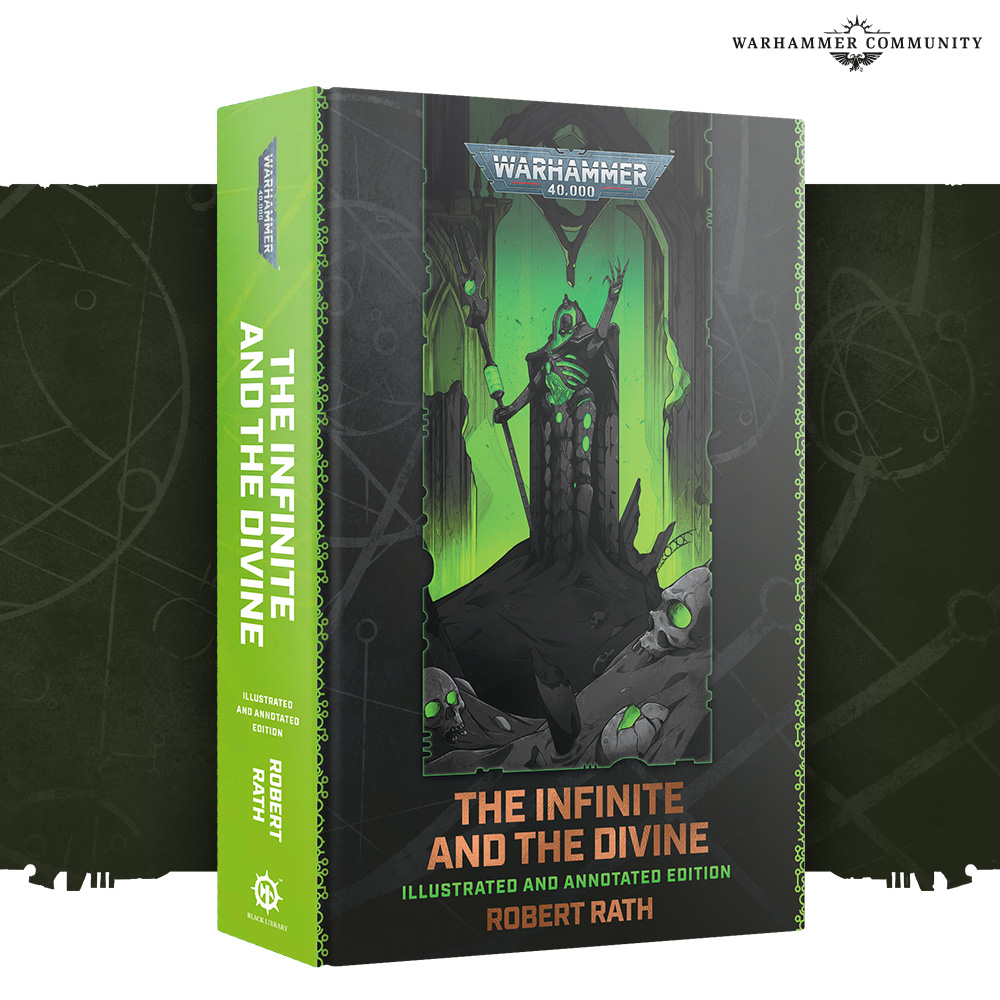
The Warhammer 40,000 universe, renowned for its grimdark aesthetic and ceaseless conflict, periodically yields works that transcend its core tenets, offering unexpected depth, humor, and historical resonance. Robert Rath’s "The Infinite and the Divine" stands as a prime example of such a phenomenon, a novel that not only captivated readers upon its initial release but has now received the esteemed treatment of an Annotated and Illustrated Edition. This special release from Black Library not only celebrates the book’s enduring legacy but also offers an unprecedented glimpse into its creation, artistic interpretation, and profound impact on the Warhammer literary landscape.
Main Facts: A Timeless Rivalry Immortalized
At its heart, "The Infinite and the Divine" chronicles the millennia-spanning, often petty, but always entertaining rivalry between two iconic Necron lords: Trazyn the Infinite and Orikan the Diviner. Trazyn, the esteemed Arch-Collectivist of Solemnace, is a hoarder of galactic history, his vast museum a testament to countless civilizations, unique artifacts, and even stasis-locked living specimens. His counterpart, Orikan, is a chronomancer of unparalleled skill, driven by an almost messianic zeal to shed his metallic form and ascend to a being of pure temporal energy. Their clash ignites when Orikan infiltrates Trazyn’s hallowed halls to steal the Astrarium Mysterios, a cryptic puzzle box that serves as both map and key to the tomb of Phaeron Nephreth the Untouched, a legendary figure from the Necrontyr’s biological past.
What ensues is a cosmic game of one-upmanship, a "Tom & Jerry" or "Spy vs. Spy" dynamic played out over epochs and across the stars. Yet, beneath the surface of this comedic feud lies a serious narrative, one that explores the nature of immortality, the weight of history, and the often-unforeseen consequences of ancient grudges. Rath masterfully weaves comedy and drama, delivering a story that is both genuinely hilarious and deeply contemplative.
The novel’s critical acclaim has been widespread, cementing its status as a modern classic within the Black Library canon. Its unique blend of character-driven humor, intricate lore exploration, and a refreshing perspective on the Necron faction has resonated deeply with both long-time Warhammer enthusiasts and new readers alike. The decision by Black Library to produce an Annotated and Illustrated Edition speaks volumes about the book’s perceived importance and its lasting impact.
Chronology: Robert Rath’s Ascendance and the Evolution of Special Editions
Robert Rath’s journey into the hallowed halls of Black Library is a compelling narrative in itself, a testament to talent, persistence, and the willingness of a publisher to take a chance on fresh voices. His arrival in the Warhammer literary stable was relatively recent, marked by his debut in 2018 with "The Garden of Mortal Delights," a story set within the Age of Sigmar. This initial foray, surprisingly, remains his sole contribution to that fantasy setting, though he would briefly touch upon the world of Blood Bowl with "The Freelancer" the following year.
The pivotal moment arrived when Black Library editors approached him to contribute to the 2019 Advent Calendar. This opportunity saw Rath pivot to the grim darkness of the 41st millennium, penning the first of his acclaimed Officio Assassinorum stories, a series that would eventually culminate in the 2022 novel "Assassinorum: Kingmaker." With a firm foothold established in the iconic Warhammer 40,000 universe, Rath’s trajectory was set.
It was on the strength of this early, impactful work that Rath was greenlit for a full-length novel. Rather than resting on the laurels of his established Assassinorum tales, he bravely leaned into a different corner of the 40K galaxy, choosing to explore the ancient, enigmatic Necrons. The result was "The Infinite and the Divine," a novel that defied expectations and showcased Rath’s versatile storytelling prowess. It demonstrated that even the most stoic and ancient of Warhammer factions could be imbued with personality, humor, and relatable flaws.
Concurrently, the format of the Annotated and Illustrated Editions has its own intriguing chronology. The concept was initially launched with Dan Abnett’s "Xenos," the first book in his beloved Eisenhorn series. However, after this inaugural release, a considerable hiatus of nearly three years followed, leaving fans to wonder if the format would ever be revived. Its eventual return, marked by subsequent releases such as Chris Wraight’s "Lords of Silence" and Sandy Mitchell’s "For the Emperor," signaled a renewed commitment from Black Library. The accelerating pace of these releases – from one in late 2024, to two in 2025, and a projected three in the current year – underscores the format’s growing popularity and commercial success. "The Infinite and the Divine" now joins this esteemed collection, solidifying its place not just as a standalone masterpiece, but as a cornerstone in Black Library’s premium offerings.
Supporting Data: The Pillars of Rath’s Narrative Brilliance and the Special Edition’s Value
The enduring appeal of "The Infinite and the Divine" can be attributed to three distinct, yet intrinsically linked, elements that Robert Rath expertly weaves throughout its narrative. These elements are not only crucial to the book’s original success but are further illuminated and celebrated in the Annotated and Illustrated Edition.
The Nuance of Comedy in a Grimdark Setting
One of the novel’s most remarkable achievements is its ability to infuse genuine humor into the inherently bleak Warhammer 40,000 universe without undermining its grimdark foundations. Rath executes a brilliant narrative trick: the story itself remains serious, fraught with ancient perils and cosmic stakes, but the interactions and perspectives of its protagonists provide moments of uproarious comedy. The incessant banter between Trazyn and Orikan often resembles that of two clever, bickering schoolboys, each vying for supremacy and attempting to land the other in trouble.
Rath himself articulated this unique approach in the afterword of the 2024 Special Edition: "A lot of people have asked how this book manages to make one of the darkest universes imaginable into a comedy… and the answer is really very simple. Comedy flows from character, and while the galaxy isn’t funny, Trazyn’s perspective on it is. Like an entomologist watching two anthills at war, he’s fascinated by the process, but not emotionally invested in the winner." This insight is key to understanding why the humor lands so effectively; it’s born from the characters’ distinct personalities and their ancient, detached viewpoints, rather than forced levity.
A standout example of this comedic brilliance, offered by the original review, involves Trazyn temporarily possessing a lesser Necron soldier under Orikan’s command. His deliberate slowness and feigned stupidity are perfectly calibrated to trigger Orikan’s intellectual snobbery and burgeoning exasperation. This scene’s hilarity is entirely dependent on Rath’s prior meticulous work in establishing Orikan’s arrogance and Trazyn’s cunning, demonstrating how character depth is paramount to effective comedy.
Exceptional Character Work and Narrative Depth
The effectiveness of the humor is inextricably linked to Rath’s superb writing and profound character work. Trazyn and Orikan emerge not merely as archetypes but as fully three-dimensional beings, despite their metallic shells and millennia of existence. Their strengths, weaknesses, virtues, and foibles are richly rendered, making them incredibly compelling. Readers gain a deep sense of their motivations, their shared history, and the complex love-hate dynamic that defines their rivalry. Rath delves into their individual obsessions—Trazyn’s insatiable drive to collect and preserve, Orikan’s relentless pursuit of ultimate temporal power—and uses these as catalysts for both conflict and, eventually, grudging cooperation. This depth transforms what could have been a simple escapade into a nuanced exploration of ambition and identity.
A Historian’s Eye: Weaving Epochal Narratives
Perhaps the most underrated, yet profoundly impactful, element of Rath’s writing is his keen sense of history. As the Head Writer for "Extra History," a YouTube series with millions of subscribers, Rath brings a scholar’s appreciation for the sweep and flow of historical narratives to his fiction. He once stated, "I’ll go anywhere and do anything to get the story," a philosophy that clearly permeates his approach to world-building and character motivation.
Rath recognized that Warhammer 40,000, much like Tolkien’s Middle-Earth or Herbert’s Dune, possesses a timeline stretching back millions of years. This epic scale, viewed through the "oculars of immortal beings" like the Necrons, was a major draw for him. The novel primarily unfolds on the world of Serenade, which acts as a microcosm of the twisted galaxy. Over the course of the book, readers witness history in motion: the subtle foreshadowing of future events through environmental details (eels preceding their fossils), and the cyclical nature of civilizations (Aeldari Exodite remnants giving way to Human settlements). Rath eloquently summarizes this historical perspective: "Civilisations, after all, always build on the dead." This deep understanding of historical processes enriches the narrative, providing a sense of gravitas and authenticity to the Necrons’ ancient existence.
The Annotated and Illustrated Edition: A Deeper Dive
The special edition significantly enhances the reading experience through two key additions:
-
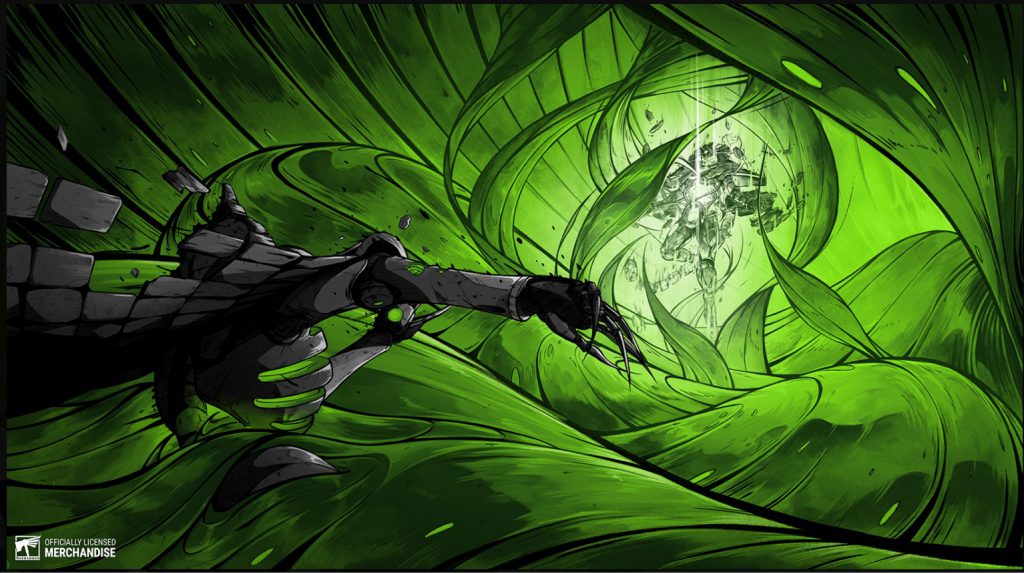
Illustrations by Erin H. Rea: The "Illustrated" aspect of the edition is brought to life by freelance illustrator Erin H. Rea. Her work for "The Infinite and the Divine" is a masterclass in evocative imagery. Her dark palette, suffused with an almost sinister emerald hue—a color synonymous with the Necrons’ energy and warpstone—perfectly captures the eerie, ancient atmosphere of the novel. Her art possesses a haunting pensiveness, a deliberate contrast to the more kinetic, action-oriented visuals often associated with Warhammer. Given the novel’s vast timeline and focus on ancient beings, Rea’s artistic choices demonstrate a profound understanding of the source material. Her background as an illustrator for Cubicle 7 Games’ Warhammer role-playing lines further attests to her deep familiarity with the franchise.
-
Robert Rath’s Extensive Annotations: Rath’s 242 annotations far exceed those found in previous Annotated Editions, suggesting a historian’s drive for a complete record. These insights offer invaluable context, nuance, and understanding to the text. They range from:
- Insights into the Creative Process: Rath candidly discusses working with editors, revealing how his initial concept for a galaxy-spanning scavenger hunt was transformed by his editor, Will Moss, into the more focused, time-spanning narrative on a single world. This anecdote, highlighted in annotation 97, is a crucial lesson for aspiring writers about the value of collaborative editing.
- Writing Craft and Technique: Annotations offer practical advice, such as the importance of establishing geographical context in action scenes.
- Historical and Lore Context: Rath provides deeper historical insights, often drawing parallels to real-world historical concepts, and expanding on Warhammer lore.
- Fan Engagement and Feedback: He occasionally references reader feedback, demonstrating an awareness of the community’s reception and interpretations.
- Unexpected Inspirations: A fascinating tidbit reveals how a factory defect in a particular miniature influenced his conception of a character, showcasing the often-unpredictable sources of creative inspiration.
These annotations transform the reading experience, turning the book into an interactive masterclass on storytelling, world-building, and the intricacies of bringing a complex universe to life.
Official Responses: A Publisher’s Endorsement
While direct quotes from Games Workshop or Black Library executives are not always public, the very existence and continued expansion of the Annotated and Illustrated Editions series, coupled with the selection of "The Infinite and the Divine," serves as a powerful official endorsement.
Black Library’s decision to greenlight Rath’s first 40K novel, especially one that veered into comedic territory with a notoriously grim faction like the Necrons, was a significant act of faith. The resounding success of the book, both critically and commercially, validated this trust. The continued investment in the Annotated and Illustrated format, evolving from a tentative initial release to a regular fixture in their publication schedule, clearly indicates that Black Library views these editions as a valuable and popular offering. They are a premium product designed for dedicated fans who seek a deeper engagement with their favorite stories and authors.
The widespread positive reception from critics and the Warhammer community, evident in countless reviews and discussions, acts as a collective "official response" from the readership. This enthusiastic feedback undoubtedly reinforces Black Library’s commitment to both Robert Rath’s work and the special edition format. It signals that there is a strong market for nuanced storytelling within the Warhammer universe, and for supplementary content that enriches the understanding of beloved texts.
Implications: Shaping the Future of Warhammer Literature
The success of "The Infinite and the Divine" and its celebrated Annotated and Illustrated Edition carries significant implications for various facets of the Warhammer literary ecosystem.
For Black Library and Warhammer Lore: Diversification and Depth
The novel’s unique blend of humor, character depth, and historical perspective has demonstrated that the Warhammer 40,000 universe is far more elastic than previously imagined. It has broadened the permissible tonal range for future Black Library publications, potentially encouraging more authors to explore different narrative styles beyond unrelenting grimdark. This diversification can only enrich the lore, allowing for a wider array of stories and perspectives. By showcasing the Necrons in such a dynamic and relatable light, Rath has undeniably deepened the understanding and appreciation for this ancient faction, proving that even seemingly monolithic entities can harbor complex personalities and compelling internal conflicts.
For Robert Rath: A Confirmed Master Storyteller
For Robert Rath, "The Infinite and the Divine" has solidified his position as one of Black Library’s preeminent authors. His ability to deliver a critically acclaimed debut novel that defied expectations, followed by its re-release in such a prestigious format, marks him as a master storyteller capable of both compelling narratives and profound meta-commentary on his own craft. This success will undoubtedly grant him greater creative latitude and influence over future projects, allowing him to continue pushing the boundaries of Warhammer fiction. He is now seen not just as a contributor, but as an innovator within the Black Library stable.
For Readers and the Warhammer Community: Enhanced Engagement and Appreciation
For the legions of Warhammer readers, the Annotated and Illustrated Edition offers an unparalleled level of engagement. It transforms a beloved novel into an educational tool, providing insights into the creative process that are rarely shared. This deeper understanding fosters a greater appreciation for the author’s craft, the editor’s role, and the intricate layers of world-building. The annotations spark further discussions within the community, encouraging fans to revisit the text with new eyes and to delve into the nuances they might have missed on a first read-through. This format serves as a testament to the value of literature beyond mere plot, highlighting the journey of creation itself.
The unlikely success story of both Rath’s first novel for Black Library and the Annotated and Illustrated format converging in this special edition is a fitting narrative in itself. It underscores a willingness by both author and publisher to take chances, to innovate, and to ultimately deliver a product that resonates deeply with a dedicated and discerning audience. "The Infinite and the Divine" is not just a book; it is a landmark, now presented in a format that ensures its legacy will continue to enlighten and entertain for years to come.