Empowering Vision: Meta Pledges Free Smart Glasses to 130,000 Legally Blind U.S. Veterans

In an unprecedented intersection of wearable technology and corporate social responsibility, Meta has announced a landmark initiative to provide free Ray-Ban Meta smart glasses to every legally blind veteran in the United States. With an estimated 130,000 veterans eligible for the program, the move represents one of the largest deployments of assistive AI technology in history. This initiative, launched in collaboration with the Blinded Veterans Association (BVA) and the non-profit TechSoup, aims to bridge the gap between cutting-edge augmented reality and the practical, daily needs of the visually impaired community.
The program is not merely a hardware giveaway; it is a comprehensive support ecosystem designed to ensure that recipients can effectively integrate the technology into their lives. By providing hands-on training and specialized AI features, Meta is positioning its smart glasses as more than a lifestyle accessory—transforming them into a vital tool for autonomy and spatial awareness.
Main Facts of the Initiative
The core of the announcement lies in the scale and the specificity of the rollout. Meta has committed to offering the latest iteration of its Ray-Ban Meta smart glasses to a population that has historically faced significant barriers to digital inclusion.
Scope and Eligibility
According to Meta’s official statements, every veteran in the U.S. who is documented as legally blind is eligible to receive a pair of the smart glasses at no cost. The current estimate of 130,000 eligible individuals underscores the magnitude of the commitment. These veterans can apply for their devices through a dedicated portal hosted by the Blinded Veterans Association.
The Support Infrastructure
Recognizing that sophisticated technology can have a steep learning curve, especially for those with sensory impairments, Meta is partnering with TechSoup and the BVA to provide:
- Hands-on Training: Personalized sessions for every recipient to ensure they understand the interface and safety protocols.
- Educational Resources: A comprehensive training guide tailored for the visually impaired.
- Ongoing Engagement: Monthly webinars and a series of in-person events scheduled "across the country" to foster a community of users and provide troubleshooting support.
Technological Capabilities
The glasses provided are equipped with Meta AI, a multimodal artificial intelligence system capable of processing visual data through the device’s built-in camera. For a blind user, this means the glasses can:

- Identify everyday objects and obstacles.
- Read text from signs, menus, or mail.
- Provide descriptive narrations of the user’s surroundings.
- Facilitate video calls where a sighted person can see through the wearer’s "eyes" to provide real-time assistance.
Chronology: From Concept to National Rollout
The journey toward this massive donation program began with the evolution of Meta’s smart glasses from a niche photography tool to a sophisticated AI-driven platform.
The Catalyst: Don Overton’s Advocacy
The initiative was heavily championed by Don Overton, a U.S. Army veteran who lost his eyesight during the Gulf War. Overton, who has been a vocal advocate for veterans’ rights and accessibility, began testing the Ray-Ban Meta glasses and found that the AI’s ability to describe the world was transformative. He reported that the technology gave him his "independence back," allowing him to navigate environments that were previously challenging. His feedback was instrumental in convincing Meta leadership that the glasses had profound utility as an assistive device.
Technological Milestones
In late 2023, Meta took a significant step toward this goal by introducing the "Detailed Responses" accessibility option. This software update was a turning point, as it shifted Meta AI from providing brief answers to offering verbose, descriptive accounts of visual queries. Following this, Meta established a partnership with Be My Eyes, a popular app that connects blind individuals with sighted volunteers. This integration allowed users to initiate video calls directly from the glasses, making the assistance "hands-free"—a critical requirement for those who use canes or service dogs.
The Official Launch
The program officially moved from the testing phase to a full-scale national rollout this month. By aligning with the BVA and TechSoup, Meta secured the logistical backbone necessary to handle the distribution and training for tens of thousands of veterans simultaneously.
Supporting Data and Technical Specifications
To understand the impact of this donation, one must look at the specifications of the Ray-Ban Meta glasses and the data surrounding visual impairment in the veteran community.
Hardware Specifications
The Ray-Ban Meta glasses are designed to be indistinguishable from standard eyewear, which reduces the stigma often associated with bulky assistive devices.
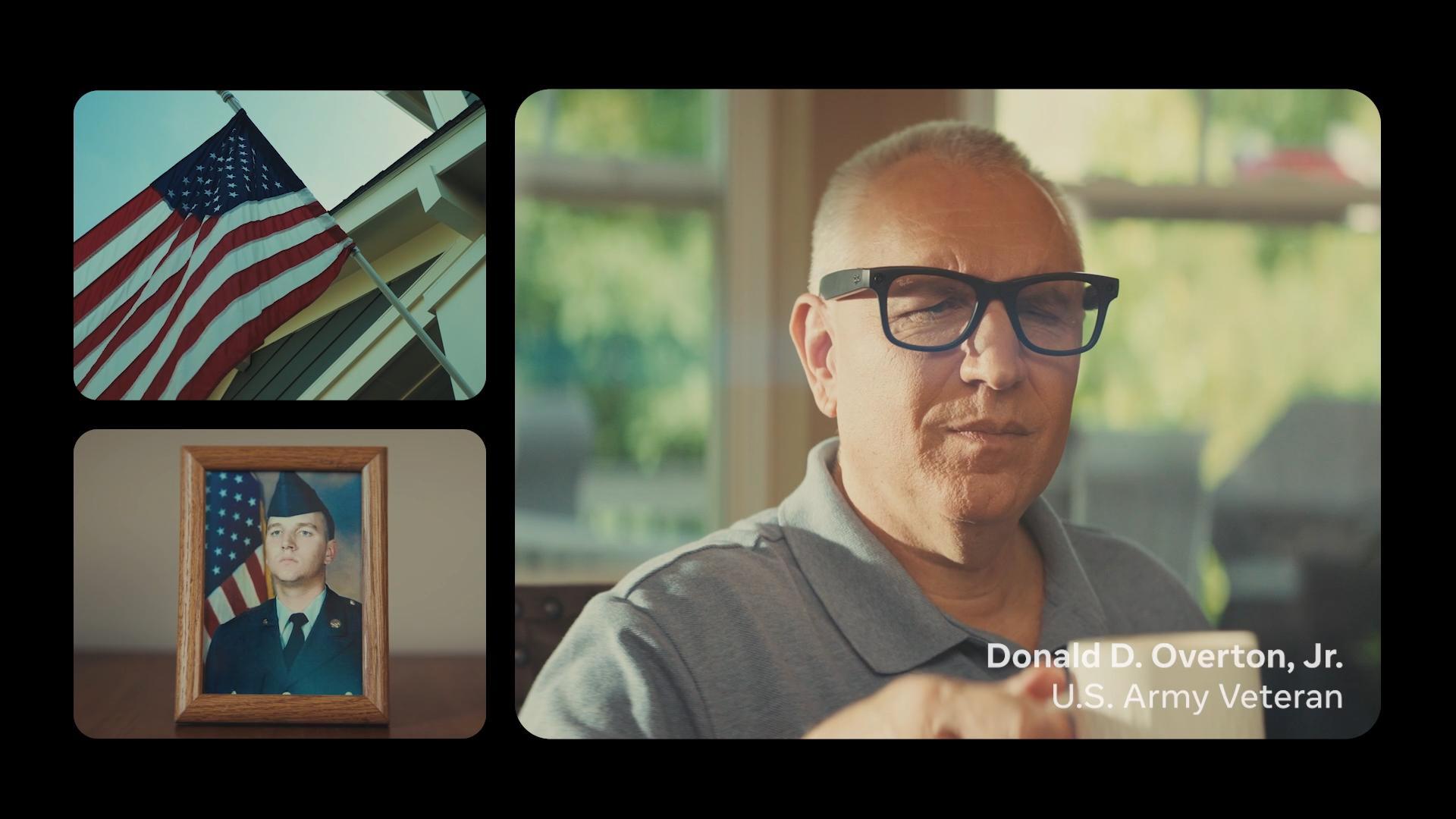
- Camera: 12MP ultra-wide camera for high-resolution image capture for AI processing.
- Audio: Custom-built speakers and a five-microphone array for clear voice commands and audio feedback.
- Processing: Powered by the Qualcomm Snapdragon AR1 Gen 1 Platform, optimized for on-device AI efficiency.
The AI Engine: Meta AI with Llama
The glasses utilize a specialized version of Meta’s Large Language Model (LLM) technology. When a user asks, "Hey Meta, look and tell me what’s in front of me," the glasses capture a still image and send it to the cloud, where the AI analyzes the pixels and generates a natural-language description. The "Detailed Responses" mode specifically instructs the model to prioritize spatial relationships and identifying features that are useful for navigation.
The Be My Eyes Network
The partnership with Be My Eyes adds a layer of human redundancy. The service boasts over 8 million volunteers globally. For a veteran using the smart glasses, the ability to tap into this network means that in complex situations where AI might struggle—such as navigating a busy airport or identifying a specific medication—they have immediate access to human intelligence.
Official Responses and Corporate Philosophy
The leadership at Meta has framed this initiative as a fulfillment of the company’s broader mission to "build for everyone."
Andrew Bosworth, Meta CTO
In a prepared statement, Andrew Bosworth emphasized the debt of gratitude owed to the veteran community. “These veterans sacrificed their sight in service to our country. Giving them technology that can meaningfully navigate the world around them is a profound honor for us and underscores the importance of why we build,” Bosworth stated. His comments reflect a shift in Meta’s public-facing narrative, moving toward the "utility" of AI rather than just its entertainment or social media value.
The Blinded Veterans Association (BVA)
Representatives from the BVA have hailed the program as a "game-changer" for veteran rehabilitation. The association noted that for many older veterans, who may struggle with the interface of a smartphone, the voice-activated, head-worn nature of the smart glasses provides a much more intuitive entry point into assistive technology.
Implications and Ethical Considerations
While the donation is a significant philanthropic gesture, it also raises important questions regarding the future of AI in the public sector and the ethical responsibilities of tech giants.

The "Hallucination" Risk
Meta’s own terms of service warn that the LLM technology powering Meta AI is prone to "hallucinations"—generating confident but incorrect information. In a journalistic context, it is vital to note that while these glasses provide independence, they are not yet foolproof. Meta has been careful to instruct users not to rely on the glasses for "safety-critical tasks," such as crossing a busy intersection or identifying dangerous substances. The training provided by TechSoup and the BVA will be essential in teaching veterans how to cross-reference AI descriptions with their other senses.
Data Privacy and Surveillance
As with any camera-equipped wearable, privacy remains a talking point. Meta has implemented a prominent LED light that shines when the camera is active to alert bystanders. However, for the visually impaired user, the primary concern is data security—ensuring that the visual data processed by the AI remains private and is not used for advertising purposes. Meta has stated that the images processed for AI descriptions are handled with strict privacy protocols, though the data is used to improve the models over time.
The Democratization of Assistive Tech
Historically, specialized assistive devices for the blind have cost thousands of dollars, often making them inaccessible to those on fixed incomes. By repurposing a consumer product like the Ray-Ban Meta glasses—which retail for approximately $299—into an assistive tool, Meta is effectively democratizing access to high-end technology. This could set a precedent for other tech companies to look at their consumer hardware through the lens of accessibility.
Future Outlook
This program serves as a massive pilot for the future of Augmented Reality (AR). By monitoring how 130,000 users interact with the AI in diverse, real-world environments, Meta will gain invaluable data that will likely influence the development of its future "Orion" AR glasses. For the veterans, however, the implications are more immediate: the ability to read a daughter’s birthday card, identify a landmark on a walk, or simply navigate a grocery store without assistance.
The initiative marks a significant moment where corporate capability meets a specific, underserved societal need. As these 130,000 veterans receive their devices and begin their training, the success of the program will likely be measured not in units shipped, but in the stories of regained autonomy that follow.
Legally blind U.S. veterans interested in the program are encouraged to visit bva.org/glasses to begin the application process.