The Architecture of Self-Sabotage: Why We Secretly Choose Misery
Main Facts: The Hidden Economy of Self-Destruction
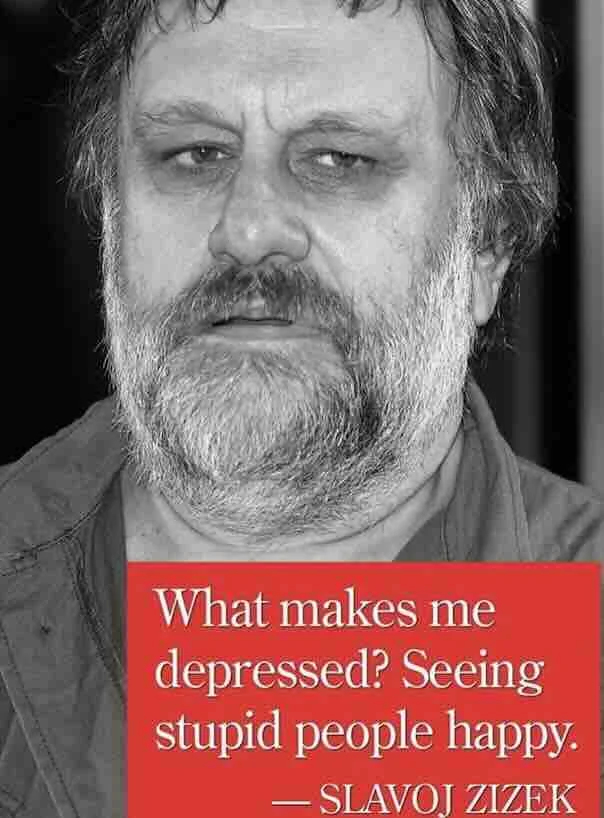
In the realm of modern self-help, the prevailing narrative suggests that human beings are fundamentally rational actors striving toward self-actualization. When we fail, we are told it is due to a lack of willpower, external obstacles, or a "delay" in our journey toward our best selves. However, a growing body of philosophical and psychoanalytic thought, spearheaded by the Slovenian philosopher Slavoj Žižek, argues that this perspective is fundamentally flawed.
The core fact of self-sabotage, according to Žižek, is that it is rarely accidental. Instead, human beings are often "quietly invested" in staying stuck. We do not just fail to reach our goals; we actively—though unconsciously—collaborate in our own stagnation. This is not a malfunction of the mind but a feature of it.
Central to this understanding is the concept of jouissance—a French term used in Lacanian psychoanalysis to describe a "painful pleasure" or an "ugly thrill." While we claim to want happiness, we often derive a deeper, more consistent satisfaction from our symptoms, our martyrdom, and our recurring failures. Whether it is the "pleasure" of moral outrage, the addictive cycle of doomscrolling, or the secret importance felt through being overworked, self-sabotage persists because it provides an emotional "kickback" that a healthy, stable life often lacks.
Chronology: From the "Elvis of Philosophy" to the Critique of the Self
To understand how these concepts entered the mainstream discourse on productivity and mental health, one must trace the intellectual trajectory of Slavoj Žižek and the evolution of his critique of the "authentic self."
- 1989: The Breakthrough. With the publication of The Sublime Object of Ideology, Žižek bridged the gap between Hegelian philosophy, Lacanian psychoanalysis, and Marxist critique. He began challenging the notion that we are "transparent" to ourselves, arguing instead that our identities are built around a central void.
- The 1990s: The Rise of the Provocateur. Žižek gained international notoriety for using pop culture—from Alfred Hitchcock to Starbucks—to explain complex psychological states. He began articulating why people resist liberation, focusing on how we are "attached to our chains."
- The 2000s: The Critique of "Enjoyment." During this period, Žižek refined his theory on the "Superego of Enjoyment." He argued that the transition from a traditional society (which commanded "Thou shalt not") to a consumerist society (which commands "Thou shalt enjoy") has created a new, more oppressive form of anxiety.
- Present Day: The Digital Interpassivity. In recent years, his focus has shifted to how digital tools allow us to "outsource" our lives. His concepts of "pseudoactivity" and "interpassivity" have become essential frameworks for understanding why we feel exhausted despite accomplishing very little in the digital workspace.
Supporting Data: The Mechanics of Stagnation
Žižek’s framework identifies five distinct mechanisms through which we sabotage our progress. These concepts provide a psychological map of why "knowing better" is rarely enough to "do better."
1. Pseudoactivity: The Illusion of Progress
In a professional context, self-sabotage often masquerades as extreme business. Žižek defines "pseudoactivity" as the act of remaining in constant motion to ensure that no real change occurs. This is the executive who clears 200 emails but avoids the one difficult phone call that would actually advance their career. It is the "productivity addict" who downloads five new apps to manage their time, effectively using the tools of organization as a defense against the act of working.
2. The Ontological Void vs. The "True Self"
The modern "authenticity" movement suggests there is a pure, "core" version of every individual waiting to be discovered. Žižek argues this is a commercially successful fairy tale. In reality, the human subject is a "mess of drives, roles, and fantasies." Self-sabotage often arises from the paralysis of waiting for "inner certainty" before taking action. By treating every choice as an "existential referendum" on who they "really" are, individuals avoid the messy, experimental business of actually building a life through action.
3. The Superego of Enjoyment
In previous generations, leisure was a simple absence of work. Today, leisure has become a performance. Žižek notes that we are now under a "command to enjoy." We must have fulfilling weekends, restorative hobbies, and Instagram-worthy experiences. This turns pleasure into a "performance review." When we fail to feel sufficiently "restored" or "happy," we view it as a personal failure, leading to a cycle of self-sabotaging stress during the very times we are supposed to be relaxing.
4. The Trap of False Hope and Resilience
Perhaps his most controversial data point is the critique of resilience. While resilience is generally viewed as a virtue, Žižek suggests it can be a form of self-sabotage. By being "too resilient," individuals train themselves to withstand intolerable conditions—such as abusive workplaces or dead-end relationships—under the "false hope" that things will eventually improve. In this context, optimism acts as an anesthesia that prevents the necessary "explosion" required for genuine change.
5. Interpassivity: Outsourcing the Experience
Digital life has introduced "interpassivity," where we collect the signs of a life rather than living one. We "bookmark" articles we will never read, "like" workout videos we will never perform, and add movies to a "watchlist" that serves as a proxy for the act of watching. This allows us to feel the satisfaction of the achievement without the effort, effectively sabotaging our actual growth by substituting it with a digital receipt.
Official Responses: Academic and Public Reception
The reception of Žižek’s theories on self-sabotage and the human condition is deeply polarized, reflecting his status as a "celebrity philosopher."
The Academic Critique:
Mainstream cognitive-behavioral psychologists often find Žižek’s approach too abstract. Critics like Noam Chomsky have dismissed his work as "posturing," arguing that his reliance on psychoanalytic terms like jouissance lacks empirical rigor. They argue that self-sabotage is better explained through "loss aversion" or "executive function deficits" rather than deep-seated unconscious desires for misery.
The Cultural Impact:
Conversely, cultural critics and sociologists argue that Žižek’s "impolite" observations are more accurate to the human experience than sanitized clinical data. His fans argue that he is the only thinker willing to address the "madness" of modern life—the fact that we often don’t want what we say we want.
The Clinical Perspective:
Some psychoanalysts have integrated Žižekian thought into therapy, helping patients identify the "hidden rewards" of their depression or anxiety. This "tough love" approach focuses on the painful honesty of admitting that one might love their own drama more than they love the prospect of a quiet, stable life.
Implications: Moving Beyond the Fantasy
The implications of accepting a Žižekian view of self-sabotage are profound, requiring a total shift in how we approach personal development and mental health.
1. The End of the "Authenticity" Search:
If there is no "true self" to find, the pressure to "discover" oneself vanishes. The implication is that we must "build" ourselves through external commitments rather than internal excavation. This shifts the focus from "Who am I?" to "What will I do?"
2. Acceptance of the "Fire":
The most immediate implication for those in stagnant situations is the need to abandon "anesthetic optimism." If a situation is "bad," calling it "challenging" or a "growth opportunity" is a form of self-sabotage. Real change only becomes possible when the individual admits the situation is intolerable and stops trying to be "resilient" in the face of it.
3. From Interpassivity to Participation:
To combat the digital outsourcing of life, individuals must move from "collecting" to "doing." This requires a move away from the "watchlist" culture. Reading one page of a physical book is, in this framework, infinitely more valuable than bookmarking a hundred digital essays.
4. Dismantling the Fantasy:
Finally, we must recognize that fantasy is not a harmless escape; it is a standard that makes reality seem defective. By realizing that "actual" relationships and "actual" jobs are always messier and more annoying than their "fantasy" counterparts, we can stop sabotaging the "real" versions we currently possess in favor of a perfection that does not exist.
In conclusion, Slavoj Žižek’s "lunatic brilliance" suggests that the way to stop self-sabotaging is not to try harder or be more positive. It is to look directly at the "greasy emotional satisfaction" we get from our own failure and decide that the "embarrassing business of actually living" is, despite its lack of glamour, a far better alternative.