The Forgotten Revolution: Re-evaluating Sergio Leone’s ‘Duck, You Sucker!’ as a Western Masterpiece
When discussing the pantheon of great Western directors, the name Sergio Leone is often synonymous with the invention of the "Spaghetti Western" and the meteoric rise of Clint Eastwood. His "Man with No Name" trilogy—A Fistful of Dollars, For a Few Dollars More, and The Good, the Bad and the Ugly—redefined the genre’s visual language, replacing the moral clarity of John Ford with a gritty, sun-scorched nihilism. However, as film historians and cinephiles dig deeper into Leone’s limited but potent filmography, a recurring realization emerges: his most emotionally complex and politically resonant work is often his most overlooked.
Duck, You Sucker! (1971), also known by the titles A Fistful of Dynamite and Giù la testa, stands as a bridge between Leone’s stylized Western myths and his final, sprawling gangster epic, Once Upon a Time in America. Despite being the "least-watched" of his Westerns according to modern metrics, it represents the director at the height of his technical powers, offering a cynical yet deeply moving meditation on revolution, friendship, and the cost of history.
Main Facts: A Violent Bromance Amidst the Mexican Revolution
Set against the volatile backdrop of the 1910 Mexican Revolution, Duck, You Sucker! departs from the wandering bounty hunter tropes of Leone’s earlier work. Instead, it presents a "Zapata Western" focused on two diametrically opposed protagonists forced into an uneasy alliance.
The Odd Couple of Mesa Verde
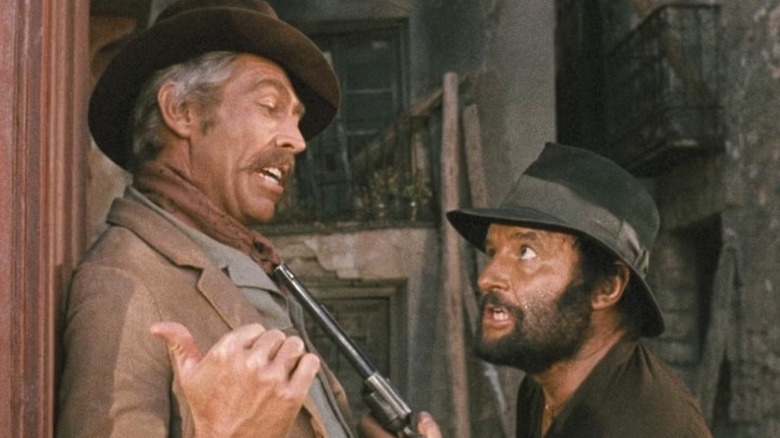
The film stars James Coburn as John (Seán) Mallory, a disgraced Irish Republican Army explosives expert on the run from the British authorities. Clad in a duster and riding a motorcycle, Mallory is a man of science and destruction, wielding dynamite with surgical precision. Opposite him is Rod Steiger as Juan Miranda, a boisterous, cynical Mexican bandit whose only "revolution" is providing for his large family of outlaws.
The plot is ignited when Miranda, recognizing Mallory’s skill with explosives, attempts to blackmail the Irishman into helping him rob the Great Bank of Mesa Verde. However, through a series of accidents and ideological manipulations, the duo finds themselves hailed as heroes of the Mexican Revolution. What begins as a quest for gold transforms into a harrowing journey through the machinery of war, where the line between "bandit" and "patriot" becomes bloodily blurred.
Stylistic Markers
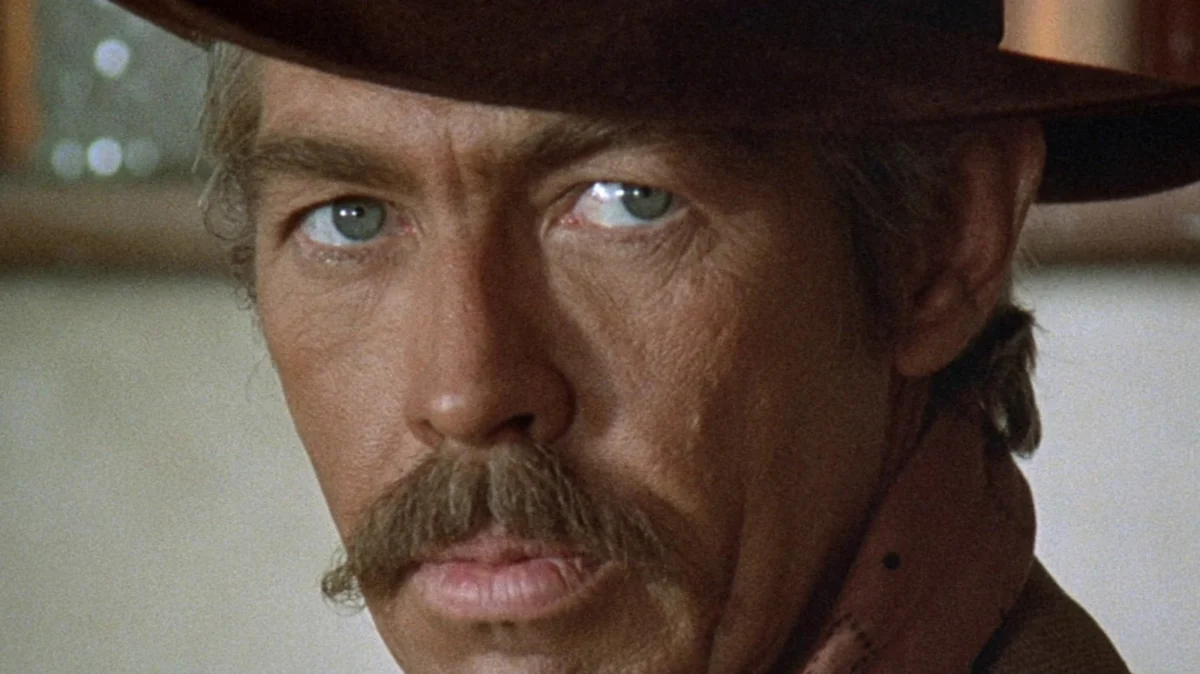
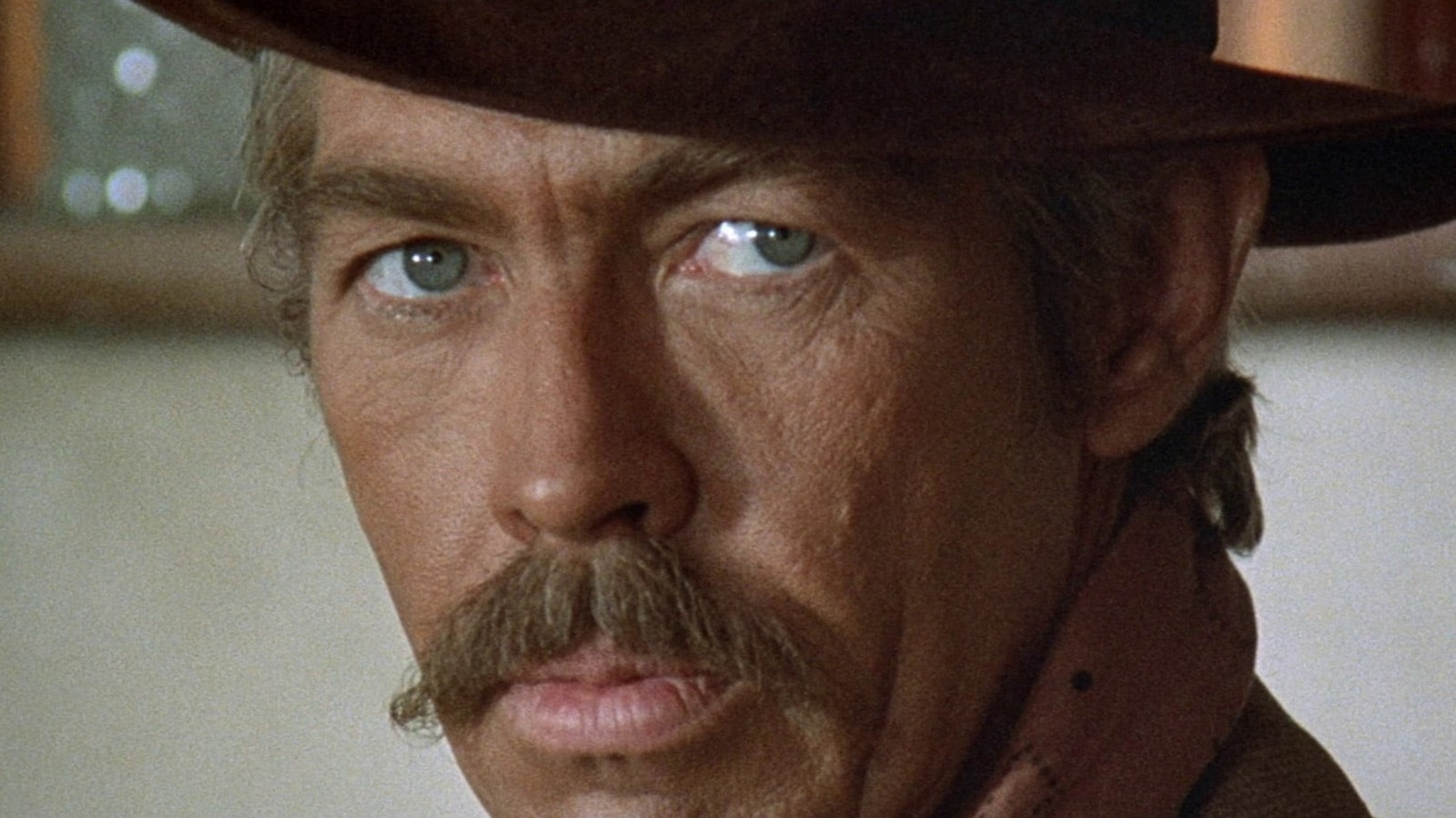
The film carries all the hallmarks of a Leone production: extreme close-ups that map every pore and bead of sweat on the actors’ faces, wide-angle vistas of the Almerían desert (doubling for Mexico), and a haunting, eccentric score by the legendary Ennio Morricone. Yet, Duck, You Sucker! introduces a somber, melancholic tone absent from the "Dollars" trilogy, trading the thrill of the gunfight for the tragic weight of the explosion.
Chronology: Leone’s Transition from Myth to History
To understand the significance of Duck, You Sucker!, one must view it within the timeline of Leone’s evolving career.
- 1964–1966: The Mythic Era. Leone establishes the Spaghetti Western. A Fistful of Dollars (1964) famously plagiarized Akira Kurosawa’s Yojimbo, leading to a successful lawsuit but also birthing the "Man with No Name" archetype. These films were exercises in style and subversion.
- 1968: The Operatic Transition. With Once Upon a Time in the West, Leone moved toward an operatic, slower pace. He began exploring the "Death of the West," focusing on the encroachment of the railroad and civilization.
- 1971: The Political Reality. Duck, You Sucker! was never intended to be directed by Leone. He initially sought Peter Bogdanovich and then Sam Peckinpah to helm the project, intending only to produce. When the stars (Coburn and Steiger) refused to work without Leone in the director’s chair, he took over. This film marked his shift toward explicit political commentary, influenced by the social unrest of the late 1960s in Europe.
- 1984: The Final Elegy. Leone’s career concluded with Once Upon a Time in America, a nearly four-hour epic that abandoned the West entirely for the streets of New York, focusing on memory and the passage of time—themes that were first deeply explored in the flashbacks of Duck, You Sucker!.
Supporting Data: The Metrics of an Underrated Classic
While The Good, the Bad and the Ugly boasts hundreds of thousands of logs on platforms like Letterboxd and IMDb, Duck, You Sucker! remains a niche interest. According to Letterboxd metrics, it is Leone’s least-watched Western, surpassed even by his directorial debut in the "peplum" (sword-and-sandal) genre, The Colossus of Rhodes (1961), in terms of relative obscurity among casual viewers.
Production Anomalies
The film’s lack of initial traction can be attributed to several factors:
- Marketing Identity Crisis: The film was released under three different titles. In Italy, it was Giù la testa ("Keep your head down"). In the US, it was first titled Duck, You Sucker!—a phrase Leone mistakenly believed was a common American idiom. When it failed to perform, it was re-titled A Fistful of Dynamite to capitalize on the "Dollars" brand.
- Running Time: Like much of Leone’s later work, the film suffered from studio-mandated cuts. The original Italian cut ran approximately 157 minutes, while US audiences were often subjected to versions truncated by over 30 minutes, stripping the film of its essential character development and its somber, flashback-driven ending.
Technical Excellence
Despite its lower viewership, the film is a technical marvel. It utilized the Techniscope process to create its signature widescreen look on a budget. Furthermore, Ennio Morricone’s score is considered one of his most experimental, featuring the "Sean-Sean" vocal motif that serves as a rhythmic pulse for the Irishman’s haunted memories.
Official Responses and Critical Reception: A Complicated Legacy
The reception of Duck, You Sucker! has been a journey from confusion to veneration. Upon its release, critics were divided. Some found the shift from the cool detachment of Clint Eastwood to the "spirited" and often loud performances of Steiger and Coburn jarring.
The Problem of Authenticity
A major point of modern and contemporary criticism is the casting of Rod Steiger, a New York-born actor of European descent, as the Mexican Juan Miranda. Clad in "brownface," Steiger’s performance is a relic of an era when Hollywood and European studios prioritized "star power" over cultural accuracy. However, some critics, such as Zach Vasquez of Crooked Marquee, argue that the performances of Steiger and Eli Wallach (who played a similar role in The Good, the Bad and the Ugly) are so emotionally grounded that they transcend the limitations of their casting, providing a soulful look at the disenfranchised peasantry.
The "Auteur" Re-evaluation
In recent decades, directors like Quentin Tarantino have championed the film as a masterpiece. Tarantino has frequently cited Leone as his favorite director, noting that Duck, You Sucker! provides a level of emotional "payoff" that the more cynical "Dollars" trilogy lacks. The film is now recognized for its sophisticated handling of "The Flashback"—a technique Leone used to show the Irish Mallory’s past love triangle and his eventual betrayal of a friend, which mirrors the betrayals happening within the Mexican Revolution.
Implications: The Bridge to Modern Cinema
The legacy of Duck, You Sucker! extends far beyond its box office numbers. It serves as a crucial evolutionary link in the history of the Western.
The Revisionist Western
Leone’s film helped solidify the "Revisionist Western," a movement that questioned the traditional heroism of the American frontier. By setting the film in 1910 and involving machine guns and landmines, Leone signaled the end of the "Old West" and the beginning of modern, mechanized warfare. It suggests that the "hero" is no longer the fastest gun, but the man who can stomach the most collateral damage.
Political Cynicism
The film’s most enduring implication is its cynical view of revolution. John Mallory’s famous monologue about "the people who read books" going to the "people who don’t read books" to tell them things must change—only for the poor to end up dead while the leaders take the credit—remains a potent critique of political idealism. It reflects the disillusionment of the post-1968 European Left, moving Leone’s work from the realm of childhood fantasy into the harsh light of political reality.
Conclusion
Duck, You Sucker! is a film of contradictions: it is a loud, explosive action movie that ends in a whisper of regret. It features broad, sometimes caricatured performances that nevertheless reach depths of genuine pathos. For those who have only seen Leone’s work through the lens of Clint Eastwood’s squint, Duck, You Sucker! offers a necessary, if brutal, expansion of what the Western can be. It is not just a masterpiece that needs more fans; it is the soul of Sergio Leone’s cinematic legacy, finally waiting to be heard over the sound of the dynamite.