The Undying Flame: How Renaissance Magic Reshaped Modernity, According to Ioan P. Couliano
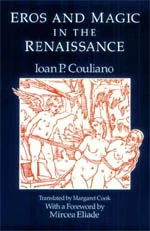
A groundbreaking historical and philosophical work, "Eros and Magic in the Renaissance" by Ioan P. Couliano, challenges prevailing notions about the origins of modern thought, arguing that our contemporary understanding of imagination and desire as purely subjective forces is a radical departure from historical perspectives. Far from a simple academic treatise, Couliano’s work, drawing on his unique background as both scholar and practitioner, asserts that the vibrant, animistic worldview of the Renaissance was systematically dismantled, not by superior reason, but by a puritanical cultural shift, driving "magic" underground where it re-emerged in the guise of modern disciplines like psychology and marketing.
The book serves as a meticulous historical sketch, tracing the profound transition from a Renaissance era brimming with magic, animism, and a sophisticated understanding of the human psyche, to the stark, mechanistic paradigm that would come to define the post-Renaissance world. More than just a historical account, it offers a compelling philosophical inquiry into the very nature of magic and its enduring influence on human perception and societal structures.
Couliano, whose extensive collaboration with the esteemed historian of religions Mircea Eliade undoubtedly informed his approach, brought a rare synthesis of academic rigor and an insider’s perspective to his subject. This dual lens allows "Eros and Magic in the Renaissance" to offer an unparalleled freshness and vitality, exploring dimensions often overlooked by conventional scholarship. The core argument posits that the battle between the magical and mechanistic worldviews was not a clear-cut victory of reason over superstition, but rather a clash between two fundamentally different "mythologies"—two incompatible ways of perceiving and experiencing reality, with the mechanistic view gaining ascendancy due to its congruence with the austere sentiments of the Protestant Reformation.
Main Facts: The Resurgence of Enchantment
Ioan P. Couliano’s seminal work, "Eros and Magic in the Renaissance," directly confronts the modern assumption that imagination and desire are mere internal, subjective states devoid of objective power. The book meticulously reconstructs a Renaissance worldview where these faculties—vis phantastica (imagination) and eros (desire)—were considered potent forces capable of shaping and interacting with reality itself. This perspective, far from being an archaic curiosity, is presented as a sophisticated understanding of the human psyche and its profound connection to the cosmos.
Couliano, an intellectual figure of considerable depth, was uniquely positioned to undertake this exploration. His background as both a serious scholar and, notably, a practitioner of magic, combined with his close association with Mircea Eliade, imbued his research with an authenticity and insight rarely found in academic circles. This blend of perspectives allowed him to bridge the often-impenetrable chasm between historical texts and the lived experience of their subject matter.
The book’s central narrative charts the dramatic shift from the richly enchanted, animistic thought of the Renaissance to the "flat, mechanistic view" that would come to dominate Western thought. This transition, Couliano argues, was not an inevitable triumph of rationality, but a culturally conditioned victory. The author contends that the very mechanisms of influence, persuasion, and symbolic manipulation that characterized Renaissance magic did not vanish but merely transmuted. Under different guises, these practices persist today in the fabric of modern society, finding expression in fields such as psychology, marketing, advertising, and personal development. Couliano invites readers to recognize these contemporary phenomena as the direct, albeit secularized, descendants of an older, more explicitly magical tradition.
Chronology: From Cosmic Sympathy to Mechanical Worlds
The intellectual and cultural landscape of the Renaissance was a complex tapestry woven with threads of classical revival, Neoplatonism, Hermeticism, and nascent scientific inquiry. Couliano meticulously unravels this tapestry, focusing on the evolution and subsequent suppression of an enchanted worldview.
The Renaissance Enchantment: Imagination as a Cosmic Force
The Renaissance witnessed a profound re-engagement with ancient philosophical and magical traditions, leading to a flourishing of ideas that fundamentally challenged the medieval scholastic framework. Central to this intellectual ferment was the belief in vis phantastica and eros as active agents in the universe. Imagination was not merely the capacity to form mental images but was seen as a vital force that could interact with the subtle energies of the cosmos, influencing both the individual and the world around them. Desire, or eros, was understood not just as carnal lust, but as a cosmic principle of attraction and bonding, a force that permeated all levels of reality, from the attraction of planets to the spiritual yearning for divine union.
Leading figures of this era, such as Marsilio Ficino, Pico della Mirandola, and Giordano Bruno, are extensively treated in Couliano’s analysis. Ficino, a pivotal figure in the Florentine Academy, revived Platonic and Neoplatonic thought, translating the Corpus Hermeticum and Plotinus into Latin. He posited a universe permeated by cosmic sympathy, where all parts were interconnected. His theory of spiritus, a subtle ethereal medium between the soul and body, was crucial for understanding how celestial influences could affect human beings and how magic could operate through talismans, music, and images. For Ficino, the imagination could capture and transmit these celestial spiritus, influencing health, mood, and destiny.
Pico della Mirandola, famous for his "Oration on the Dignity of Man," celebrated human potential and the capacity to ascend or descend the Great Chain of Being. He championed a syncretic approach, integrating elements of Kabbalah and Hermeticism with Christian theology. Pico saw magic, particularly "natural magic," not as demonic sorcery but as the highest form of natural philosophy, a means of understanding and harnessing the hidden sympathies and antipathies of the cosmos through intellectual insight and imaginative engagement.
Giordano Bruno, perhaps the most radical of these thinkers, envisioned an infinite, animate universe teeming with life and spirit. His magnum opus, On Bonding in a General Sense (De vinculis in genere), becomes a cornerstone of Couliano’s analysis. In this work, Bruno meticulously explores the vincula, or bonds, that connect individuals to objects, ideas, and other beings. These bonds, often forged through imagination and desire, were the very mechanisms through which a magician could influence and persuade. Bruno’s thought represents the zenith of Renaissance magical philosophy, where the human mind, through its imaginative and volitional powers, could actively participate in the cosmic dance of creation and influence.
The Protestant Reformation’s Role: Stripping the Enchantment
Couliano presents a provocative reinterpretation of the Protestant Reformation, challenging its conventional image as a movement of liberalization and intellectual progress. Instead, he argues that the Reformation, particularly its Calvinist and Puritanical strains, functioned as an "ultraconservative movement." Its fundamentalist zeal was aimed at purging Christianity of what it perceived as the last vestiges of animism and "superstition" that had quietly endured under the comparatively more tolerant, or at least less dogmatic, auspices of the medieval Catholic Church.
This theological purification cast a long shadow of suspicion over any enchanted view of the world. The Reformation’s emphasis on a transcendent, remote God, and the direct, unmediated relationship between the individual and the divine through scripture, left little room for intermediaries, subtle forces, or the immanent spiritual presence that characterized animistic magic. The world was increasingly seen as distinct from God’s immediate presence, subject to divine law but not inherently spiritual or alive.
This period also saw a critical divergence within the nascent scientific inquiry. On one side stood the "natural magicians" like Paracelsus and Agrippa, who, though often controversial, sought to understand and manipulate nature through an understanding of its hidden sympathies and energetic properties. On the other side emerged the "proto-mechanists," whose worldview began to conceive of the world as essentially a giant machine, operating according to fixed, impersonal laws. In this emerging paradigm, will and spirit were exiled from the natural world, relegated solely to the human brain (often within a Cartesian dualistic framework) or to a remote, transcendent Christian spirit world.
The Rise of Mechanism: A Clash of Mythologies
The ascendancy of the mechanistic worldview, Couliano contends, was not a simple triumph of superior rationality or empirical evidence. Rather, it was a complex cultural victory, deeply intertwined with the prevailing puritanical sentiments of the era. The idea that the world was a soulless machine, devoid of inherent spirit or will, resonated with a theological outlook that sought to demystify creation and emphasize human fallenness and dependence on a transcendent God.
Couliano brilliantly reframes the historical debate not as one between "reason and unreason," as proponents of mechanism often cast it, but as a conflict between "two different and incompatible ways of perceiving and experiencing the world—two different mythologies, two different sets of premises." The mechanistic worldview, in a slightly modified form, ultimately became the underlying mythology of dominant modern science. Its victory was not solely due to its inherent "truth" or greater predictive power at the time, but also because it aligned more closely with the cultural and religious currents that condemned the perceived excesses and dangers of an enchanted world.
With the mechanists gaining public favor and institutional support, magic was forced underground. It did not disappear, however, but merely shed its overtly magical nomenclature. Couliano argues that its core principles—the understanding and manipulation of imagination and desire to influence behavior and perception—survived and flourished under new, respectable names: "psychology," "marketing," "advertising," and "personal development." These modern disciplines, he suggests, are the secularized descendants of the very magical arts that the Enlightenment sought to eradicate.
Supporting Data: The Enduring Power of Influence
To fully grasp Couliano’s thesis, it is essential to delve deeper into the philosophical and practical underpinnings of Renaissance magic and its modern manifestations. The author provides a wealth of historical detail to support his claims, illustrating how ancient concepts continue to inform contemporary practices of influence.
Philosophical Underpinnings of Renaissance Magic
The intellectual bedrock of Renaissance magic was multifaceted, drawing heavily from Neoplatonism, Hermeticism, and Kabbalah. Neoplatonists, inspired by Plotinus and Iamblichus, believed in a hierarchical cosmos emanating from a single divine source, where all levels of reality were interconnected through a web of sympathies and correspondences. This concept of anima mundi (world soul) suggested that the entire universe was imbued with a living spirit, making it susceptible to subtle influences.
The Corpus Hermeticum, a collection of Greco-Egyptian texts attributed to the mythical Hermes Trismegistus, further fueled the belief in humanity’s divine potential and the possibility of interacting with celestial and terrestrial forces. Hermetic philosophy emphasized the power of the human mind, imagination, and ritual to ascend to higher states of being and to effect changes in the material world.
Kabbalah, particularly Christian Kabbalah as embraced by figures like Pico della Mirandola, offered a mystical framework for understanding the divine emanations and the symbolic power of language and numbers. It provided a system for "operating" on these divine structures through contemplative and ritualistic practices, aiming to influence the flow of divine grace into the world.
These traditions coalesced into a sophisticated understanding of how astrology, alchemy, and talismanic magic could operate, not through crude manipulation, but by aligning human intention and action with cosmic rhythms and sympathies. The magician, through focused imagination and desire, sought to become a conduit for these universal forces.
The Legacy of Key Thinkers
Couliano’s emphasis on Bruno’s On Bonding in a General Sense is crucial because it articulates a theory of influence that resonates profoundly with modern social psychology. Bruno’s vincula are the invisible bonds—of love, fear, ambition, desire, belief—that tie individuals to specific ideas, people, or objects. A skilled "magician" (or, in modern terms, a persuader) understands these bonds and uses them to guide or redirect an individual’s will and imagination. This is not coercion but a subtle art of suggestion and emotional appeal. For instance, to make someone desire something, one must first understand what they already desire and then forge a bond between that existing desire and the new object.
Ficino’s theory of spiritus provided a physiological and cosmological basis for magical effects. He believed that spiritus could be modulated by celestial influences, music, and images. Talismanic magic, for Ficino, involved crafting objects under specific astrological conjunctions to imbue them with beneficial spiritus. Similarly, music, particularly the Orphic hymns, could affect the spiritus within a person, altering their mood and even their health. This shows a direct understanding of how sensory input and symbolic representation could influence internal states and, by extension, external reality.
Pico’s defense of magic as a natural, not demonic, art, aimed at understanding and manipulating the hidden forces of nature, underscores the intellectual respectability that such practices could command. He saw magic as a form of active philosophy, where the sage didn’t merely observe but actively participated in shaping the world through an enlightened understanding of its inner workings.
Modern Reinterpretations of Magic
Couliano’s most provocative and insightful argument lies in his identification of modern disciplines as the inheritors of Renaissance magic. "Psychology," particularly its branches dealing with persuasion, suggestion, and therapy, directly engages with the manipulation of imagination and desire. Cognitive Behavioral Therapy, for example, often involves challenging and reframing imaginative narratives (thoughts) to alter emotional states and behaviors. Visualization techniques in sports psychology or self-help programs directly tap into the vis phantastica to manifest desired outcomes.
"Marketing" and "advertising" are perhaps the clearest examples of this re-enchantment. These industries are entirely built upon understanding and creating "bonds" (Bruno’s vincula) between products/brands and consumer desires. They craft narratives, imagery, and emotional appeals designed to capture the imagination, stimulate longing, and ultimately, drive purchasing behavior. The creation of brand loyalty is a modern form of creating powerful, almost mystical, affiliations. The carefully constructed "mythologies" around luxury brands, for instance, evoke specific feelings and aspirations, leveraging eros in its broadest sense.
"Personal development" and "self-help" movements frequently employ techniques like positive affirmations, manifestation, and vision boards, which are direct descendants of magical practices aimed at shaping one’s internal world to influence external reality. These practices implicitly acknowledge the power of focused imagination and intense desire to attract or create desired circumstances, echoing the Renaissance belief in the active agency of the human mind.
Official Responses: Navigating Academic and Public Reactions
Couliano’s thesis, while gaining significant traction in certain academic circles, has naturally elicited a range of responses from various stakeholders, reflecting the deep-seated divisions between the "mechanistic" and "enchanted" worldviews.
Academic Reception
Within academia, Couliano’s work is widely praised for its rigorous scholarship and interdisciplinary breadth, yet it also sparks considerable debate. Historians of science, while acknowledging the nuanced cultural and philosophical contexts Couliano highlights, often defend the eventual triumph of the scientific method on empirical grounds. They might argue that while early science had magical components, the systematic development of falsifiable hypotheses and experimental verification ultimately led to a more reliable understanding of the natural world, regardless of the cultural reasons for its initial acceptance.
Philosophers, particularly those engaged in epistemology and the history of ideas, tend to engage more directly with Couliano’s concept of "two mythologies." They debate the implications for objective truth and the possibility of incommensurable worldviews, questioning whether one system can truly be judged "better" than another outside of a specific cultural context. Some might see Couliano’s work as a crucial deconstruction of Enlightenment narratives, while others might critique it for potentially blurring the lines between rational inquiry and magical thinking.
Religious scholars, especially those studying the Reformation, offer varied responses. Some might agree with Couliano’s characterization of the Reformation as an ultraconservative force that sought to strip away animistic elements, emphasizing the theological motivations behind such purges. Others might argue that such a portrayal oversimplifies the complex theological landscape of the period, emphasizing the Reformation’s genuine attempts at spiritual renewal and its contributions to individual conscience, rather than solely its "puritanical" drive.
Industry Perspectives
Professionals in marketing, advertising, and public relations often find Couliano’s insights surprisingly relevant. While they may not use the term "magic," they readily recognize the historical parallels between their craft of persuasion and the manipulation of imagination and desire. Many acknowledge that effective campaigns tap into deep-seated human emotions and aspirations, creating symbolic bonds between consumers and brands—a modern echo of Bruno’s vincula. They might see Couliano’s work as providing a rich historical and philosophical framework for understanding the enduring power of their methods.
Psychologists, particularly those in social psychology, consumer psychology, or therapeutic practices involving suggestion and visualization, might acknowledge the historical roots of influence and belief systems. However, they would likely emphasize the scientific methodology and empirical validation that underpin modern psychological interventions, distinguishing them from pre-scientific magical practices. They might view Couliano’s work as a valuable historical context but would stress the ethical and evidence-based frameworks that govern their contemporary practices.
Public Discourse
For the general public, accustomed to a clear-cut dichotomy between "science" and "magic," Couliano’s thesis can be both fascinating and unsettling. It challenges a comforting narrative of progress and rationality, suggesting that the "irrational" elements of human experience have not been eradicated but merely rebranded. This can lead to renewed interest in the history of ideas, but also potentially to skepticism about the objectivity of modern scientific and commercial endeavors. It might also spark a re-evaluation of personal practices, leading some to question the origins and implications of self-help techniques or the pervasive influence of advertising.
Implications: Re-enchanting Our Understanding of Modernity
Couliano’s "Eros and Magic in the Renaissance" carries profound implications, forcing a re-evaluation of not only historical narratives but also our contemporary understanding of human nature and society.
Re-evaluating the History of Science
One of the most significant implications is the challenge it poses to the triumphalist narrative of scientific progress. Couliano demonstrates that the mechanistic worldview did not simply "win" because it was inherently superior or more rational, but because it aligned with specific cultural and religious sentiments. This suggests that the trajectory of science is not solely driven by objective discovery but is deeply intertwined with prevailing "mythologies" and societal values. It encourages historians of science to look beyond purely intellectual advancements and consider the complex, often non-rational, factors that shape scientific paradigms. This perspective opens doors for understanding the social construction of knowledge and the cultural embeddedness of scientific inquiry.
Understanding Modernity: The Persistent Influence of the "Hidden"
If magic never truly disappeared but merely went underground, then our understanding of modernity must be radically reconfigured. Couliano’s work suggests that the secularized world is far from disenchanted; rather, it is covertly enchanted. The pervasive nature of influence, persuasion, and belief systems in ostensibly secular contexts—from political rhetoric to branding strategies—can be seen as direct descendants of magical operations aimed at bonding individuals to ideas and desires. This implies that modern society, despite its scientific veneer, still operates on principles that tap into the imaginative and emotional core of human experience, mirroring older magical practices. It offers a powerful critique of reductionist views of human experience, reminding us that humans are not purely rational actors.
The Enduring Power of Imagination and Desire
Couliano’s emphasis on vis phantastica and eros underscores their profound and enduring impact. Regardless of whether these forces are framed as "magical" or "psychological," their capacity to shape perception, motivate action, and influence reality remains undeniable. This has significant ethical considerations: if these powerful forces can be harnessed, whether for good or ill, what are the responsibilities of those who wield them (marketers, politicians, therapists, educators)? The book compels us to recognize the potency of our inner worlds and how they are constantly being shaped and appealed to by external forces.
Fostering Interdisciplinary Dialogue
The interdisciplinary nature of Couliano’s work itself is an important implication. It encourages a richer dialogue between seemingly disparate fields: history, philosophy, religious studies, psychology, sociology, and even media studies. By demonstrating the deep historical connections between these areas, the book helps to break down artificial disciplinary boundaries, fostering a more holistic and nuanced understanding of human culture and intellectual evolution. Scholars across various fields can find common ground in exploring how human meaning-making, persuasion, and the construction of reality have evolved over time.
A Call to Reconsider Our Worldview
Ultimately, "Eros and Magic in the Renaissance" serves as a profound call to reconsider our dominant worldview. By exposing the historical contingency of the "flat, mechanistic view," Couliano invites readers to question the assumptions that underpin modern thought. He suggests that there might be richer, more nuanced, and perhaps more accurate ways of perceiving reality and human potential, echoing the complex and interconnected cosmos envisioned by Renaissance thinkers. In an era grappling with the implications of technology, artificial intelligence, and the manipulation of information, Couliano’s work offers a timely reminder of the enduring power of human imagination and desire, and the critical importance of understanding how these forces are shaped and directed. It suggests that a truly enriched modernity might require us to re-engage with the very "magic" we thought we had outgrown.