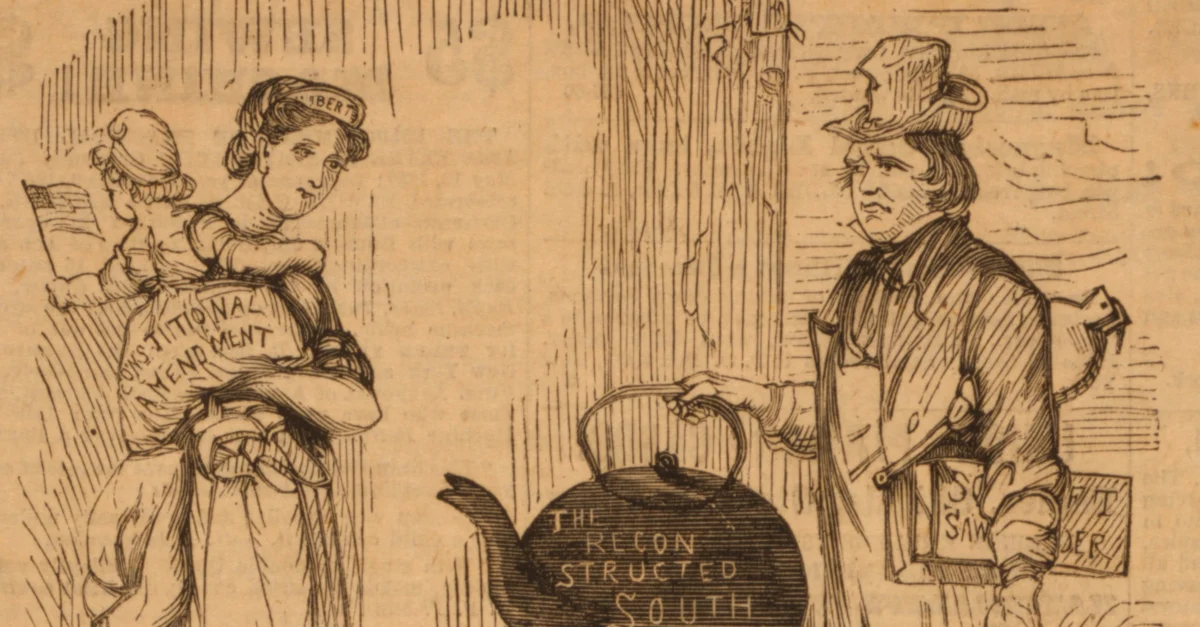
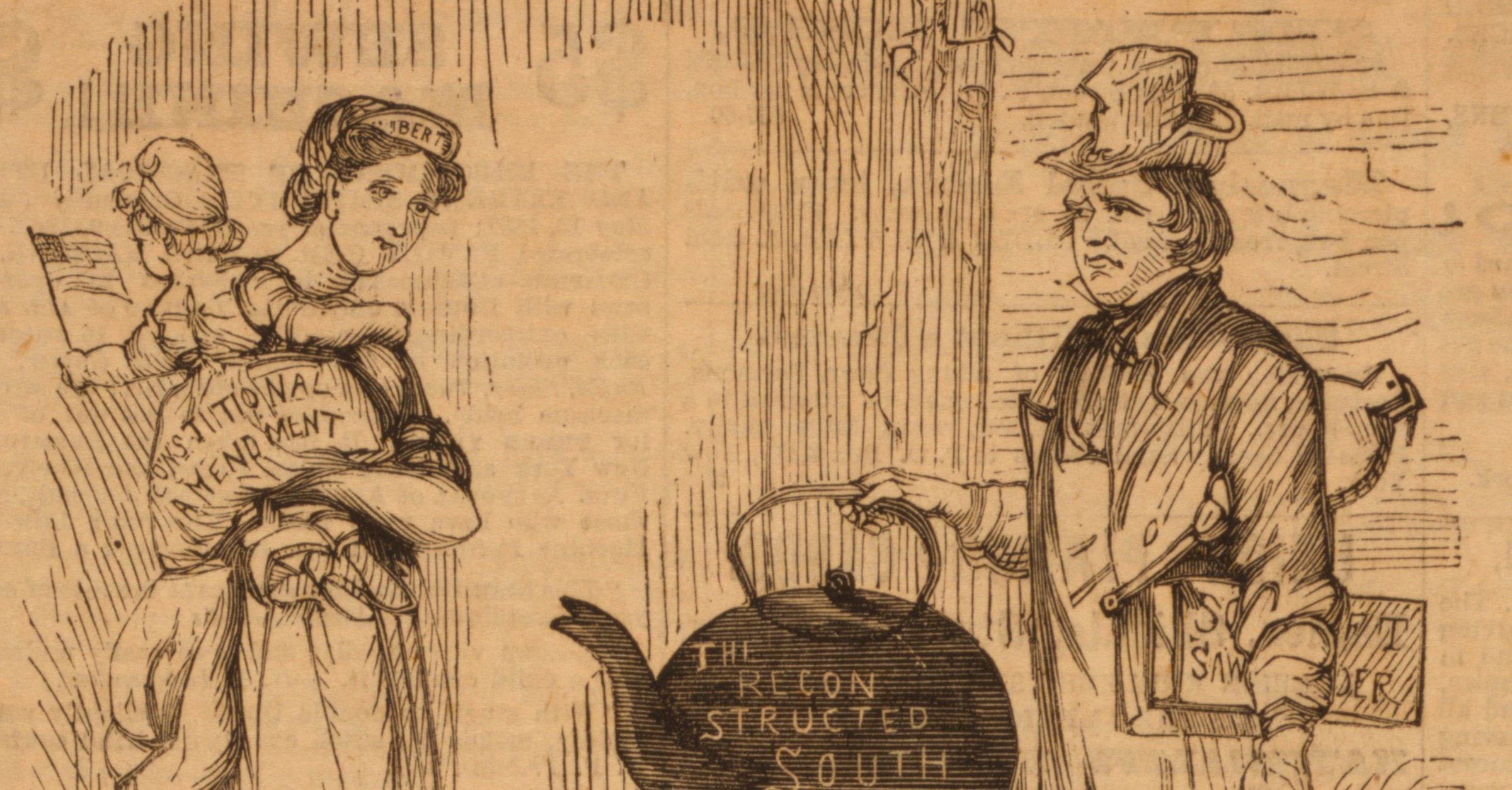
The Fourteenth Amendment to the United States Constitution stands as a monumental pillar in American constitutional law, profoundly reshaping the nation’s understanding of citizenship, rights, and governmental power. Ratified in 1868 amidst the tumultuous Reconstruction Era (circa 1863-1877), its core tenets were designed to rectify the injustices of slavery and ensure the newly won liberties of formerly enslaved people. At its heart, the amendment unequivocally defines American citizenship as belonging to "all persons born or naturalized in the United States"—a principle famously known as ‘birthright citizenship.’ Beyond this foundational declaration, it guarantees "equal protection of the laws" and "due process" to all citizens, clauses that have since become cornerstones of civil rights and liberties. Its far-reaching impact is undeniable, making it one of the most frequently litigated and interpreted sections of the U.S. Constitution, consistently influencing landmark Supreme Court decisions and remaining a vibrant focal point in contemporary political discourse.
Chronology: Forging a New Nation
The path to the Fourteenth Amendment was fraught with conflict, ideological clashes, and a desperate struggle to redefine the American experiment in the wake of its bloodiest chapter.
The Aftermath of War and Emancipation
The surrender of the Confederate forces in April 1865 brought an end to the American Civil War, but it merely shifted the battleground from the physical battlefield to the political arena. With the war’s conclusion came the formal abolition of slavery across the nation. The Emancipation Proclamation of 1863 had liberated enslaved people in the rebellious Southern states, and the Thirteenth Amendment, ratified in December 1865, extended this freedom to all corners of the United States, save for the controversial exception of forced labor as punishment for criminals. Millions of African Americans were unshackled, ostensibly free to determine their own destinies.
However, freedom on paper did not automatically translate into full societal integration or equal rights. The fundamental question loomed: what would be the place of these formerly enslaved people—and indeed, of all Americans, including women—within the social and political fabric of the United States? Would they be recognized as full citizens? Would they be granted the sacred right to vote?
President Abraham Lincoln, acutely aware of the deep divisions and unresolved issues, understood that the nation needed to grapple with these questions to truly heal. In early 1865, he and the anti-slavery Republican Party established the Freedmen’s Bureau, a federal agency tasked with aiding formerly enslaved individuals in their transition to freedom. The bureau provided crucial supplies, facilitated access to education, and even devised ambitious plans to distribute confiscated Confederate farmlands to freedpeople—a vision that became immortalized in the rallying cry of ‘forty acres and a mule.’
Lincoln also began to contemplate the political liberties of Black Americans, particularly suffrage. In a pivotal speech on April 11, 1865, just days after the Confederate surrender at Appomattox, he voiced support for enfranchising Black Americans, at least those who had served honorably in the Union Army. Tragically, Lincoln’s vision for Reconstruction, and the extent to which he would have pursued these promises, was cut short just days later by an assassin’s bullet.
Presidential Reconstruction and Southern Defiance
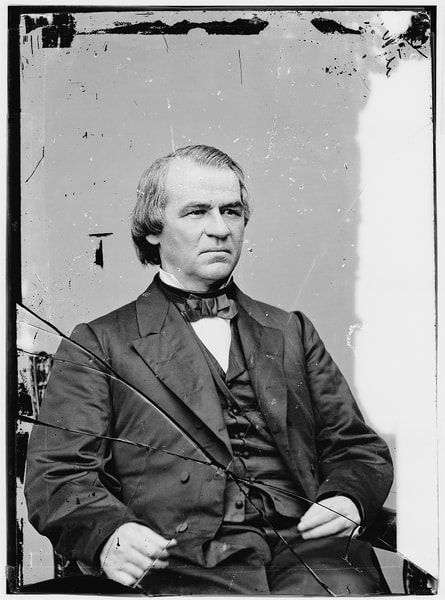
Lincoln’s successor, Andrew Johnson, a self-described "plebeian" Democrat from Tennessee, held a dramatically different vision for Reconstruction. Far less interested in securing the rights of Black Americans, Johnson prioritized a swift reintegration of the Southern states into the Union, largely on their own terms. His policies, dubbed ‘Presidential Reconstruction,’ included granting widespread amnesty to former Confederates and restoring much of their confiscated lands, effectively sabotaging the Freedmen’s Bureau’s plans for land redistribution to freedpeople. Johnson’s antagonism towards the bureau extended to vetoing its crucial aid bills, further undermining efforts to support the newly liberated population.
Johnson’s leniency inadvertently emboldened the defeated South. Former Confederate leaders quickly regained political power, and Southern states began enacting a series of discriminatory legislative policies known as the ‘Black Codes.’ These codes severely restricted the freedoms and civil liberties of Black Americans, effectively attempting to relegate them to a status akin to slavery, despite the Thirteenth Amendment. When the Republican-controlled Congress reconvened in late 1865, its members—particularly the fervent advocates for Union and Black liberties, known as Radical Republicans—were horrified by Johnson’s actions, perceiving them as a dangerous betrayal of the war’s objectives and a threat to the very essence of Reconstruction.
The Congressional Battle for Constitutional Safeguards
The Republican-dominated Congress, determined to counteract President Johnson and the resurgence of Southern defiance, refused to admit newly elected Southern congressmen to their chambers. This strategic maneuver bought them time to devise a means of permanently enshrining the gains of the Civil War into the Constitution, placing them beyond the reach of presidential obstruction or future political shifts. The urgency of the situation was reflected in January 1866 alone, when over 70 constitutional amendments were introduced, each attempting to address the complex issues of Black liberties and the future of the Union.
One of the most pressing problems was that of congressional representation. Before the war, the infamous Three-Fifths Clause allowed Southern states to count three-fifths of their enslaved population towards their congressional representation, artificially inflating their political power despite denying those individuals any political participation. With slavery abolished, the South could now count their entire Black population, including the freedmen. However, since most freedmen were still denied the right to vote, the Southern states stood to gain even greater congressional influence disproportionate to their actual voting populace. This prospect deeply alarmed Republicans, who feared that "unrepentant…traitors" (as quoted in Foner, 252) could seize control of the federal government and reverse the course of Reconstruction.
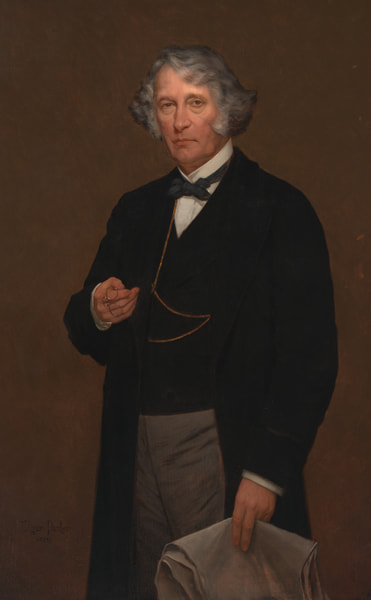
To address this, the Joint Committee on Reconstruction proposed an amendment in late January 1866 that would penalize any state restricting male citizens from voting by proportionally reducing that state’s congressional representation. While this proposal passed in the House of Representatives, it failed in the Senate. It faced opposition not only from Democrats but also from some Radical Republicans, like Senator Charles Sumner of Massachusetts, who argued it did not go far enough. Sumner, a leading radical voice and an uncompromising abolitionist, believed the amendment offered insufficient protection for Black voters, as a large state might still choose to restrict Black suffrage if it deemed the loss of representation an acceptable trade-off. He vehemently opposed compromise on moral principles, stating, "the day of compromise with wrong had passed forever" and "a moral principle cannot be compromised" (quoted in Sinha, 90). He even presented petitions from revered abolitionists like Frederick Douglass who shared his skepticism.
The division within Republican ranks was palpable. Thaddeus Stevens, the influential Radical Republican leader in the House, condemned Sumner and his "self-righteous Republicans" for aligning with "unrighteous copperheads" (a derogatory term for Northern Democrats who opposed the Civil War). Stevens, while acknowledging the amendment’s imperfections, argued that "compromises had to be made, since they lived among men and not among angels" (quoted in Sinha, 91). Despite these arguments, the amendment failed to secure the necessary two-thirds majority in the Senate, forcing House Republicans back to the drawing board.
The political climate was tense and uncertain. "The President has gone over to the enemy," one Republican congressman lamented, "and our friends are all split up among themselves" (quoted in Foner, 253). Republicans understood that failing to propose an agreeable amendment before the upcoming midterm elections could cost them control of Congress and their leverage in the battle for Reconstruction. With this stark realization, the Joint Committee proposed a new, more comprehensive amendment in late April 1866, hoping to garner broader support, especially from their radical colleagues in the Senate.
Crafting the Landmark Amendment
The primary architect of this new document, which would become the Fourteenth Amendment, was Ohio Congressman John A. Bingham. Bingham, who had gained national recognition prosecuting the conspirators behind Abraham Lincoln’s assassination, was deeply concerned that Southern states would attempt to deny Black Americans both citizenship and the fundamental liberties guaranteed by the Bill of Rights.
Bingham and his collaborators strategically addressed these concerns in the first section of the new amendment. They defined American citizenship expansively as any person "born or naturalized in the United States, and subject to the jurisdiction thereof." This pivotal phrase enshrined birthright citizenship, ensuring that children of immigrants born on U.S. soil would receive the full rights and privileges of the Constitution, a principle that continues to be debated today. Furthermore, Section 1 stipulated that "No State shall make or enforce any law which shall abridge the privileges or immunities of citizens of the United States; nor shall any State deprive any person of life, liberty, or property, without due process of law; nor deny to any person within its jurisdiction the equal protection of the laws."
Scholars like Manisha Sinha emphasize the profound importance of Bingham’s deliberate choice of the word "person" instead of "male" when referring to those entitled to due process and equal protection. This foresight would later prove crucial, enabling marginalized groups, including women and LGBTQ+ individuals, to successfully claim equality before the law.
The second section of the Fourteenth Amendment definitively abolished the Three-Fifths Clause, decreeing that all persons, excluding "Indians not taxed" (referring to Native Americans on reservations), would be counted for representational purposes. Crucially, it retained the penalty for disenfranchisement: if any state prevented or restricted adult male citizens from voting, its congressional representation would be proportionally reduced. It is a historical irony that this penalty, designed to prevent voter suppression, was rarely, if ever, invoked, even when Southern states openly flaunted the Fourteenth Amendment by disenfranchising Black men during the subsequent Jim Crow era.
Section three aimed to prevent former Confederates from regaining positions of power. It stipulated that any individual who had previously taken an oath to uphold the Constitution but then engaged in rebellion against the United States would be barred from holding federal or state office. Congress, however, retained the power to remove this disability with a two-thirds vote. Earlier drafts had sought to disenfranchise ex-rebels entirely, but this was ultimately removed, leaving the punishment for Confederate leaders relatively light. As Sinha observes, "Never have traitors felt the hand of law so lightly" (Sinha, 93).
The fourth section of the amendment affirmed the validity of the U.S. national debt, including pensions for Union soldiers, while explicitly prohibiting the payment of any debt incurred by the Confederacy or any claim for the loss of enslaved persons. These debts and claims were declared "illegal and void."
Finally, the fifth section granted Congress the explicit power "to enforce, by appropriate legislation, the provisions of this article." This enforcement clause provided the legal authority for future civil rights legislation. Once completed, the amendment was quickly approved by both houses of Congress on June 13, 1866, and then sent to the states for ratification by Secretary of State William H. Seward.
Supporting Data: The Full Text and Historical Perspectives
The Fourteenth Amendment is a testament to both the ideals and compromises of its era. Its language, carefully chosen and intensely debated, continues to shape legal interpretation.
The Full Text of the Fourteenth Amendment:
Section 1: All persons born or naturalized in the United States, and subject to the jurisdiction thereof, are citizens of the United States and of the State wherein they reside. No State shall make or enforce any law which shall abridge the privileges or immunities of citizens of the United States; nor shall any State deprive any person of life, liberty, or property, without due process of law; nor deny to any person within its jurisdiction the equal protection of the laws.
Section 2: Representatives shall be apportioned among the several States according to their respective numbers, counting the whole number of persons in each State, excluding Indians not taxed. But when the right to vote at any election for the choice of electors for President and Vice-President of the United States, Representatives in Congress, the Executive and Judicial officers of a State, or the members of the Legislature thereof, is denied to any of the male inhabitants of such State, being twenty-one years of age, and citizens of the United States, or in any way abridged, except for participation in rebellion, or other crime, the basis of representation therein shall be reduced in the proportion which the number of such male citizens shall bear to the whole number of male citizens twenty-one years of age in such State.
Section 3: No person shall be a Senator or Representative in Congress, or elector of President and Vice-President, or hold any office, civil or military, under the United States, or under any State, who, having previously taken an oath, as a member of Congress, or as an officer of the United States, or as a member of any State legislature, or as an executive or judicial officer of any State, to support the Constitution of the United States, shall have engaged in insurrection or rebellion against the same, or given aid or comfort to the enemies thereof. But Congress may by a vote of two-thirds of each House, remove such disability.
Section 4: The validity of the public debt of the United States, authorized by law, including debts incurred for payment of pensions and bounties for services in suppressing insurrection or rebellion, shall not be questioned. But neither the United States nor any State shall assume or pay any debt or obligation incurred in aid of insurrection or rebellion against the United States, or any claim for the loss or emancipation of any slave; but all such debts, obligations and claims shall be held illegal and void.
Section 5: The Congress shall have power to enforce, by appropriate legislation, the provisions of this article.
Historical Perspectives:
The debates surrounding the Fourteenth Amendment underscore the deep ideological chasms of the era. The urgency felt by Radical Republicans to prevent a resurgence of pre-war power structures in the South is captured by historian Eric Foner, who quotes a Republican congressman’s warning that if nothing were done, "unrepentant…traitors" would seize control of the federal government and "reverse the trajectory of Reconstruction" (Foner, 252). This fear directly motivated the amendment’s provisions regarding representation and the disqualification of ex-Confederates.
The principled stand of figures like Senator Charles Sumner highlights the moral conviction that fueled parts of the abolitionist and radical Republican movements. His insistence that "a moral principle cannot be compromised" (Sinha, 90) reflects a desire for absolute justice, even if it meant delaying legislative action. Conversely, Thaddeus Stevens’ pragmatic retort that they lived "among men and not among angels" (Sinha, 91) illustrates the political realities of achieving constitutional change, often requiring concessions.
John A. Bingham, the amendment’s principal drafter, eloquently defended its reach against charges of federal overreach, asserting that it "takes from no State any right…but it imposes a limitation upon the States to correct their abuses of power" (quoted in Foner, 259). This perspective articulated the amendment not as an assault on legitimate state authority, but as a necessary guardrail against discriminatory state actions.
The amendment’s leniency toward former Confederate leaders, particularly the ease with which their disabilities could be removed, has also drawn critical commentary. Manisha Sinha starkly notes the historical reality that "Never have traitors felt the hand of law so lightly" (Sinha, 93), pointing to a gap between the initial radical aims and the final, compromise-laden text.
Official Responses and Ratification
Presidential and Southern Opposition
The proposed Fourteenth Amendment immediately ignited fierce opposition from President Andrew Johnson and the former Confederate States. Johnson, a staunch proponent of states’ rights and a critic of federal intervention in Southern affairs, viewed the amendment as an unconstitutional overreach by Congress. He argued that it unjustly deprived states of their sovereign powers and imposed conditions that were punitive and unnecessary for national unity. His vetoes of civil rights legislation and his public condemnations of the amendment galvanized Southern resistance.
The former Confederate States, still smarting from defeat and bolstered by Johnson’s sympathetic stance, largely refused to ratify the amendment. Their state legislatures, having re-elected many of their pre-war leaders, saw the amendment as an affront to their autonomy and a continuation of federal coercion. With the notable exception of Tennessee, which had taken steps towards readmission and ratification, the Southern states presented a united front of defiance, leading to a political stalemate.
Congressional Resolve and Forced Ratification
The political battle reached a crescendo in the 1866 midterm elections. Radical Republicans framed the elections as a referendum on their vision for Reconstruction and the Fourteenth Amendment. Their resounding victory, securing overwhelming majorities in both the House and Senate, provided them with a clear mandate to override President Johnson’s obstruction.
With their newfound political power, Congress passed the Reconstruction Acts of 1867. These acts imposed martial law on the defiant Southern states (excluding Tennessee) and established strict conditions for their re-entry into the Union. Crucially, each state was required to draft a new constitution guaranteeing universal male suffrage (regardless of race) and, most importantly, to ratify the Fourteenth Amendment. This marked a decisive shift from ‘Presidential Reconstruction’ to ‘Radical Reconstruction,’ where Congress, backed by military force, compelled the Southern states to accept the terms of national unity and racial equality.
Under this immense pressure, Southern states gradually acceded. Although some states held out for decades—Kentucky, for instance, did not formally ratify the amendment until March 1976—the requisite number of 28 states had ratified it by July 9, 1868. On that day, Secretary of State William H. Seward officially proclaimed the Fourteenth Amendment adopted into the U.S. Constitution, marking a watershed moment not only in the history of Reconstruction but in the constitutional history of the United States.
Implications: An Enduring Legacy
A Cornerstone of American Rights
The Fourteenth Amendment is arguably the most significant amendment to the Constitution after the Bill of Rights, profoundly altering the relationship between the individual, the states, and the federal government. Its impact stems primarily from Section 1, which introduced the concepts of ‘birthright citizenship,’ ‘privileges or immunities,’ ‘due process of law,’ and ‘equal protection of the laws’ directly to the states. These clauses have served as the legal foundation for expanding civil rights and liberties for over a century and a half.
The "due process" clause, originally intended to ensure fair legal proceedings, has evolved through judicial interpretation to include "substantive due process," meaning that certain fundamental rights are so essential that the government cannot infringe upon them, regardless of process. Similarly, the "equal protection" clause has been instrumental in challenging and dismantling discriminatory laws and practices. Together, these clauses have also been used to apply most of the protections of the Bill of Rights—originally only binding on the federal government—to the states, a process known as "incorporation." This expansion of federal oversight fundamentally transformed American federalism, ensuring a baseline of rights across all states.
Transformative Supreme Court Rulings
The Fourteenth Amendment has formed the bedrock of some of the most pivotal and transformative U.S. Supreme Court decisions, demonstrating its adaptability and enduring power to shape societal norms and legal frameworks:
Brown v. Board of Education (1954): This landmark decision, citing the "equal protection" clause, declared state-sponsored segregation in public schools unconstitutional, dismantling the "separate but equal" doctrine established in Plessy v. Ferguson (1896), a case that had severely limited the Fourteenth Amendment’s reach. Brown laid the legal groundwork for the modern Civil Rights Movement.
Loving v. Virginia (1967): The Court unanimously ruled that state laws banning interracial marriage violated the "equal protection" and "due process" clauses of the Fourteenth Amendment, affirming the fundamental right to marry regardless of race.
Roe v. Wade (1973): This controversial decision established a woman’s constitutional right to an abortion, based on the "due process" clause’s implicit protection of a right to privacy. While Roe was overturned by Dobbs v. Jackson Women’s Health Organization in 2022, this reversal itself underscored the Fourteenth Amendment’s continued centrality to debates over fundamental rights and its susceptibility to evolving legal interpretations.
Obergefell v. Hodges (2015): Citing both the "due process" and "equal protection" clauses, the Court legalized same-sex marriage nationwide, recognizing it as a fundamental right inherent in the liberty of the person and ensuring equal treatment under the law.
These cases exemplify how the amendment, initially crafted to protect the rights of formerly enslaved people, has become a dynamic instrument for expanding rights and equality for diverse marginalized groups throughout American history.
Ongoing Debates and Unfulfilled Promises
Despite its profound influence, the Fourteenth Amendment’s journey is marked by both triumphs and unfulfilled promises, and it remains a subject of vigorous debate today. The principle of birthright citizenship, established in Section 1, is frequently challenged in contemporary political discourse, particularly regarding the children of undocumented immigrants. Debates also persist over the appropriate balance between federal power (exercised through the Fourteenth Amendment) and states’ rights, echoing the very conflicts that animated its creation.
A stark reminder of the amendment’s limitations in practice is the fate of Section 2. The clause designed to penalize states for disenfranchising male citizens was rarely, if ever, enforced, even during the Jim Crow era when Southern states openly and systematically disenfranchised Black men through poll taxes, literacy tests, and intimidation. This highlights the gap between constitutional ideals and the political will required for their enforcement.
Ultimately, the Fourteenth Amendment stands as a living document, a testament to the nation’s ongoing struggle to realize its founding principles of liberty and equality. It continues to serve as a critical legal battleground, constantly interpreted and reinterpreted, defining who "We the People" are and what rights and protections they are guaranteed in an ever-evolving America. Its legacy is not just in the rights it explicitly grants, but in the enduring framework it provides for challenging injustice and striving for a more perfect union.
Washington, D.C. – Ratified in 1868 during the tumultuous Reconstruction Era, the Fourteenth Amendment stands as one of the most profoundly impactful and frequently litigated additions to the United S
Johannesburg, South Africa – The year 1886 marked a pivotal moment in the history of Southern Africa, a year that saw the discovery of an immense treasure beneath the dusty plains of the Transvaal. Th
December 7, 1941, remains etched in history as "a date which will live in infamy." On that fateful Sunday morning, a surprise attack by the Imperial Japanese Navy on the unsuspecting U.S. na