Chronicles of the 12-Day War: Art, Survival, and the Iranian Perspective
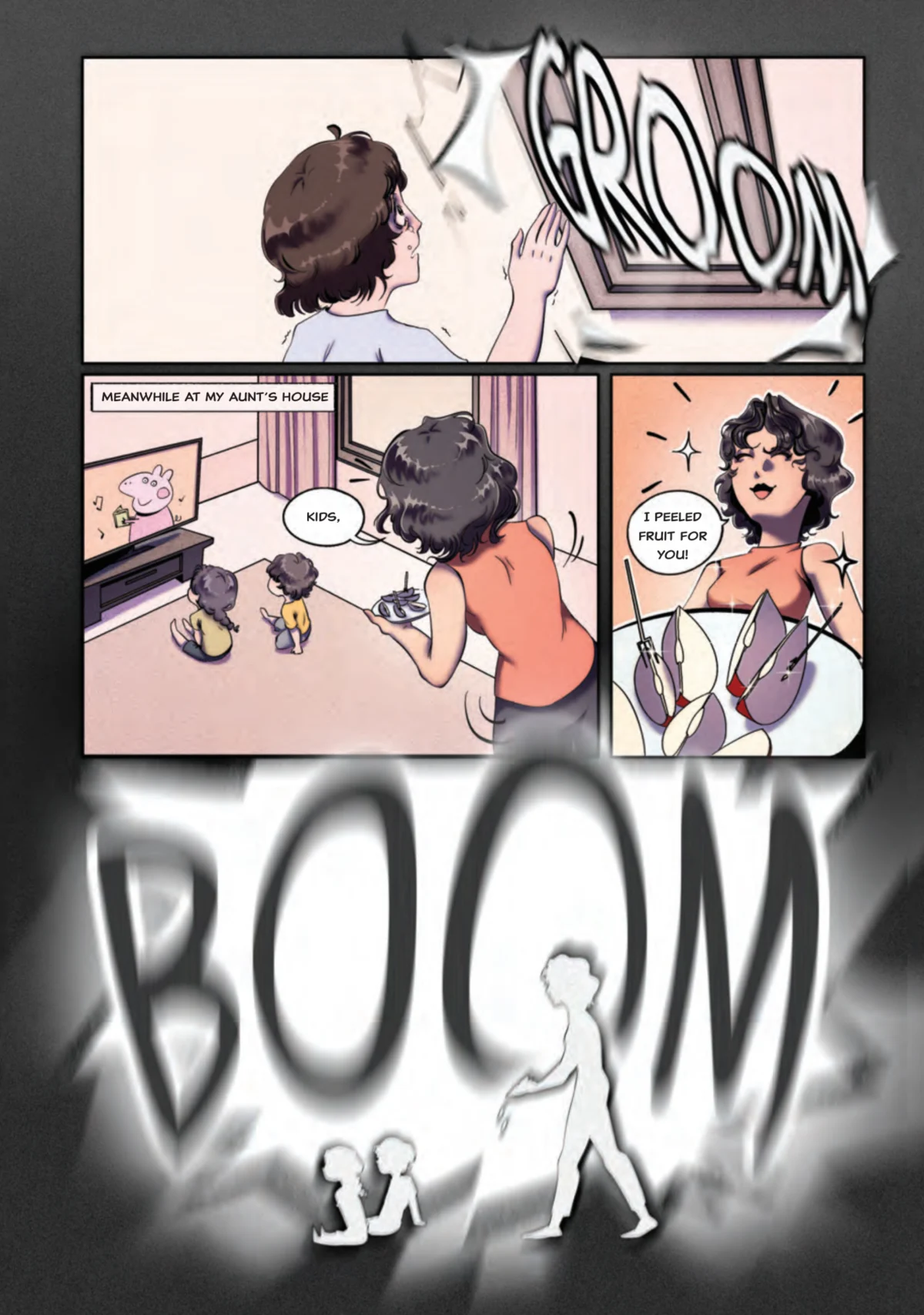
TEHRAN – A year after the devastating military escalation that reshaped the Middle East, a new cultural artifact has emerged to document the human cost of the conflict. Published by The Cartoonist Collective in Tehran, the anthology titled I Won’t Pretend These Missiles Are Stars: Life in Iran During the 12-Day War offers a visceral, multi-perspective look at the June 2025 conflict between Iran, Israel, and the United States.
The collection, reviewed recently by cultural critics, serves as both a historical record and a psychological profile of a nation under fire. Through a diverse array of visual styles—ranging from stark realism to abstract expressionism—the artists of Tehran have issued a singular plea to the international community: “Remember us, remember Iran, and speak loudly about it.”
Main Facts: The Intersection of Art and Atrocity
The "12-Day War," which took place from June 13 to June 24, 2025, remains one of the most concentrated periods of aerial bombardment in modern history. The anthology I Won’t Pretend These Missiles Are Stars captures the immediate aftermath and the lived experience of these eleven days through the eyes of those who remained in the capital and surrounding provinces.
The Cartoonist Collective, a group of underground and established illustrators, produced the work to counteract the sanitized versions of the war presented by state media and international news outlets. The anthology focuses on several key thematic pillars:
- The Erosion of Daily Life: How mundane routines—caring for pets, completing freelance work, and navigating internet outages—persist even under the threat of annihilation.
- The Psychology of Victimhood: The shift from fear to a grim "memento mori" acceptance of death.
- Political Disillusionment: A shared resentment toward both foreign aggressors and domestic leadership.
By documenting the deaths of military personnel, nuclear scientists, and thousands of civilians, the anthology bridges the gap between geopolitical statistics and individual suffering.
Chronology of the 12-Day War (June 2025)
To understand the anthology, one must revisit the rapid escalation of the June 2025 conflict. The timeline of the war, as reflected in the graphic narratives, followed a trajectory of total surprise leading to a desperate ceasefire.
June 13: The Surprise Opening
The conflict began with a massive, unannounced Israeli air campaign targeting Iran’s nuclear enrichment facilities and key military command centers. The anthology’s story "12 Days" captures the initial confusion of this day, particularly the immediate severance of internet services which left the population in a localized information vacuum.
June 14–20: Retaliation and Escalation
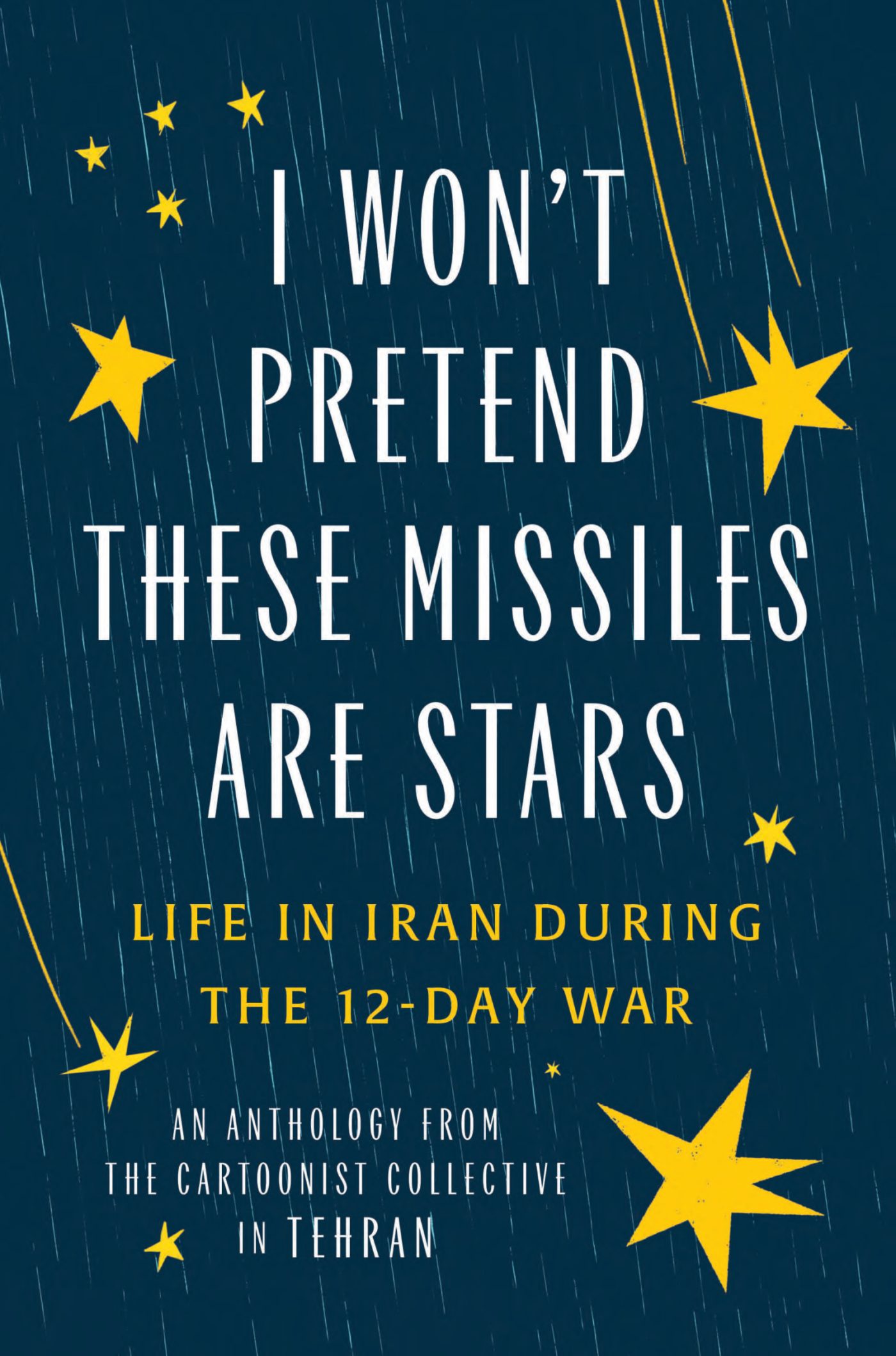
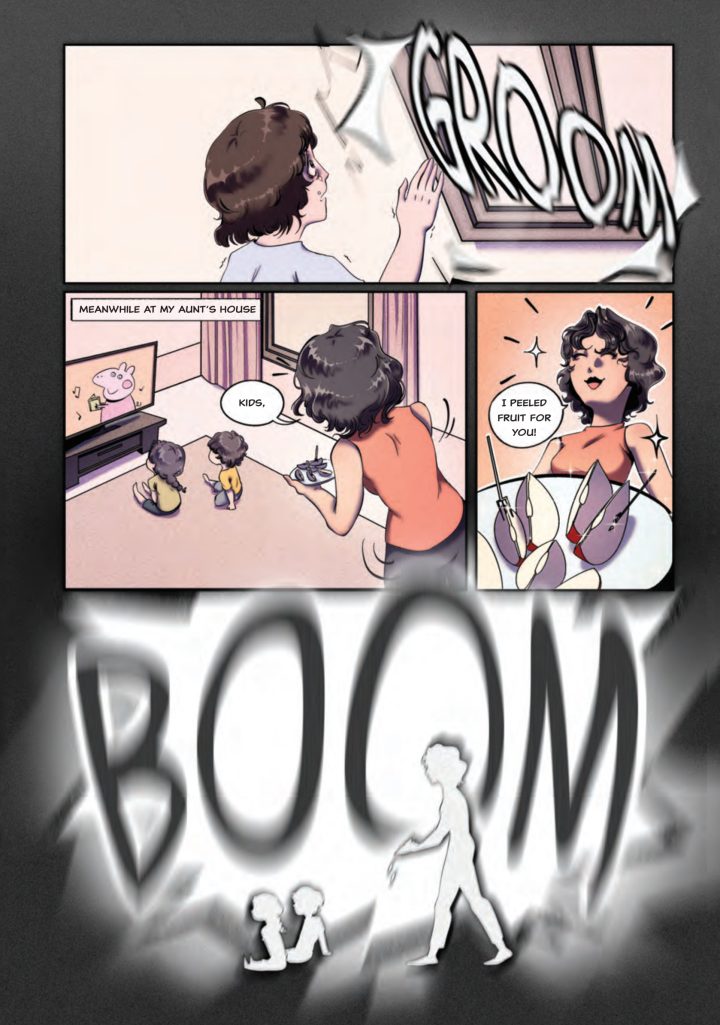
Iran responded with a series of missile strikes targeting Israeli military hubs, government buildings, and healthcare infrastructure. During this week, the violence expanded to include civilian centers in both nations. In Tehran, this period was marked by the "BOOM" and "GROOM" onomatopoeia that dominates the background of the anthology’s panels—a constant rhythmic reminder of the crumbling city.
June 21–23: United States Intervention
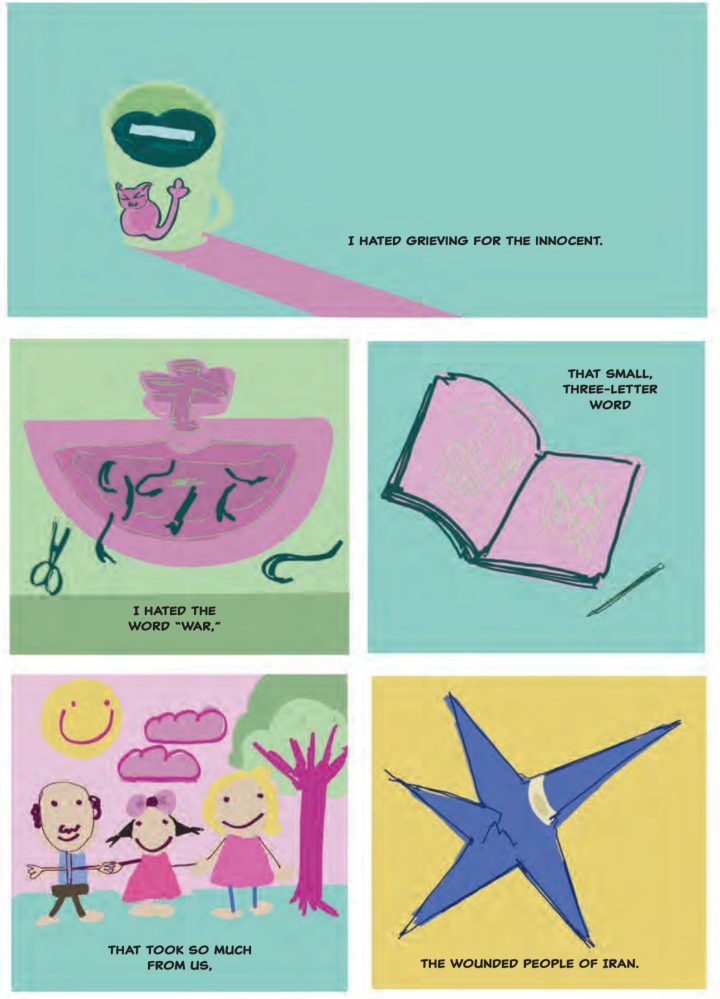
The conflict took a global turn when the United States launched a series of "surgical" strikes against Iranian targets to disable remaining retaliatory capabilities. This intervention prompted an Iranian strike on a U.S. military base in Qatar. Stories such as "I Won’t Pretend" highlight the deep-seated anger felt by Iranians toward the U.S. intervention, depicting it as a force that "took so much from the wounded people."
June 24: The Ceasefire
A fragile ceasefire was brokered, ending the active bombardment but leaving the country in a state of ruin. The final stories in the collection, such as "Until After the War," reflect the eerie silence that followed the ceasefire—a silence that many narrators found more haunting than the sirens.
Supporting Data: The Mundanity and Malice of Conflict
The anthology provides a unique data set of human behavior during wartime. While official casualty counts focus on the "what," these stories focus on the "how."
The Burden of Domesticity
Surprisingly, a significant portion of the anthology is dedicated to the trivialities of survival. In "Lappe Letters," the narrative arc centers entirely on the safety of a pet cat and the frustration of losing a pet’s identification tag during an evacuation. This reflects a documented psychological phenomenon where, during extreme trauma, individuals fixate on small, controllable variables to maintain a sense of agency.
Similarly, "Deadline with Letters" follows a character named Mona who is more preoccupied with a professional coloring deadline and a failing Kickstarter campaign than the missiles falling outside. These stories provide crucial data on the "normalization of crisis" that occurs in urban war zones.
Visual Language as Universal Communication
The artistic data within the collection suggests a move toward "Universalism," as described by theorist Scott McCloud. By using "cartoonish" diction and simple stick-figure-like representations in the most violent scenes, the artists make the suffering more accessible to a global audience. The recurring use of blue and purple palettes signifies a collective state of mourning, while the "El Greco-like" focus on light in "The Fireworks" documents the specific visual phenomenon of anti-aircraft fire and explosions lighting up the Tehran night sky.
Official Responses and Domestic Critique
The anthology does not shy away from the political complexities of the 12-Day War. It serves as a critique of both the "enemies without" and the "authorities within."
State Propaganda vs. Lived Reality
Several stories, most notably "Under the Same Roof," address the Iranian government’s official response. The narrator expresses a profound hatred for the state-sponsored propaganda that sought to glorify the war as a "heroic defense." The anthology reveals a significant rift between the patriotic narrative pushed by Tehran’s officials and the resentment felt by civilians who felt they were being "played by people who didn’t care about us."
The "Clown Show" of International Diplomacy
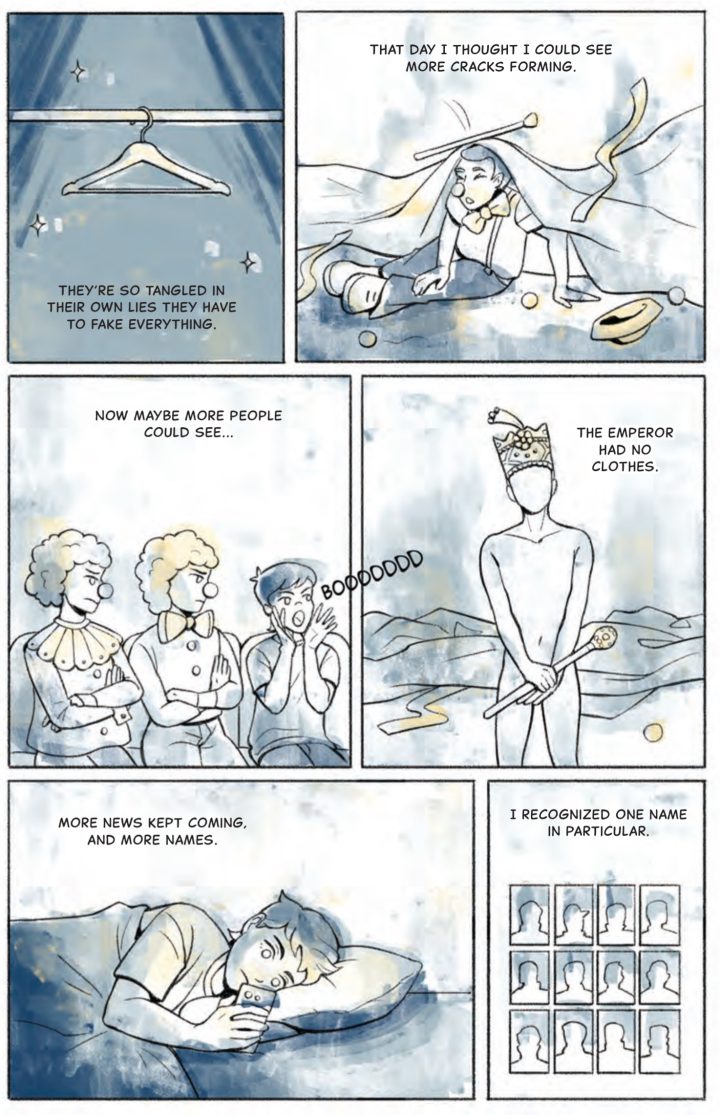
In the story titled "Nothing," the artist utilizes the imagery of a circus to describe the international community’s response. The narrator views the global political stage as a "clown show" where world leaders cheer on destruction while ignoring the "naked emperor"—the obvious, unmitigated suffering of the Iranian people. This reflects a broader sentiment of isolation, as Iranians felt abandoned by a Western world that watched the bombardment with indifference.
Implications: The Long-Term Psychological Toll
The release of I Won’t Pretend These Missiles Are Stars in 2026 suggests that the 12-Day War was not a contained event, but a catalyst for a long-term mental health crisis in the region.
Survivor’s Guilt and the Erasure of History
A recurring theme in the anthology is "mourning what never got to be." For the youth of Tehran, exemplified by the art student Lyanna in "My Dream City," the war did not just destroy buildings; it destroyed the future. The implication for the "Generation 2025" is a pervasive sense of survivor’s guilt and a fear of "erasure from history."
Storytelling as a Survival Mechanism
Perhaps the most significant implication of the collection is the role of art as a final line of defense. The concluding story, "Until After the War," posits that when political agency is stripped away and physical safety is non-existent, the act of creation becomes a form of resistance. The narrator’s assertion that "if in the end, anything of us remains, it’ll be these stories" suggests that the Iranian creative community has shifted its focus from seeking immediate political change to ensuring the preservation of their cultural memory.
Geopolitical Instability
The anthology ends on a note of profound uncertainty. The question "Is our home alright?" remains unanswered. As the region continues to experience tremors of conflict in 2026, the work implies that the 12-Day War was merely a symptom of a larger, ongoing cycle of violence. For the civilians of Tehran, the war didn’t end with the ceasefire on June 24; it merely moved "inside," creating a permanent state of internal unrest.
In conclusion, I Won’t Pretend These Missiles Are Stars is more than a comic book. It is a sophisticated piece of journalistic art that documents a tragedy through the eyes of the disenfranchised. It challenges the reader to look past the "BOOM" of the explosions and see the people—the art students, the cat owners, and the freelancers—who are forced to stage their own scenes in a play they never asked to join.