Unearthing the Divine Scribe: The Enduring Legacy of the Sumerian Goddess Nisaba and Her Ancient Hymn
FOR IMMEDIATE RELEASE
Mesopotamia’s Divine Administrator: Rediscovering Nisaba, Goddess of Writing and Accounts
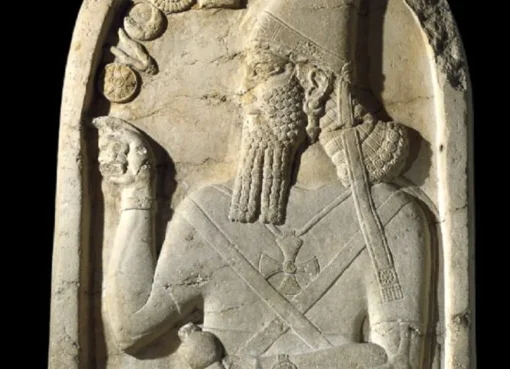
[DATELINE, Ancient Mesopotamia Studies] – In the annals of ancient Sumerian civilization, few deities encapsulated the very foundations of societal order and intellectual progress as profoundly as Nisaba. Revered as the goddess of writing, accounts, and wisdom, Nisaba was a central figure in the intricate pantheon of Mesopotamia, her influence permeating everything from agricultural prosperity to the meticulous records of state. A testament to her enduring significance is the "Hymn to Nisaba," a remarkable poetic composition dating back to the 3rd millennium BCE, offering a vivid glimpse into her attributes and the devotional practices of her followers.
Though officially dedicated to Enki, the Sumerian god of wisdom – sometimes cited as her father, sometimes as her patron – the hymn’s lyrical verses overwhelmingly celebrate Nisaba, detailing her multifaceted powers and her indispensable role in the development of one of humanity’s greatest inventions: writing. This ancient text, recovered from the ruins of forgotten cities, not only illuminates the spiritual landscape of Sumer but also underscores the profound reverence accorded to literacy and administration in the earliest urban societies.
The Goddess of the Written Word: A Profile of Nisaba
Nisaba, known by various names including Naga, Se-Naga, Nissaba, and Nidaba, was more than just a divine patron; she was considered the very essence of intellectual spark and administrative precision. Her journey from an agricultural deity to the celestial scribe of the gods reflects the evolving needs and complexities of Sumerian society.
From Grain to Glyph: Nisaba’s Evolving Domain
Originally, Nisaba was deeply entwined with the earth’s bounty, particularly as a grain goddess associated with fertility and abundance. This initial role was crucial in a society whose survival depended heavily on successful harvests. Her power to "engender and increase" crops naturally extended to the meticulous calculation and apportionment of these vital resources. As scholar Jeremy Black eloquently states, "Without her, harvests could not be calculated, nor bread and beer offerings apportioned since she was the goddess of accounts who made sure records were accurate." This highlights the practical, fundamental nature of her divinity, grounding her in the daily realities of Sumerian life.
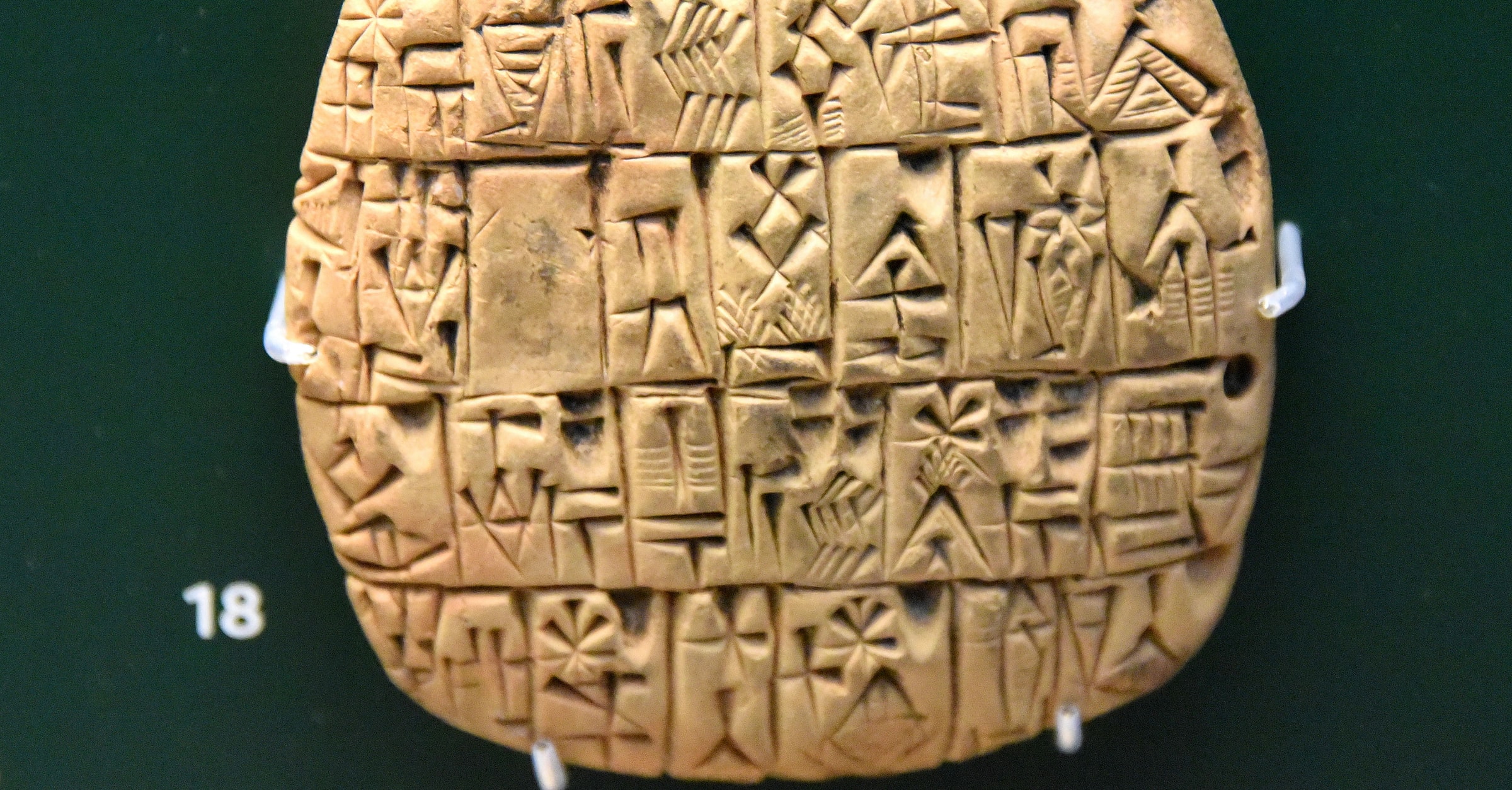
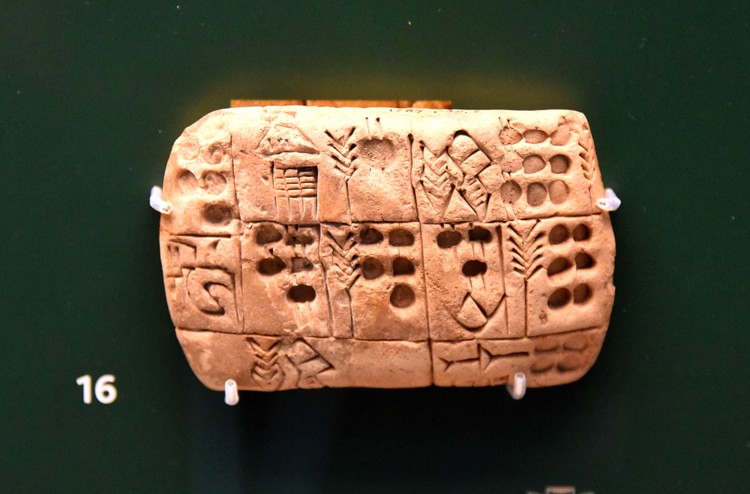
The invention of writing in Sumer, around 3600/3500 BCE, primarily arose from the necessity to manage long-distance trade and complex economic transactions. Merchants needed reliable ways to record shipments of grain, livestock, and other commodities. Early pictographs, evolving into sophisticated cuneiform scripts, were the answer. It was a logical progression for Nisaba, already associated with the staple commodity of grain and the accounts thereof, to become the patroness of this new, transformative technology. Her transition from overseeing the growth of crops to inspiring the creation of written works solidified her status as a crucial deity in the burgeoning literate civilization.
Divine Lineage and Patronage
Nisaba’s divine genealogy is rich and, at times, multifaceted, reflecting the dynamic nature of ancient Mesopotamian mythologies. While the "Hymn to Nisaba" opens by identifying her as the daughter of Anu, the ancient sky god, and Uras, the earth goddess – the primordial divine couple – other traditions link her to different prominent deities. During later periods, she was often regarded as the daughter of Enlil, the king of the gods, and his consort Ninlil. This connection placed her firmly within the most prestigious echelons of the Sumerian pantheon, associating her with ultimate cosmic authority.
However, the hymn itself foregrounds her relationship with Enki, the god of wisdom, water, and creation. Enki is depicted opening the "House of Learning" for her and bestowing upon her the lapis lazuli tablet, a symbol of divine knowledge. This patronage, whether paternal or purely supportive, underscored Nisaba’s connection to wisdom and the foundational elements of civilization. Scholar Paul Kriwaczek emphasizes Enki’s role as the god who "brings civilization to humankind," responsible for imparting intelligence and knowledge, and as the custodian of the meh – "the fundamental, unalterable, comprehensive assortment of powers and duties, norms and standards, rules and regulations, relating to civilized life." Through Enki’s association, Nisaba, and by extension writing itself, became inextricably linked with the very fabric of civilized existence.
Beyond her immediate family, Nisaba also held significant connections to other deities. She was associated with Nanshe, the Sumerian goddess of social justice, serving as her divine record-keeper, meticulously documenting which mortals required Nanshe’s assistance and which deserved her wrath. This highlights her role in maintaining cosmic order and ethical accountability. Furthermore, her responsibilities in writing, construction, and accounts drew parallels with the Egyptian goddess Seshat, the counterpart in a distant yet similarly sophisticated ancient civilization, demonstrating a shared recognition of the divine importance of record-keeping and knowledge.
The "Hymn to Nisaba": A Window into Ancient Piety and Pedagogy
The "Hymn to Nisaba" is far more than a simple prayer; it is a complex devotional work, a cultural artifact that offers deep insights into Sumerian religious practices, literary traditions, and even educational methods.
The Hymn’s Structure and Significance
As a typical Mesopotamian hymn, this composition is a piece of devotional literature, meticulously cataloging the deity’s attributes and expressing gratitude for the blessings bestowed upon humanity. Scholar Stephen Bertman notes that most hymns were "probably composed by priests, and they were set down in writing as an act of piety. Once transcribed, the words of praise could then be copied and recited by others." The "Hymn to Nisaba" fits this description perfectly, designed to be performed, likely with musical accompaniment, in sacred spaces dedicated to learning and devotion.
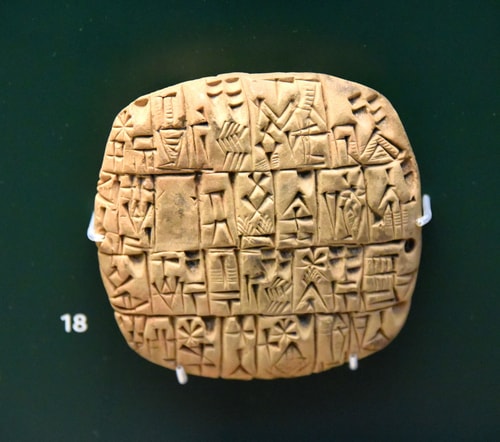
The hymn’s verses are rich with poetic imagery and divine epithets. Nisaba is hailed as "Lady colored like the stars of heaven," "great wild cow born of Uras," and "perfectly endowed with fifty great divine powers." Such vivid descriptions not only elevate her status but also weave her into the cosmological tapestry of Sumerian belief. Her role as "chief scribe of An, record-keeper of Enlil, wise sage of the gods" reinforces her unparalleled authority in the divine bureaucracy.
Music was an integral part of Mesopotamian culture, with the Akkadian word nigutu meaning both music and "joy and an elevation of the spirit." Samuel Noah Kramer suggests that hymns were performed with instruments like drums, lyres, and reed pipes, elevating the participants in their praise. Thus, the "Hymn to Nisaba" would have been a vibrant, multisensory experience, fostering a profound connection between the worshiper and the divine.
A Praisesong and a Practical Tool
While primarily a praise song, the "Hymn to Nisaba" also served a crucial practical purpose. It would have been performed at Nisaba’s sanctuaries, typically attached to libraries and scribal houses, where the act of writing itself was considered a primary form of worship. These institutions were not merely repositories of knowledge but active centers of cultural and religious life.
This dual function is not unique in Mesopotamian literature. The "Hymn to Ninkasi," goddess of beer, famously served as both a devotional ode and a detailed recipe, allowing brewers to memorize and transmit the intricate brewing process across generations. Similarly, the "Hymn to Nisaba," through its poetic structure and repeated invocations, would have reinforced the principles of writing, grammar, and the divine inspiration behind all literary endeavors. It was a living textbook, blending spiritual reverence with pedagogical utility.
Chronology of Worship and Cultural Shifts
Nisaba’s prominence, like that of many deities, waxed and waned with the shifting political and religious landscapes of ancient Mesopotamia. Her story traces a fascinating trajectory from widespread adoration to eventual obscurity and modern rediscovery.
Ascendancy in the Early Dynastic Period
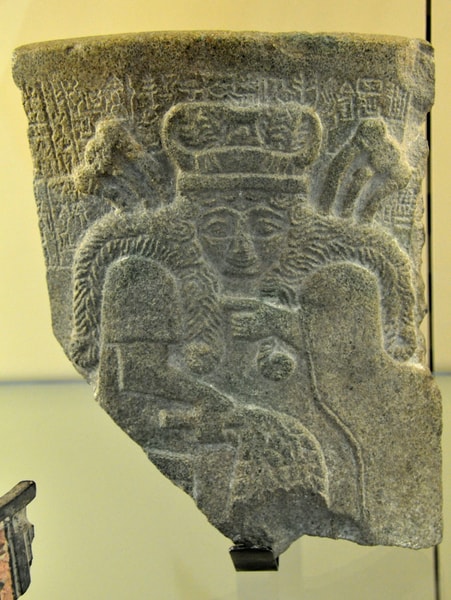
Nisaba enjoyed particular popularity during the Early Dynastic period in Mesopotamia (circa 2900-2350/2334 BCE), a time of significant urban development and the institutionalization of administrative systems. Her early pictographic representation as an ear of grain evolved into the image of a woman holding a tablet of the heavens and a gold stylus, symbolizing her expanded domain. She was invoked regularly by scribes in the city of Ur during the Ur III period (circa 2112 to circa 2004 BCE), notably during the reign of Shulgi of Ur (2094 to circa 2046 BCE), and later became the patron goddess of the city of Eresh during the Isin-Larsa period (circa 2025-1763 BCE). This consistent patronage across various influential cities underscores her widespread and enduring importance. Students in scribal schools would often conclude their compositions with a reverent declaration: "Praise be to Nisaba!"
The Old Babylonian Decline and the Rise of Nabu
A significant turning point for Nisaba occurred during the Old Babylonian period (circa 1894-1595 BCE). This era witnessed a broader societal and religious shift, particularly under the reign of Hammurabi (1792-1750 BCE), who elevated Marduk as the patron god of Babylon. This political ascendancy of Babylon led to a religious realignment where male deities increasingly superseded females in prominence. Nisaba was gradually replaced as the goddess of writing by Nabu, Marduk’s son, who took on her roles as the god of writing, wisdom, learning, prophecy, and the patron of scribes. Nabu also inherited her association with agricultural growth and abundant harvests, effectively consolidating many of Nisaba’s domains under a male figure.
From Sacred Text to Scholarly Exercise
As Nisaba’s status declined, so did the primary function of her hymn. By the Old Babylonian period, the "Hymn to Nisaba" transitioned from a devotional piece sung in worship to primarily a writing exercise for students. It became part of the "Tetrad," a curricular grouping of four hymns in simple Sumerian, designed as a "steppingstone between the elementary curriculum and the Decad," a more advanced set of ten compositions. This pedagogical use ensured the hymn’s survival for centuries, albeit in a different capacity, preserving its linguistic and poetic structure for future generations of scribes. Jeremy Black points out that parts of the hymn are also attested on a stone tablet from late third-millennium Lagash, indicating its long history as an instructional and devotional text.
Rediscovery and Modern Understanding
Nisaba’s name and her once-popular hymn faded into obscurity following the fall of Babylon to Cyrus II in 539 BCE and subsequent Hellenistic periods. Her last known followers were active during the Seleucid period (312-63 BCE), but after that, she vanished from historical records. Her story remained lost for millennia, entombed beneath the sands of Mesopotamia.
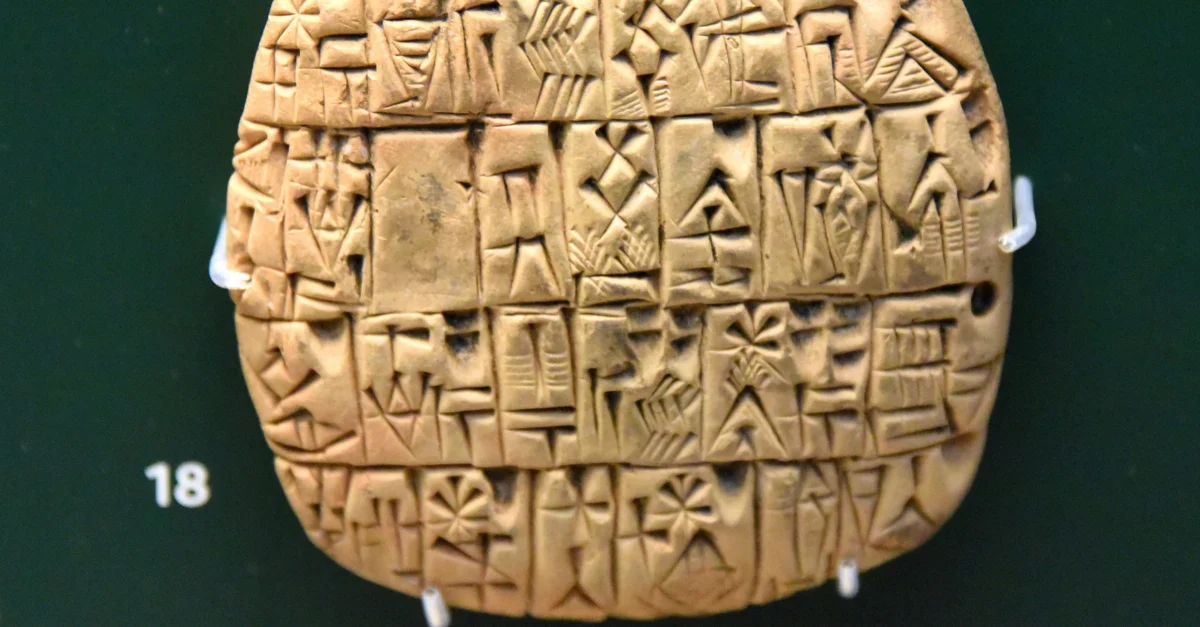
It was not until the mid-19th century, when European archaeologists embarked on concerted efforts to excavate the ancient cities of Mesopotamia, that Nisaba’s legacy began to resurface. The cuneiform tablet bearing the "Hymn to Nisaba" was discovered in the ruins of the sacred temple precinct of Lagash. The arduous work of deciphering cuneiform in the modern era finally brought Nisaba’s name, her hymn, and her profound significance back into the light, allowing contemporary scholars to reconstruct her story and her vital role in ancient Sumerian civilization.
Supporting Data: The Pillars of Sumerian Civilization
The very existence and content of the "Hymn to Nisaba" provide invaluable data for understanding the intellectual, administrative, and spiritual pillars of Sumerian society.
The Dawn of Writing and its Divine Patronage
Writing, considered by many to be the cornerstone of civilization, was not merely a human invention but, in Sumerian thought, a divine gift. Its practical origins in facilitating trade – recording commodities like barley from Uruk circa 3200 BCE – quickly acquired sacred dimensions. Nisaba’s epithet, "The Lady – in the place where she approaches, there is writing," beautifully encapsulates this belief, positioning her as the spark of inspiration for every written work. The tradition of scribal students ending compositions with "Praise be to Nisaba!" cemented her role as the ultimate muse and patron of literacy. This divine endorsement elevated the act of writing beyond a mere technical skill, imbuing it with spiritual significance and aligning it with the highest cosmic order.
Insights from the Hymn’s Verses (Detailed Breakdown)
A closer look at the translated passages of the hymn reveals layers of meaning and connections to Sumerian cosmology and daily life:
- Lines 1-6: These opening lines establish Nisaba’s celestial grandeur and administrative power. Her lapis-lazuli tablet symbolizes divine knowledge and decrees. Being "born of Uras" (earth goddess) links her to primordial creation, while her "fifty great divine powers" might connect her to the meh, the divine ordinances that govern civilization. Her presence in Enlil’s temple, E-Kur, underscores her importance within the main divine hierarchy.
- Lines 7-13: Nisaba is depicted as a cosmic force, a "Dragon emerging in glory at the festival," and "Aruru of the Land," linking her to the Mother Goddess Ninhursag, whose name means "Lady of the Great Mountain." This association with powerful creative goddesses further solidifies her role in shaping and nurturing civilization. Her titles as "chief scribe of An, record-keeper of Enlil, wise sage of the gods" emphasize her unparalleled administrative and intellectual authority among the deities.
- Lines 14-20: This passage vividly recalls Nisaba’s original role as a grain goddess. "Corn" here refers to grain (not maize), and the lines describe her ensuring abundant harvests of barley and flax. The transition is noted as she dons the "holy priestly garment," signifying her shift from agricultural deity to the goddess of writing, whose responsibilities now encompass the sacred act of recording.
- Lines 21-26: This section further clarifies the transition. With Nisaba now focused on writing, other grain deities like Kusu and Ezina (aspects of Ashnan) assume her former agricultural responsibilities. To appease these goddesses and manage the immense task of recording and dispersing harvests, Nisaba appoints an en-priest (high priest), who would essentially function as a divine accountant, ensuring accuracy and fairness.
- Lines 27-35: Here, Enki’s patronage of Nisaba is detailed. He provides her with the lapis lazuli tablet and opens the "house of learning" for her in Aratta, a mythical land often associated with knowledge and precious materials. The E-zagin, the "lapis lazuli house of learning," is placed at her disposal, reflecting Enki’s gratitude for her patronage of the city of Eres. This passage underscores the divine origin of knowledge and the importance of institutions of learning.
- Lines 36-50: This lengthy passage describes Enki’s actions in his city of Eridug, particularly within the Abzu, the realm of freshwater, symbolizing life and wisdom. Enki’s counsel in the Hal-an-kug (council house/temple) and his subsequent "divine gesture" in praise of Nisaba reinforce her supreme importance. The imagery of Enki opening the "house of learning" and his grand actions further elevates Nisaba as the recipient of his divine favor and the embodiment of wisdom.
- Lines 50-55: These lines are a direct outpouring of praise for Nisaba, invoking her as the source of abundance and good stewardship. She is wished to be "butter in the cattle-pen," "cream in the sheepfold," "keeper of the seal in the treasury," and a "heaper up of grain," reaffirming her comprehensive oversight of prosperity and orderly administration.
- Lines 56-57: The hymn concludes with its official dedication to Enki, acknowledging his pivotal role in empowering Nisaba. While the entire work glorifies Nisaba, it subtly reminds the audience of the divine hierarchy and Enki’s wisdom in enabling Nisaba to bestow her gifts upon humanity.
Institutionalization and Shifting Devotion (Official Responses)
The "official responses" to Nisaba’s divinity can be understood through the institutionalization of her worship and the later shifts in divine patronage mandated by political and religious authorities.
The Sacred Spaces of Nisaba
Nisaba’s worship was deeply embedded within the intellectual infrastructure of Sumerian society. While she did not possess grand temples exclusively dedicated to her, her sanctuaries were invariably attached to libraries and scribal schools. This architectural and functional integration highlights the societal recognition of her direct link to education and literacy. The act of writing itself, undertaken within these sacred spaces, was a form of devotion, a tangible expression of reverence for the goddess who inspired and enabled it. Her presence, or at least her symbolic representation, was also likely felt in temples dedicated to Enki, her divine patron.
The Royal and Religious Mandate
The invocation of Nisaba by rulers like Shulgi of Ur demonstrates a royal mandate for her veneration, particularly among the scribal elite who served the state. Her role in ensuring accurate accounts was vital for royal administration, taxation, and the management of vast temple estates. This "official" recognition was, however, subject to change.
The most significant "official response" to Nisaba’s cult was the dramatic shift under Hammurabi. The elevation of Marduk and his son Nabu was not merely a theological development but a calculated political and religious maneuver. By promoting male deities, the Babylonian kings consolidated power and projected a new patriarchal order. This institutional shift effectively demoted Nisaba, reallocating her divine portfolio to a male successor. It was a clear, if silent, statement from the ruling elite about the changing religious landscape and the preferred divine patrons of the state.
Enduring Echoes: Implications for Ancient and Modern Worlds
Nisaba’s story and the "Hymn to Nisaba" carry profound implications, not only for understanding ancient Mesopotamia but also for appreciating the long arc of human intellectual and spiritual development.
Nisaba’s Enduring Societal Impact
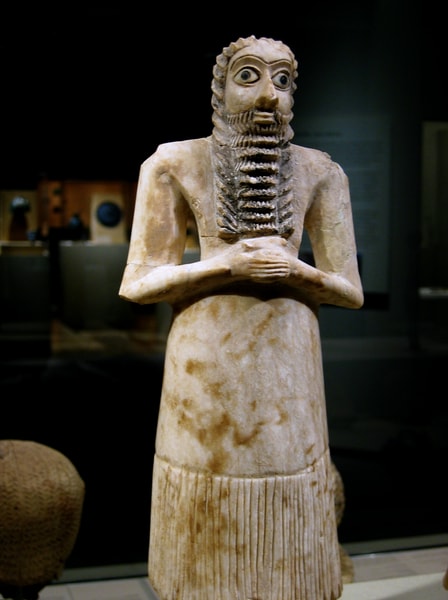
In ancient Sumer, Nisaba’s influence was foundational. Her domain over writing and accounts underpinned the entire administrative, economic, and legal framework of the civilization. Without her divine inspiration and oversight, the complex systems of record-keeping, trade, and governance that defined Sumerian urbanism would have faltered. She facilitated the transfer of knowledge, the codification of laws, and the chronicling of history, effectively bringing order out of chaos. Nisaba was, in essence, the patroness of what we now call "information management," a critical function in any advanced society. Her role ensured that the meh – the divine powers that brought civilization – were not only understood but meticulously documented and maintained.
The Legacy of the Hymn
The "Hymn to Nisaba" serves as an invaluable primary source. It provides scholars with direct insights into Sumerian religious beliefs, poetic forms, and the cultural value placed on literacy. Its survival, first as a sacred text, then as a pedagogical tool, speaks to the enduring power of its content and its adaptability within a changing educational system. For modern researchers, the hymn is a linguistic treasure, offering clues to Sumerian grammar and vocabulary.
Beyond its academic utility, the hymn’s rediscovery is a poignant reminder of the ebb and flow of religious practices and the power of archaeological and linguistic decipherment. It highlights how entire pantheons and their associated narratives can be lost to time, only to be resurrected through painstaking scholarly work. Nisaba’s re-emergence allows us to connect with the intellectual and spiritual lives of people who lived millennia ago, reminding us that the human quest for understanding, order, and divine inspiration is a timeless endeavor.
Conclusion
Nisaba, the Sumerian goddess of writing and accounts, embodies the foundational principles of knowledge, order, and administration in one of humanity’s earliest civilizations. Her journey from a grain goddess to the divine scribe, meticulously documented in the evocative "Hymn to Nisaba," reflects the profound societal shifts that accompanied the invention of writing. Though her cult eventually waned, overshadowed by new deities and changing political currents, her hymn endured, first as a sacred text, then as a vital tool in scribal education.
Today, thanks to the dedicated work of archaeologists and linguists, Nisaba’s story and her powerful hymn have been resurrected. They offer us an unparalleled window into the intellectual and spiritual heart of ancient Sumer, celebrating a goddess who inspired the very act of putting thought to tablet, thereby laying the groundwork for all future human knowledge and recorded history. The "Hymn to Nisaba" stands as a vibrant echo from the past, reminding us of the enduring legacy of a divine patroness whose influence profoundly shaped the course of civilization.