Unsheathing Knowledge: Black Gate Magazine Challenges Fantasy Enthusiasts with Iconic Heroes Quiz
Oak Lawn, IL – In an era increasingly dominated by digital distractions, the venerable realm of literary fantasy continues to captivate and challenge its dedicated readership. Black Gate magazine, a long-standing bastion for sword-and-sorcery and epic fantasy aficionados, has once again engaged its community with a thought-provoking "Heroes of Fantasy Quiz." Curated by Charles Gramlich, administrator of The Swords & Planet League group on Facebook, the quiz invites readers to test their knowledge of the genre’s most iconic protagonists and their legendary creators. Far from a simple trivial pursuit, this interactive challenge serves as both a celebration of fantasy literature’s rich history and a gauge of its fans’ profound immersion in its often-bloody, always-heroic narratives.
The quiz, first appearing on Black Gate‘s platform, presents a list of 15 renowned fantasy authors alongside an equally distinguished roster of their heroic creations. The task for participants is to correctly match the author to their corresponding hero, a feat designed to separate the casual reader from the true connoisseur of epic sagas and daring deeds. With a scoring system ranging from "bloodthirsty authors like Conan knows ale" for 12-15 correct answers to a less flattering assessment for those scoring below four, the quiz cleverly leverages the genre’s inherent drama to incentivize participation and spark spirited discussion among its devotees. The initiative underscores Black Gate‘s ongoing commitment to fostering a vibrant community around classic and contemporary speculative fiction.
The Crucible of Lore: Main Facts of the Fantasy Heroes Quiz
At its core, the "Heroes of Fantasy Quiz" is a direct challenge to the reader’s command of the vast and intricate tapestry of speculative fiction. Published by Black Gate magazine, a respected online and print publication dedicated to fantasy and science fiction since 1999, the quiz is the brainchild of Charles Gramlich, a seasoned contributor and enthusiast of the genre. Gramlich, also known for his role in administering The Swords & Planet League on Facebook, brings a deep understanding of fantasy lore to his curated content, ensuring a challenging yet rewarding experience for participants.
The quiz features 15 pairings, presenting an author’s name on the left and a hero’s name on the right. The objective is to identify which hero is correctly attributed to which author, given that the initial pairings are intentionally mismatched to test knowledge. This format not only assesses memory but also understanding of the literary landscapes each author forged. For instance, participants are asked to correctly associate luminaries such as Robert E. Howard, Lin Carter, Karl Edward Wagner, C. L. Moore, Edgar Rice Burroughs, Michael Moorcock, David Gemmell, and J. R. R. Tolkien with their respective protagonists, including Kull, Thongor, Kane, Jirel of Joiry, Carson Napier, Hawkmoon, Druss, and Strider (Aragorn). The inclusion of an ancient figure like Homer and his hero Odysseus further roots the quiz in the foundational narratives that underpin much of modern fantasy.
The scoring system is humorously tailored to the genre’s violent tropes, suggesting that a high score signifies a reader as "bloodthirsty" as Conan himself, while a low score might imply a certain "squeamishness at the sight of crimson gore." This playful framing encourages engagement and light-hearted competition, transforming a simple knowledge test into an immersive experience aligned with the genre’s adventurous spirit. Beyond the immediate challenge, Black Gate also cross-promotes its "Sword & Planet Quiz," indicating a broader strategy to engage readers with specialized subgenres and deepen their appreciation for the diverse facets of speculative fiction. The quiz, therefore, serves as a dynamic tool for community building, knowledge reinforcement, and the celebration of fantasy’s enduring appeal.
A Hero’s Journey Through Time: Chronology of Fantasy Literature and its Champions
The "Heroes of Fantasy Quiz" is not merely a contemporary exercise in trivia; it is a direct lineage to a rich and sprawling literary history, tracing the evolution of heroic archetypes from ancient epics to modern sagas. To truly appreciate the quiz, one must understand the chronological development of the genre it celebrates.
The roots of fantasy heroism stretch back millennia, long before the term "fantasy" was even coined. Ancient myths and legends from diverse cultures provided the bedrock, with figures like Homer’s Odysseus (featured in the quiz) embodying the cunning, resilient adventurer navigating supernatural perils. Heroes such as Gilgamesh, Heracles, and Beowulf established archetypes of strength, divine favor, and confrontation with monstrous evil, laying the groundwork for future literary explorations of the heroic ideal.
The medieval period saw the rise of Arthurian legends and chivalric romances, where knights like Sir Lancelot and Sir Gawain embarked on quests, often involving magic, mythical beasts, and moral dilemmas. These narratives refined the concept of the noble hero, bound by codes of honor and driven by a quest for glory or salvation.
The modern fantasy genre, as we recognize it today, began to coalesce in the 19th and early 20th centuries. Authors like William Morris (e.g., The Well at the World’s End) and Lord Dunsany (The King of Elfland’s Daughter) pioneered the creation of secondary worlds, populating them with unique mythologies and heroic figures. However, it was the pulp magazines of the 1920s and 30s that truly ignited the "Sword & Sorcery" subgenre, a direct predecessor to many characters in the quiz.
Robert E. Howard, a titan of this era, introduced the world to Kull of Atlantis (1929) before his more famous Conan the Barbarian. Kull represented a thoughtful, yet brutal, king-philosopher struggling with civilization’s decay. Howard’s work, along with that of C. L. Moore, who created Jirel of Joiry (1934) – one of the earliest and most formidable female swordswomen – defined the genre’s early, visceral appeal. These heroes were often solitary figures, battling dark magic and savage foes in exotic, dangerous lands.
Following World War II, the landscape diversified. J. R. R. Tolkien‘s The Lord of the Rings (published 1954-1955) revolutionized fantasy, establishing the "epic fantasy" subgenre with its grand scope, intricate world-building, and a reluctant hero like Strider (Aragorn), the hidden king destined to reclaim his throne. This era also saw authors like Poul Anderson contribute to a more literary and mythological vein of fantasy with works like The Broken Sword (1954), featuring the tragic hero Skafloc.
The 1960s and 70s witnessed a resurgence of Sword & Sorcery, often in homage or expansion of the pulp era. Lin Carter, a prolific writer and editor, brought us Thongor of Lemuria, a clear pastiche of Howard and Burroughs, embodying the adventurous spirit of the genre. Simultaneously, Edgar Rice Burroughs, a foundational figure whose "Sword & Planet" novels influenced generations, introduced Carson Napier of Venus (starting 1934), a hero who combined swashbuckling adventure with scientific romance on alien worlds, an important distinction highlighted by Black Gate‘s separate "Sword & Planet Quiz."
The late 20th century continued to expand the genre’s boundaries. Michael Moorcock‘s "Eternal Champion" saga, featuring characters like Hawkmoon (starting 1967), explored multiversal conflicts and tragic, often anti-heroic figures. Karl Edward Wagner introduced Kane (starting 1970), an immortal, amoral sorcerer-swordsman who challenged traditional notions of heroism. Alan Burt Akers (pseudonym for Kenneth Bulmer) contributed to the Sword & Planet tradition with the extensive Dray Prescot series (starting 1972), known for its intricate world-building across multiple planets.
The late 1980s and 90s saw a shift towards grittier, more morally ambiguous narratives. David Gemmell‘s Druss the Legend (from Legend, 1984) epitomized the aging, battle-scarred hero facing overwhelming odds. Glen Cook‘s The Black Company series (starting 1984), narrated by Croaker, presented fantasy from the perspective of mercenary soldiers, pioneering "dark fantasy" and "military fantasy." Authors like Gardner F. Fox and Philip Jose Farmer also left their marks, with characters like Kothar and Hadon, respectively, adding to the rich tapestry of sword-wielding adventurers. Even into the 21st century, authors like David C. Smith have continued to contribute to the classic Sword & Sorcery mold with heroes like Oron, demonstrating the enduring appeal and adaptability of these archetypes.
This chronological journey reveals that the quiz’s authors and heroes are not isolated figures but crucial milestones in a continuous narrative of literary evolution, each building upon or reacting against those who came before, collectively shaping the dynamic genre we know today.
The Anatomy of a Hero: Supporting Data on Authors and Their Creations
The quiz presents a fascinating cross-section of fantasy literature, highlighting both genre-defining authors and their memorable creations. Delving into each pairing reveals the depth and diversity of heroic archetypes.
- Robert E. Howard & Kull: While Howard is most famous for Conan, Kull of Atlantis predates him, appearing in Weird Tales in 1929. Kull is a barbarian who becomes king, grappling with the complexities of civilization versus his primal nature. He is a brooding, philosophical warrior, setting a precedent for many "barbarian king" figures.
- Lin Carter & Thongor: A prolific author and editor, Lin Carter was instrumental in the 1960s and 70s revival of Sword & Sorcery. His Thongor of Lemuria series (starting 1965) is a direct homage to the works of Robert E. Howard and Edgar Rice Burroughs, featuring a powerful barbarian hero battling sorcery and ancient evils in a prehistoric world.
- Karl Edward Wagner & Kane: A master of dark fantasy, Wagner introduced Kane in 1970. Kane is an immortal, Cain-like figure, cursed to wander the earth, wielding both a sword and dark magic. He is a complex anti-hero, morally ambiguous and often tragic, pushing the boundaries of what a fantasy protagonist could be.
- C. L. Moore & Jirel of Joiry: Catherine Lucille Moore was a groundbreaking author in the pulp era. Jirel of Joiry, first appearing in 1934, is one of the earliest and most iconic female swordswomen in fantasy. As a fierce, red-haired ruler of a French province, she journeys into supernatural realms to protect her people, demonstrating strength, courage, and agency in a male-dominated genre.
- Gardner F. Fox & Kothar: A hugely prolific pulp writer across various genres, Fox created Kothar the Barbarian in the mid-1960s. Kothar is a quintessential Sword & Sorcery hero, a mighty warrior engaged in endless battles against sorcerers, monsters, and evil empires, embodying the adventurous spirit of the genre.
- Poul Anderson & Skafloc: A celebrated science fiction and fantasy author, Anderson’s The Broken Sword (1954) is a masterpiece of dark fantasy deeply rooted in Norse mythology. Skafloc is a human changeling raised by elves, caught between the human and faerie worlds, destined for a tragic fate in a brutal, magic-infused landscape.
- Edgar Rice Burroughs & Carson Napier: Burroughs, the creator of Tarzan and John Carter of Mars, also introduced Carson Napier of Venus (starting 1934). Carson is a classic "Sword & Planet" hero – an Earthman accidentally transported to an alien world (Amtor/Venus) where he engages in swashbuckling adventures, falls in love with a princess, and battles strange creatures and tyrannical rulers. His adventures are a blend of scientific romance and high adventure, inspiring an entire subgenre.
- Alan Burt Akers & Dray Prescot: The pseudonym of Kenneth Bulmer, Akers penned the incredibly long-running Dray Prescot series (over 50 novels, starting 1972). Dray Prescot is an Earthman transported to the alien planets of Kregen, where he becomes a master swordsman and adventurer, battling for justice and love across intricate, fantastical worlds. This series is a cornerstone of the Sword & Planet genre.
- Michael Moorcock & Hawkmoon: A pivotal figure in modern fantasy, Moorcock’s "Eternal Champion" saga explores multiversal themes. Dorian Hawkmoon (starting 1967) is a tragic hero in a post-apocalyptic Europe, fighting against the oppressive Granbretanian Empire, often burdened by destiny and cosmic forces. He represents the "hero with a tragic flaw" archetype.
- David C. Smith & Oron: A contemporary author who has continued the traditions of classic Sword & Sorcery, David C. Smith is known for his heroic fantasy novels, including the Oron series (starting 1978). Oron is a powerful warrior navigating a world of ancient evils, sorcery, and adventure, demonstrating the enduring appeal of the genre’s foundational elements.
- Glen Cook & Croaker: Glen Cook is a pioneer of "grimdark" and military fantasy. Croaker is the chronicler and later leader of The Black Company (starting 1984), a mercenary company serving an evil empire. His perspective offers a cynical, ground-level view of war and magic, challenging traditional heroic narratives by focusing on anti-heroes and moral ambiguities.
- David Gemmell & Druss: David Gemmell was a master of heroic fantasy, and Druss the Legend (from Legend, 1984) is perhaps his most iconic character. Druss is an aging, legendary warrior, facing his final battle with a mixture of grim determination, regret, and immense courage, embodying themes of sacrifice, heroism, and the cost of a violent life.
- Homer & Odysseus: The epic poet Homer’s Odyssey (c. 8th century BCE) features Odysseus, the cunning king of Ithaca. His arduous ten-year journey home after the Trojan War, filled with encounters with gods, monsters, and mythical dangers, established many tropes of the heroic quest and the archetypal journey.
- Philip Jose Farmer & Hadon: Farmer, a versatile and imaginative author, delved into Sword & Sorcery with his "Ancient Opar" series, featuring Hadon (starting 1974). These novels expand upon Edgar Rice Burroughs’s Opar, a lost city in Africa, with Hadon as a young hero navigating political intrigue, ancient mysteries, and savage lands.
- J. R. R. Tolkien & Strider: John Ronald Reuel Tolkien’s The Lord of the Rings (1954-1955) is the foundational text of modern epic fantasy. Strider, also known as Aragorn, is the archetype of the hidden king – a ranger with a mysterious past who eventually reveals his true lineage as the heir to Gondor, embodying courage, wisdom, and leadership.
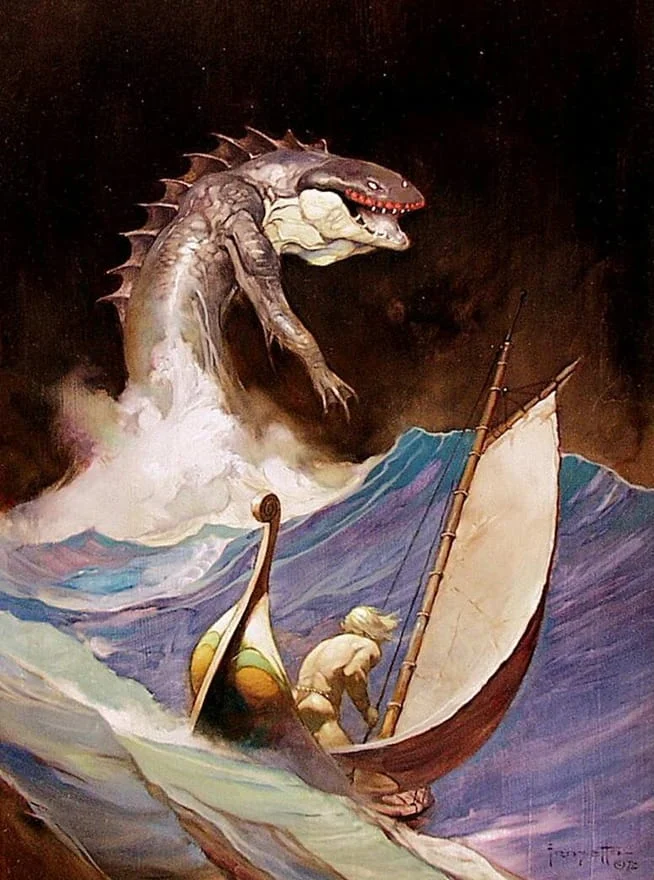
The quiz’s accompanying artwork, Frank Frazetta’s powerful illustration for Carson of Venus, serves as a visual testament to the aesthetic that defined much of this genre. Frazetta’s dynamic and muscular depictions of heroes and monsters captured the raw energy and adventurous spirit of Sword & Sorcery and Sword & Planet, becoming synonymous with the genre itself and inspiring countless artists and writers. His art, much like the authors and heroes in the quiz, is an indelible part of fantasy’s cultural legacy.
Echoes from the Guild: Official Responses and Community Engagement
While the "Heroes of Fantasy Quiz" may not elicit formal "official responses" from government bodies or corporations, it generates a vital form of official response within its own sphere: the enthusiastic engagement and dialogue of the fantasy community itself. Platforms like Black Gate magazine and Charles Gramlich’s The Swords & Planet League Facebook group serve as crucial hubs for this interaction, acting as unofficial "guild halls" where enthusiasts gather to share their passion and knowledge.
The very act of creating and publishing such a quiz is an "official response" from Black Gate to its readership, signaling a commitment to not only review and critique new works but also to preserve and celebrate the genre’s foundational texts and authors. It’s a call to arms for intellectual engagement, a challenge thrown down by the curators of fantasy lore to their dedicated followers.
Within these communities, the quiz functions as a powerful catalyst for discussion. Fans meticulously compare their scores, debate the nuances of each author’s work, and share anecdotes about how they discovered these heroes. For example, a discussion might erupt over whether a particular character is truly "Sword & Sorcery" or leans more towards "Epic Fantasy," or how one hero’s journey influenced another. These exchanges are invaluable, as they:
- Reinforce Collective Memory: They ensure that the legacies of authors like Robert E. Howard, C. L. Moore, and Edgar Rice Burroughs are not forgotten but actively remembered and discussed by new generations.
- Foster Deeper Understanding: Debating the quiz’s answers or the broader genre categories encourages participants to revisit the source material, leading to a richer appreciation of literary history and character development.
- Build Community: Shared challenges and triumphs create bonds among readers, strengthening the sense of belonging within the fantasy fandom. The scoring system, with its playful "bloodthirsty" and "squeamish" labels, further enhances this communal, light-hearted rivalry.
- Identify Expertise: For individuals like Charles Gramlich, administering such quizzes helps identify and celebrate the depth of knowledge within the community, often revealing unsung experts who can contribute further to discussions and content creation.
Furthermore, the quiz’s existence and its connection to The Swords & Planet League group highlights the importance of subgenre-specific communities. These groups provide a dedicated space for fans of particular fantasy niches—like the interplanetary adventures of Sword & Planet—to delve deeper than general fantasy forums might allow. This specialized engagement is a testament to the genre’s intricate world-building and diverse appeal.
In essence, the "official responses" to the quiz are found in the vibrant, ongoing conversation it sparks, validating the enduring relevance of these heroes and authors, and solidifying the role of platforms like Black Gate as essential arbiters and celebrants of fantasy literature.
Beyond the Blade: Implications of the Heroes of Fantasy Quiz
The "Heroes of Fantasy Quiz" from Black Gate magazine, while seemingly a simple test of knowledge, carries significant implications for the fantasy genre, its readership, and the broader cultural landscape. These implications extend from the preservation of literary heritage to the evolution of storytelling itself.
1. Preservation of Literary Heritage: The most immediate implication is the quiz’s role in preserving and promoting the canon of classic fantasy literature. By featuring authors and characters from across several decades – from Homer to Tolkien, from Howard to Gemmell – the quiz acts as a curator, ensuring that foundational works and their creators remain relevant. In an age of rapid content consumption, such initiatives encourage readers to revisit or discover the seminal texts that shaped the genre, preventing them from being lost to obscurity. This is crucial for understanding the lineage of modern fantasy.
2. Deepening Fan Engagement and Education: The quiz transforms passive reading into active engagement. It challenges fans to move beyond superficial enjoyment to a deeper understanding of authorial voice, character development, and genre distinctions. For those who score highly, it validates their expertise; for those who falter, it serves as a guide, prompting them to explore the works of authors they might not know. This educational aspect subtly elevates the discourse around fantasy, moving it beyond mere entertainment to a field worthy of study and appreciation.
3. The Enduring Appeal of Archetypes: The quiz implicitly highlights the enduring power of heroic archetypes. Whether it’s the barbarian king, the cunning adventurer, the tragic anti-hero, or the hidden monarch, these figures resonate across generations. The quiz’s success underscores humanity’s timeless fascination with courage, sacrifice, good versus evil, and the quest for identity and purpose. This confirms that despite evolving narrative styles and societal changes, certain fundamental human stories remain universally compelling.
4. The Role of Specialized Publications and Communities: Black Gate magazine and Charles Gramlich’s The Swords & Planet League exemplify the critical role of specialized publications and fan communities. In a fragmented media landscape, these platforms provide a focal point for niche interests, fostering a sense of belonging and shared passion. They are vital for maintaining enthusiasm for specific subgenres, promoting lesser-known works, and facilitating expert-level discussions that mainstream outlets might overlook. The quiz reinforces Black Gate‘s position as a respected authority and community builder within the fantasy world.
5. Bridging Generations of Readers: The quiz serves as a bridge between older generations of readers who grew up with the pulp masters and newer fans introduced to fantasy through more contemporary works or media adaptations. By mixing classic and relatively modern authors, it encourages cross-generational dialogue and the sharing of literary discoveries, enriching the overall fandom. A young reader familiar with The Black Company‘s Croaker might be inspired to discover Robert E. Howard’s Kull, tracing the evolution of grim fantasy.
6. Influence on Other Media: The literary heroes celebrated in the quiz have profoundly influenced other forms of media. From the direct adaptations of Tolkien’s Lord of the Rings and Burroughs’s Mars books to the countless video games, comics, and television shows that draw inspiration from Sword & Sorcery tropes, the characters and worlds discussed in the quiz are the bedrock of much of modern speculative fiction across all platforms. The quiz subtly reminds us of the literary origins of many beloved multimedia franchises.
7. Validation of the Genre’s Depth: Finally, the sheer depth and breadth of knowledge required to master the quiz validate fantasy as a serious literary genre, capable of complex world-building, profound character arcs, and thematic exploration. It challenges any lingering perceptions of fantasy as merely escapist or simplistic, showcasing its rich history and diverse contributions to storytelling.
In conclusion, the Black Gate "Heroes of Fantasy Quiz" is far more than a casual diversion. It is a vibrant declaration of the enduring power of fantasy literature, a call to knowledge for its devoted followers, and a testament to the timeless appeal of its legendary heroes and the visionary authors who brought them to life. It ensures that the fires of imagination, first kindled by ancient bards and pulp pioneers, continue to burn brightly for generations to come.