
Warhammer 40,000 11th Edition: A Deep Dive into the Latest Faction Focus Reveals
Introduction: The Shifting Sands of the 41st Millennium
The anticipation for the 11th Edition of Warhammer 40,000 continues to build, as Games Workshop progressively unveils a torrent of new rules, keywords, and detachment options. Following last week’s initial insights, the latest series of "Faction Focus" articles on Warhammer Community, supplemented by videos and social media posts, has provided a clearer picture of the strategic landscape players can expect in the grim darkness of the far future. This weekly recap series aims to distill these official revelations, offering a comprehensive and analytical overview of what these changes mean for army construction, gameplay dynamics, and the competitive meta.
With a steady stream of information, it is projected that players will have a foundational understanding of each faction’s direction by early June, aligning with the anticipated release of the "Armageddon" boxed set in just over a month. The core objective of this analysis is to condense and extrapolate from the officially released data, providing critical insights into the evolving ruleset. While some fundamental mechanics persist, the extensive rewrites to Detachments herald a significant transformation in how armies are built and how popular playstyles will manifest. This week’s revelations have been particularly impactful, touching upon core game mechanics and offering a tantalizing glimpse into the strategic depth of the new edition.
Main Facts: Core Changes Reshaping the Battlefield
This week’s Faction Focus articles have brought to light several pivotal changes that promise to profoundly impact gameplay in Warhammer 40,000 11th Edition. From the resurgence of an often-overlooked psychological mechanic to nuanced alterations in defensive positioning and weapon characteristics, the meta is poised for a significant shake-up. Key revelations include a substantial buff to the Battle-shock mechanic, a clarification on the interaction between Stealth and Cover, the introduction and refinement of several weapon keywords (HEAVY, CLOSE-QUARTERS, MOBILE, CLEAVE), a clearer understanding of Core Stratagems, and adjustments to critical engagement ranges for "slippery" units. Perhaps most significantly, the new Detachment Point (DP) system has begun to take shape, outlining how players will construct their forces with unprecedented flexibility and specialization.
Chronology: A Week of Unveiling the 11th Edition’s Foundations
The past week has been a whirlwind of information, with Games Workshop systematically releasing details through their Faction Focus series. These articles, often accompanied by supplementary videos and social media snippets, have rolled out a structured preview of the 11th Edition. The chronological progression of reveals began with overarching rule adjustments, affecting all armies, before delving into faction-specific modifications for some of the Imperium’s and Chaos’s most iconic forces, alongside the ravenous Tyranid swarms.
The initial announcements clarified universal mechanics, such as the surprising enhancement to Battle-shock tests and the crucial interaction between Stealth and Cover. This was followed by the introduction of new keywords like CLOSE-QUARTERS (replacing PISTOL), the refined HEAVY rule, and the tactical MOBILE ability. Glimpses of the core Stratagems and the innovative CLEAVE rule for melee attacks further elaborated on the foundational changes.
Subsequently, the focus shifted to army construction, with detailed insights into the new Detachment Point system and the nature of both new and digitally rewritten Detachments. This framework then provided context for the faction-specific previews. Orks led the charge with a look at their new ‘Rolling Def” Detachment, followed by extensive coverage of Space Marines, including various non-Codex Chapters. Astra Militarum showcased unique Detachments leveraging their specialist units, while Tyranids demonstrated flexible new options. The week culminated in a comprehensive "Mega-Preview" for Chaos, encompassing both Chaos Space Marines and Chaos Daemons, revealing a host of god-agnostic and unit-type focused Detachments. This systematic rollout has allowed players to gradually piece together the strategic puzzle of the 11th Edition.
Supporting Data: Deconstructing the New Rules
The devil, as always, is in the details. A closer examination of each revealed change highlights the intricate design philosophy underpinning the 11th Edition.
Battle-shock Gets a Shocking Buff
For much of 10th Edition, the Battle-shock mechanic was widely considered an underpowered and often negligible aspect of gameplay. Units with high Leadership values or specific special rules could easily shrug off its effects, rendering abilities designed to inflict Battle-shock on the opponent’s turn largely ineffective due as the condition would simply clear at the start of the next player’s turn. This was a particular frustration for factions like Chaos Knights, whose "Nightmare Hunt" Detachment struggled to capitalize on its psychological warfare potential.
The 11th Edition heralds a dramatic shift. Battle-shocked units will no longer automatically clear the condition; instead, they must pass a subsequent Battle-shock test to regroup. This critical change, initially revealed through a Space Marines Faction Focus video rather than its accompanying article, means the psychological scars of combat now persist. This is an enormous boon for armies capable of inflicting widespread Battle-shock, such as Drukhari, Space Marines, Adeptus Mechanicus, Chaos Knights, and especially Tyranids. These factions will find their ability to deny primary and secondary objectives significantly enhanced, as debuffs to Leadership can create cascading effects on an opponent’s scoring potential. While the immediate effects of Battle-shock (OC 0, no Stratagems, Desperate Escape) remain unchanged, its newfound persistence transforms it into a potent liability for units with Leadership 7+ or worse. Consequently, Enhancements or unit rules that can directly un-shock a unit, such as those typically found on Chaplains or Dark Apostles, are expected to see a substantial rise in strategic value.
Stealth and Cover Don’t Stack
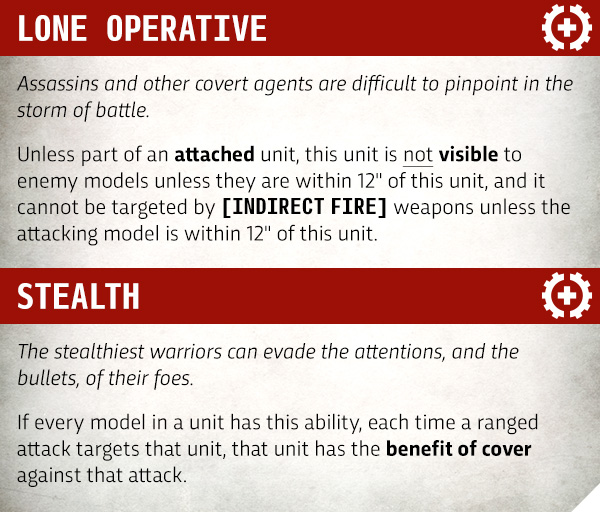
A point of considerable speculation following the reveal of the new Cadian Recon Squad Datasheet was how its Stealth ability would interact with the new benefit of cover. In 10th Edition, Stealth often combined with cover to provide a cumulative -2 to hit modifier, making units exceptionally resilient. The 11th Edition clarifies this interaction: Stealth now provides the benefit of cover while a unit is out in the open, provided every model in the unit possesses the rule. It does not stack.
In literal terms, this maintains the unit’s defensive bonus, but its practical implications represent a significant nerf. Official Games Workshop layouts suggest that acquiring the benefit of cover will be much easier in 11th Edition, meaning Stealth’s primary utility – granting cover when none is available – will be less frequently needed. Furthermore, unless "Ignore Cover" rules are rephrased, they will now functionally ignore Stealth as well. This creates a triple threat of problems for Stealth units. Previously, infantry units "toeing" onto objectives with part of their squad behind a wall greatly benefited from Stealth, as it offered an additional layer of survivability to an otherwise exposed position. With Terrain Areas now serving as objectives and typically providing cover to units within them, this crucial defensive synergy is largely gone. The change mirrors the nuanced rephording of "Fights First" in 11th Edition, a minor textual alteration that is poised to have massive, often negative, impacts on established strategies.
HEAVY, CLOSE-QUARTERS, and MOBILE: New Keywords Defined
The 11th Edition introduces a suite of refined and new keywords designed to streamline rules and enhance tactical depth.
-
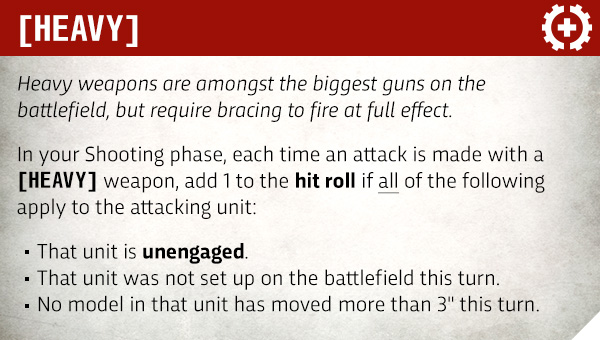
HEAVY Is Back: The HEAVY special rule returns with a tactical tweak. Units equipped with HEAVY weapons can now move up to 3 inches and still gain the +1 to their hit roll. However, this bonus is contingent on the unit being unengaged and not having been set up on the battlefield in the current turn. This prevents HEAVY from stacking with other weapon types, like PISTOLs, to improve shooting at targets in Engagement Range, emphasizing its role for more static or slowly repositioning fire support.
-
PISTOL Is Now CLOSE-QUARTERS: A significant housekeeping change sees the familiar PISTOL keyword replaced by [CLOSE-QUARTERS]. New datasheets from the 11th Edition boxed set, such as the Captain’s Heavy Bolt Pistol, now feature this new ability. The renaming offers a less literal and more thematic description of weapons designed for close-range engagements, potentially broadening its application beyond traditional pistols.
-
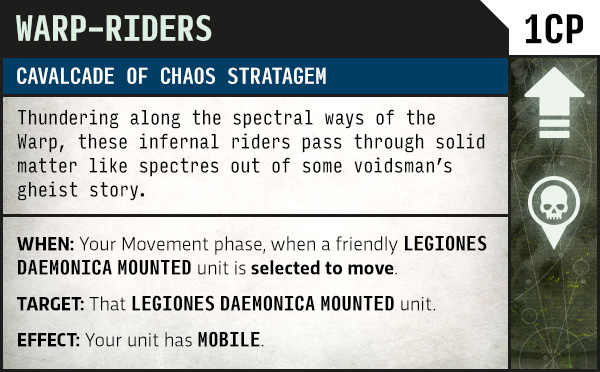
The New MOBILE Ability: Revealed during a Chaos update, the new MOBILE keyword offers crucial tactical flexibility. Mounted Daemons units, for example, can gain this ability via a Stratagem. Per Warhammer Community, MOBILE allows units to move through dense terrain features like ruins and walls that would otherwise impede their movement. This effectively consolidates and replaces the myriad of specific rules that previously allowed various units to traverse terrain as if it didn’t exist, simplifying rules interactions and offering a clear, consistent mechanism for enhanced battlefield maneuverability.
Core Stratagems: A Clearer Picture
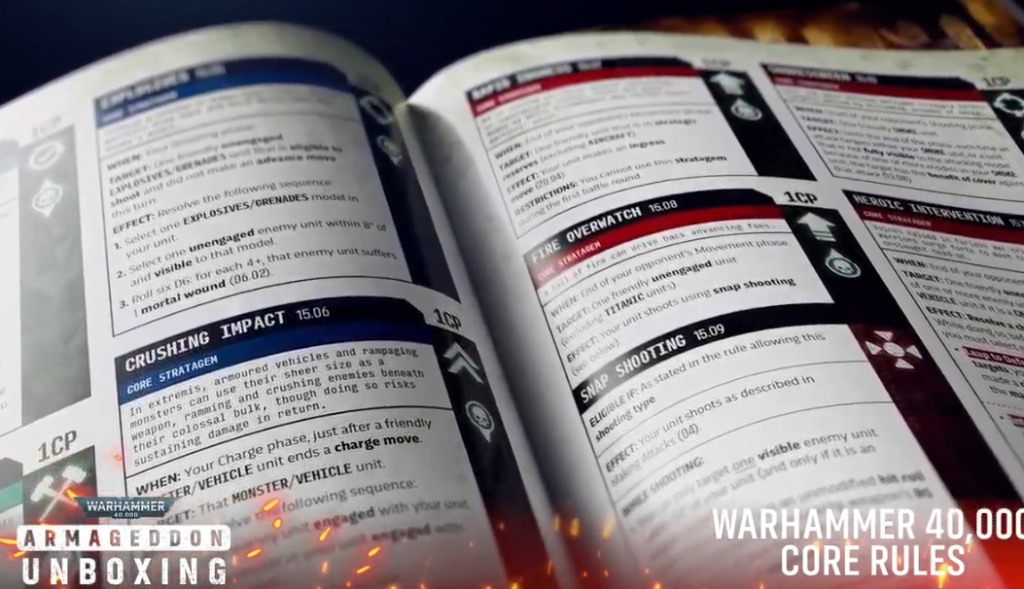
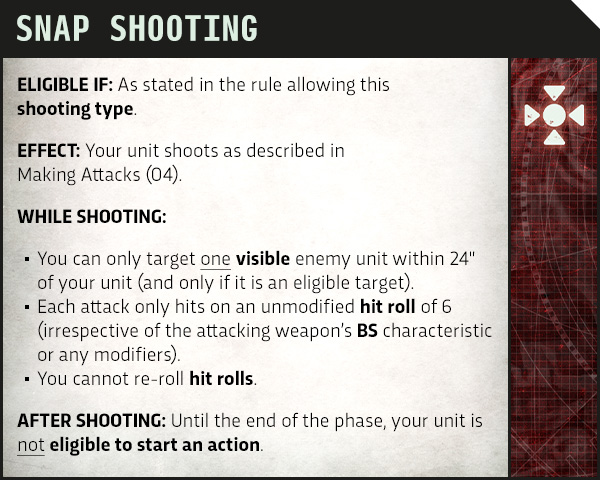
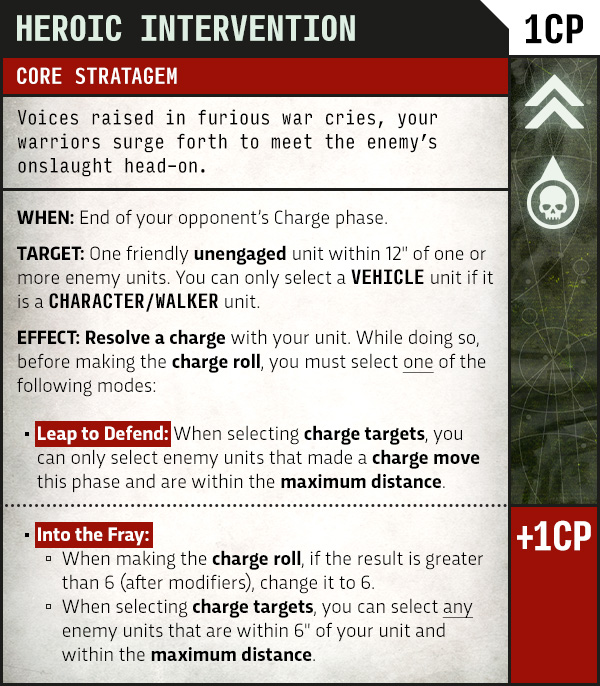
The unboxing review offered a brief but insightful glimpse into the Core Stratagems included in the 11th Edition rulebook. While the full list and detailed mechanics are yet to be revealed, this initial preview provides a much clearer understanding of the universal tactical options available to all armies. Additional information from the Space Marines Faction Focus clarified specific interactions, such as how Heroic Intervention will now function. The emphasis appears to be on a consolidated, clear set of fundamental Stratagems that form the bedrock of tactical play, ensuring a consistent strategic layer across all factions.
CLEAVE Gives Us Melee BLAST
A long-requested addition by players, a new keyword rule called CLEAVE makes its debut for melee weapons. The Warboss’ axe, for instance, has been shown with the CLEAVE 1 rule. This grants the attacking unit an additional attack for every five models in its target unit. This mechanic effectively brings a "Blast" equivalent to melee combat, making certain weapons far more effective against horde units. This innovation is particularly exciting for heavy-hitting units like Knights, which often struggle to maximize their damage output against numerous, lower-toughness targets.
Ranges Change for Slippery Units
The 11th Edition introduces a small but impactful set of changes to how range is measured for certain unit types and reactive moves, aligning with previous clarifications.
-
Lone Operative Evolution: The Lone Operative rule has been significantly altered. Instead of merely preventing units from being shot at outside of 12 inches, Lone Operatives are now simply not visible to those units beyond that range. This change carries an explicit clarification that they are also illegal to target with Indirect Fire outside of 12 inches, as expected. This distinction is crucial, as it carves out a number of rules that rely on visibility (e.g., those inflicting mortal wounds) from affecting Lone Operatives at range, bolstering their defensive utility.
-
Reactive Move Adjustments: Similar to the "Ingress Moves" clarification, reactive moves (such as those triggered by enemy advances) now appear to check for an 8-inch range rather than 9 inches. This allows enemy models to get slightly closer before a unit can shift away. While this might not drastically alter charging dynamics (which now measure base-to-base), it offers a minor but welcome advantage for units with specific ranged weapons, like 18-inch Rapid Fire options or multi-meltas, allowing them to close the gap slightly more effectively. This appears to be a sweeping change affecting various reactions and deployments, requiring players to adjust their spatial awareness and measurement habits.
Our First Look at New Detachments
The 11th Edition’s Detachment system has been a focal point of discussion, promising a balance between player freedom and systemic integrity. Previous editions’ experiments with sub-faction mixing proved divisive, highlighting the tightrope designers walk: too much freedom can lead to "soup" lists dominating, while too many restrictions can stifle faction flavor.
The Faction Focus articles have unveiled a host of new Detachment options. Crucially, a critical piece of information shared on social media confirmed that all new Detachments revealed thus far cost 1 Detachment Point (DP). Furthermore, it was stated that a 2,000-point game will afford players 3 Detachment Points, allowing for up to three different 1 DP Detachments in a single list. Games Workshop has also indicated that many older Detachments will cost 2 DP, with some of the most potent potentially costing 3 DP.
These new 1 DP Detachments are often hyperspecific, exemplified by Ork’s ‘Rollin’ Deff,’ which specifically buffs ‘Wagon’ units (Battlewagon, Kill Rig, Hunta Rig). These new Detachments utilize a "batching" mechanism, applying a new keyword (e.g., ‘Wagon’) to existing units to create clear thematic groupings. They also explicitly state limitations, such as only being able to take one ‘Wagons’ Detachment, preventing unintended rule overlaps. This approach is highly praised for providing clear shorthand, preventing problematic synergies, and allowing players to devote small portions of their army to highly specialized roles. Similar examples include Astra Militarum’s ‘Designation Force’ with its ‘Recon’ tag, almost certainly preventing its combination with ‘Recon Element.’ This concise design promises to add significant strategic depth and flavor.
Digital Detachment Rewrites
An intriguing observation from the Faction Focus articles is that all returning Detachments shown with rules tweaks for 11th Edition are digital-only releases, not originating from existing printed codexes. This suggests a strategic choice by Games Workshop. Given their upfront promise that 11th Edition would not be an "Index Edition" like 10th, and that existing army books would carry over, it is plausible that designers have more latitude to alter digitally released content. This implies that codex Detachments are less likely to see full-scale rules rewrites, with their balance more likely to be managed through adjustments to their Detachment Point costs. This approach would allow GW to maintain its commitment to printed materials while still iterating and balancing the game dynamically.
Detachment Utility Is King
The new Detachment Point system profoundly impacts army construction, moving away from the generalist "swiss army knife" lists that often dominated 10th Edition (e.g., Gladius Task Force). The ability to specialize a portion of one’s force into a niche role, while leaving the remainder to a broader skillset, unlocks new strategic avenues.
Consider the Ork ‘Taktikal Brigade,’ which allows relevant units (Boyz, Kommandos, Stormboyz) to Advance or Fall Back and still perform an action in the same turn. This unconfirmed but likely ability suggests a Force Disposition that rewards subtle, objective-focused play rather than pure lethality. An Ork player could combine this with ‘Rollin’ Deff’ to have a mobile, action-oriented core supported by resilient Battlewagons crashing into the mid-board. Similarly, Astra Militarum’s ‘Designation Force’ synergizes with long-range firepower, adding +3 inches to the Detection Range of scout units, allowing them to pick off targets from further away. This could pair exceptionally well with a 2 DP Detachment like ‘Siege Regiment,’ which incentivizes artillery. Games Workshop has confirmed that "most" codex Detachments will be 2 DP, meaning many armies will integrate a familiar core with one of these new, niche 1 DP specialist options. This design thrust empowers players to identify gaps in their army’s capabilities and fill them with highly specific, cost-effective tools.
Faction-Specific Previews: A Glimpse of Future Armies
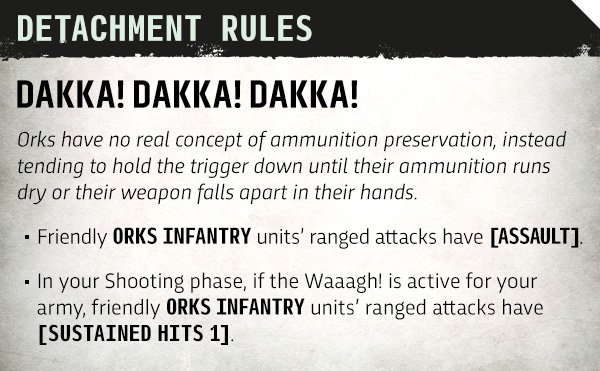
Orks Seem Ded Kunnin’: The Greenskins received a preview of three Detachments. ‘Rolling Def” is a new ‘WAGON’ Detachment, granting Kill Rigs, Hunta Rigs, and Battlewagons the ability to re-roll Charge rolls and auto-advance 6 inches, while explicitly stating that only one ‘WAGON’ Detachment can be taken. The updated ‘Taktikal Brigade’ now allows Stormboyz, Boyz, and Kommandos to perform actions after Advancing or Falling Back. ‘More Dakka!’ provides Infantry units with [ASSAULT] and [SUSTAINED HITS 1] when the Waaagh! is active, reinforcing their aggressive playstyle.
Marines Make Use of New Rule Changes: Space Marines received a substantial preview, covering not only the Adeptus Astartes Codex but also the four non-Codex Chapters (Blood Angels, Dark Angels, Black Templars, and Space Wolves). While specific details for each were varied, the overarching question remains the Detachment Point cost of the highly versatile ‘Gladius Task Force.’ If Gladius costs 2 DP, it will likely be a staple alongside one of the new 1 DP options. If it costs 3 DP, players may explore more unconventional combinations.
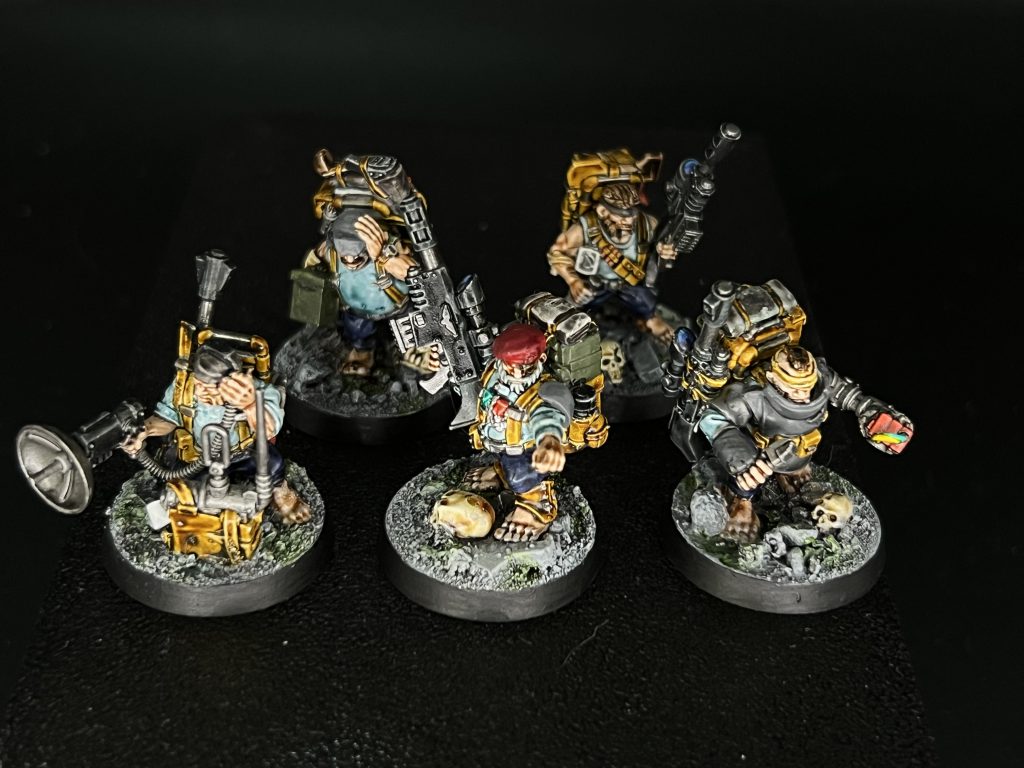
Astra Militarum Gets Weird: The Imperial Guard showcased three Detachments. ‘Abhuman Auxiliaries’ buffs Ogryn/Bullgryn and Ratling units, giving them the ‘Abhuman’ tag and allowing Commissars to issue ‘Take Aim!’ orders to them. ‘Bridgehead Strike’ returns, making Tempestus units BATTLELINE, granting +1 OC, and +1 to hit on the turn they are set up, with an enhancement for a Turn 1 ingress move for Tempestus Officers. Finally, the ‘Designation Force’ centers on scout units (Scout Sentinels and Infantry SMOKE units), allowing them to designate enemy units for +3 inches to detection range, synergizing with long-range firepower.
Tyranids Are Flexible: The Great Devourer unveiled three Detachments. ‘Ambush Predators’ focuses on Lictors, granting them Deep Strike and re-rolls of 1 to hit against enemy CHARACTER units, with an enhancement providing a D3+3 inch reactive move. ‘Talons of the Norn Queen’ is tailored for Norn Emissary/Assimilator units, allowing them a once-per-battle re-pick for their ‘Singular Purpose’ ability. The updated ‘Warrior Bioform Onslaught’ makes Warriors BATTLELINE and grants them a 5+ invulnerable save, a significant boost to their survivability. Its enhancement gives a Tyranid Prime +1 AP and re-roll wound rolls in melee, and the ‘Alien Physiology’ Stratagem can grant a Warriors unit -1 to wound against incoming attacks with Strength greater than their Toughness.
The Chaos Mega-Preview: Chaos received a five-part preview for both Chaos Space Marines (CSM) and Chaos Daemons.
-
Chaos Space Marines: The revamped ‘Cabal of Chaos’ (now ‘Empyric Wellspring’) gives non-Daemon Psyker units +1 Strength to ranged attacks with a Dark Pact, and non-Khorne Daemon Princes +2 Strength and +1 AP in the Fight Phase with a Dark Pact. An enhancement can grant a model the PSYKER keyword. ‘Devotees of Destruction’ grants HEAVY to Havocs and Obliterators, aiding accuracy for static gunlines. ‘Murdertalon Raiders’ buffs INFANTRY FLY units, giving them re-rolls of 1 to hit against battle-shocked/half-strength units and -1 to be hit when attacked. Its enhancement gives a Jump Lord’s unit a 5+ Invulnerable save, and a Stratagem grants [LANCE] to a charging FLY unit, significantly boosting Warp Talons’ ability to wound tough targets.
-
Chaos Daemons: Three unit-type focused Detachments were revealed. ‘Cavalcade of Chaos’ buffs MOUNTED units (Drones, Bloodcrushers, Seekers, Fateskimmers), allowing them to Fall Back, Shoot, and Charge, with a Stratagem to grant ‘Mobile’ for a phase. ‘Lords of the Warp’ enhances Daemon non-MONSTER CHARACTER units with +1 Leadership and Objective Control, with enhancements for extra wounds or a ‘Fights First’ Stratagem. ‘Warptide’ focuses on Battleline units, granting them ASSAULT and the ability to Advance and Charge. Its enhancement gives a Battleline unit +1 Strength, and ‘Daemonic Infestation’ allows a unit to heal 3 wounds, suggesting a change in healing mechanics. This extensive Daemon preview offers much-needed attention to an army that did not receive a 10th Edition Codex, with players eagerly awaiting clarification on Daemon allies.
Official Responses: Games Workshop’s Vision
All the information presented here stems directly from Games Workshop’s official channels: Warhammer Community articles, video features, and social media posts. The developers have implicitly and explicitly communicated their vision for 11th Edition through these reveals. Their emphasis on Detachment Points as a balancing mechanism for existing codexes, coupled with the introduction of new 1 DP specialized options, highlights a desire for both continuity and innovation. The promise that 11th Edition is not an "Index Edition" and that existing army books will remain relevant underscores a commitment to the current player base, while the flexibility demonstrated with digital-only Detachment rewrites allows for dynamic balancing without invalidating printed materials. The careful introduction of new keywords and the re-evaluation of core mechanics like Battle-shock and Stealth indicate a concerted effort to deepen strategic play and address previous edition’s imbalances.
Implications: The Evolving Strategic Landscape
The cumulative effect of this week’s reveals paints a picture of an 11th Edition that prioritizes tactical depth, army specialization, and a more dynamic battlefield.
Strategic Depth: The enhanced Battle-shock mechanic forces players to consider psychological warfare more seriously, potentially leading to a shift in unit selection and objective control strategies. The nuanced interaction of Stealth and Cover means defensive positioning will require a more granular understanding of terrain. New keywords like MOBILE and CLEAVE introduce specific tactical advantages, rewarding armies that can leverage them effectively.
Army Specialization: The Detachment Point system is arguably the most significant structural change. By offering numerous 1 DP specialist Detachments, players are empowered to build highly focused "sub-armies" within their main force. This moves away from the "one-size-fits-all" Detachments of 10th Edition, encouraging players to identify specific roles or "holes" in their army’s capabilities and fill them with precise tools. This could lead to a far more diverse and less predictable meta, as players experiment with combinations of generalist 2 DP codex Detachments and specialized 1 DP options.
Player Experience: Players will need to adapt to new measurement conventions (e.g., 8-inch reactive moves) and internalize a broader array of keywords and their interactions. The "batching" system for Detachments, while initially requiring learning new keywords (like ‘WAGON’ or ‘RECON’), promises to simplify rules interactions in the long run by clearly defining unit groupings.
Competitive Meta: The implications for competitive play are substantial. Factions that can exploit the persistent Battle-shock (e.g., Tyranids, Chaos Knights) are likely to see a surge in viability. The re-evaluation of Stealth will force armies relying on it for resilience to adapt. The ability to tailor army segments via 1 DP Detachments means "skew" lists might become more potent and varied, challenging generalist builds. The "Gladius cost" question for Space Marines, and similar core Detachments for other factions, will be critical in shaping their competitive presence.
Future Outlook: As more Faction Focus articles are released, the overarching design philosophy of 11th Edition will become increasingly clear. The coming weeks, leading up to the "Armageddon" release, will be crucial in revealing the full scope of changes and allowing players to refine their strategies. The dynamic nature of digital rule updates also suggests a more responsive balancing approach from Games Workshop, promising an evolving and engaging game for years to come.
We continue to monitor all official channels – Warhammer Community, videos, and social media – to condense these critical updates into one comprehensive overview. Join us next week for another recap as the 11th Edition of Warhammer 40,000 continues to take shape.



Leave a Comment