Penelope of Ithaca: Unraveling the Enduring Legacy of Loyalty and Wit
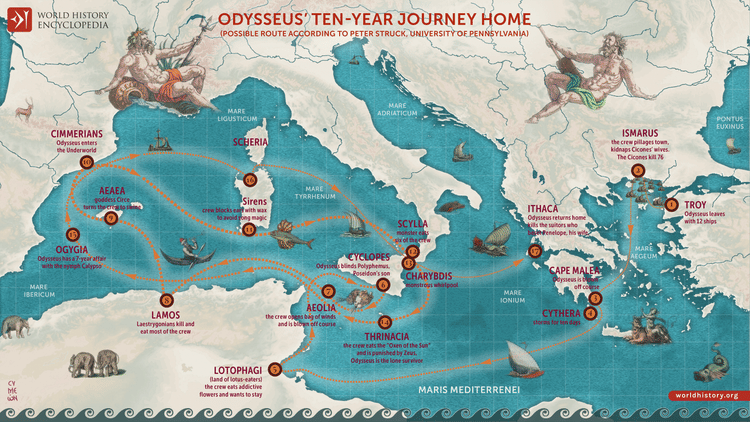
In the annals of Greek mythology, few figures resonate with the complexity and unwavering spirit of Penelope, the formidable queen of Ithaca. As the wife of the legendary Odysseus, the cunning king renowned for his exploits, and the devoted mother of Telemachus, Penelope’s story is an epic within an epic. She is immortalized in Homer’s monumental work, The Odyssey (circa 750 BCE), not merely as a passive spouse awaiting her hero’s return, but as a proactive, intelligent, and deeply resilient woman whose fidelity and shrewdness became a benchmark for heroic virtue in ancient Greece and beyond. Her twenty-year ordeal, marked by the absence of her husband and the relentless siege of unwelcome suitors, forms the dramatic core of her narrative, showcasing a character whose strength of will and intellectual prowess were as vital to the survival of her household as Odysseus’s martial might was to his journey home.
The Steadfast Queen: An Introduction to Penelope’s Enduring Myth
Penelope’s narrative transcends a simple tale of domestic waiting; it is a profound exploration of endurance, hope, and the intricate dynamics of power within an aristocratic household during a time of prolonged uncertainty. Her steadfastness in the face of immense pressure, combined with her remarkable ingenuity in outmaneuvering a powerful and predatory male collective, has cemented her status as one of literature’s most compelling female protagonists. She represents an archetype of loyalty and intelligent resistance, inspiring countless interpretations and discussions across centuries.
Royal Lineage and Strategic Union
Penelope’s noble origins trace back to Sparta, a kingdom renowned for its formidable warriors and strict societal structures. She was the daughter of King Icarius of Sparta and the graceful naiad nymph Periboia. Her lineage further connected her to a network of influential figures within the Greek world, including five brothers: Thoas, Damasippos, Imeusimos, Aletes, and Perileos. This royal background, while affording her status, also placed her within the intricate web of political marriages and alliances common in the heroic age.
Spartan Roots and a Nymph’s Daughter
Her birth to a king and a nymph subtly hints at a blend of mortal and divine qualities, often attributed to characters destined for significant roles in mythology. While not a goddess, her background provides a certain gravitas and perhaps a touch of ethereal beauty, which, alongside her intelligence, made her a highly sought-after bride.
The Oath of Tyndareus and Marriage to Odysseus
The circumstances of Penelope’s marriage to Odysseus are steeped in the high-stakes political maneuvering surrounding another legendary figure: Helen of Sparta. Odysseus, initially one of Helen’s numerous suitors, foresaw the potential for conflict among the many powerful men vying for her hand. Recognizing this, he struck a shrewd deal with Helen’s father, Tyndareus. In exchange for Tyndareus’s assistance in securing Penelope’s hand, Odysseus offered a brilliant solution to prevent a war over Helen.
Odysseus advised Tyndareus to extract an oath from all of Helen’s suitors: they would collectively swear to defend the chosen bridegroom against any harm or challenge regarding his marriage. This ingenious strategy bound the most powerful men in Greece to a common cause, preventing immediate bloodshed and setting a precedent for future alliances. True to his word, Tyndareus then facilitated Odysseus’s marriage to Penelope, with King Icarius consenting to the union. Shortly before the devastating Trojan War erupted, Odysseus and Penelope welcomed their only son, Telemachus, into the world, a child destined to grow up in the long shadow of his father’s absence.
Twenty Years of Absence: The Weight of a Kingdom
The departure of Odysseus for the Trojan War marked the beginning of Penelope’s two-decade-long ordeal. What began as a martial campaign evolved into a grueling test of her resilience, intelligence, and unwavering commitment to her family and kingdom.
The Mourning Queen and the Palace Under Siege
At the outset of The Odyssey, Penelope is portrayed as a figure of profound sorrow. Her husband’s twenty-year absence has left a gaping void, not only in her heart but also in the governance of Ithaca. The palace, once a vibrant hub of royal authority, has been overrun by a multitude of ambitious suitors, all vying for her hand and, by extension, the throne of Ithaca. These men, driven by greed and a disregard for social custom, have transformed the royal residence into their personal feasting hall, consuming the family’s resources and disrespecting the royal household.
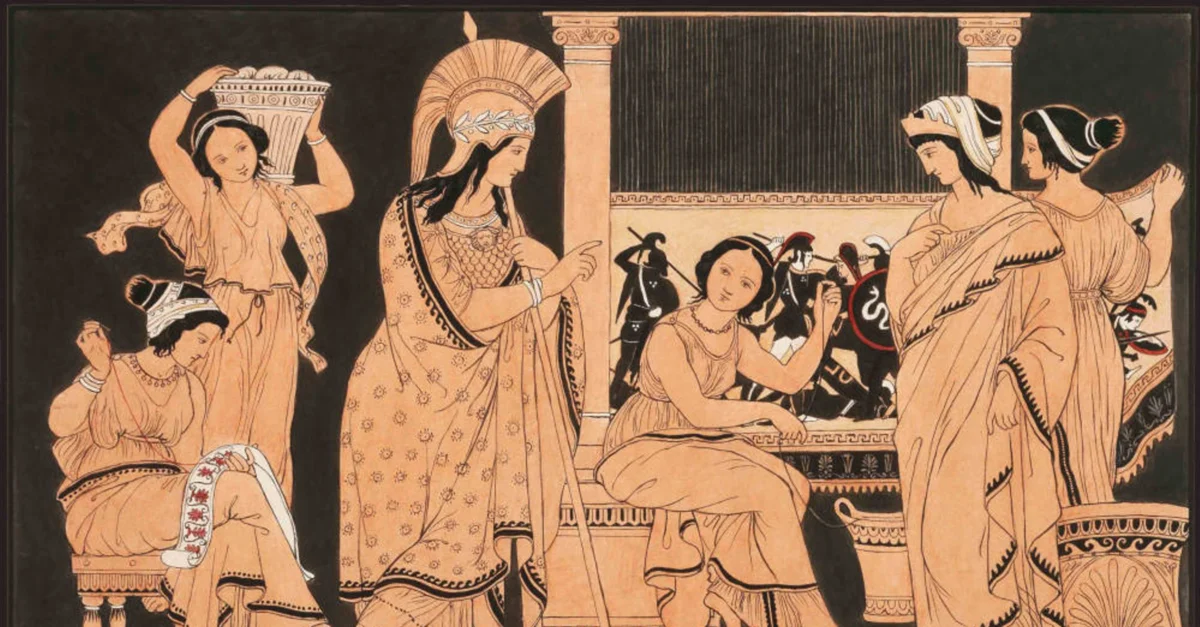
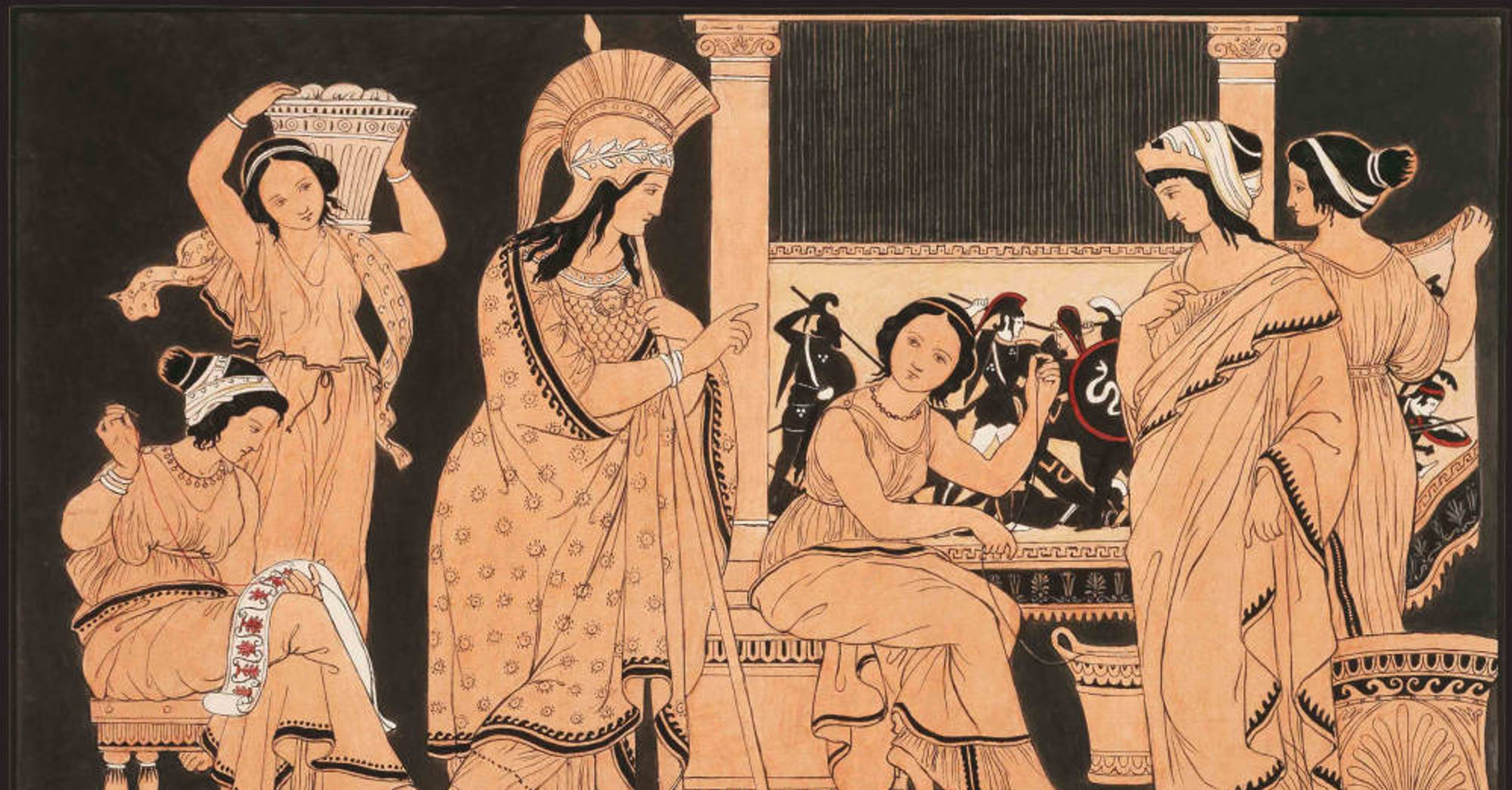
One poignant evening, as the revered bard Phemius performs a song detailing the tragic homeward journeys of the Achaean heroes, Penelope descends from her chambers, accompanied by her loyal handmaidens. Overwhelmed by the painful reminder of Odysseus’s presumed loss, she implores Phemius to cease his mournful melody. Her words, imbued with raw grief, echo the deep longing that defines her existence:
How I long for my husband — alive in memory, always,
That great man whose fame resounds through Hellas
Right to the depths of Argos!
(Homer, The Odyssey, 1.395-398)
Her son, Telemachus, still young and struggling to assert his authority, attempts to comfort his mother and gently sends her back to her chambers. There, Penelope continues to weep, her sorrow a constant companion, until the compassionate goddess Athena intervenes, lulling her into a restorative, blissful sleep. This divine intervention underscores the immense emotional toll of her situation and highlights the gods’ awareness of her plight.
The Suitors’ Tyranny: A Household Undone
The presence of the suitors was not merely an inconvenience; it was a profound threat to the stability and future of Ithaca. In Book 2 of The Odyssey, Telemachus, gathering the Achaeans for an assembly—the first without his father’s guiding presence—articulates the depth of their insolence. He passionately laments how these men have commandeered the palace, slaughtered their livestock, feasted on their provisions, and consumed their precious wine, all while pressing Penelope to choose one of them as her new husband and king. Their actions represented a blatant disregard for hospitality, tradition, and the rightful heir, plunging the kingdom into an unprecedented state of chaos and financial ruin.
A Web of Deception: Penelope’s Clever Resistance
Faced with an untenable situation and lacking the physical means to expel the numerous suitors, Penelope employed her sharp intellect and cunning to buy time and preserve her dignity.
The Shroud of Laertes: A Four-Year Delay
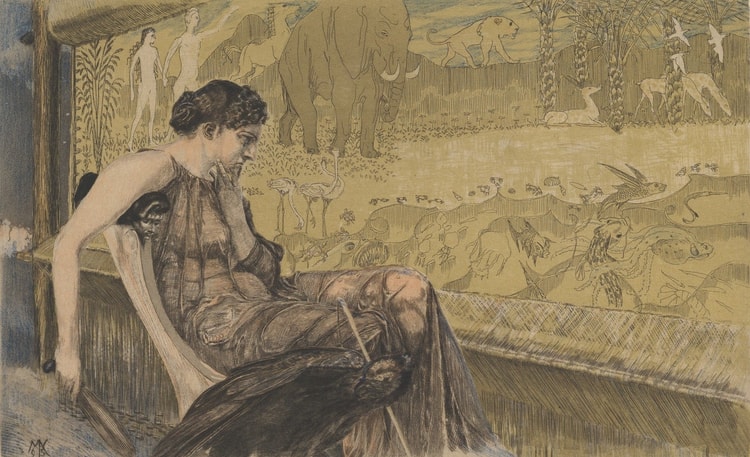
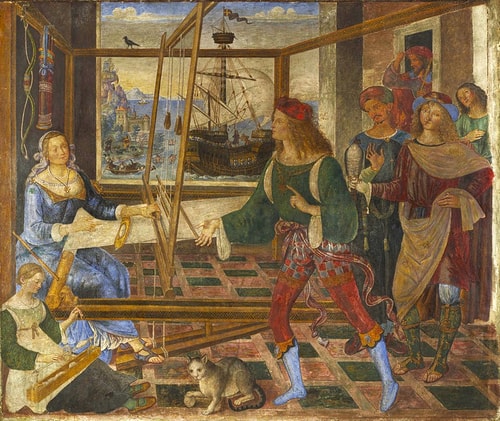
Penelope’s most celebrated act of ingenuity was her elaborate weaving trick. She declared to the suitors that she would choose a new husband only after completing a funeral shroud for her aging father-in-law, Laertes. This was a socially acceptable delaying tactic, as honoring the dead was a sacred duty. For three years, the suitors, believing her sincerity, waited patiently while she worked diligently on the shroud in the royal halls during the day.
However, Penelope had devised a brilliant stratagem: each night, under the cover of darkness, she would meticulously unravel the work she had completed that day, effectively starting anew each morning. This allowed her to indefinitely postpone the completion of the shroud and, consequently, her decision to remarry. Her secret remained safe until the fourth year, when one of her disloyal handmaidens, eager to expedite a marriage, exposed her clever deception to the suitors.
Antinous, one of the most arrogant and outspoken suitors, reacted with particular fury to Telemachus’s complaints and Penelope’s trickery. He publicly blamed Penelope for her "cunning" and for giving the men "false hope" for nearly four years. Once her deception was revealed, the suitors forced her to complete the shroud against her will, stripping her of her most effective delaying tactic. Antinous, in his tirade, acknowledged Penelope’s remarkable intelligence and skilled hands, even while condemning her "tricks." He argued that as long as she remained in the palace, delaying the inevitable, the suitors would remain, draining Ithaca’s resources. He brazenly implored Telemachus to send Penelope back to her father’s house in Sparta, where her father could choose a husband for her, thus ridding them of her presence.
Telemachus’s Plea and Divine Omens
Telemachus, though still developing his assertiveness, staunchly refused Antinous’s demand. He argued that he would never forcibly expel his own mother from her home, emphasizing that if the suitors possessed any sense of shame, they would depart voluntarily. He then called upon Zeus, the king of the gods, to punish the suitors for their egregious disrespect and impiety. In a dramatic show of divine acknowledgment, Zeus sent two eagles from the heights of the assembly, which then engaged in a violent aerial struggle, shocking all onlookers. While the men debated the meaning of this powerful omen, Telemachus silenced them, reiterating his resolve: he would embark on a year-long quest to find news of his father. If, after that time, he received undeniable evidence of Odysseus’s death, he would then concede to his mother marrying another man. Before setting sail on his perilous mission, Telemachus took precautions, ensuring that Penelope would remain unaware of his voyage for twelve days, sparing her immediate anguish.
A Mother’s Anguish and Divine Intervention
Telemachus’s departure, while a necessary step in the unfolding epic, plunged Penelope into deeper anxiety, setting the stage for further divine interaction.
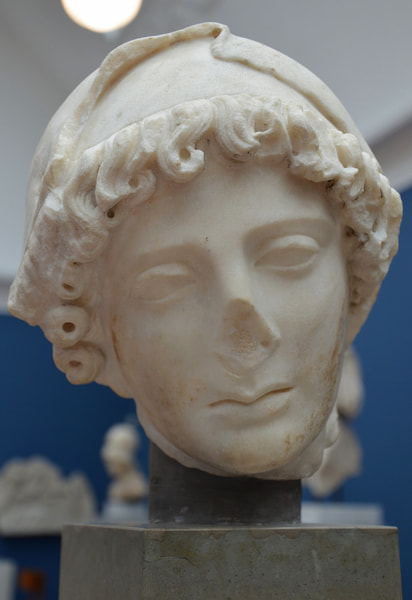
The Suitors’ Malice: A Plot Against Telemachus
With Telemachus away, the suitors, particularly Antinous, saw an opportunity to solidify their control and eliminate a potential threat. Antinous hatched a nefarious plan to ambush Telemachus in the narrow straits between Ithaca and the rocky island of Same, intending to murder him and secure the path to Penelope and the throne. The other suitors, eager for the spoils, readily agreed to this dark scheme. Fortunately, the loyal herald Medon overheard their plotting and, recognizing the grave danger, swiftly reported it to Penelope. Understandably, the news left her profoundly shocked and dismayed. She questioned why her son had left her side, consumed by worries about the perilous fate that might await him.
Penelope’s Despair and Athena’s Comfort
Overwhelmed by her compounding losses—first her beloved husband, and now the potential loss of her only son—Penelope collapsed in grief. In her anguish, she angrily questioned her handmaidens’ silence, demanding to know why none had informed her of Telemachus’s departure. She then pleaded for her aged father-in-law, Laertes, to be informed, hoping he might devise a rescue plan for Telemachus. Her old, trusted nurse, Eurycleia, taking pity on the queen, begged forgiveness for keeping the secret, explaining that she had sworn an oath to Telemachus. Eurycleia implored Penelope to pray to Athena, assuring her that the gods would not allow another heir of King Arcesius to perish.
Heeding this wise counsel, Penelope offered a heartfelt prayer to Athena, a testament to her deep faith and desperation:
Hear me, daughter of Zeus whose shield is thunder –
tireless one, Athena! If ever, here in his halls,
resourceful King Odysseus
burned rich thighs of sheep or oxen in your honour,
oh remember it now for my sake, save my darling son,
defend him from these outrageous, overbearing suitors!
( The Odyssey, 4.859-864)
As Penelope, consumed by worry, refused food and drink, Athena once again intervened. The goddess allowed the sweet balm of sleep to overtake the queen and then appeared to her in a dream, disguised as Penelope’s sister, Iphthime. The phantom figure of Iphthime sought to comfort and reassure Penelope that no harm would befall Telemachus, as he had never wronged the gods. Half-asleep and believing she was conversing with her sister, Penelope expressed her profound concern for both her husband and son. Athena, still in disguise, reiterated that the powerful goddess was watching over Telemachus and that his divine escort would keep him safe. Penelope, yearning for definitive news, then inquired about Odysseus’s fate. Athena, in a moment of cautious compassion, responded that she could not reveal whether he was alive or dead, deeming it wrong to offer false hope. With her message delivered, Athena vanished like a breeze, leaving Penelope to awaken with a newfound, albeit fragile, sense of peace.
Confrontation and a Queen’s Resolve
The return of Telemachus sparked a renewed dynamic in the palace, pushing Penelope to confront her tormentors directly.
Telemachus’s Return and Renewed Hope
On the fifth day of Telemachus’s absence, a herald arrived at the royal palace with welcome news: Penelope’s son had returned safely home. This news, while a source of immense relief for Penelope, was met with bitter resentment by the suitors. Gathering outside the palace, they watched Telemachus’s ship sail into the harbor, their dark intentions simmering. Antinous, ever the instigator, once again stirred discontent, arguing that they must assassinate Telemachus to seize his land and wealth, which they could then divide among themselves. He suggested that Penelope and her future husband would continue to reside in the palace. He further encouraged the suitors to intensify their courtship of Penelope by showering her with lavish gifts, believing that the man who could offer the most impressive bounty would be the one favored by the gods to become her husband.
The Queen’s Fury: Challenging Antinous
Inspired by a surge of righteous anger, Penelope finally felt compelled to confront her tormentors about their murderous plot against Telemachus. Accompanied by her loyal handmaidens, she entered the great hall, her presence commanding attention. She directed the full force of her wrath at Antinous, publicly tearing down his character and denouncing him as a "madman." She sharply reminded him of a past incident: his own father had once sought refuge in the royal palace of Ithaca after participating with Taphian pirates in an attack on their allies. This pointed rebuke exposed Antinous’s hypocrisy, highlighting his family’s debt to Odysseus while he now sought to destroy Odysseus’s lineage.
Eurymachus, another leading suitor, attempted to placate Penelope, promising that no man alive would lay a hand on Telemachus while he was present. While his words offered temporary reassurance, they were ultimately hollow. Placated for the moment, Penelope retreated to her chambers, her heart still heavy with sorrow for Odysseus, where Athena once again offered her the gentle escape of sleep.
The Display of Gifts: A Strategic Move
Later, Penelope prepared to meet with her suitors and her son. Athena, ever watchful, ensured her readiness. The goddess made Penelope fall into a deep sleep and, while she rested, bestowed upon her immortal gifts, making her appear taller, fuller in form, and cleansing her face. Penelope awoke feeling refreshed and resolved to stop passively wasting her life. When she appeared before the suitors, their jaws dropped in awe, their minds consumed by lust at her enhanced beauty. Penelope seized the opportunity to berate Telemachus for allowing the beggar to be treated so poorly, to which Telemachus responded that he, too, felt shame and was driven mad by the suitors’ evil plots.
Odysseus, disguised among the beggars, observed this interaction with immense pride, witnessing Penelope’s strength and authority. Eurymachus approached Penelope, lavishing praise upon her beauty, proclaiming that she surpassed all other women. Penelope, however, replied with a poignant statement that the gods had destroyed her beauty on the very day Odysseus sailed for Troy. She then cleverly criticized her suitors, reminding them that in times past, suitors would bring gifts for the woman they courted and provide their own provisions. Her current suitors, however, were merely consuming Ithaca’s wealth. This subtle yet powerful rebuke, overheard by Odysseus, filled him with quiet satisfaction at his wife’s unwavering spirit and sharp wit. Antinous, attempting to regain control, encouraged Penelope to accept their gifts, declaring that they would not return home until she had chosen one of them to marry. One by one, the suitors presented her with extravagant and lavish gifts: a resplendent robe, an amber necklace, intricately crafted earrings, and a choker, among other treasures. Penelope, maintaining her composure, withdrew with her maids, who carried the abundance of gifts in their arms.
The Beggar in the Palace: A Test of Truth
The arrival of the disguised Odysseus introduced a pivotal layer of dramatic irony, allowing husband and wife to interact without recognition, setting the stage for their eventual, emotional reunion.
An Encounter by the Fire
Penelope, seeking respite from the suitors, settled into her favorite chair by the fire. She overheard one of her disrespectful handmaidens verbally abusing the disguised Odysseus. Incensed by this behavior, Penelope swiftly threatened the maid and then graciously instructed the beggar to take a seat. She initiated a conversation, asking him about his origins, confessing her profound yearning for her husband, and admitting her disregard for the persistent suitors. She confided in him about her elaborate weaving trick and how, after three years, her deception had been exposed. The beggar, maintaining his elaborate ruse, recounted a fabricated story of meeting Odysseus on his journey to Troy, weaving elements of truth into his lies. Penelope wept openly as she listened, deeply moved by the stories of her husband, and pressed the beggar for more details. He reassured her that Odysseus was alive and would indeed return to Ithaca. Despite her desperate desire to believe him, a part of Penelope’s heart, hardened by years of dashed hopes, struggled to accept that her husband would ever truly come back.
Dreams and Prophecies
The next morning, Penelope and the disguised Odysseus met again. Penelope, still troubled by her dreams, recounted one particularly vivid vision, asking the beggar for his interpretation. Once he heard the details of her dream, the beggar, with a knowing certainty born of his true identity, replied that it was an unmistakable sign: Odysseus was destined to return and rescue Penelope from the oppressive grasp of her suitors. This moment further highlights the profound connection between them, even in disguise, as Odysseus subtly guides her towards the truth.
The Bow of Odysseus: A Fateful Contest
Inspired by divine will and her own deep intuition, Penelope devised the ultimate test, one that only her true husband could possibly pass.
The Ultimate Challenge
Under the subtle inspiration of Athena, Penelope conceived a definitive test for her suitors: an archery contest using Odysseus’s mighty bow. This treasured weapon, a symbol of Odysseus’s strength and unique identity, had been carefully stored in a hidden vault. Penelope retrieved it, shedding tears as she held the relic of her long-lost love. Appearing before the assembled suitors, she explained the terms of the challenge: she would marry the man who could successfully string Odysseus’s bow and shoot an arrow cleanly through the holes of twelve aligned axes. This was a feat of strength, skill, and intimate knowledge of the bow, something only Odysseus himself could accomplish.
Suitors’ Failure and the Beggar’s Triumph
One by one, the arrogant suitors attempted the challenge, but each one failed miserably, unable even to string the powerful bow, let alone perform the impossible shot. As their frustration mounted, Odysseus, still disguised as a humble beggar, requested a turn, much to the contempt and derision of the other men. Penelope, perhaps sensing something extraordinary, promised that if he succeeded, she would clothe him in fine garments, give him a sword, and ensure his safe passage wherever he wished to go. Telemachus, privy to his father’s true identity and aware of the impending bloodshed, wisely sent Penelope back to her chambers before Odysseus, now revealing himself, and he began the brutal slaughter of the suitors. This violent purge marked the climax of Odysseus’s return and the restoration of order to his beleaguered household.
The Unveiling: A Reunion Forged in Secrets
Even after the horrific massacre of the suitors, Penelope’s cautious nature and deep-seated trauma prevented immediate recognition of her husband, leading to one final, poignant test.

The Nurse’s Revelation and Penelope’s Doubt
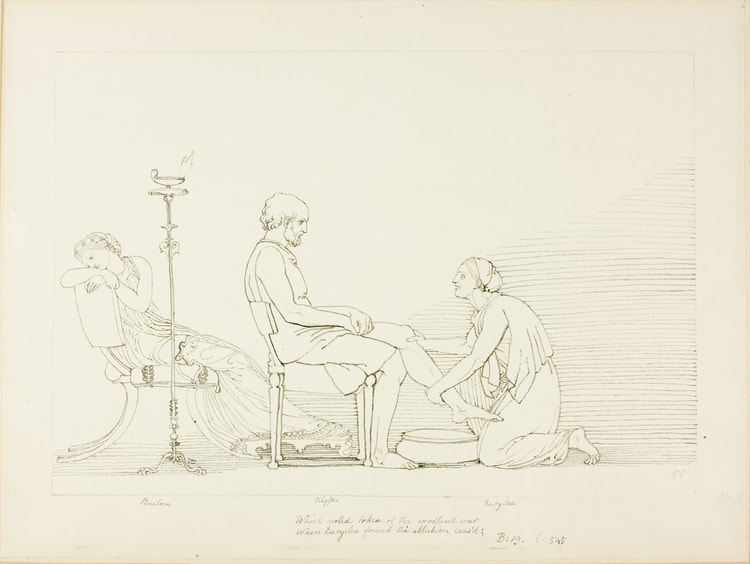
Penelope was awakened by her old, loyal nurse, Eurycleia, who excitedly proclaimed that Odysseus had finally returned home and had slaughtered all the suitors. Naturally, Penelope, accustomed to disappointment and the cunning of men, initially feared for the nurse’s sanity, despite Eurycleia’s fervent insistence. Penelope’s questions came thick and fast, a whirlwind of hope and apprehension. She yearned to believe but was not yet ready to fully commit to the incredible news. She decided to descend to the great hall to verify the astonishing claim for herself. Telemachus, witnessing his mother’s hesitation, questioned why she did not immediately embrace his father. Penelope, with a wisdom born of long suffering, replied that she felt powerless, unable to simply look him in the eyes. She declared that if it was truly Odysseus, she would know, for they possessed secret signs, intimate knowledge shared only between the two of them, that would confirm his identity.
The Secret of the Olive Bed
Odysseus, tired of her protracted caution, accused Penelope of being coldhearted. Penelope, however, remained steadfast in her test. She instructed her maid, Eurycleia, to move their bridal bed out of their bridal chamber. This command instantly angered Odysseus, who passionately retorted, asking how anyone could possibly move the bed he himself had built, for it was carved directly into the living trunk of an olive tree, rooted deep within the earth.
This detail, a secret known only to them, was the final, undeniable proof. Penelope’s cautious facade crumbled. Finally realizing that this man was indeed her long-lost husband, she ran to embrace him, both of them dissolving into tears of relief and joy. Their reunion was not one of immediate recognition, but one earned through years of fidelity, suffering, and a shared, intimate secret that proved their unique bond.
A Night of Shared Tales
As they embraced, Odysseus gently informed Penelope that one more trial awaited him: a journey in honor of the sea god Poseidon, to appease the deity he had offended during his travels. Penelope, her heart now full, replied with hope that this final task would mean they could live happy lives together thereafter. They finally retreated to their bed, where Odysseus recounted, in painstaking detail, all his harrowing adventures. Penelope, captivated and insatiably curious, did not close her eyes until she had heard every last word, soaking in the narrative of his twenty-year odyssey, which had now finally brought him home.
Beyond Homer: Diverse Interpretations of Penelope
While Homer’s Odyssey firmly established Penelope as the paragon of fidelity, her character has not been immune to alternative, and sometimes scandalous, interpretations throughout history. These differing views offer a fascinating glimpse into the evolving cultural perceptions of female virtue and agency in ancient societies.
Challenging Fidelity: Alternative Narratives
Some ancient sources dared to challenge Homer’s portrayal of the loyal and chaste wife. The lyric poet Pindar (circa 518 BCE) and the Greek historian Hecateus of Miletus (circa 550 to circa 476 BCE) mention Penelope as being the mother of Pan, the goat-footed god of the wild. The paternity of Pan in these accounts varies, attributed to Hermes, Apollo, or even Mercury (the Roman equivalent of Hermes). More controversially, the historian Duris of Samos (circa 350 BCE) wrote that Pan’s birth was the result of Penelope sleeping with all her suitors, a narrative that starkly contradicts the Homeric ideal.
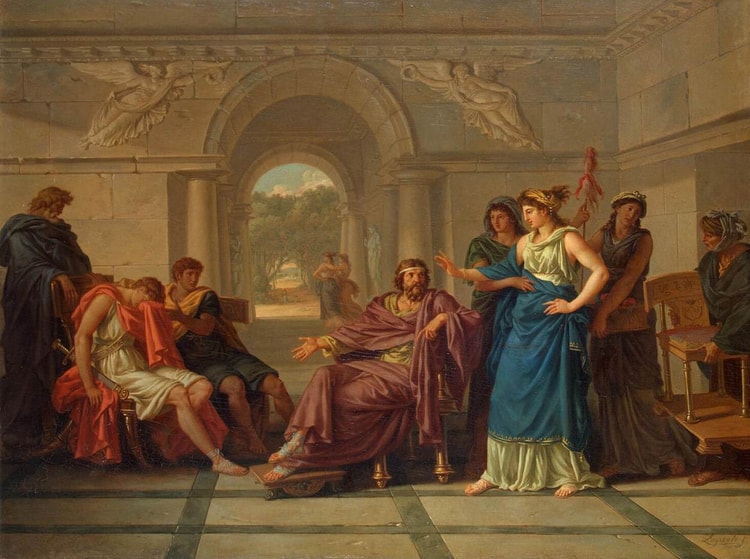
This unflattering portrayal was echoed by the travel writer Pausanias (circa 110 to circa 180 CE), who recounted a very different story from the Mantineans in the Peloponnese. According to this account, Odysseus returned home only to discover Penelope’s unfaithfulness and, in a fit of rage, banished her from Ithaca. These alternative narratives presented Penelope not as the virtuous queen, but as an adulteress, potentially stripping her of the moral authority so central to her Homeric character.
Reclaiming the Narrative: Victims or Adulteresses?
It is important to note that many authors and scholars, both ancient and modern, pushed back against these less flattering interpretations. They often presented Penelope as a victim of seduction, either by her persistent suitors or by a cunning god like Hermes, rather than as a willing adulteress. This reinterpretation sought to preserve her image of virtue while acknowledging the powerful pressures she faced.
Today, a common theory regarding the Pan paternity story is that the Penelope named as Pan’s mother was, in fact, a distinct nymph who, due to a shared name, was mistakenly conflated with the more famous Queen of Ithaca throughout history. This theory allows for the preservation of Homer’s virtuous Penelope while accounting for the existence of these divergent myths.
Penelope’s Enduring Legacy: A Symbol for the Ages
Penelope’s story, far from being confined to ancient texts, has resonated deeply throughout history, shaping perceptions of womanhood, loyalty, and intellectual strength. Her legacy is one of enduring admiration and continuous reinterpretation.
Ancient Admiration and Archetypal Significance
From the time of Homer, Penelope has been admired and respected as an embodiment of fidelity and unwavering devotion to her husband. Over centuries, she evolved beyond simply "Odysseus’s wife" to become a heroine in her own right, celebrated for her intelligence and resilience. The Etruscans, an ancient civilization in Italy, featured her prominently in their art, recognizing her significance. The Roman poet Ovid (circa 43 BCE to 17 CE), in his Heroides, presented her as a powerful symbol of love and marital fidelity, penning a letter from her perspective that amplified her suffering and steadfastness. Women in ancient Rome often aspired to possess her wisdom and faithfulness, holding her up as a model of domestic virtue. Her renown even stretched to ancient Egypt, demonstrating the widespread impact of her narrative.
Modern Reinterpretations: A Feminist Icon
The fascination with Penelope continues unabated in the modern era. Contemporary literature, novels, short stories, and poems frequently feature her, often re-examining her story through a modern lens. A notable example is Margaret Atwood’s 2005 novel, The Penelopiad, which retells The Odyssey from Penelope’s perspective, with the queen reminiscing about her life from Hades in the 21st century. Atwood’s work, like many other modern interpretations, endeavors to reclaim Penelope’s narrative, presenting her as a powerful woman of agency, intelligence, and often, a wry sense of humor. Modern authors and scholars celebrate her key role in The Odyssey, emphasizing her cunning, her resilience, and the subtle power she wielded in a patriarchal society. She is often seen as a proto-feminist icon, a woman who maintained her autonomy and protected her household through wit and strategy in the face of overwhelming male aggression.
The Timeless Appeal of a Resilient Spirit
Homer’s epic poem, with Penelope at its heart, continues to inspire and be celebrated today, its themes of love, loss, homecoming, and resilience remaining eternally relevant. Penelope’s character endures as a testament to the strength of the human spirit, a reminder that heroism is not solely found on the battlefield but also in the quiet, unyielding determination of a woman protecting her family and her future against impossible odds. Her journey, marked by sorrow and ingenious resistance, ensures her place as an indelible figure in the pantheon of literary heroines, a queen whose wit and loyalty ultimately brought her long-awaited reunion and cemented her legendary status.