The Impossible Made Real: Doom Reborn on the Humble Commodore 64
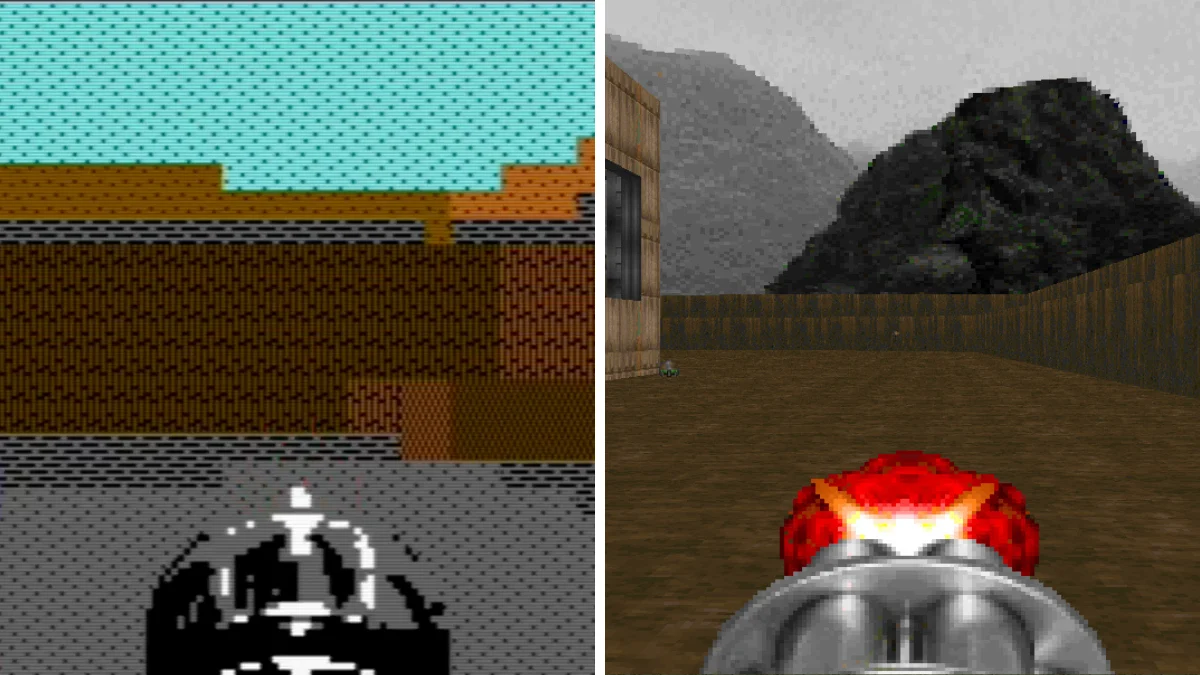
For decades, the legendary first-person shooter Doom has been a benchmark for technological prowess, pushing the boundaries of what was thought possible on gaming hardware. Its iconic status has led to it being ported to an astonishing array of devices, from the mundane to the utterly bizarre. Yet, the prospect of running id Software’s seminal 1993 title on the venerable Commodore 64 – a machine whose heyday predated Doom’s release by over a decade – seemed like a distant, almost fanciful dream. Until now. Engineer and programmer Steve McCrea has achieved what many believed to be impossible, bringing a surprisingly functional and visually compelling version of Doom to the beloved 8-bit powerhouse.
This monumental undertaking is not merely a technical curiosity; it represents a profound testament to human ingenuity and a deep understanding of retro computing. McCrea, whose impressive resume includes work on beloved Metroid titles and the VR port of Resident Evil 4, has embarked on a project that transcends typical game development, delving into the very core of what makes a game playable and enjoyable. His Commodore 64 Doom port is more than just a successful emulation; it’s a reimagining, a masterful feat of optimization and creative problem-solving that breathes new life into a classic on an unforgiving platform.
The Genesis of an Ambitious Project: Overcoming the Odds
The Commodore 64, released in 1982, was a titan of its era, renowned for its impressive graphics and sound capabilities for the time. However, by the release of Doom in 1993, the computing landscape had dramatically shifted. First-person shooters, with their demands for 3D rendering, complex environments, and rapid processing, were inherently unsuited to the C64’s 8-bit architecture. The machine’s relatively limited processing power and memory made such a port seem like an insurmountable challenge.
McCrea’s approach circumvents the direct emulation of Doom’s true 3D engine. Instead, his C64 adaptation is built upon the foundations of his previous project, "The Keep," a first-person dungeon crawler he developed for the Commodore VIC-20. The VIC-20, an earlier and less powerful predecessor to the Commodore 64, itself represented a significant technical achievement for its time. McCrea leverages a technique known as "ray casting" within a tile-based grid. This method, while not true 3D rendering in the modern sense, allows for the illusion of depth and perspective by simulating how light rays would interact with the game world.
"It’s a far from straightforward port," McCrea explained in a recent post on X, formerly Twitter. "And it’s technically not 3D." This admission highlights the fundamental engineering challenge: how to translate the visceral, immersive experience of Doom into a format compatible with hardware vastly inferior to the original target platform. The ray casting on a tile grid provides a clever workaround, enabling the simulation of a 3D space without requiring the raw processing power for full polygonal rendering.
A Leap Beyond Expectations: Features and Visuals
What sets McCrea’s Doom C64 apart from its conceptual predecessor, "The Keep," is the sheer ambition in replicating Doom’s core gameplay elements. While "The Keep" offered a more static, grid-locked maze experience akin to early first-person titles like Wolfenstein 3D, McCrea’s Doom C64 boasts a surprising level of environmental complexity.
Key advancements include:
- Variable Floor and Ceiling Heights: This is a crucial element that adds significant depth and visual interest to the environments. The ability to have different elevations within the same room breaks the monotonous flatness often seen in older 3D simulations, creating more dynamic and believable spaces.
- Elevators: The inclusion of functional elevators further enhances the sense of a real, explorable environment, adding verticality and strategic possibilities to level design.
- Opening Doors: A seemingly simple feature, but the smooth and responsive opening of doors contributes greatly to the immersion and pace of the game.
- Visible Weapons: Unlike "The Keep," where weapons were abstract representations, McCrea has managed to render visible weapon sprites. This is a significant visual upgrade that directly impacts the player’s sense of agency and combat readiness, making the experience feel much more akin to the original Doom.
Perhaps the most astonishing revelation in recent progress updates is the implementation of variable lighting. This feature, often a hallmark of advanced graphics in its time, adds a crucial layer of atmosphere and visual fidelity to the C64 port. The interplay of light and shadow can dramatically alter the perception of a space, and its inclusion here is a testament to McCrea’s mastery of the platform’s limitations.
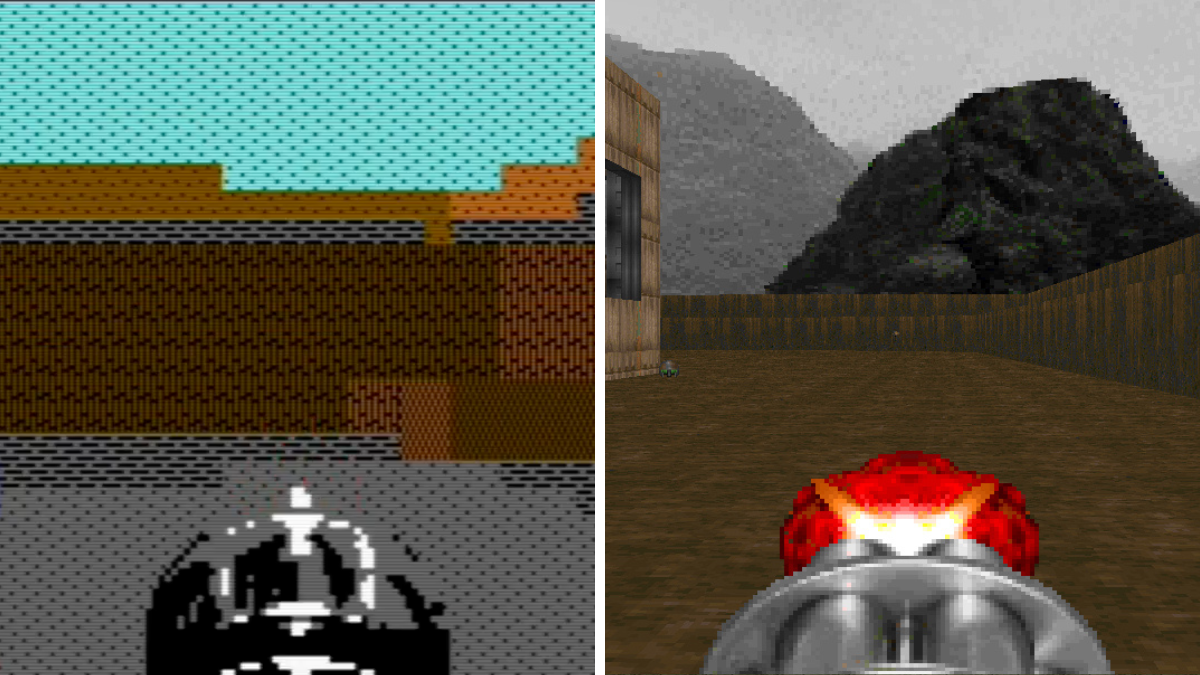
Furthermore, McCrea has showcased a skybox in his work-in-progress videos. This technique, where a static image of the sky is rendered as the background, is a common method for creating the illusion of an outdoor environment. Its presence suggests that McCrea is not just focusing on interior levels but is aiming to replicate the full scope of Doom’s diverse settings.
The Road Ahead: Level Design and the Quest for Music
As of the latest updates, McCrea has successfully implemented all levels from Episode 1 (E1M1 through E1M8) of the original Doom. This represents a significant chunk of content and demonstrates the viability of his port for a substantial portion of the game. The fact that these levels are playable with the aforementioned features, including variable heights and visible weapons, is a remarkable achievement in itself.
However, the project is not without its ongoing needs. McCrea has openly stated that he is actively seeking a musician to contribute to the game’s soundtrack. The iconic, adrenaline-pumping music of Doom is as integral to its identity as its groundbreaking gameplay. Finding a composer who can capture that spirit within the sonic limitations of the Commodore 64 would be another significant undertaking. The call for a musician has even drawn the attention of established figures in the retro gaming music scene, with a hopeful mention of Chris Hülsbeck, known for his work on titles like Turrican.
Reverberations Across the Industry: A Legend’s Praise
The sheer audacity and success of McCrea’s project have not gone unnoticed. Scott Miller, the founder of Apogee Software and the publisher of the seminal Wolfenstein 3D, expressed his profound admiration for the achievement. Miller revealed that back in the early days of id Software, he had implored the developers to create a Commodore 64 version of Wolfenstein 3D, a request that was met with the assertion that it was "not possible."
"Back when we released Wolf3D I begged Id to make a C-64 version and they said it wasn’t possible," Miller stated. "Now I’m crying." This poignant reaction underscores the immense technical hurdle that McCrea has overcome. It speaks volumes about the perceived limitations of the Commodore 64 for such demanding genres and highlights the transformative nature of McCrea’s work. His success not only reopens the discussion about the capabilities of vintage hardware but also serves as an inspiration to a new generation of developers and enthusiasts.
Implications and the Future of Retro Gaming
Steve McCrea’s Doom for the Commodore 64 is more than just a fan project; it’s a paradigm-shifting demonstration of what can be achieved with deep technical knowledge, creative problem-solving, and a passion for preserving and evolving gaming history. This port has profound implications for the retro gaming community and beyond:
- Redefining Possibilities: It challenges long-held assumptions about the limitations of older hardware. What other complex games, once deemed impossible for these machines, could be brought to life through innovative programming techniques?
- Inspiring Innovation: McCrea’s methods, particularly his clever use of ray casting and optimization strategies, could inspire new approaches to game development, even in modern contexts, by focusing on efficiency and clever design over brute force.
- Preservation and Accessibility: By making Doom playable on the Commodore 64, McCrea is not only preserving a piece of gaming history but also making it accessible to a new audience who might not have experienced it otherwise, or who can now experience it in a novel and engaging way.
- The Enduring Appeal of Classic Games: The continued fascination with and dedication to porting classic games like Doom to unusual platforms speaks to the timeless quality of their design and the enduring appeal of these digital experiences. It highlights that the core of a great game lies in its mechanics, atmosphere, and sense of fun, elements that can transcend hardware generations.
As the project continues to evolve, with the addition of music and potentially further refinements, Steve McCrea’s Doom for the Commodore 64 stands as a monumental achievement. It is a testament to the power of human ingenuity and a thrilling reminder that even the most seemingly insurmountable technical barriers can be overcome with enough dedication, skill, and a touch of retro magic. The echoes of this accomplishment will undoubtedly resonate throughout the gaming world for years to come, inspiring a new wave of passion for the past and a fresh perspective on the future.