The Temporal Paradox of Star Trek: Generations: How a Cut Scene Created a Legendary Plot Hole
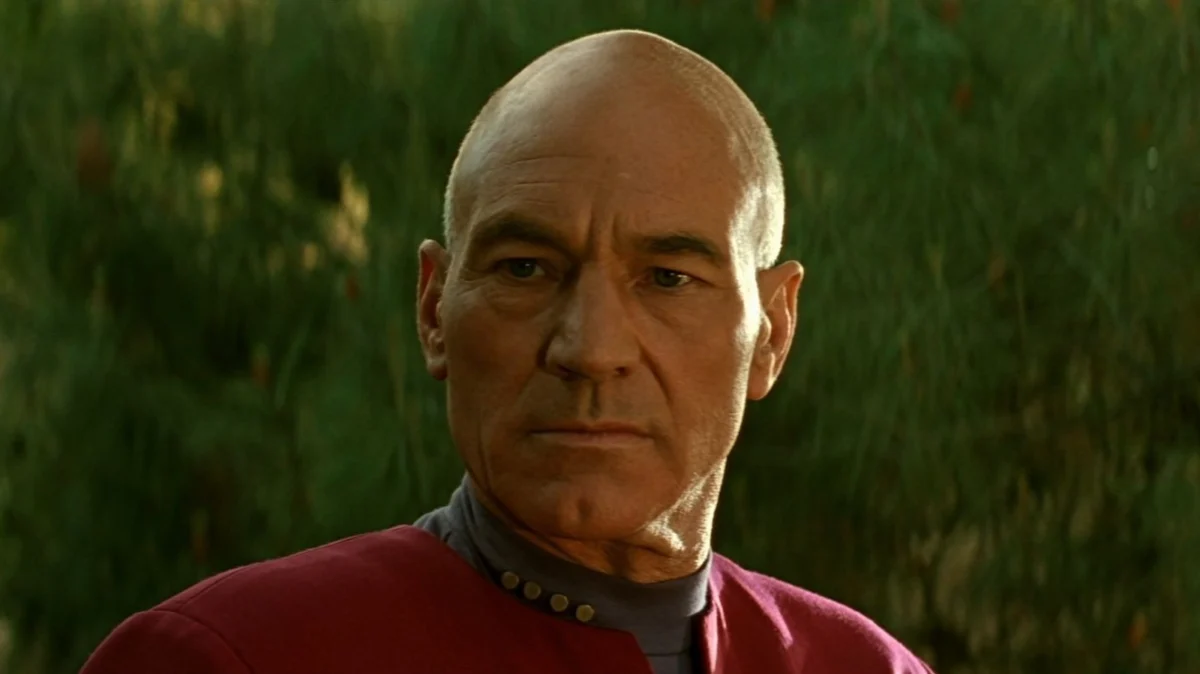
The 1994 cinematic transition of the Star Trek franchise from the "Original Series" (TOS) cast to "The Next Generation" (TNG) crew was intended to be a monumental hand-off. Star Trek: Generations, directed by David Carson, aimed to bridge the 78-year gap between Captain James T. Kirk and Captain Jean-Luc Picard. However, for nearly three decades, the film has been defined less by its emotional weight and more by a glaring logical inconsistency regarding its central plot device: the Nexus.
New light shed on the film’s production reveals that the most scrutinized plot hole in the movie—the question of why Picard did not use the Nexus’s time-travel capabilities more effectively—was actually addressed in a scene that never made it to the final cut. According to co-screenwriter Brannon Braga, the explanation was sacrificed on the altar of pacing, leaving a narrative vacuum that Trekkies have been dissecting since the Clinton administration.
Main Facts: The Nexus and the Ten-Minute Window
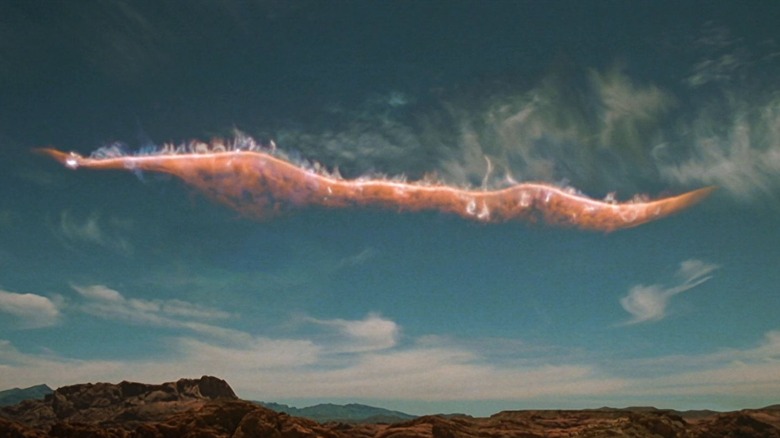
At the heart of Star Trek: Generations is the Nexus, described as a "negative space wedgie"—a massive, free-floating energy ribbon that traverses the galaxy. The Nexus is more than just a celestial phenomenon; it is a gateway to a pocket dimension where time has no meaning and every individual’s deepest desires are manifested in a state of eternal bliss.
The film’s climax hinges on Dr. Tolian Soran (Malcolm McDowell), a scientist obsessed with returning to the Nexus after being forcibly removed from it decades prior. To "steer" the ribbon toward him, Soran intends to destroy the Veridian star, an act that would result in the death of millions on a nearby inhabited planet. Captain Picard fails to stop Soran in their initial confrontation, the star is destroyed, and both Picard and Soran are swept into the Nexus.
Inside this "heaven," Picard meets James T. Kirk, who had been presumed dead since 2293 but was actually preserved within the ribbon. Because the Nexus exists outside of linear time, Picard is told by a psychic projection of Guinan (Whoopi Goldberg) that he can leave the Nexus at "any place and any time."
This revelation creates the film’s most infamous logical lapse. Picard chooses to return to the surface of Veridian III a mere ten minutes before Soran launches his trilithium rocket. This decision results in a desperate, low-stakes fistfight and the eventual death of Captain Kirk. For years, fans have asked: If Picard could go back to any time, why not go back twenty-four hours? Why not go back a week and have Soran arrested by Starfleet? Why not go back to the beginning of the movie and warn the Enterprise-B?
Chronology: A Timeline of the Nexus Encounters
To understand the gravity of the plot hole, one must look at the chronological events as established in the film’s narrative:
- 2293: During the maiden voyage of the Enterprise-B, the ship encounters the Nexus ribbon while rescuing El-Aurian refugees (including Soran and Guinan). Captain James T. Kirk is seemingly killed when a section of the hull is blown away. In reality, he is pulled into the Nexus.
- 2371: Dr. Soran, having spent 78 years obsessed with returning to the "heavenly" dimension, begins destroying stars to alter the gravity of the sector and pull the Nexus toward Veridian III.
- The Veridian Encounter: Picard confronts Soran on the planet’s surface. He fails to stop the launch. The star collapses, the shockwave destroys the Enterprise-D (causing the famous saucer crash), and Picard enters the Nexus.
- The Nexus Meeting: Inside the ribbon, Picard experiences a Victorian Christmas with a family he never had. He eventually rejects the illusion and finds Kirk.
- The Return: Picard and Kirk exit the Nexus together, arriving back on Veridian III just minutes before the disaster they already witnessed.
The decision to return to that specific moment is what Brannon Braga later admitted was a narrative failure caused by the removal of a specific explanatory dialogue.
Official Responses: Brannon Braga on the "Boring" Truth
The explanation for this oversight was buried in a 1996 interview with Brannon Braga, published in Sci-Fi Universe Magazine. Braga, who co-wrote the screenplay with Ronald D. Moore, was candid about the film’s structural weaknesses, admitting that the movie was "full of f***ing plot holes."
Regarding the Picard-exit conundrum, Braga revealed that a specific speech was written and filmed to justify Picard’s decision. The reasoning? The Prime Directive—specifically, the Temporal Prime Directive.
"There was a speech in the movie that explained all that […] but we cut it," Braga stated. "You know, it’s the Prime Directive. You can’t go screwing up the timeline. He can’t go back to when Soran was born; the further back he goes, the more he risks. We cut the speech because it was a little too expositional and a little boring."
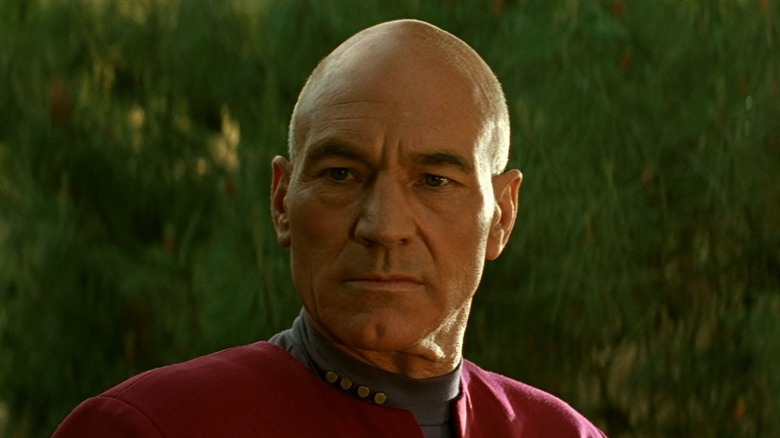
In the logic of the writers, Picard, as a staunch adherent to Starfleet principles, felt a moral obligation to minimize his "temporal footprint." By returning only ten minutes prior to the disaster, he was attempting to fix the immediate crisis without causing a butterfly effect that could rewrite nearly a century of Federation history. However, by removing this explanation, the filmmakers left Picard looking less like a principled commander and more like an unimaginative strategist.
Supporting Data: A History of Narrative Inconsistencies
The Nexus exit is far from the only issue cited by critics and fans. Star Trek: Generations has long been the subject of intense scrutiny, most notably in a famous 30-minute video essay by the production team at Red Letter Media, which highlighted several other "egregious" lapses in logic:
- The Enterprise-B Location: At the start of the film, the Enterprise-B is the "only ship in range" to respond to a distress call, despite being on a media cruise just outside of Earth’s solar system—the most heavily defended and populated region of Federation space.
- Geordi’s Kidnapping: Dr. Soran kidnaps Chief Engineer Geordi La Forge and installs a camera in his visor to spy on the Enterprise. Critics argue that Soran’s plan was unnecessarily convoluted, as he already possessed the technology to destroy stars; the sub-plot served mostly to give the TNG crew something to do while Picard was busy with the main plot.
- The Destruction of the Enterprise-D: The flagship of the Federation is defeated by a twenty-year-old Klingon Bird of Prey (manned by the Duras sisters) because the Enterprise crew fails to rotate their shield harmonics—a basic tactical maneuver established in previous episodes of the television series.
- Kirk’s Burial: After Kirk dies helping Picard, Picard buries him under a pile of rocks on a desolate planet (Veridian III) that is about to be scorched by a sun (if they had failed) or simply left behind. Fans have long argued that Kirk deserved a return to Earth or a burial at sea/space, rather than being left in a shallow grave on a remote rock.
These inconsistencies contribute to the perception that Generations was a film struggling to balance its high-concept sci-fi ideas with the logistical requirements of a big-budget action movie.
Implications: The "Pass the Torch" Mandate vs. Creative Integrity
The existence of these plot holes points to a larger issue in the film’s production: the "Pass the Torch" mandate. Paramount Pictures was eager to transition the film franchise to the younger, more active Next Generation cast, but they felt a cinematic debut required the presence of the legendary William Shatner to ensure box-office success.
This created a "churlish" narrative environment, as the source material notes. The transition had already effectively happened on television; The Next Generation had run for seven successful seasons and had already surpassed the original series in many metrics of popularity. Star Trek VI: The Undiscovered Country (1991) had already given the original crew a poignant and definitive send-off.
By forcing a crossover, the writers had to invent a "celestial nirvana" (the Nexus) that could bridge the 78-year gap, which inherently introduced time-travel logic that is notoriously difficult to manage in a two-hour script. The decision to cut the "boring" exposition regarding the Prime Directive suggests that the studio prioritized "pacing" over "cohesion," a common pitfall in franchise filmmaking.
Furthermore, the film was designed to appeal to "casual filmgoers" who might not have seen a single episode of the TV show. This led to a simplification of the characters and the over-explanation of certain themes (like "Time is the fire in which we burn") while ignoring the complex internal logic that long-time fans expected.
Legacy: A Flawed Bridge
Ultimately, Star Trek: Generations remains a polarizing entry in the canon. While it features stunning cinematography and a strong performance by Malcolm McDowell, its legacy is inextricably linked to the "what ifs" of its script.
The revelation of the cut Prime Directive speech offers some closure to fans who felt Picard’s actions were out of character. It suggests that the Picard of Generations was still the same man who once told Q that "the trial never ends"—a man burdened by the weight of responsibility and the fear of the consequences of his power.
Had that "boring" speech remained, Generations might have been remembered as a thoughtful meditation on the ethics of time travel and the burden of command. Instead, it stands as a cautionary tale of how the cutting room floor can sometimes claim the very logic that holds a story together. For Trekkies, the Nexus plot hole isn’t just a mistake; it’s a reminder that in the vacuum of space—and Hollywood editing—sometimes the most important thing is the exposition you don’t cut.