The Tactile Counter-Revolution: Alix Bortoli and the Renaissance of Analogue Craft in a Digital Age
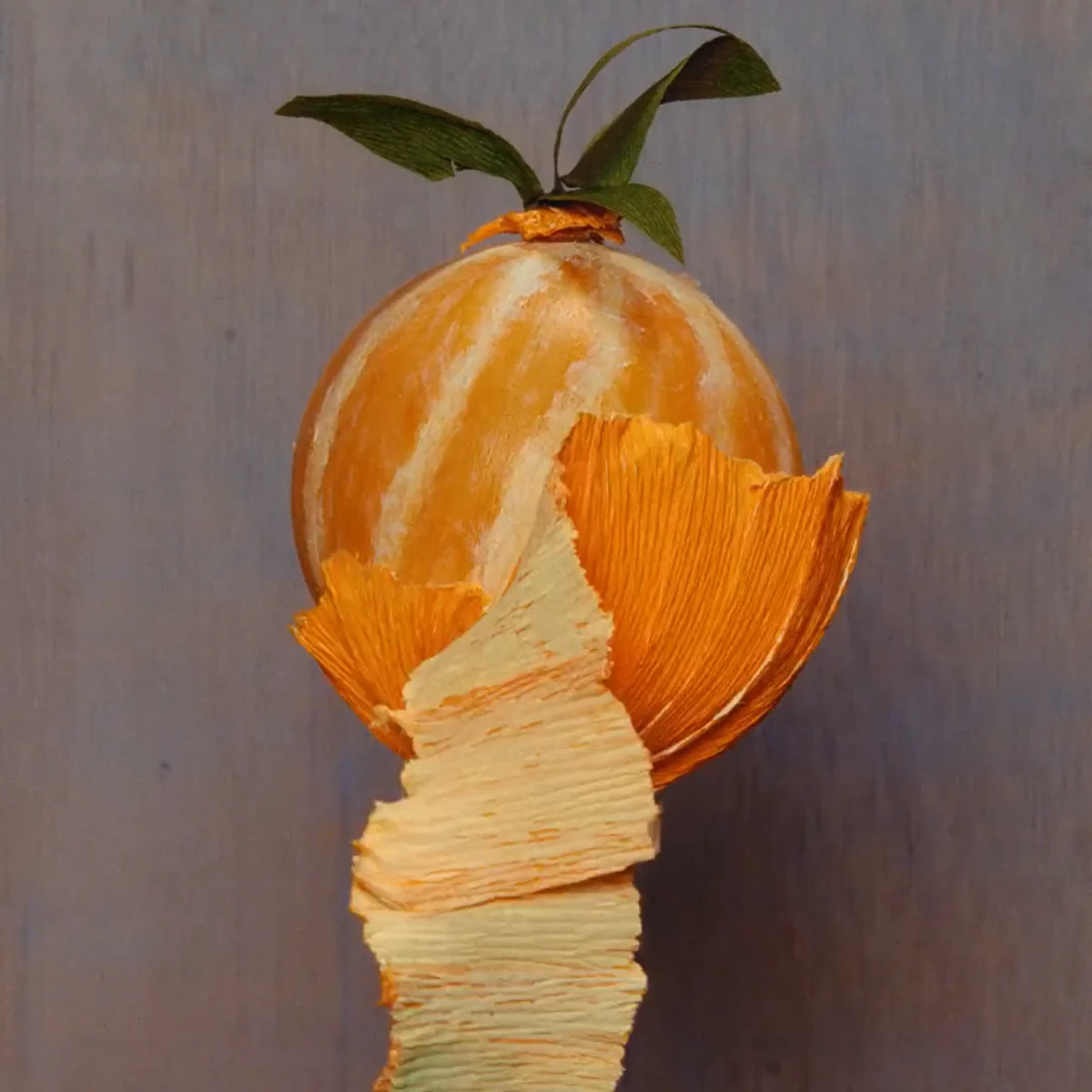
In an era increasingly defined by the seamless, hyper-optimized outputs of generative artificial intelligence, a counter-movement is quietly gaining momentum within the upper echelons of the creative industries. At the forefront of this shift is Alix Bortoli, a French artist and director whose multidisciplinary practice serves as a testament to the enduring power of the "human touch."
Bortoli’s work—a meticulous blend of stop-motion animation, textile embroidery, woodworking, and traditional drawing—represents a deliberate departure from the homogenized aesthetic of modern digital production. As brands and audiences alike begin to experience "digital fatigue," Bortoli’s commitment to experimentation and physical materiality has transformed her from a niche practitioner into a highly sought-after visionary for the modern age.
Main Facts: A Polymathic Approach to Visual Storytelling
Alix Bortoli’s professional identity is defined not by a singular "house style," but by an evolving relationship with her materials. While many directors lean on a recognizable visual signature to build their brand, Bortoli views each commission as a blank slate, selecting the medium that best serves the emotional core of the narrative.
The Multi-Medium Toolkit
Bortoli’s repertoire is vast and deliberately labor-intensive. Her work frequently incorporates:
- Stop-Motion Animation: A medium that requires frame-by-frame physical manipulation, offering a jittery, organic rhythm that digital CGI struggles to replicate.
- Textiles and Embroidery: Utilizing threads and fabrics to create tactile landscapes, adding a layer of domesticity and warmth to visual storytelling.
- Woodwork: Incorporating raw, structural elements that ground her films in a sense of permanence and architectural weight.
- Traditional Illustration: Maintaining a foundation in hand-drawn techniques that allow for a fluid, expressive line quality.
The Shift in Market Demand
The primary driver behind Bortoli’s recent surge in popularity is a shifting corporate landscape. Brands that once prioritized the efficiency of digital rendering are now pivoting toward "tactile storytelling." According to industry analysts, this shift is motivated by a desire for differentiation. In a marketplace saturated with AI-generated content that often feels sterile or uncanny, the visible "imperfections" of handmade art provide a sense of authenticity and emotional resonance that consumers are increasingly craving.
Chronology: From Niche Experimentation to Industry Influence
The trajectory of Alix Bortoli’s career mirrors a broader evolution in the global creative economy—one that has moved from the unbridled excitement of the digital revolution to a more nuanced appreciation for analogue craftsmanship.
The Formative Years: Building a Foundation in Materiality
Early in her career, Bortoli’s insistence on using physical materials was often viewed as a stylistic eccentricity. During the mid-2010s, when digital tools were becoming more accessible and sophisticated, the labor-intensive nature of stop-motion and embroidery was seen by many as inefficient. However, Bortoli remained steadfast, using this period to refine her technical skills across various crafts. She treated her studio as a laboratory, experimenting with how light interacts with different textures—how a silk thread catches a shadow differently than a wooden surface.
The Mid-Career Pivot: The Rise of "Slow Media"
By the early 2020s, the creative industry began to see the emergence of "Slow Media," a movement paralleling "Slow Food" or "Slow Fashion." As the novelty of high-speed digital production wore off, a space opened for work that signaled effort, time, and human presence. Bortoli began to see her "niche" work gain traction with high-end luxury brands and editorial outlets that wanted to distance themselves from the "fast content" cycle.
The Current Era: The AI Inflection Point
The explosion of generative AI in 2023 and 2024 served as the ultimate catalyst for Bortoli’s current status. As AI began to master the art of the "perfect" image, the value of the "perfectly imperfect" skyrocketed. Bortoli’s practice, rooted in the physical world, became a safeguard against the devaluation of creative labor. Today, she is positioned not just as a director, but as an architect of tangible experiences.
Supporting Data: The Economics of Authenticity
The demand for Bortoli’s work is supported by emerging data regarding consumer behavior and brand perception in the 2020s.
The "Human Premium"
Recent marketing studies suggest the existence of a "Human Premium"—a phenomenon where consumers are willing to pay more and engage more deeply with content they perceive as having been created by a human hand. A 2023 survey by the Creative Review indicated that 68% of consumers felt a stronger emotional connection to advertisements that featured visible craft, such as hand-painting or physical puppetry, compared to those that were entirely CGI-based.
The Saturation of the Digital Commons
The sheer volume of digital content has led to a "visual numbness." With billions of images uploaded daily, the human brain has become adept at filtering out standard digital aesthetics. Tactile work, however, breaks this pattern. The physical depth of a textile-based animation or the grain of wood on screen creates a "haptic visuality"—a style of imaging that triggers the viewer’s sense of touch, forcing a higher level of cognitive engagement.
Diversification of Brand Assets
Data from leading creative agencies shows a 40% increase in requests for "mixed-media" campaigns over the last 24 months. Brands are no longer looking for a single video; they are looking for a "tactile ecosystem" that includes physical installations, artisanal packaging, and handmade digital content—all areas where Bortoli’s multidisciplinary background provides a competitive edge.
Official Responses: Insights from the Artist
In recent discussions regarding her practice and the state of the industry, Alix Bortoli has been vocal about the philosophy that drives her work. Her insights offer a roadmap for how artists can navigate the tension between tradition and technology.
On the Rejection of a "House Style"
"I have never been interested in settling on a single visual language," Bortoli explains. "When you define a ‘house style,’ you run the risk of the style becoming the story. For me, the material must come first. If I am telling a story about memory, perhaps I use faded textiles. If I am telling a story about structure and growth, I might turn to wood. The technique should deepen the emotional resonance, not just serve as a signature."
On the Rise of Tactile Demand
Reflecting on her journey, Bortoli notes the significant shift in how her work is perceived: "When I started, the kind of work I was doing felt much more niche, but now there is a real demand and space for it. I think brands are increasingly looking for more tactile, handmade, and artistic forms of expression in order to create work that feels original and emotionally engaging, but also to differentiate themselves from others."
On the Challenge of AI
Bortoli views the rise of AI not as a threat, but as a clarifying force. "AI can replicate the look of a thing, but it cannot replicate the process of a thing. There is a specific energy that comes from the struggle with a material—the way a needle breaks or the way wood resists a blade. That resistance is where the soul of the work lives. In the age of AI, the fact that something was difficult to make is exactly why it is valuable."
Implications: The Future of Craft in a Post-Digital World
The success of Alix Bortoli has profound implications for the future of the creative economy and the role of the artist in society.
1. The Redefinition of "Luxury"
In the future, "luxury" in the creative space will likely be defined by the absence of automation. Just as a hand-stitched leather bag is more valuable than one made by a machine, a film that bears the visible marks of human labor will become the gold standard for high-end branding. Bortoli’s work suggests that the "analogue" is becoming the new "exclusive."
2. Educational Shifts in Art and Design
As Bortoli’s approach becomes more mainstream, there is a likely implication for arts education. After decades of prioritizing software proficiency (Adobe Suite, 3D modeling), there may be a return to "foundational materiality." Future directors may find themselves spending as much time in woodshops and weaving studios as they do in front of monitors.
3. The Hybridization of Technology
While Bortoli’s work is rooted in the analogue, it is distributed digitally. This creates a "phygital" (physical-digital) hybrid that points toward a new era of content creation. The implication is that technology will increasingly be used as a delivery mechanism for human craft, rather than a replacement for it. The camera and the editing software become tools to document the physical act of creation, turning the process itself into the product.
4. Psychological Resilience through Materiality
On a broader societal level, the work of artists like Bortoli provides a necessary anchor. In an increasingly virtual world, the "tactile turn" in art serves a psychological function, reminding viewers of their own physicality. By engaging the senses of touch and sight simultaneously, Bortoli’s work offers a groundedness that digital-only media cannot provide.
Conclusion
Alix Bortoli’s rise is not merely a trend; it is a correction. As the digital pendulum swings toward the total automation of imagery, the human spirit instinctively reaches for the tangible, the textured, and the real. By refusing to be confined by a single style and instead embracing the unpredictable nature of physical materials, Bortoli has carved out a space where art remains an act of labor, love, and profound human connection. Her work serves as a reminder that in a world of infinite digital copies, the original—the handmade, the embroidered, the carved—remains the most powerful language of all.