A Deep Dive into the Cosmos of Cinema: Reactor Magazine Columnist Reflects on 100+ Science Fiction Films

FOR IMMEDIATE RELEASE
[City, State] – [Date] – A two-year cinematic expedition has culminated in a significant milestone for Reactor Magazine, as its dedicated "Science Fiction Film Club" columnist marks having reviewed over 100 science fiction films. What began as a personal journey fueled by a nascent fondness for the genre has evolved into a profound exploration, revealing deep insights into the history, artistry, and cultural significance of sci-fi cinema. This retrospective offers a compelling look at the genre’s enduring legacy, its hidden gems, and the broader lessons learned about art appreciation.
A Cinematic Odyssey: Unpacking Two Years of Sci-Fi Exploration
The columnist, who embarked on this ambitious project with a self-professed "scattering of knowledge" and a desire to learn more, now stands with a significantly expanded understanding and an even stronger passion for science fiction films. This arbitrary yet meaningful benchmark provides an opportune moment to look back at the key observations and revelations garnered from this extensive viewing experience. Beyond merely cataloging films, the column has consistently sought to unearth overlooked or underappreciated masterpieces, challenging conventional narratives surrounding the genre’s development and impact.
The journey has been one of continuous discovery, transforming a casual appreciation into a more discerning and comprehensive understanding of sci-fi’s multifaceted nature. The columnist’s reflections offer valuable lessons not just for fellow cinephiles, but for anyone interested in the evolution of artistic expression and the critical engagement with popular culture.
Unearthing Science Fiction’s Enduring Legacy in Cinema
One of the most striking revelations from this extensive review process is the sheer antiquity and continuous presence of science fiction in the cinematic landscape. Contrary to popular perception, which often frames sci-fi’s prominence as a recent phenomenon, its roots stretch back to the very dawn of filmmaking.

A Century of Vision: From Méliès to Modern Blockbusters
Mainstream film histories frequently offer a truncated view of science fiction’s cinematic lineage. While Georges Méliès’ seminal 1902 work, A Trip to the Moon, universally earns its mention as a pioneering effort, the narrative often jumps abruptly to Fritz Lang’s dystopian epic Metropolis (1927). A subsequent leap then typically lands in the post-World War II Atomic Era, with a brief nod to Stanley Kubrick’s transcendent 2001: A Space Odyssey (1968), before finally acknowledging science fiction as a commercial powerhouse with the release of Star Wars (1977). This selective historical recounting perpetuates an "oddly common" tendency among some film critics and scholars to view the genre’s current success as bafflingly novel rather than a natural evolution.
This oversight is often attributed to various factors, including an era in film scholarship that prioritized gritty realism over imaginative spectacle, and a lingering academic snobbery towards genre films. However, a deeper dive into cinematic archives quickly disproves this narrow perspective. From the moment filmmakers realized the camera’s potential to depict the impossible, fantastical elements—aliens, rocket ships, mad scientists, time travelers—became integral to storytelling. While many early films have been lost, and countless others dismissed as mere thrillers or horror flicks, their consistent presence underscores sci-fi’s foundational role. It was not merely a niche, but a persistent strain of creativity that allowed cinema to explore uncharted territories of imagination. The genre has always been there, captivating audiences and pushing the boundaries of what film could achieve.
- Check out: Ikarie XB-1 (1963) and Man Facing Southeast (1986) serve as excellent examples of internationally acclaimed sci-fi that often get overlooked in Anglocentric film canons, demonstrating the global reach and diverse interpretations of the genre across different eras.
The Indomitable Spark: Discovering Passion in Every Frame
Another profound insight gained from watching over a hundred sci-fi films, spanning various budgets, eras, and artistic intentions, is the undeniable presence of human passion in every cinematic endeavor, regardless of its perceived quality.
Beyond Blockbusters: The Hidden Artistry of Genre Cinema
While epic "passion projects" like those from Spielberg, Tarkovsky, or Cameron are well-documented, a significant portion of film history comprises movies made primarily for commercial gain—often quickly, cheaply, and with minimal perceived artistic care. Yet, even within these productions, the columnist found an inherent spark of dedication. A testament to the collaborative nature of filmmaking, there is almost always someone on the team deeply invested in a particular aspect of the craft.
For instance, Rocketship X-M (1950), rushed into production to capitalize on the release of another film, still contains "thoughtful themes and beautiful artwork." Similarly, It! The Terror From Beyond Space (1958), assembled in a week from borrowed ideas and props, is memorable for Paul Blaisdell’s iconic monster suit. Even Planet of the Vampires (1965), conceived as a schlocky monster feature, achieved a "wonderfully effective atmosphere and tension."

This observation challenges the simplistic dichotomy of "good" versus "bad" films, proposing instead a more nuanced appreciation for the complex ecosystem of cinematic artistry. Every film is a mosaic of different parts, and somewhere within that mosaic, a genuine skill and creativity can be found, demonstrating the dedication of individual artists and technicians who bring these visions to life.
- Check out: Aelita (1924) and Kin-dza-dza! (1986) are examples of films where the constraints of budget or political context did not stifle imaginative production design and dedicated craftsmanship, resulting in visually distinctive and enduring works.
The Craft of Worlds: Championing Practical Effects in a Digital Age
The journey through sci-fi cinema also ignited a strong conviction regarding the indispensable value of practical effects, evolving the columnist’s initial neutrality into a fervent advocacy.
Preserving Artistic Heritage: The Battle for Tangible Effects
Initially, the debate between CGI and practical effects held little sway, with the primary criterion being simply whether the end result "looks good." However, prolonged exposure to a century of cinematic visual storytelling has shifted this perspective dramatically. While acknowledging the "fantastic things" computer-generated effects have enabled—citing films like The Fifth Element (1997) and The Matrix (1999) for their clever blend of digital and practical elements—the columnist now asserts that the deprioritization of practical effects poses a significant threat to the art of filmmaking and, by extension, to human ingenuity itself.
The concern stems from the industry’s trend of abandoning decades of accumulated knowledge, skill, and craftsmanship in favor of digital solutions, often under the guise of cost-saving. This argument is further undermined by examples like Moon (2009), a lower-budget film that successfully leveraged practical effects precisely because it was the more economical and artistically effective option. The columnist passionately argues that "saving money is not the goal of art," and artistic value cannot be measured solely by its economic efficiency or its contribution to an investor’s portfolio.
Filmmakers create richer, more interesting movies when they utilize the full spectrum of tools available. This includes, crucially, working with highly skilled computer visual effects artists, who deserve better industry treatment, but also with costumers, miniaturists, painters, sculptors, and puppeteers. The collective artistry and craftsmanship—from concept art and storyboards to the final cut—represent a profound showcase of human creativity. Protecting these skills and the knowledge base they represent is paramount to preserving the depth and tactile reality that practical effects bring to cinematic worlds, offering a tangible connection that purely digital creations sometimes struggle to replicate.

- Check out: La Jetée (1962), a masterpiece told almost entirely through still images, demonstrates how profound visual storytelling can be achieved with minimalist "practical" means, while High Life (2018) utilizes a combination of stark practical sets and subtle digital enhancements to create its unsettling atmosphere.
Cultivating Curiosity: The Transformative Power of Open-Minded Art Appreciation
The immersive experience of reviewing over 100 films also fostered a critical habit that transcends cinematic boundaries: approaching art with an open mind.
Beyond Personal Taste: A Broader Horizon for Cultural Engagement
In an era often characterized by binary criticism and a struggle for nuance, the columnist intentionally adopted a philosophy of seeking out the interesting in every film. This meant a willingness to engage with movies that might be outdated, problematic, poorly executed, or simply outside personal preferences, focusing instead on their story, production, context, or legacy. This deliberate practice revealed that there is "always something worth talking about," often in unpredictable ways.
The distinction between personal dislike and artistic worth became clear. Statements like "I don’t like it" or "This isn’t for me" or "This has some problems" do not automatically equate to "This is a waste of time" or "This isn’t worth thinking about." Every piece of art, a complex creation often born from vastly different contexts and perspectives, offers an opportunity for understanding and appreciation, even if it doesn’t align with individual tastes.
This habit of open-minded engagement, cultivated through film criticism, proved transferable to other art forms—music, literature, games, visual arts, fashion. The world, the columnist discovered, becomes "much richer and more interesting" when approached with the understanding that art’s value isn’t contingent on perfect alignment with personal aesthetic preferences, but on its capacity to reflect, provoke, and connect.
Science Fiction as a Mirror: Reflecting Humanity’s Hopes and Fears
Perhaps the most profound overarching lesson from this cinematic journey is the recognition of science fiction cinema as an invaluable historical artifact, a dynamic medium uniquely suited to capturing the shifting zeitgeist.

A Genre in Dialogue with Its Times: From Weimar to the New Millennium
The very definition of science fiction remains fluid, sparking countless debates. Yet, one consistent truth emerged: the genre is inherently responsive. It continuously engages with the anxieties, aspirations, and philosophical quandaries of its time. Sci-fi cinema is neither inherently bleak nor hopeful, optimistic nor skeptical, reactionary nor progressive; it encompasses this vast spectrum, reflecting the complex human condition.
Film, as an art form, matured alongside the tumultuous 20th century, and sci-fi proved an ideal vehicle for documenting these changes. From the expressionist anxieties of German Weimar Republic films like The Cabinet of Dr. Caligari to the revolutionary dreams depicted in the early Soviet republic’s Aelita, the genre has consistently absorbed and refracted its contemporary world.
The escapist spectacles of the Great Depression, exemplified by King Kong, gave way to the paranoia and moral dilemmas of the post-WWII Atomic Era, as seen in The Day the Earth Stood Still. The experimental freedom of the French New Wave found expression in films like Alphaville, while the weary realism of 1970s New American cinema was captured in environmental fables such as Silent Running. The push-and-pull of earnest optimism (Close Encounters of the Third Kind) and sharp political criticism (They Live, Repo Man) characterized the Reagan era. The 1990s brought big ideas about mind and machine (Ghost in the Shell) and humanity’s place in the cosmos (Contact). This trajectory continued into the new millennium, with global sci-fi cinema exploring increasingly complex social, technological, and existential themes. Across every decade and cultural context, sci-fi cinema has served as a powerful medium, vividly portraying the collective hopes, fears, anxieties, and doubts of the society that produced it. It is, therefore, an indispensable lens through which to understand human history.
- Check out: Godzilla (1954), which masterfully embodies post-WWII nuclear anxieties, and Invasion of the Body Snatchers (1956/1978), a chilling allegory for conformity and existential dread, are prime examples of sci-fi’s ability to encapsulate societal fears.
The Ever-Expanding Universe of Cinematic Discovery
Finally, the most enduring and joyous lesson from this intensive film club experience is the boundless potential for discovering new favorites and evolving personal tastes.
Embracing the Unexpected: A Journey of Evolving Tastes
While the columnist revisited beloved classics like Alien (1979), The Thing (1982), and the "perfect" The Iron Giant (1999), the project underscored that true appreciation comes from an openness to the unknown. The journey was not about confirming existing preferences but about expanding them. Unexpected revelations emerged, such as the profound emotional impact of Andrei Tarkovsky’s Stalker (1979) or the re-contextualized horror and pain found in a mature viewing of Twin Peaks: Fire Walk With Me (1992). The experience transformed the columnist into someone who champions the socio-political context of Godzilla (1954) or Invasion of the Body Snatchers (1956/1978) at dinner parties, eager to share newly acquired insights.
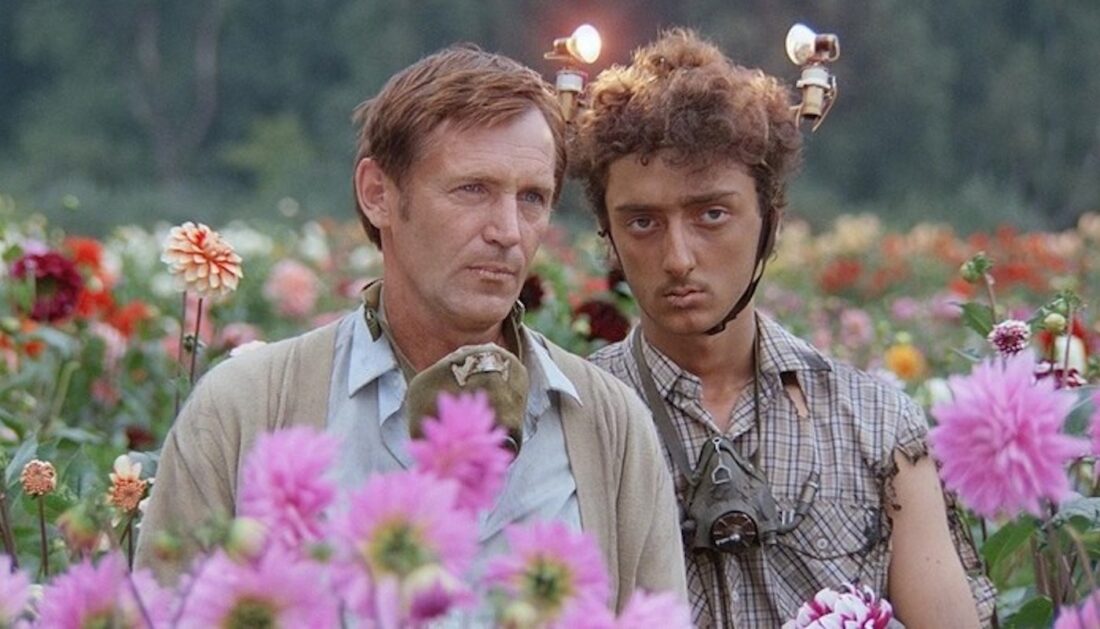
This continuous journey of discovery highlights that personal taste is not static but dynamic, constantly reshaped by new experiences and deeper understanding. The joy of finding a new cinematic gem is a testament to the vast, unexplored territories of film history, promising countless more discoveries for the engaged viewer.
Conclusion: A Continuing Voyage Through Sci-Fi’s Depths
Having surpassed the 100-film milestone, the "Science Fiction Film Club" column at Reactor Magazine stands as a testament to the enduring power and rich history of the genre. The columnist’s two-year odyssey has not only deepened their own appreciation but has provided readers with a nuanced understanding of sci-fi’s role as a historical mirror, a canvas for human passion, and a fertile ground for artistic innovation.
The insights gleaned — from the genre’s deep historical roots and the ubiquitous presence of passion in filmmaking, to the critical importance of practical effects, the transformative power of open-mindedness, and sci-fi’s unique ability to reflect societal anxieties — underscore the value of dedicated film criticism and continuous cinematic exploration. The journey, far from complete, promises many more discoveries.
Readers are encouraged to engage with the ongoing column and contribute their own recommendations as the "Science Fiction Film Club" continues its exploration. Next week, the column returns to its regular schedule with a discussion of the classic 1970 thriller, Colossus: The Forbin Project.