The New Frontiers of Asian Cinema: Immersive Tech, AI Integration, and Institutional Evolution
The global landscape of cinema and media arts is currently undergoing a seismic shift, driven by the convergence of traditional storytelling, cutting-edge technology, and a renewed focus on institutional diversity. Three major developments in the Asian film sector—spanning Taiwan, Japan, and South Korea—highlight this transformation. From a landmark partnership between the Taiwan Creative Content Agency (TAICCA) and New York’s Museum of the Moving Image (MoMI), to the ambitious rebranding of Japan’s SKIP City D-Cinema International Film Festival, and a historic appointment at the CHANEL X BIFF Asian Film Academy, these initiatives signal a new era of "Immersive Investment" and technological "KINETEC" evolution.
Main Facts: A Tripartite Shift in Global Media
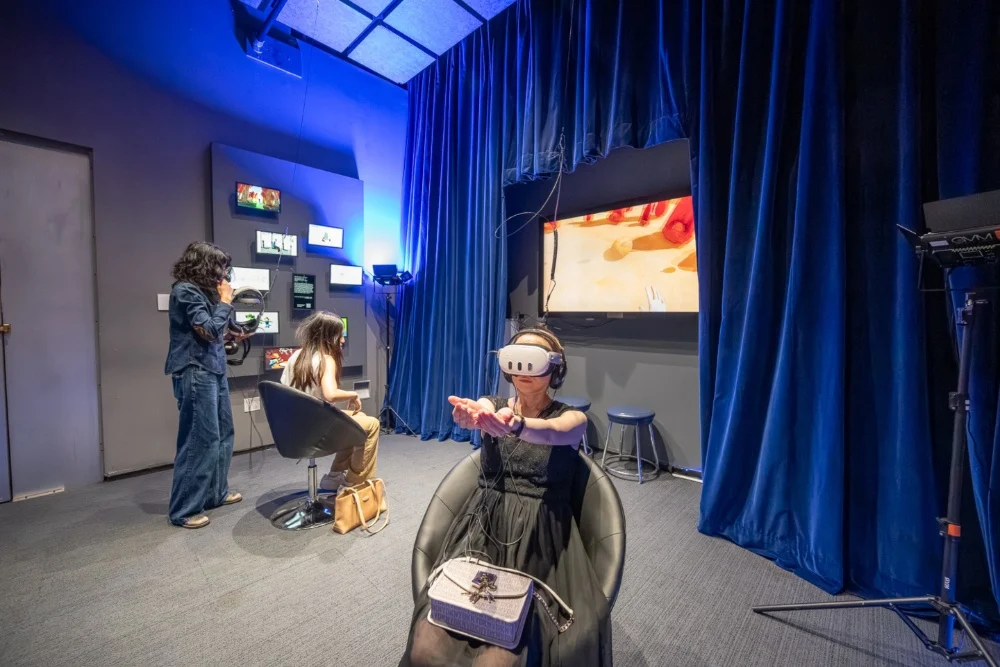
The first major development concerns the strategic expansion of Taiwanese immersive art into the North American market. TAICCA and MoMI have formalized a three-year partnership aimed at establishing a permanent foothold for Taiwanese virtual reality (VR) and interactive installations in New York City. This collaboration follows a highly successful pilot program in early 2025, which saw over 3,000 screenings and maintained a staggering 90% daily capacity. The current phase of the partnership features two flagship works: the SXSW-winning interactive installation Proof As If Proof Were Needed and the Venice-debuted VR experience Sense of Nowhere.
In Japan, the SKIP City D-Cinema International Film Festival has announced a radical rebranding. Starting in 2027, the festival will be known as the SKIP City KINETEC International Film Festival. This change is not merely cosmetic; it represents a pivot from "digital cinema"—a term the festival helped pioneer in 2004—to a broader focus on artificial intelligence (AI), virtual production, and immersive media. The 2027 edition will introduce a "NEXT Competition" specifically designed for vertical-format and AI-generated content, reflecting the changing consumption habits of modern audiences.
Finally, in South Korea, the CHANEL X BIFF Asian Film Academy (BAFA) has reached a milestone in its 20th year. Director Shin Su-won has been appointed as the first female dean in the history of the Busan-based training program. Alongside mentors Yosep Anggi Noen and Park Junghun, Shin will lead a revamped curriculum that focuses on "Proof of Concept" (PoC) shorts. These projects are designed to serve as tangible foundations for the fellows’ future feature-length screenplays, bridging the gap between educational theory and industrial production.
Chronology: From Digital Pioneers to AI Innovators
To understand the weight of these announcements, one must look at the historical trajectory of these institutions.
2004–2024: The Era of Digital Transition
The SKIP City D-Cinema International Film Festival was founded in 2004 in Saitama, Japan, at a time when digital filmmaking was still viewed with skepticism by the traditional film industry. It was the world’s first competitive festival dedicated exclusively to digital cinema. Over two decades, it served as a launchpad for world-class talent, including Turkish auteur Nuri Bilge Ceylan, who eventually won the Palme d’Or at Cannes. However, as "digital" became the industry standard rather than a niche, the festival’s original mission became redundant.
2022–2024: The Rise of TAICCA’s Global Ambitions
TAICCA, established by Taiwan’s Ministry of Culture, has spent the last several years aggressively promoting Taiwan as a "Silicon Valley of Content." By leveraging Taiwan’s hardware manufacturing prowess and a vibrant creative community, TAICCA began securing slots at major festivals like Venice and SXSW. The 2025 pilot collaboration with MoMI in New York served as the "proof of concept" for the current three-year deal, demonstrating that there was a high-volume, paying audience for immersive work outside of traditional film festival circuits.
2025–2027: The Pivot to "KINETEC" and Immersive Stability
The current timeline sees these institutions moving toward permanence and technological integration. The TAICCA-MoMI deal ensures that Taiwanese artists have a "stable platform" through 2028. Meanwhile, SKIP City’s transition to the "KINETEC" brand (scheduled for a full relaunch in 2027) marks the end of the "Digital Cinema" era and the beginning of the "Generative/Immersive" era. Submissions for the 2027 KINETEC festival are already opening in late 2025, showing a long-lead strategy for industry adoption.
Supporting Data: Capacity, Competition, and Curriculum
The scale of these initiatives is reflected in the data provided by the respective organizations.
The TAICCA-MoMI Partnership
- Duration: 3 years (2025–2028).
- Performance Metrics: The 2025 pilot achieved nearly 90% daily capacity, an unusually high figure for museum-based VR screenings, which are often limited by hardware availability and throughput.
- Featured Works:
- Proof As If Proof Were Needed: Winner of the Special Jury Award at SXSW 2025. A collaboration between Ting-Tong Chang and the UK’s Blast Theory.
- Sense of Nowhere: Directed by Hsin Hsuan Yeh. Debuted at the 81st Venice International Film Festival’s Immersive Competition.
SKIP City KINETEC Rebrand
- Relaunch Date: Jan. 31 – Feb. 7, 2027.
- New Categories: Feature & Short Film Competition and the NEXT Competition.
- Submission Deadline: August 31, 2025 (for the early 2027 cycle).
- Scope: Expansion into AI-generated work, vertical-format video (TikTok/Reels style), and virtual production (LED volume-based filmmaking).
CHANEL X BIFF Asian Film Academy
- Applicant Pool: 501 applicants from 34 different countries, highlighting the global prestige of the Busan training program.
- Fellows/Output: The program will result in 8 "Proof of Concept" shorts.
- Festival Premiere: These shorts will be showcased at the 31st Busan International Film Festival (Oct. 6-15).
- Leadership: Shin Su-won, the first female dean, is a veteran of the international festival circuit, known for films like Pluto and The Glass Garden.
Official Responses: Strategic Visions for the Future
The leaders of these organizations have emphasized that these moves are about more than just staying current; they are about building sustainable ecosystems.
Sue Wang, the Chair of TAICCA, highlighted the importance of institutional stability in North America. “Our collaboration with MoMI is central to that effort: it gives Taiwanese work a stable platform in North America where revenue, audiences, and institutional resources reinforce one another,” Wang stated. This suggests that TAICCA is moving away from "one-off" festival appearances toward a model of long-term exhibition and revenue sharing.
Regarding the SKIP City rebrand, festival organizers indicated that the name "KINETEC" (a portmanteau of Kinetic and Technology) reflects the movement of the image beyond the static screen. By including AI and vertical formats, the festival aims to validate these new mediums as legitimate art forms, much as they did for digital cinema in 2004.
In Busan, the appointment of Shin Su-won is being hailed as a progressive step for the Asian Film Academy. By shifting the curriculum toward "Proof of Concept" shorts, the academy is acknowledging the difficulty young directors face in securing funding. A high-quality PoC short, backed by the BIFF and CHANEL brands, provides fellows with a powerful tool to pitch their feature scripts to international investors.
Implications: The Convergence of Art and Algorithm
The broader implications of these developments for the global film and media industry are profound.
1. The Institutionalization of Immersive Media
The TAICCA-MoMI partnership suggests that immersive media (VR/AR/XR) is moving out of its "experimental" phase and into a "commercial" phase. By focusing on revenue and stable audience platforms, these institutions are treating VR as a sustainable part of the museum and cinema economy, rather than a temporary tech demo.
2. The Legitimacy of AI in Cinema
SKIP City’s decision to create a dedicated competition for AI-generated work is a significant endorsement. While AI remains a controversial topic in Hollywood, Asian film festivals are increasingly embracing it as a tool for creative expansion. This could lead to Saitama becoming a global hub for AI-assisted storytelling, attracting tech-forward filmmakers who find traditional festival structures too restrictive.
3. Gender Representation and Educational Reform
The appointment of Shin Su-won at BAFA reflects a growing demand for gender parity in film leadership within Asia. Furthermore, the focus on "Proof of Concept" filmmaking signals a shift in film education—from purely artistic exploration to a more pragmatic, industry-aligned approach. This ensures that the next generation of Asian filmmakers is not only creatively prepared but also equipped with the marketing materials necessary to survive in a competitive global market.
4. The Rise of Vertical and Non-Traditional Formats
By including vertical-format work in a major international competition, SKIP City KINETEC is acknowledging that the "cinema" of the future may live on smartphones as much as it does on silver screens. This democratization of format may open doors for a new demographic of creators who operate outside the traditional 16:9 cinematic paradigm.
As these three initiatives unfold over the coming years, they will likely serve as blueprints for other regions looking to bridge the gap between cultural heritage and technological disruption. The fusion of Taiwanese immersive art, Japanese tech-centric festival curation, and South Korean educational prestige suggests that the future of the moving image is being written in Asia.