The Pen and the Republic: Satire, Symbolism, and the Struggle for the American Soul
The intersection of national celebration and biting political critique has long been a hallmark of the American experience. As the United States approaches its 250th anniversary, the role of the political cartoonist as a democratic "attentive assistant"—a phrase coined by veteran commentator Mike Peterson—has never been more vital or more contentious. Through the lens of ink and irony, contemporary artists are currently grappling with a nation caught between its hallowed past and a deeply polarized present.
Recent works by prominent cartoonists such as Jennings, Telnaes, Bennett, and Varvel offer a panoramic view of a country in the midst of a rigorous "national inventory." These illustrations do more than merely depict current events; they serve as a barometer for the health of the "Tree of Liberty," questioning whether the symbols of the state are being upheld or exploited for personal gain.
Main Facts: The Visual Language of Modern Dissent
The current landscape of political satire is dominated by themes of profiteering, the erosion of democratic norms, and the controversial use of national iconography. A central figure in this discourse is the artist Jennings, whose recent "State of the Union" illustration has sparked intense debate regarding the image of the United States abroad.
Jennings’ work focuses on what he characterizes as the "profiteering" of the current administration. His illustration depicts a vessel laden with bags of cash and cryptocurrency, with stacks of bills dangling precariously over the side. This is a direct satirical response to recent reports concerning the intersection of private wealth and public office, most notably the revelations regarding high-stakes crypto-investments linked to the executive branch.
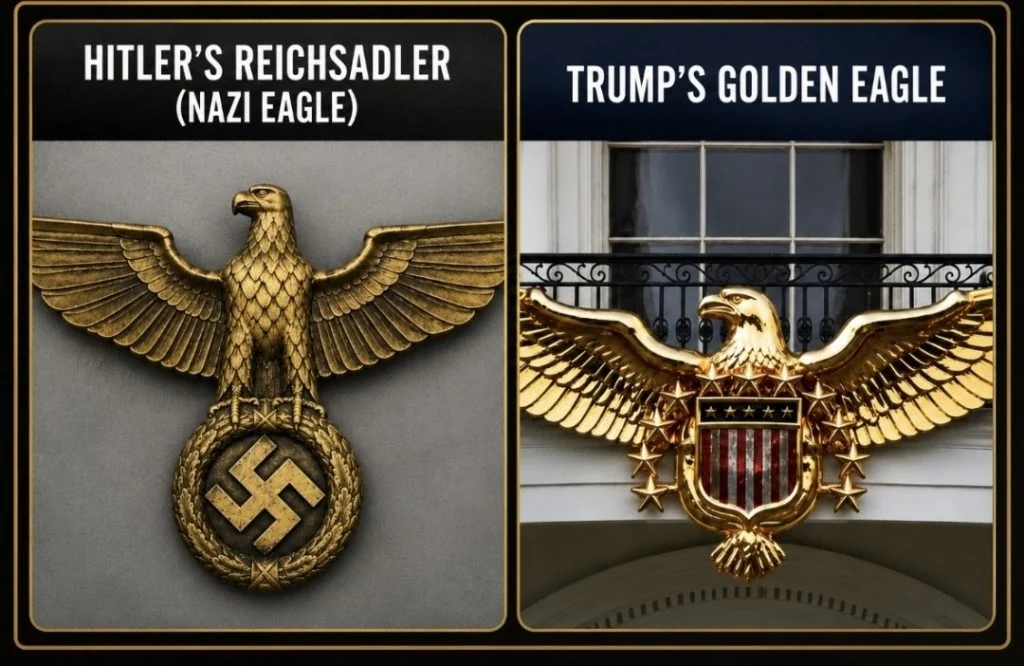
Furthermore, Jennings critiques the aesthetic and symbolic shifts within the White House. He highlights the installation of a new, gilded eagle—an addition ordered by the administration—noting that critics have drawn uncomfortable parallels between this decor and the Reichsadler, the heraldic eagle used by Nazi Germany. While some dismiss these comparisons as subjective matters of taste, the historical weight of such symbols remains a flashpoint for those concerned with the direction of national leadership.
Chronology: A Century of Satirical Reflection
To understand the weight of today’s critiques, one must view them through the timeline of American editorial history. The tradition of using the July 4th holiday as a moment for somber reflection rather than just revelry is well-established.
1914: The "Safe and Sane" Movement
Over a century ago, cartoonists rallied behind a public safety campaign known as the "Safe and Sane Fourth." In an era before modern safety regulations, the holiday was often marked by catastrophic injuries from unregulated explosives. This early form of social activism through art sought to reform national behavior, proving that cartoonists have always functioned as a "conscience" for the public.
1934: The Quest for Unity
By October 1934, the nation was still healing from the scars of the Civil War while navigating the depths of the Great Depression. Cartoons from this era often depicted the "solitary communities" of the North and South, using the image of a grandmother teaching a young boy about sacrifice to advocate for national reconciliation. This highlights a recurring theme in American satire: the fear of internal division and the longing for a cohesive national identity.
2010–Present: The Digital Shift and Heightened Polarities
Since 2010, the "Comic Strip of the Day" has chronicled the accelerating friction in American discourse. The current era is marked by a shift from bipartisan critiques of safety or unity toward fundamental disagreements over the very nature of the Constitution. The chronology of the 21st century, as mapped by artists like Bennett, identifies key milestones—the 13th Amendment, the 19th Amendment, Brown v. Board of Education, and the Voting Rights Act—as the "growth rings" of the Tree of Liberty, which some artists now claim is under direct assault.
Supporting Data: Symbols of Progress and Decay
The effectiveness of political satire relies on the audience’s ability to recognize and interpret complex symbols. In the contemporary context, two primary metaphors have emerged: the "Profiteering Vessel" and the "Attacked Tree."
The Tree of Liberty
Cartoonist Bennett’s recent work utilizes a historical timeline to measure the health of American democracy. By citing the ratification dates of amendments that ended slavery and granted women’s suffrage, Bennett establishes a baseline of progress. The "data" in his cartoon is the historical record itself. He posits that the current political era represents a sharp departure from this trajectory, illustrating a "Tree of Liberty" that is being systematically dismantled. The clarity of this imagery forces the viewer to decide whether they view the current administration as a protector of these historical gains or an existential threat to them.
Iconography and the Reichsadler Comparison
The controversy surrounding the "White House Eagle" serves as a case study in symbolic resonance. The Reichsadler (Imperial Eagle) of the 1930s featured a stylized, aggressive posture that is historically associated with authoritarianism. When modern cartoonists like Jennings incorporate "tacky" gilded versions of this symbol into their work, they are leveraging "visual data" to suggest a shift in the philosophy of governance—from democratic humility to imperial ostentation.
Official Responses and Interpretations
The debate over the role of faith and personal conviction in governance remains a cornerstone of American political philosophy. In addressing the "Christian Nation" narrative often promoted by conservative cartoonists like Gary Varvel, historians and commentators frequently point to the foundational writings of the Founding Fathers.
The Washington Precedent
George Washington, often depicted as a man of profound faith, was famously cautious about the intersection of religion and state power. In a 1778 letter to Brigadier General Thomas Nelson Jr., Washington discussed the "Doctrine of Providence" but explicitly noted that it would be "time enough for me to turn preacher, when my present appointment ceases." This "official response" from the nation’s first president underscores a fundamental American principle: that while a leader may hold private religious convictions, it is inappropriate to impose those beliefs upon the citizenry.
The Cuomo Doctrine
This sentiment was echoed in the modern era by the late Mario Cuomo. In his landmark 1984 speech at the University of Notre Dame, Cuomo explained his refusal to let his Catholic faith dictate his legislative policies. He argued that protecting the right to be a Catholic required preserving the rights of Jews, Protestants, and non-believers alike. This philosophical framework serves as a rebuttal to the "partisan vitriol" found in the work of some contemporary cartoonists, who frame the Democratic party as inherently "hateful" or "blind to the glories of the nation."
Implications: The Responsibility of the Editor and the Citizen
The current state of political cartooning reveals a deepening rift in how Americans perceive their national identity. The juxtaposition of Varvel’s non-partisan celebration of the 250th anniversary against Benson’s partisan attack on the Democratic Party illustrates the dilemma facing modern media editors.
Editorial Ethics
The editorial challenge is to balance the "reasonable criticism" mentioned by Peterson with the need to avoid alienating half of the readership with messages of pure vitriol. A cartoon that simply says "We hate you" to a specific political demographic fails the test of constructive satire. In contrast, cartoons that "riff on an iconic picture of America" to highlight specific policy failures—such as profiteering or the erosion of civil rights—provide a necessary service to the republic.
The "Safe and Sane" Future
As the nation moves toward its sestercentennial, the implications of these visual critiques are profound. If the "Tree of Liberty" is indeed under attack, the role of the cartoonist as a "watchdog" becomes a matter of national survival. However, if the satire becomes nothing more than a tool for division, it risks contributing to the very "solitary communities" it once sought to bridge.
Ultimately, the goal of American political satire remains what it was in 1914: to promote a "Safe and Sane" society. Whether through the lens of a dog owner managing the anxiety of fireworks or a citizen monitoring the bags of crypto on the "ship of state," the message is clear: vigilance is the price of liberty. The cartoons of today are not just drawings; they are the "attentive assistants" that every leader, and every citizen, needs to hear if the American experiment is to continue for another 250 years.