The Intersection of Imagination and Reality: A Comprehensive Review of Speculative History, Cinema, and Space Exploration
The landscape of science fiction and space exploration is currently undergoing a period of profound reflection and rapid evolution. From the aesthetic beautification of fannish landmarks to the technical repurposing of multi-billion-dollar planetary rovers, the line between speculative fiction and scientific reality continues to blur. Recent developments across the Los Angeles Science Fantasy Society (LASFS), the halls of NASA, and the editing suites of DC Studios reveal a culture deeply invested in both its storied past and its ambitious, if sometimes turbulent, future.
Main Facts: A Convergence of Science and Fandom
The current state of the "speculative union" is characterized by several major pillars. In the realm of community and art, the Los Angeles Science Fantasy Society (LASFS)—the world’s oldest continuously meeting science fiction club—has completed a significant beautification project. Artist Selina Phanara has unveiled new murals on the storage containers of the society’s recently opened clubhouse. These murals, which include a rocket with a mission number that pays homage to the club’s long history, serve as a physical manifestation of the genre’s enduring legacy in Southern California.
In the world of high-stakes cinema, DC Studios is grappling with the fallout of the production of Supergirl. Reports indicate a fractured post-production process where the studio’s vision clashed with that of director Craig Gillespie. The struggle highlights the ongoing difficulty of managing superhero properties in an era of intense critical and commercial scrutiny. Simultaneously, the industry is celebrating the 30th anniversary of Independence Day, with creators Roland Emmerich and Dean Devlin revealing how the film was shaped by a race against rival projects like Tim Burton’s Mars Attacks!.
Scientific progress has mirrored this speculative energy. NASA has officially announced plans for the PROMISE mission (Polar Rover for Observation, Mapping and In-Situ Exploration). This mission is notable for its pragmatism: NASA intends to send a spare Mars rover—originally built as a test model for Curiosity and Perseverance—to the lunar south pole. This represents a strategic pivot in lunar exploration, utilizing proven Martian technology to survive the harsh, two-week-long lunar nights.
Chronology: From 19th-Century Ambition to 21st-Century Reality
To understand the current state of these projects, one must look at the timelines that birthed them:
The Historical Foundation (1860–1893)
The roots of "world-building" can be traced back to the United States Congress. In 1860, as the nation faced the brink of Civil War, Representative John William Noell of Missouri proposed a radical constitutional amendment to replace the presidency with a three-person executive council. This was followed in 1893 by Representative Lucas Miller of Wisconsin, who introduced a bill to rename the country the "United States of the Earth," envisioning a future where every nation would eventually join the Union. Though dismissed as "cranks" at the time, these figures engaged in a form of political science fiction that sought to restructure the American experiment.

The Space Age and the Cold War (1973–1983)
The practicalities of living in space were first truly tested in May 1973 with the launch of Skylab. The mission nearly ended in disaster when a meteoroid shield tore off during ascent. The subsequent repair by the Skylab 2 crew—involving frustrated outbursts and high-stakes spacewalks—proved that humans could maintain complex orbital laboratories.
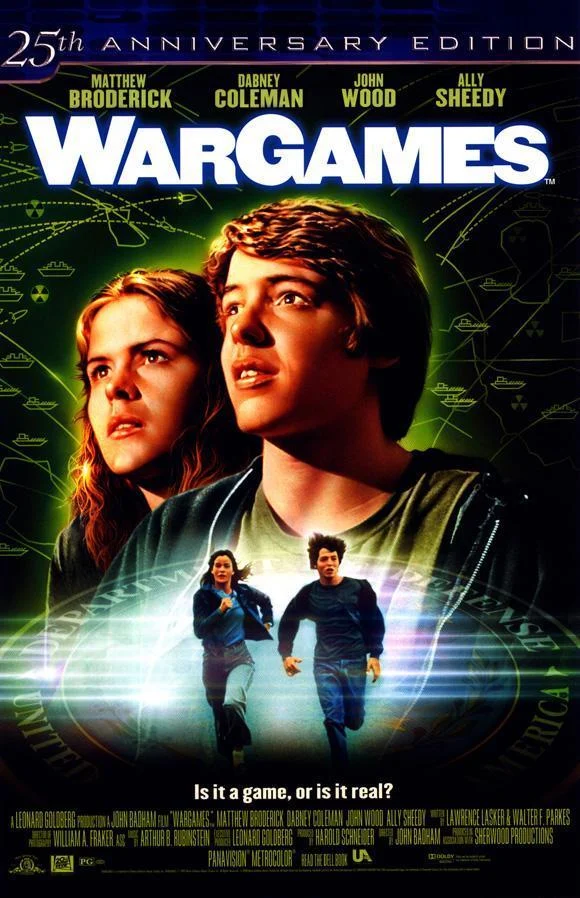
A decade later, in July 1983, the film WarGames was released. It captured the Cold War zeitgeist, depicting a sentient computer nearly triggering a nuclear holocaust. The film’s accuracy regarding early hacking techniques and its message—"the only winning move is not to play"—was eerily mirrored just months later in the real world when Soviet officer Stanislav Petrov averted a nuclear exchange after a system glitch falsely reported a US strike.
The Modern Era (2021–2026)
The production of Supergirl began in earnest in the early 2020s, with filming wrapping in May 2025. By the fall of that year, internal friction regarding the film’s tone and music began to surface, leading to the studio-mandated "autopsy" and re-editing process in early 2026. This timeline coincides with NASA’s June 2026 announcement regarding the PROMISE rover, signaling a transition from Earth-based testing to lunar deployment.
Supporting Data: Technical Specifications and Creative Metrics
The success and failure of these ventures are often found in the data.
NASA’s PROMISE Rover
The PROMISE rover is an SUV-sized vehicle. Unlike solar-powered lunar missions that fail during the lunar night, PROMISE will be powered by a Multi-Mission Radioisotope Thermoelectric Generator (MMRTG). This "chunk of plutonium" converts the heat of radioactive decay into electricity, allowing the rover to operate in temperatures below minus 200 degrees Fahrenheit. This technical advantage allows for "long traverses" into permanently shadowed regions (PSRs) of the lunar south pole, areas that may contain water ice critical for future moon bases.
The "Supergirl" Production Crisis
Data from test screenings revealed a significant disconnect between the director’s cut and the studio’s requirements. Four separate screenings were held between December 2025 and March 2026. A key point of contention was the "needle drop"—the use of popular music to punctuate action. While director Craig Gillespie favored a cover of Cyndi Lauper’s "Girls Just Want to Have Fun" for the climax, the studio eventually swapped it for a cover of Jimmy Eat World’s "The Middle" following mixed test audience reactions.

Independence Day’s Box Office Legacy
Reflecting on its 30-year history, Independence Day remains a benchmark for the "summer blockbuster." It grossed over $800 million worldwide in 1996 dollars. Its success was driven by a marketing campaign centered on the July 4th release date, a decision made specifically to beat Mars Attacks! to theaters, despite the latter having a more established directorial pedigree in Tim Burton.
Official Responses: Insights from the Architects
The discourse surrounding these events is shaped by the voices of those in the room.
On Space Exploration: NASA Administrator Jared Isaacman emphasized the efficiency of the PROMISE mission during a recent update on lunar base plans. "The question was posed: What if we send it to the moon?" Isaacman stated, highlighting the agency’s desire to maximize existing assets. Carlos García-Galán, leader of the Moon Base program, added that the rover’s ability to navigate "very hard-to-reach areas" would provide "immense capability in short order."
On Cinematic Conflict: Regarding the Supergirl post-production, sources close to DC Studios suggest that James Gunn, a proponent of specific musical "needle drops," was heavily involved in the re-editing process. While the studio enlisted writer Jeremy Slater to assist with nine days of additional photography, the official stance remains that the revisions were necessary to ensure the film’s "climactic fight" met the standards of the modern DC Cinematic Universe.
On Creative Origins: Roland Emmerich and Dean Devlin provided a candid look at the birth of Independence Day. Devlin recalled the moment of inspiration: "Roland said, what if we woke up tomorrow morning and above it was a 15-mile-wide spaceship blotting out the sun for an entire city? Then he turned to look at me and goes, I think I have our next movie."
Implications: The Future of Speculative Endeavors
The convergence of these stories points to several long-term implications for both science and the arts.

1. The Circularity of Space Technology
The decision to send a Mars-designed rover to the Moon suggests a new era of "frugal innovation" at NASA. By repurposing engineering test models, the agency can accelerate mission timelines while reducing costs. This sets a precedent for future missions where hardware designed for one planetary environment may be adapted for another, provided the power systems (like RTGs) are robust enough.
2. The Vulnerability of the Auteur in Franchise Filmmaking
The Supergirl situation underscores the diminishing power of the director in the face of "universe-building." When a film is part of a larger interconnected narrative, the studio’s need for tonal consistency often overrides the director’s creative vision. This ongoing tension will likely continue to define the next decade of blockbuster cinema.
3. The Enduring Relevance of Cold War Narratives
As noted by critics reflecting on WarGames and The Chronoliths by Robert Charles Wilson, the themes of pre-destination and accidental nuclear catastrophe remain relevant. In an era of increasing AI integration into military systems, the "0th law" answers—where computers take control to prevent human error—and the "WOPR" answer—refusing to play the game—continue to serve as vital philosophical frameworks for modern geopolitics.
4. Community as the Custodian of History
Finally, the efforts of groups like LASFS to beautify their clubhouse remind us that while studios and space agencies operate on billion-dollar budgets, the "soul" of science fiction resides in the fan communities. These groups preserve the history that informs the next generation of scientists, writers, and dreamers, ensuring that the "United States of the Earth" remains a goal, if not a literal reality, for the speculative future.