Half a Century of Ink and Independence: Revisiting the 1976 Bicentennial Through the Lens of the Sunday Funnies
The Fourth of July has always served as a mirror for the American psyche, but few celebrations in the nation’s history carried the weight—or the creative outpouring—of the 1976 Bicentennial. Today, as we stand in 2026 observing the Sestercentennial (250th anniversary), we look back fifty years to a moment when a bruised nation sought healing through its popular culture. In 1976, the United States was a country emerging from the shadows of the Vietnam War and the Watergate scandal. The Bicentennial was not merely a birthday party; it was a vital exercise in national rebranding.
Among the most vivid chronicles of this era were the newspaper comic strips. Because July 4, 1976, fell on a Sunday, the nation’s cartoonists were granted a rare "big canvas"—the full-page Sunday color supplement—to reflect on two centuries of American history. These illustrations provided a unique intersection of high-stakes politics, satirical wit, and traditional patriotism.
Main Facts: A Media Landscape Transformed by Celebration
The 1976 Bicentennial was a multimedia phenomenon that began its preparation years in advance. The scale of the celebration was unprecedented, touching every facet of American life from coinage to television.
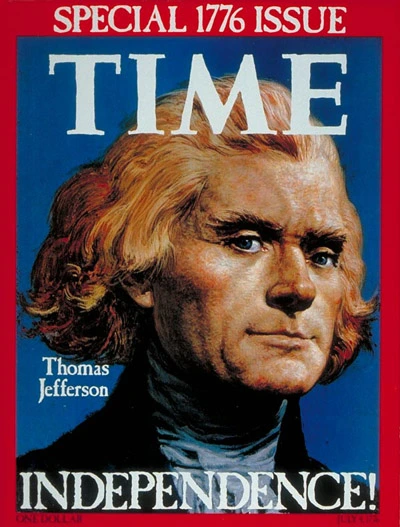
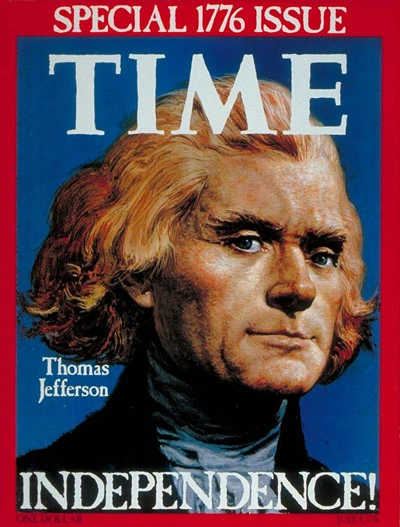
The Time Magazine 1776 Special Edition
One of the most significant cultural artifacts of the era was Time magazine’s special Bicentennial issue. Rather than looking back from a 1976 perspective, the editors designed the entire issue as if it had been published the week of July 4, 1776. It covered the political firestorms in Philadelphia, but it also expanded the scope to include global news of the era: scientific breakthroughs in Europe, cultural shifts in the East, and the daily lives of the colonists. This provided Americans with a sophisticated "snapshot" of Thomas Jefferson’s world, grounding the celebration in a broader historical context rather than simple mythology.
The Sunday Comic Strip Bonus
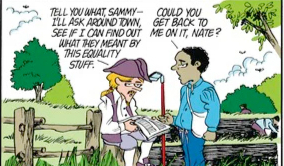
For the cartooning world, the calendar provided a stroke of luck. The Bicentennial fell on a Sunday, the day when newspapers traditionally printed their most expansive and colorful comic sections. This allowed creators like Garry Trudeau, Milton Caniff, and Alfred Andriola to move beyond the constraints of the four-panel daily strip and create sweeping, thematic tributes. These works ranged from somber historical reflections to sharp-edged political commentary, mirroring a nation that was simultaneously proud and cynical.
Chronology: From Turmoil to the "Quiet Man" in the White House
To understand the tone of the 1976 celebrations, one must look at the timeline of the preceding decade. The Bicentennial arrived at a critical juncture in the American story.
- 1968–1974: The Era of Upheaval: The late 1960s and early 70s were defined by the trauma of the Vietnam War and the institutional collapse of the Nixon administration. The trust in government was at an all-time low.
- 1974: The Ascension of Gerald Ford: Following Nixon’s resignation, Gerald Ford took office. History remembers him as a "quiet, decent man" who prioritized national stability. Though his pardon of Richard Nixon was controversial, Ford’s presence provided a calm backdrop for the 1976 festivities.
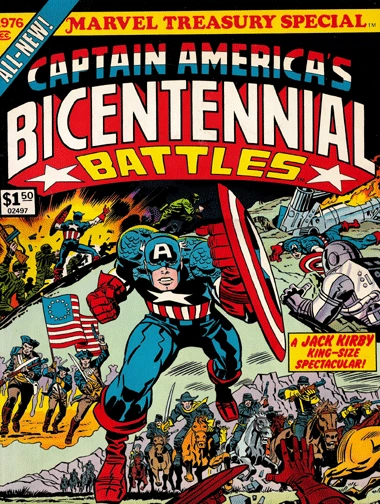
- 1975: The Lead-up: Preparations for the Bicentennial reached a fever pitch. In the world of comics, Jack Kirby—the legendary co-creator of Captain America—returned to Marvel to produce Captain America’s Bicentennial Battles, an oversized treasury edition that sent the Sentinel of Liberty through various eras of American history.
- July 4, 1976: The climax of the celebration. While "Tall Ships" sailed into New York Harbor and fireworks lit up the National Mall, millions of Americans opened their Sunday papers to see how their favorite comic characters were marking the milestone.
Supporting Data: Diverse Perspectives in the "Funny Pages"
The Sunday strips of July 4, 1976, were not a monolith. They reflected the diverse political and social leanings of their creators and their respective audiences.
Satire and Consciousness: Doonesbury
Garry Trudeau’s Doonesbury was at the height of its cultural influence in 1976. Trudeau did not settle for a simple celebratory graphic. Instead, he utilized his "colonial-era" characters—most notably the ancestor of his main cast, Amy—to explore the contradictions of the founding era. Trudeau’s work was so extensive that it was eventually compiled into a standalone book, Speaking of Inalienable Rights, Amy…. His strips often featured colonial characters exhibiting a very 1970s "contemporary consciousness," using the past to comment on the civil rights and feminist movements of the present.

The Traditionalists: Steve Canyon and Kerry Drake
On the other side of the ideological spectrum, adventure strips like Milton Caniff’s Steve Canyon took a more conservative, reverent view of the day. Caniff, a staunch patriot, used his masterfully drafted panels to emphasize the military and civic duty required to maintain the Republic. Similarly, Alfred Andriola’s Kerry Drake maintained its crime-fighting focus but acknowledged that the nation’s history is an "ongoing process," framing the pursuit of justice as the ultimate American tradition.
The Western Perspective: Rick O’Shay
Stan Lynde’s Rick O’Shay offered a unique Western take on the Bicentennial. Lynde often used his character Hipshot Percussion—a brooding, philosophical gunfighter—for "Sunday reveries." On July 4, 1976, Lynde moved away from the slapstick humor of the daily strip to deliver a poetic meditation on the land and the cost of freedom, a move that resonated deeply with readers in the American West.
Historical Curiosities: Ripley’s Believe It or Not
The Ripley’s franchise, ever the purveyor of the strange and the factual, devoted its Bicentennial space to the more obscure details of 1776. This included trivia about the signers of the Declaration of Independence and the logistical hurdles of the Revolutionary War, catering to a public that was, for a brief moment, obsessed with historical minutiae.
Official Responses: The Role of the Executive and the Satirists
The Bicentennial was a rare moment where the "official" version of America and the "satirical" version of America lived in a strange, symbiotic harmony.
The Ford Administration
President Gerald Ford’s approach to the Bicentennial was intentionally low-key. He avoided the imperial trappings of his predecessor, preferring to let the grassroots celebrations take center stage. His "common man" persona was a perfect fit for a Bicentennial that emphasized "the people" over the state.
The Rise of SNL and Chevy Chase
While the comics provided a daily dose of reflection, a new force was emerging in television: Saturday Night Live. Chevy Chase’s portrayal of Gerald Ford as a bumbling, clumsy oaf became a cultural staple. However, as Mike Peterson notes in his retrospective, "neither the Nixon pardon nor the ridicule of Chevy Chase could completely tear him down." There was a resilience in the American system—and in Ford himself—that seemed to absorb the satire and move forward.
Implications: Then vs. Now (1976–2026)
As we observe the 250th anniversary in 2026, the parallels and contrasts to 1976 are striking.
The Evolution of the Canvas
In 1976, the newspaper was the primary source of shared cultural experience. The "Sunday funnies" were a communal ritual. Today, in 2026, the media landscape is fragmented. We no longer wake up to the same physical page of comics; instead, we consume digital "webtoons" and social media commentary. The "big canvas" of the Sunday paper has been replaced by the viral thread.
The Rhyme of History
The mention of Stan Freberg’s 1961 concept album, The United States of America Vol. 1, in the context of the Bicentennial serves as a reminder that American history "rhymes." Freberg’s satirical take on the Declaration of Independence—specifically the sketch where Ben Franklin is hesitant to sign the document for fear of it being a "subversive" radical manifesto—was a commentary on the McCarthy era. By 1976, that satire felt equally relevant in the wake of the COINTELPRO revelations and the surveillance of the 60s. Today, in 2026, the debate over what constitutes "American values" and "patriotism" remains as contested as ever.
The Legacy of the Bicentennial
The 1976 Bicentennial proved that a nation could use its history not just to boast, but to heal. The cartoonists of fifty years ago understood that the American story is a work in progress. Whether it was the cynicism of Doonesbury or the stoic patriotism of Steve Canyon, the 1976 Bicentennial allowed for a plurality of voices to exist on a single Sunday morning.
As we look toward the 2026 celebrations, the archives of 1976 serve as a blueprint. They remind us that the most enduring way to celebrate a democracy is to allow its artists, satirists, and storytellers the freedom to question it, laugh at it, and ultimately, to honor it. The ink may have faded on those old newsprint pages, but the spirit of that "Sunday canvas" remains a vital part of the American narrative.