Unearthing Ancient Wisdom: Amanda Edmiston’s "The Time Traveller’s Herbal" Invites a Journey Through Botanical History
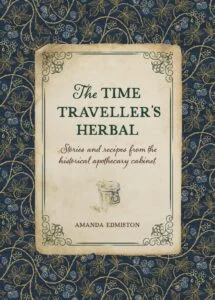
SCOTLAND, UK – In an increasingly fast-paced and digitally driven world, a unique voice is emerging, inviting us to slow down, listen to the land, and journey back through centuries. Amanda Edmiston, the esteemed herbal storyteller behind Botanica Fabula, has unveiled her latest literary offering, The Time Traveller’s Herbal: Stories and recipes from the historical apothecary cabinet. This captivating work is not merely a book; it is an immersive invitation to step into the intricate "spiral of history" and rediscover the profound connections between plants, people, and the passage of time.
Edmiston’s approach transcends conventional historical accounts, blending meticulous research with evocative storytelling to illuminate the often-overlooked legacy of herbalists. Far from being mere practitioners of folk remedies, these figures—variously known as cunning women, wise women, or even, pejoratively, witches—were, in essence, the pioneering scientists and custodians of traditional knowledge in their respective eras. The Time Traveller’s Herbal seeks to peel back the layers of misconception and reveal the vital threads of stories, folklore, and effective herbal remedies that are intricately woven into the fabric of our shared human experience.
The Ancient Roots of Herbalism: Pioneers, Healers, and Custodians of Knowledge
For millennia, the knowledge of plants has been central to human survival and well-being. Before the advent of modern pharmaceuticals, communities relied entirely on the natural world for sustenance, shelter, and healing. At the heart of this reliance stood the herbalist—a figure often revered, sometimes feared, but undeniably indispensable. Amanda Edmiston’s work meticulously chronicles the evolution of this role, challenging contemporary biases that might dismiss ancient practices as superstitious.
Historically, these practitioners were the bedrock of community health. They possessed an encyclopedic knowledge of local flora, understanding not only which plants could heal, but also how to gather them, prepare them, and administer them safely. Their skills encompassed botany, pharmacology, rudimentary surgery, and psychology, as they often acted as confidantes and counsellors. They observed, experimented, and passed down their findings through generations, a sophisticated system of empirical learning that predates formal scientific institutions.
However, as societies evolved, particularly with the rise of organised religion and later, institutionalised medicine, the role of the independent herbalist became increasingly marginalised, and at times, actively persecuted. The term "witch," for instance, often became a dangerous label applied to women who held significant power through their botanical knowledge and connection to nature. Edmiston argues that these labels obscured the truth: these were individuals dedicated to understanding and harnessing the natural world for the benefit of their communities, laying foundational groundwork for what we now recognise as biology, chemistry, and medicine. By re-examining their contributions, The Time Traveller’s Herbal not only celebrates their legacy but also offers a crucial re-evaluation of how we perceive historical knowledge systems.
A Journey Through Time: Edmiston’s Methodology
The very premise of The Time Traveller’s Herbal is built upon Edmiston’s unique methodology for connecting with the past. Her "time travel" is not a fantastical leap but a deeply contemplative and sensory immersion into specific landscapes. She describes a process rooted in mindful observation: "I stop, take a moment, sit and look around me, I start to notice the plants and the changes afforded by time, both seasonal change and historical."
This involves a multi-layered approach:
- Botanical Observation: Identifying plants in their current environment, understanding their lifecycle and ecological niche.
- Seasonal Awareness: Recognising how the landscape transforms with the seasons, mirroring the ebb and flow of life in ancient times.
- Historical Imagination: Researching the human history of a place—what structures stood there, what activities took place, what cultures inhabited it.
- Folklore Integration: Delving into the myths, legends, and traditional tales associated with specific plants and locations. These stories, often passed down orally, contain vital clues about ancient beliefs, uses, and cultural significance.
- Sensory Engagement: Actively engaging with the environment through scent, touch, sound, and sight, allowing these sensations to trigger imaginative connections to past iterations of the same space.
This methodology allows Edmiston to construct vivid mental landscapes that bridge the present with the past, making history tangible and relatable. It’s an invitation to readers to develop their own deeper connection to their surroundings, fostering an appreciation for the layers of time that reside beneath our feet.
Scotland’s Living Archive: The Floodplain Meadow
Many of Edmiston’s stories, and the accompanying recipes and sensory experiences, are born from the very ground she walks. A particular muse is a wild floodplain meadow in Scotland, a site of immense ecological and historical significance. Located behind a castle and at the confluence of two rivers, this landscape is a natural archive, holding within its soil and flora the echoes of millennia.
Floodplain meadows are rare and vital ecosystems, rich in biodiversity, supporting a vast array of plant and animal life. Their proximity to rivers means they have historically been crucial sites for human settlement, offering fertile ground, water for sustenance and transport, and strategic defensive positions (hence the castle). The constant flow of water and the annual inundation enrich the soil, creating unique conditions that foster a specific botanical community.
For Edmiston, this meadow is more than just a beautiful vista; it’s a dynamic stage where different historical epochs have played out. The geological features—the arc of the rivers, the contours of the hills—provide a constant, unchanging backdrop against which the transient human and botanical elements have shifted. This blend of immutable geography and evolving ecology makes it an ideal canvas for her "time travel" explorations, allowing her to visualise the meadow through different historical lenses.
Stepping into 200 AD: A Pictish Landscape
Edmiston’s narrative takes a decisive leap into the past, inviting us to join her in imagining this very meadow as it existed around 200 AD. This is a period in Scotland when the indigenous Pictish people flourished, their vibrant culture yet to be fully documented by Roman invaders. The landscape, though geographically similar, would have been profoundly different.
"The places we are passing through are barely recognisable without their architectural constructs: the castle and paths that are familiar features in our own time," Edmiston describes. The imposing stone castle that now dominates the skyline would be absent, its future shadow a mere suggestion. Instead, the focus shifts to the natural architecture: a tree line sculpted differently, with ancient oaks perhaps more prevalent where modern larch now stands. The familiar tunnel of blackthorn, a resilient constant, would stretch further, populated by young saplings unfettered by modern pruning, reflecting a wilder, less managed environment.
The air would be different, too – perhaps thick with the scent of woodsmoke from distant hearths, the sounds of livestock and human activity from a bustling settlement rather than the drone of modern traffic. We are guided to a rocky outcrop overlooking the river confluence, a natural vantage point. From here, the absence of the castle is striking, but its place in the human narrative is filled by the vibrant presence of a Pictish village on the opposite bank. This is a landscape alive with ancient life, teeming with the rhythms of a world long past, where human existence was intimately intertwined with the immediate environment.
The Scent of History: Meadowsweet and its Mysteries
As we "walk towards the flower-strewn field" of this 200 AD meadow, a distinct aroma beckons: "the scent of salicylates." This faintly medicinal, partially sweet, partially antiseptic fragrance is the unmistakable signature of meadowsweet (Filipendula ulmaria), a plant central to this particular journey through time.
Approaching the riverbank, the creamy clouds of meadowsweet blossoms create an almost ethereal blurring of the view, evoking a sense of enchantment. Edmiston describes this sensory experience vividly: "as if some ethereal queen was hiding behind them, not wanting anyone to catch her in her natural form." The imagination, already primed by the journey through time, conjures fleeting images—a shimmering figure, a ripple in the river, eyes in the nearby wood. This powerful sensory stimulus, coupled with the evocative atmosphere, leads to a moment of self-reflection: is it the heat of the day, or is the Queen of the Meadows herself playing tricks?
This initial, almost hallucinatory encounter sets the stage for the profound connection between the plant and a potent figure from Celtic mythology: the Morrigan. As Edmiston sips a tisane of meadowsweet, a memory stirs, and "the penny drops, we are in the presence of the Morrigan, phantom queen, capable of transformation, shapeshifter, one of the ethereal, rarely acknowledged, middle feminine figures in Celtic mythology." This moment perfectly encapsulates Edmiston’s methodology: the sensory experience of a plant leading directly to its folkloric and historical significance.
The Morrigan’s Embrace: A Tale of Transformation and Healing
The story of the Morrigan and the warrior Cu Chulainn is a cornerstone of Celtic mythology, and Edmiston retells it with the storyteller’s flair, imbuing it with deeper meaning in the context of meadowsweet. The tale begins with Cu Chulainn, a fierce warrior, training in Skye under the warrior maid Sgathaich and becoming betrothed to her daughter, Uathach. His life, however, is one of constant battle and dubious encounters.
During a fierce battle at a ford, Cu Chulainn encounters a beautiful young woman who offers him aid in exchange for his love. When he rebuffs her, loyal to Uathach, she transforms into an eel, attempting to trip him. He injures her. Undeterred, she transforms again, this time into a huge grey wolf, inciting a cattle stampede against him. Again, he wounds her with his slingshot. Finally, she becomes a white heifer, leading the stampede, and he injures her one last time with a spear before she vanishes, "haar-like into the river."
Weary and wounded after the battle, Cu Chulainn fears meeting the Bean nighe (a washerwoman foretelling death) or hearing the Caointeach (a wailer predicting doom). Instead, he encounters an old woman milking a deer, her body bearing the familiar injuries he inflicted on the eel, the wolf, and the heifer. Thirsty, he asks for a drink, and with each cup she provides, he blesses her. With each blessing, her wounds heal. After the third blessing, the warrior recognises her true identity: the formidable Morrigan, the phantom queen.
In a poignant turn, the Morrigan gifts him meadowsweet. While some versions suggest Cu Chulainn regrets healing her, Edmiston asserts that he carries it on his belt "from that day forth," relying on it to bathe his wounds, reduce fevers, and cool his temper. This retelling highlights the Morrigan’s power of transformation, her connection to battle and fate, and the profound wisdom that even a warrior’s hubris can learn from the natural world and the blessings of compassion. Meadowsweet, in this context, becomes a symbol of reconciliation, healing, and the power of feminine wisdom, even in its fierce manifestations.
Meadowsweet: From Myth to Medicine
Beyond its captivating role in the Morrigan myth, meadowsweet holds a rich history of practical application, bridging the gap between folklore and early scientific understanding. In Gaelic, it is known as crios Chu-chulainn (Cu Chulainn’s belt), a direct linguistic link to the legend. It was also affectionately called "bride-wort" due to its popularity as a floral confetti, its delicate creamy blossoms making it a natural choice for celebratory occasions.
Historically, meadowsweet has been highly valued for its medicinal properties. Its distinctive scent, identified earlier as "salicylates," is a key to its efficacy. Meadowsweet contains salicylic acid precursors, compounds chemically similar to aspirin. This explains its traditional use as a natural pain reliever, anti-inflammatory, and fever reducer. It was commonly employed to soothe headaches, joint pain, and digestive discomfort. The plant’s mild, pleasant taste also made it suitable for tisanes, offering relief for indigestion and heartburn, a testament to its gentle yet effective action.
The historical apothecary cabinet would undoubtedly have contained meadowsweet in various forms: dried blossoms for teas, tinctures, and poultices. Its ability to "cool" both physical fever and metaphorical temper (as suggested in the Cu Chulainn story) speaks to a holistic understanding of health, where emotional and physical well-being were seen as interconnected. Edmiston’s work not only retells these historical uses but also provides accessible ways for modern readers to engage with this ancient wisdom.
Crafting the Past: Recipes from the Apothecary Cabinet
The Time Traveller’s Herbal is not merely a historical account; it is a practical guide, offering readers tangible ways to incorporate ancient herbal wisdom into their lives. Edmiston shares recipes that evoke the spirit of the historical apothecary, encouraging a hands-on connection with the plants she discusses.
Soothing Bath for Body and Spirit
Inspired by Cu Chulainn’s post-battle ritual, a meadowsweet bath offers both physical relief and a moment of calm reflection.
- Ingredients: Three to four fresh or dried meadowsweet flower heads, muslin bag (or similar), optional: a handful of rolled oats.
- Method: Place the meadowsweet blossoms (and oats, if using) into a muslin bag. As the bathwater runs, place the bag under the tap, allowing the warm water to infuse with the plant’s properties.
- Benefits: Meadowsweet’s salicylic compounds help reduce fevers and soothe minor aches. The addition of oats is excellent for calming irritated or inflamed skin, making this bath a gentle remedy for a variety of skin complaints and general discomfort. The subtle, sweet scent further enhances relaxation, inviting a sense of peace.
A Cordial for a Phantom Queen: Easing Tempers, Fevers, and Heartburn
This recipe, fit for a mythical queen, is a delicious and potent way to enjoy meadowsweet’s benefits internally.
- Ingredients:
- 30 heads of meadowsweet blossoms, in full flower (ensure they are gathered from an unpolluted area).
- Juice of one unwaxed, freshly squeezed lemon, plus a little grated rind.
- 300 grams of blossom honey (locally produced honey offers additional regional pollen benefits).
- 1 litre of filtered water.
- Method:
- Bring the filtered water to a boil.
- Dissolve half of the honey (150g) into the hot water, stirring until fully incorporated.
- Add the meadowsweet blossoms, lemon juice, and grated rind to the honey-water mixture.
- Allow the mixture to simmer gently for approximately three minutes.
- Remove from heat, cover, and let it rest overnight (or for at least one to two hours) to allow the meadowsweet to fully infuse its essence into the liquid.
- Strain the mixture through a fine-mesh sieve or cheesecloth, pressing gently to extract all the liquid. Discard the spent plant material.
- Return the strained liquid to the pan. Add the remaining 150g of honey.
- Bring the cordial back to a gentle boil and simmer for a further five minutes, or until the mixture begins to reduce and take on the consistency of a cordial. More honey can be added to taste or for desired thickness.
- Carefully pour the hot cordial into sterile glass jars or Kilner-style bottles.
- Storage: If kept cool, the cordial can last for up to three months.
- Serving Suggestions: Mix with still or sparkling water for a refreshing and medicinal drink, or even with sparkling wine for a unique celebratory toast.
- Benefits: This cordial harnesses meadowsweet’s anti-inflammatory and digestive properties, making it excellent for soothing indigestion, heartburn, and reducing mild fevers. The lemon adds a bright flavour and vitamin C, while honey contributes its own antimicrobial and soothing qualities.
These recipes are more than just instructions; they are tangible connections to the past, allowing individuals to experience the wisdom of herbalists firsthand.
The Enduring Legacy of Herbal Storytelling
Amanda Edmiston’s The Time Traveller’s Herbal offers far more than a collection of stories and recipes. It presents a profound argument for the enduring relevance of traditional knowledge and a compelling call to reconnect with the natural world. Her work underscores several critical implications:
- Preservation of Heritage: By meticulously researching and retelling these stories, Edmiston actively preserves cultural heritage that might otherwise be lost. She highlights the importance of ethnobotany—the study of how people use plants—as a vital field for understanding human history and cultural identity.
- Ecological Awareness: Her deep connection to specific landscapes, like the Scottish floodplain meadow, fosters an appreciation for biodiversity and the delicate balance of ecosystems. By encouraging readers to observe their local environment, she implicitly promotes ecological stewardship.
- Reclaiming Historical Narratives: Edmiston challenges conventional historical narratives that often overlook or demonise traditional healers. She champions the "cunning women" and "wise women" as intelligent, observant, and essential figures in their communities, offering a more nuanced and respectful understanding of their contributions.
- Holistic Well-being: The practical remedies offered in the book remind us of the simple yet effective ways that nature can support our health. While always advocating for modern medical consultation, she opens a door to complementary practices that have stood the test of time, promoting a holistic view of health that encompasses mind, body, and spirit.
- Personal Connection to Place: Ultimately, Edmiston’s work encourages a deeper, more personal connection to the land beneath our feet. By teaching us to "read" the landscape—its plants, its geology, its folklore—she empowers us to find our own "twist in time," feeling "the tide of years ebbing and flowing, the shift is visceral."
Her herbal storytelling journey is an invitation to embrace curiosity, to look beyond the surface, and to discover the rich, living history that continues to whisper from the plants around us.
Further Journeys with Botanica Fabula
For those inspired to continue this enthralling journey through time and flora, The Time Traveller’s Herbal is available in all good bookshops and directly through the Botanica Fabula website. Amanda Edmiston’s work offers a unique lens through which to view our world, reminding us that history is not just in dusty archives but alive and thriving in the verdant meadows and ancient stories waiting to be rediscovered.
Disclaimer: FolkloreThursday, in presenting this article, highlights that information regarding folklore practices and traditional remedies is provided for entertainment and educational purposes only. This article does not offer medical advice. Readers are strongly advised to consult with a qualified medical professional before attempting any remedies or practices mentioned herein, especially concerning health conditions or treatments.