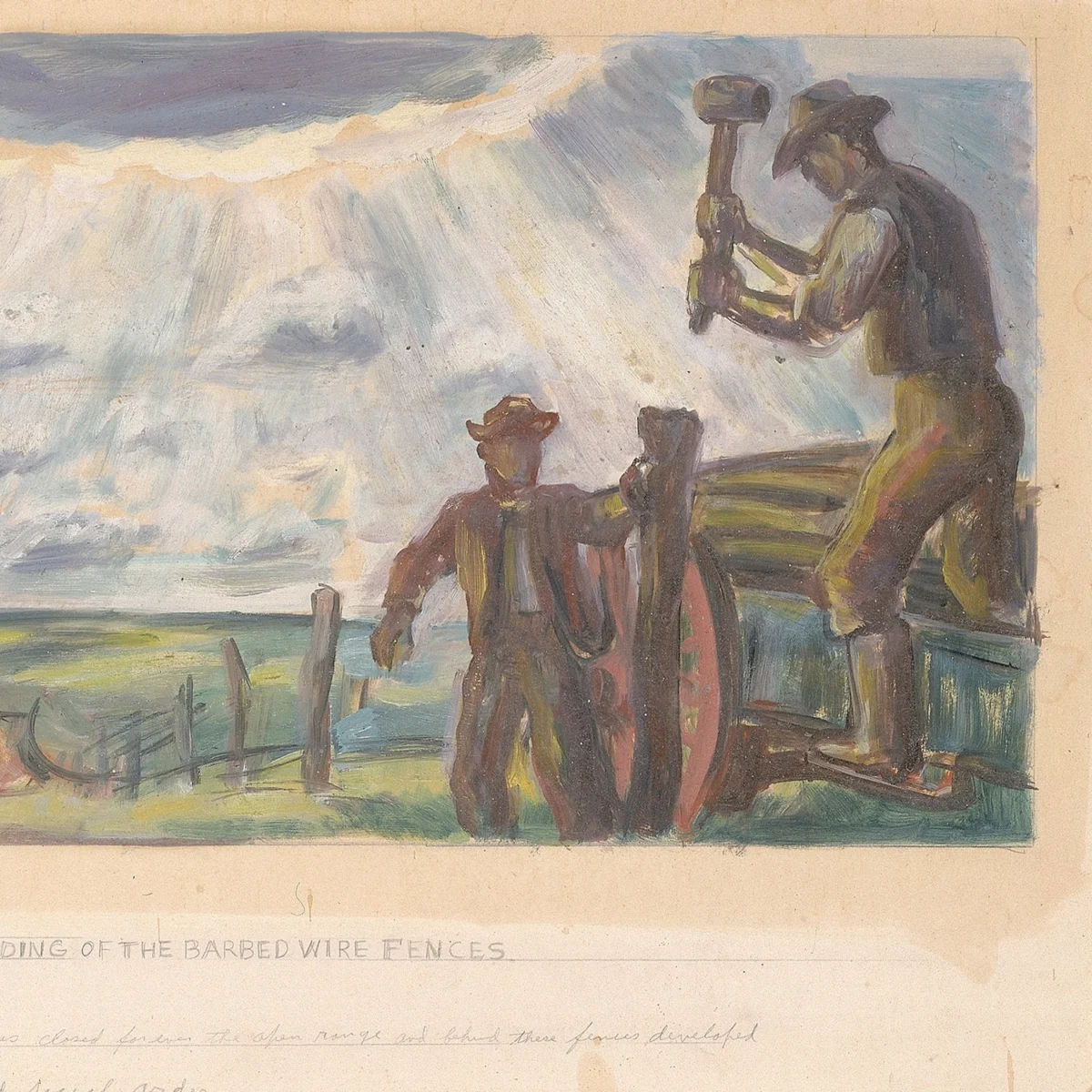
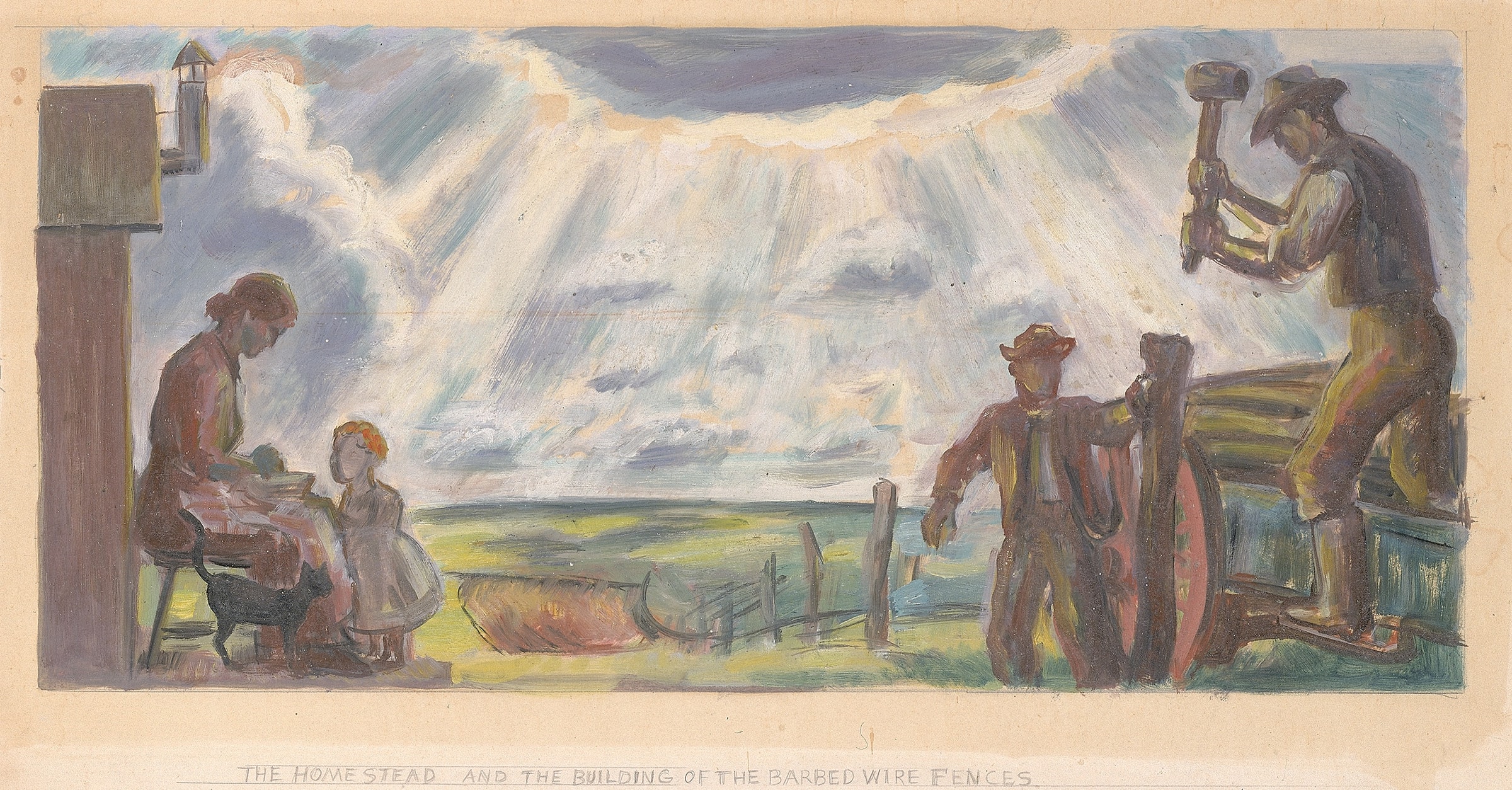
On May 20, 1862, amidst the turmoil of the American Civil War (1861-1865), the United States government enacted the Homestead Act. This landmark legislation was designed to accelerate westward expansion by offering citizens 160 acres (approximately 65 hectares) of public domain land. While the land itself came at no purchase price, it was far from "free." Prospective farmers were mandated to reside on and "improve" the land for five continuous years before they could claim legal ownership. Despite a significant percentage of these nascent farms ultimately failing, the Homestead Act spurred hundreds of thousands of American families to venture West. By its discontinuation in 1976, the act had facilitated the claim and settlement of an astonishing 270 million acres of land by U.S. citizens, profoundly reshaping the nation’s geography and demography.
Chronology
The Long Road West: A Nation’s Obsession and Conflict
The allure of the West captivated Americans long before the nation’s formal establishment. This westward yearning was a persistent undercurrent in the colonial and early republican eras, frequently clashing with existing realities and populations.
Early American Expansionist Dreams
In 1763, the British Crown, under King George III, issued a royal proclamation explicitly forbidding American colonists from settling west of the Appalachian Mountains. This decree, aimed at preventing further costly conflicts with the Native American nations already inhabiting those territories, ignited considerable resentment among the colonists and became one of the foundational grievances that fueled the American Revolution (1775-1783). The desire for unfettered access to western lands was a powerful motivator for independence.
Following the United States’ hard-won independence, the nation’s Founders swiftly laid the groundwork for systematic westward expansion through the Northwest Ordinance of 1787. This pivotal legislation was of monumental importance, not only establishing the first organized U.S. territory – the Northwest Territory – but also setting crucial legal precedents for western settlement and outlining the process by which new states could be admitted into the Union. However, this organized expansion was not without severe consequences, leading inevitably to bloody conflicts between Euro-American settlers and the Indigenous peoples of the Great Lakes and Ohio Valley regions, foreshadowing future clashes.
Manifest Destiny and Territorial Acquisition
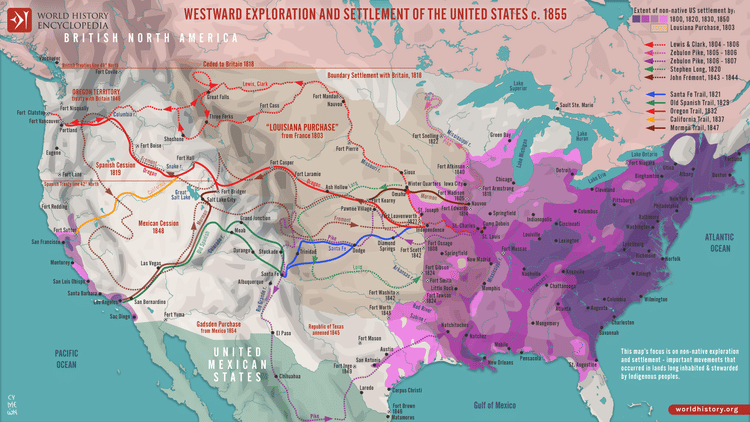
The precedent established by the Northwest Ordinance – both in terms of structured settlement and the violent displacement of Native Americans – shaped the subsequent decades. American settlers, driven by the promise of economic opportunity and the burgeoning ideology of Manifest Destiny, streamed westward. Manifest Destiny, a belief in the divinely ordained right and duty of the United States to expand its dominion across the North American continent, provided a powerful cultural and political justification for aggressive territorial expansion.
The Mexican-American War (1845-1848), championed by the ardently expansionist administration of President James K. Polk, dramatically expanded U.S. territory, adding 525,000 square miles to the nation’s domain. The subsequent discovery of gold in California in 1848, triggering the legendary Gold Rush, further incentivized thousands of eager prospectors and settlers to undertake the arduous journey West, transforming remote frontier outposts into bustling settlements almost overnight.
The Looming Shadow of Slavery
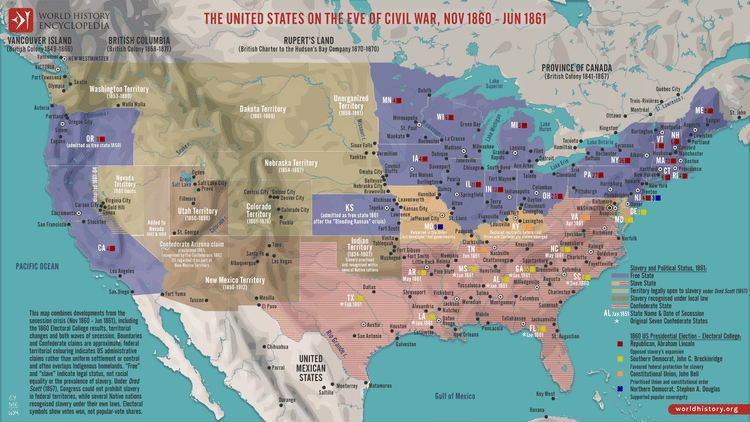
As the West became more heavily populated, the fundamental question of slavery’s expansion into these newly acquired lands became the nation’s most divisive issue. The powerful slave-holding aristocracy of the Antebellum South fiercely advocated for the expansion of chattel slavery. For them, the creation of new "slave states" was paramount to increasing their political power in Congress, ensuring the perpetuation of their agrarian economic system. Moreover, many of the newly acquired Western lands, particularly those suitable for cotton cultivation, represented vast potential for increased wealth. By forcing enslaved people to toil over the virgin soil of the West, the slave-holding elite envisioned ever-greater fortunes.
This expansion of slavery was met with strong opposition, not only from dedicated abolitionists but also from a significant faction of "free soil" Northerners. These free soilers believed in the inherent value and dignity of wage labor performed by free workers, contrasting it sharply with the institution of slavery. Many championed the idealized vision of the "virtuous yeoman farmer" – a hardworking American man who owned his own farm, tilled his own soil, and reaped the rewards of his labor for himself and his family. This vision of a West populated by a multitude of small, independent farms stood in stark opposition to the slaveholders’ aspiration for a West dominated by sprawling slave plantations.
During the pivotal Presidential Election of 1860, the newly formed anti-slavery Republican Party strategically incorporated a conceptual version of the Homestead Act into its platform. The primary goal was clear: to offer land to potential settlers and their families, thereby incentivizing them to establish farms and solidify a "free soil" presence before slaveholding elites could claim the land and extend their system. The Republican candidate, Abraham Lincoln, was a staunch supporter of this initiative. In February 1861, shortly after his election to the presidency, Lincoln articulated his vision, proclaiming that "the wild lands of the country should be distributed so that every man should have the means and opportunity of benefiting his condition" (quoted by history.org). By this point, several Southern slave states had already seceded from the Union, laying the groundwork for the inevitable conflict. Two months later, Confederate cannons fired on Fort Sumter, plunging the nation into the American Civil War.
Implementation & Mechanisms
Crafting the American Dream: The Act’s Provisions and Practicalities
The Homestead Act was passed by a Republican-controlled Congress on May 20, 1862, just over a year after the outbreak of the Civil War. Its passage was facilitated by the secession of Southern states, whose representatives had historically blocked such legislation, fearing it would favor free labor and undermine the expansion of slavery. With Southern opposition removed, the Republican vision of the "free soil, yeoman farmer" could finally be tested.
The act was open to any adult citizen, or intended citizen, who had never taken up arms against the United States. To file a claim, applicants paid a small registration fee, typically around $10, and were granted a 160-acre plot of public land. The core requirement was that claimants must live on the land and "improve" it through cultivation for a continuous period of five years. Upon successful completion of these terms, the legal title to the property would become theirs. To expedite the process, claimants had the option to "commute" their claim by paying the government $1.25 per acre after a minimum of six months of residency and improvement. A significant provision, added after the war, allowed returning Union soldiers to deduct their time served in the army from the five-year residency requirement, offering a tangible benefit to veterans.
The unstated but widely understood assumption behind the Homestead Act, as historian Richard White explains, was that "the successful development of this tract demanded the labor of both men and women and thus the creation of a home and family. At the end of five years, labor on the land would have created a home, family, a competence, and independence" (142). The policy sought to transplant the ideal of the self-sufficient, family farm onto the vast Western landscape, encouraging permanent settlement and the establishment of communities.
Supporting Data & Outcomes
A Mixed Harvest: Successes, Failures, and Unintended Consequences
Throughout the 1860s and 1870s, hundreds of thousands of American families filed claims, and many embarked on the arduous journey West to settle on their new plots of "free" land. However, the promise of free land often masked a reality fraught with immense toil, hardship, and frequent failure.
The Harsh Realities of Frontier Life
While the land itself did not cost money, the process of transforming raw wilderness into a productive farm required significant capital, labor, and resilience. Settlers faced challenges ranging from harsh climates, infertile soil, and lack of water to isolation, disease, and conflict with Native American populations. Richard White’s research highlights the stark reality: for every four families that succeeded in establishing viable farms and "improving" their land, another six failed. These failures often resulted in claimants "abandoning the land, selling their right to others, or choosing to purchase the claim rather than waiting five years for the title" (ibid).
The success rate of homestead claims varied significantly across different regions and time periods. The act proved most immediately successful in the lands east of the 100th meridian, where rainfall was more abundant, and in regions like the Dakotas. For instance, two-thirds of the homestead claims made in Minnesota between 1863 and 1875 proved successful. In contrast, Kansas saw only 40% of claims filed between 1863 and 1890 yielding a successful result. Nevertheless, even 40% in Kansas translated to 94,448 successful farms, underscoring the sheer volume of people who attempted to leverage the act.
White further illuminates the scale of homesteading within the broader context of agricultural expansion. In the 1860s, Americans established 615,908 new farms; of these, only 142,410 were created by homesteaders. White notes that "even if every application proved successful – and only a minority in fact succeeded – the act accounted for fewer than 25 percent of new farms created" (143). The 1870s saw similar trends, with 1,348,985 new farms created, of which 318,572 were homestead entries. It was not until the 1880s that homesteaders constituted a majority of new farm creations, but this period was also characterized by continued high rates of failure, particularly as settlers pushed into increasingly arid regions.
Competing Interests and Land Monopolies
One significant obstacle for homesteaders was the formidable presence of railroad companies and other large land speculators. These powerful entities received massive land grants from the federal government, often far exceeding the 160-acre plots offered to individual settlers. These grants, intended to fund railroad construction and promote development, frequently encompassed prime agricultural land that might otherwise have been available to small farmers. This imbalance of land distribution meant that while the government ostensibly promoted the yeoman farmer ideal, it simultaneously facilitated large-scale land accumulation by corporations, undermining the spirit of the act for many.
The Devastating Impact on Native Americans
Perhaps the most profoundly negative consequence of the Homestead Act, and indeed of the broader policy of westward expansion it underpinned, was its catastrophic effect on Native American populations. For generations, Indigenous peoples had inhabited these lands, developing complex societies, unique cultures, and sustainable economies intrinsically linked to their ancestral territories. The arrival of homesteaders, often backed by military force, led directly to widespread displacement, forced removals onto reservations, and an escalating cycle of violence and bloodshed. Treaties were routinely violated, and Indigenous claims to sovereignty and land were systematically disregarded in the relentless push for settlement.
The influx of homesteaders also had severe environmental repercussions. The dramatic increase in agricultural activity contributed to a marked decrease in the buffalo population, a species central to the cultural, spiritual, and economic life of many Plains tribes. Furthermore, the introduction of unsustainable farming methods by settlers, often unsuited to the arid Western environment, further degraded the land and disrupted Indigenous ways of life, which had traditionally practiced more harmonious land management. The "American dream" for homesteaders often came at the cost of the displacement, cultural destruction, and even genocide of Native American nations.
Official Responses & Legacy
An Enduring, Contested Legacy
The Homestead Act, a product of specific historical pressures, left an indelible mark on the American landscape and its people. Its legacy is complex, marked by both transformative opportunities and profound injustices.
The Government’s Intent vs. Reality
Initially, the government’s intent was multifaceted: to democratize land ownership, to promote the "yeoman farmer" ideal, and crucially, to populate western territories with free labor to counter the expansion of slavery. In some respects, the act succeeded in its goals. It undeniably populated the West, facilitating the growth of new states and agricultural industries. It also provided opportunities for a diverse range of Americans, including women (who could file claims as heads of households), European immigrants, and, significantly, African Americans (known as "Exodusters" in some cases) after the Civil War, to become landowners – a powerful symbol of independence and upward mobility.
However, the reality often diverged from the idealistic vision. The high failure rates, the exploitation of the act by large land interests, and the sheer difficulty of frontier life meant that the dream of independent farming remained elusive for many. The government’s policy, while framed as an opportunity, was also an aggressive act of nation-building that prioritized settler expansion over the rights and existence of Indigenous peoples. The "public domain" offered for homesteading was, in fact, the ancestral lands of numerous Native American tribes, seized through conquest, broken treaties, or forced cessions.
Repeal and Modern Context
The Homestead Act remained in effect for 124 years, a testament to its long-standing influence. It was finally repealed in 1976 by the Federal Land Policy and Management Act, which stipulated a shift in federal policy: "public lands be retained in Federal ownership." This marked a significant change from the earlier policy of divesting public lands into private hands. An exception was made for Alaska, where homesteading was still authorized until 1986, reflecting the unique challenges and vast undeveloped areas of that state.
During its extensive tenure, the Homestead Act resulted in an astonishing 270 million acres (approximately 110 million hectares) – roughly 10% of all U.S. land – being claimed and settled. While the act undoubtedly had its severe negative impacts, particularly the high probability of failure for individual settlers and the devastating displacement of Native American peoples, it also had significant upsides. It allowed vast numbers of Americans – including men and women, White and Black citizens – to become landowners, fundamentally shaping the distribution of wealth and population across the continent and forever embedding the narrative of the independent frontier farmer into the American national identity.
The Homestead Act of 1862: Full Transcript
The following is a full transcript of the Homestead Act, passed by the US government on 20 May 1862:
CHAP. LXXV. —An Act to secure Homesteads to actual Settlers on the Public Domain.
Be it enacted by the Senate and House of Representatives of the United States of America in Congress assembled, That any person who is the head of a family, or who has arrived at the age of twenty-one years, and is a citizen of the United States, or who shall have filed his declaration of intention to become such, as required by the naturalization laws of the United States, and who has never borne arms against the United States Government or given aid and comfort to its enemies, shall, from and after the first January, eighteen hundred and sixty-three, be entitled to enter one quarter section or a less quantity of unappropriated public lands, upon which said person may have filed a preemption claim, or which may, at the time the application is made, be subject to preemption at one dollar and twenty-five cents, or less, per acre; or eighty acres or less of such unappropriated lands, at two dollars and fifty cents per acre, to be located in a body, in conformity to the legal subdivisions of the public lands, and after the same shall have been surveyed: Provided, That any person owning and residing on land may, under the provisions of this act, enter other land lying contiguous to his or her said land, which shall not, with the land so already owned and occupied, exceed in the aggregate one hundred and sixty acres.
SEC. 2. And be it further enacted, That the person applying for the benefit of this act shall, upon application to the register of the land office in which he or she is about to make such entry, make affidavit before the said register or receiver that he or she is the head of a family, or is twenty-one years or more of age, or shall have performed service in the army or navy of the United States, and that he has never borne arms against the Government of the United States or given aid and comfort to its enemies, and that such application is made for his or her exclusive use and benefit, and that said entry is made for the purpose of actual settlement and cultivation, and not either directly or indirectly for the use or benefit of any other person or persons whomsoever; and upon filing the said affidavit with the register or receiver, and on payment of ten dollars, he or she shall thereupon be permitted to enter the quantity of land specified: Provided, however, That no certificate shall be given or patent issued therefor until the expiration of five years from the date of such entry; and if, at the expiration of such time, or at any time within two years thereafter, the person making such entry; or, if he be dead, his widow; or in case of her death, his heirs or devisee; or in case of a widow making such entry, her heirs or devisee, in case of her death; shall. prove by two credible witnesses that he, she, or they have resided upon or cultivated the same for the term of five years immediately succeeding the time of filing the affidavit aforesaid, and shall make affidavit that no part of said land has been alienated, and that he has borne rue allegiance to the Government of the United States; then, in such case, he, she, or they, if at that time a citizen of the United States, shall be entitled to a patent, as in other cases provided for by law: And provided, further, That in case of the death of both father and mother, leaving an Infant child, or children, under twenty-one years of age, the right and fee shall ensure to the benefit of said infant child or children; and the executor, administrator, or guardian may, at any time within two years after the death of the surviving parent, and in accordance with the laws of the State in which such children for the time being have their domicile, sell said land for the benefit of said infants, but for no other purpose; and the purchaser shall acquire the absolute title by the purchase, and be entitled to a patent from the United States, on payment of the office fees and sum of money herein specified.
SEC. 3. And be it further enacted, That the register of the land office shall note all such applications on the tract books and plats of, his office, and keep a register of all such entries, and make return thereof to the General Land Office, together with the proof upon which they have been founded.
SEC. 4. And be it further enacted, That no lands acquired under the provisions of this act shall in any event become liable to the satisfaction of any debt or debts contracted prior to the issuing of the patent therefor.
SEC. 5. And be it further enacted, That if, at any time after the filing of the affidavit, as required in the second section of this act, and before the expiration of the five years aforesaid, it shall be proven, after due notice to the settler, to the satisfaction of the register of the land office, that the person having filed such affidavit shall have actually changed his or her residence, or abandoned the said land for more than six months at any time, then and in that event the land so entered shall revert to the government.
SEC. 6. And be it further enacted, That no individual shall be permitted to acquire title to more than one quarter section under the provisions of this act; and that the Commissioner of the General Land Office is hereby required to prepare and issue such rules and regulations, consistent with this act, as shall be necessary and proper to carry its provisions into effect; and that the registers and receivers of the several land offices shall be entitled to receive the same compensation for any lands entered under the provisions of this act that they are now entitled to receive when the same quantity of land is entered with money, one half to be paid by the person making the application at the time of so doing, and the other half on the issue of the certificate by the person to whom it may be issued; but this shall not be construed to enlarge the maximum of compensation now prescribed by law for any register or receiver: Provided, That nothing contained in this act shall be so construed as to impair or interfere in any manner whatever with existing preemption rights: And provided, further, That all persons who may have filed their applications for a preemption right prior to the passage of this act, shall be entitled to all privileges of this act: Provided, further, That no person who has served, or may hereafter serve, for a period of not less than fourteen days in the army or navy of the United States, either regular or volunteer, under the laws thereof, during the existence of an actual war, domestic or foreign, shall be deprived of the benefits of this act on account of not having attained the age of twenty-one years.
SEC. 7. And be it further enacted, That the fifth section of the act entitled "An act in addition to an act more effectually to provide for the punishment of certain crimes against the United States, and for other purposes," approved the third of March, in the year eighteen hundred and fifty-seven, shall extend to all oaths, affirmations, and affidavits, required or authorized by this act.
SEC. 8. And be it further enacted, That nothing in this act shall be so construed as to prevent any person who has availed him or herself of the benefits of the first section of this act, from paying the minimum price, or the price to which the same may have graduated, for the quantity of land so entered at any time before the expiration of the five years, and obtaining a patent therefor from the government, as in other cases provided by law, on making proof of settlement and cultivation as provided by existing laws granting preemption rights.
Nippur, Mesopotamia – Dating back to approximately 2000 BCE, the ancient Sumerian hymn Enlil in the E-Kur stands as a monumental work of Mesopotamian literature, offering profound insights into the re
London, UK – For many, the word "folklore" conjures images of quaint anachronisms or fantastical tales spun for entertainment. It might evoke the sight of antler-wearing men dancing in Abbot
FOR IMMEDIATE RELEASE London, UK – [Insert Date, e.g., December 12, 2023] – In an ambitious and visually stunning endeavor, acclaimed comic world luminaries John Reppion and PJ Holden have unveiled an