The Ghost in the Machine: Why a Game with 1.4 Billion Potential Customers Managed Zero Sales on the Microsoft Store
Introduction: The Statistical Impossibility of Zero
In the digital age of video game distribution, the "long tail" theory suggests that even niche products will eventually find a buyer if the marketplace is large enough. However, a recent revelation from independent developer Martin Nerurkar has sent shockwaves through the indie development community, highlighting a glaring vacuum in the heart of the world’s most ubiquitous operating system.
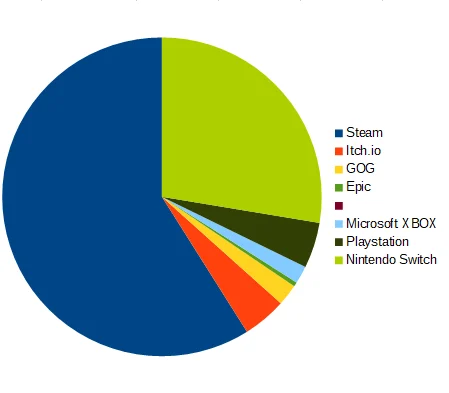
Nerurkar, the founder of Sharkbomb Studios and creator of the critically acclaimed "dustpunk" deck-builder Nowhere Prophet, recently shared a revenue breakdown of his game by platform. While the game performed respectably on Steam, Nintendo Switch, and PlayStation, one platform stood out for a reason that defied statistical probability: the Microsoft Store. Despite being pre-installed on over 1.4 billion active Windows devices, the Microsoft Store version of Nowhere Prophet had not recorded a single sale since its launch on the platform.
This anomaly raises critical questions about the viability of Microsoft’s integrated storefront, the effectiveness of its discovery algorithms, and the broader identity crisis currently plaguing the Windows ecosystem.
Main Facts: The "Nowhere Prophet" Revelation
The story began when Martin Nerurkar posted a chart on social media detailing the lifetime revenue of Nowhere Prophet. The game, which blends roguelike progression with tactical card combat, was well-received by critics and carved out a loyal following. According to Nerurkar’s estimates, the game has moved approximately 20,000 units across all digital storefronts.
The data revealed a healthy distribution across major players:
- Steam: The dominant leader in revenue and units.
- Nintendo eShop: A strong secondary performer, consistent with the "indie boom" on the Switch.
- PlayStation Store & Xbox: Modest but consistent contributions to the bottom line.
However, the Microsoft Store—the specific digital storefront integrated into Windows 10 and 11—was entirely absent from the chart. When questioned by followers, Nerurkar clarified the omission with a startling admission: "And if you’re wondering why the Microsoft Store isn’t on this graph, that’s because we haven’t made a single sale there in this entire time."
The contrast is stark. Microsoft claims that Windows has 1.4 billion Monthly Active Users (MAU). To have a product available for years on a platform with a ten-figure user base and achieve zero conversions suggests more than just a lack of interest in a specific genre; it suggests a fundamental breakdown in the commerce pipeline.
Chronology: From Windows 8 to the Modern Identity Crisis
To understand how the Microsoft Store failed Nowhere Prophet, one must look at the history of Microsoft’s attempts to centralize Windows software distribution.
2012: The Birth of the Windows Store
With the launch of Windows 8, Microsoft introduced the "Windows Store." It was designed to mimic the success of the Apple App Store, focusing on "Metro" (later UWP) apps that were sandboxed, touch-friendly, and theoretically more secure. However, the store was criticized from day one for its poor UI, lack of high-quality software, and the "walled garden" approach that alienated traditional PC power users.
2015–2019: The Transition to Windows 10
With Windows 10, the store was rebranded as the Microsoft Store. Microsoft attempted to bridge the gap by allowing traditional Win32 games (like those found on Steam) to be packaged for the store. It was during this period that Nowhere Prophet was developed and eventually ported to various platforms.
2019–2021: The Rise of Game Pass
Microsoft shifted its strategy heavily toward the Xbox Game Pass for PC. This subscription model became the primary way users interacted with the Microsoft Store. While this was a boon for Microsoft’s subscription numbers, it fundamentally changed the "buy-to-play" psychology of the storefront. Users began to view the Microsoft Store as a "library" for their subscription rather than a "shop" for individual purchases.
2022: The Revelation
By August 2022, after years of availability, the data for Nowhere Prophet confirmed what many indie developers had suspected: without being featured on Game Pass or heavily promoted by Microsoft’s editorial team, an organic sale on the Microsoft Store was a near-mythical event.

Supporting Data: The 1.4 Billion User Disconnect
The sheer scale of the Microsoft Store’s failure in this instance is best illustrated by comparing it to its competitors.
The Footfall Comparison
- Steam: Approximately 120–130 million Monthly Active Users.
- Epic Games Store: Approximately 60 million Monthly Active Users.
- Microsoft Store (via Windows): 1.4 billion Monthly Active Users.
Despite having ten times the potential audience of Steam, the Microsoft Store’s conversion rate for Nowhere Prophet was 0%. In marketing terms, the "funnel" is entirely blocked. Industry analysts point to several data-driven reasons for this:
- Intent to Purchase: Users open Steam with the specific intent to buy or play games. Users open Windows to work, browse the web, or access other services. The "Store" icon on the taskbar is often viewed as bloatware rather than a shopping destination.
- Discovery Algorithms: Steam’s "Discovery Queue" and "Recommended for You" sections are highly tuned to individual tastes. The Microsoft Store’s landing page has historically been a cluttered mix of productivity apps (like WhatsApp or Netflix) and AAA games (like Halo or Forza), leaving little room for mid-tier indie titles.
- The UWP Legacy: For years, games on the Microsoft Store were locked in a proprietary format that prevented modding and made overlay software (like Discord or Fraps) difficult to use. Though Microsoft has moved away from this, the "stigma" of the store being a technically inferior place to play games persists.
Official Responses and Platform Evolution
While Microsoft has not commented specifically on the sales figures of Nowhere Prophet, the company has acknowledged through its actions that the Store required a radical overhaul.
In 2021, alongside the announcement of Windows 11, Microsoft revealed a "new" Microsoft Store. Panos Panay, Microsoft’s Chief Product Officer, emphasized that the store was being rebuilt from the ground up to be more "open." Key changes included:
- Allowing Unpackaged Win32 Apps: Developers no longer need to jump through complex hoops to list their software.
- Third-Party Commerce Engines: Microsoft allowed developers to keep 100% of their revenue if they used their own payment processing systems (though this does not apply to games).
- Integration of the Epic Games Store: In a surprising move, Microsoft allowed the Epic Games Store to be "searchable" and "downloadable" within the Microsoft Store itself.
These moves were seen as a quiet admission that the previous iteration of the store had failed to gain traction as a standalone retail destination. By opening the doors to other stores and making it easier to list software, Microsoft is attempting to pivot the Store from a "Retailer" to a "Directory."
Implications: What This Means for the Future of Indie Games
The case of Nowhere Prophet serves as a cautionary tale for the "omni-channel" distribution strategy. It highlights three major implications for the industry:
1. The "Game Pass or Bust" Reality
For indie developers, the Microsoft Store is increasingly becoming a binary ecosystem. If your game is selected for Xbox Game Pass, you receive a guaranteed licensing fee and massive exposure. If your game is simply "available for sale" on the store without being part of the subscription, it effectively does not exist. This creates a dangerous dependency on Microsoft’s curators as the sole gatekeepers of success on the Windows platform.
2. The Failure of the "Default" Advantage
Conventionally, being the "default" option is a massive competitive advantage (as seen with Google Search or Apple’s Safari). However, the Microsoft Store proves that if the User Experience (UX) is poor and the brand identity is confused, being the default is irrelevant. Developers are learning that porting costs to the Microsoft Store may not even be recouped if there is no marketing support from Microsoft.
3. The Identity Crisis of the PC
The PC remains the most open gaming platform in the world. The failure of the Microsoft Store to capture sales—even with its massive OS integration—suggests that PC gamers value the "openness" and specialized features of platforms like Steam and GOG over the "convenience" of an OS-integrated shop. Microsoft’s struggle is that it is trying to serve two masters: the casual user who wants a "safe" app store, and the hardcore gamer who wants a high-performance distribution hub. By trying to be both, they have arguably succeeded at neither.
Conclusion
Nicholas Lovell’s assessment of the situation is blunt: "The Microsoft Store is terrible." While that may be a subjective opinion, the data provided by Martin Nerurkar provides an objective backing to that sentiment.
For a game to sell 20,000 copies elsewhere and zero on the world’s most popular OS storefront is a landmark failure of retail design. As Microsoft continues to iterate on Windows 11, the ghost of Nowhere Prophet serves as a reminder that 1.4 billion users are only valuable if you can convince them to click "Buy"—and currently, on the Microsoft Store, they aren’t even looking at the shelf.