The Long Road to Ni’Var: The Complex History of Vulcan and Romulan Unification
In the vast tapestry of the Star Trek multiverse, few narratives are as poignant or as politically charged as the fractured relationship between the Vulcans and the Romulans. What began as a surprising reveal in the 1960s—that the Federation’s greatest allies and one of its most lethal enemies were biological cousins—evolved into a millennia-spanning saga of war, philosophy, and eventual reconciliation. The concept of "Unification" is more than a diplomatic goal; it is a testament to the franchise’s core belief that even the deepest ideological chasms can be bridged through time, persistence, and the legacy of a few dedicated individuals.
Main Facts: A Species Divided by Philosophy
To understand the relationship between Vulcans and Romulans, one must first understand their shared biology. Both species possess green, copper-based blood, pointed ears, and highly acute hearing. Physically, they are nearly identical, though Romulans often exhibit V-shaped cranial ridges—a physiological trait that has been attributed to various evolutionary or genetic factors over the centuries.
However, the chasm between them is entirely cultural and philosophical. Vulcans, as a society, are defined by C’thia, the rigorous practice of emotionless logic. This was not an innate trait but a survival mechanism adopted after a period of global nuclear conflict. In contrast, Romulans are defined by passion, secrecy, and an unyielding commitment to the state. Where Vulcans seek transparency through logic, Romulans master the art of the "hidden" through the Tal Shiar (their secret police) and the Zhat Vash (an even more ancient, anti-artificial intelligence cult).
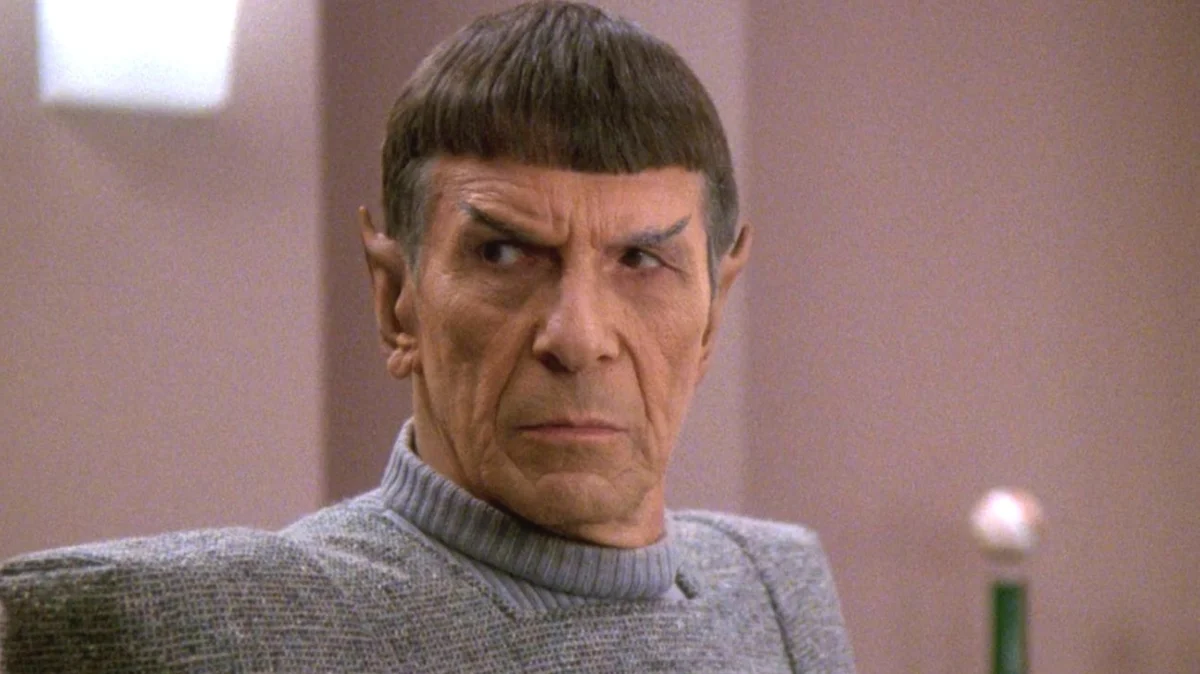
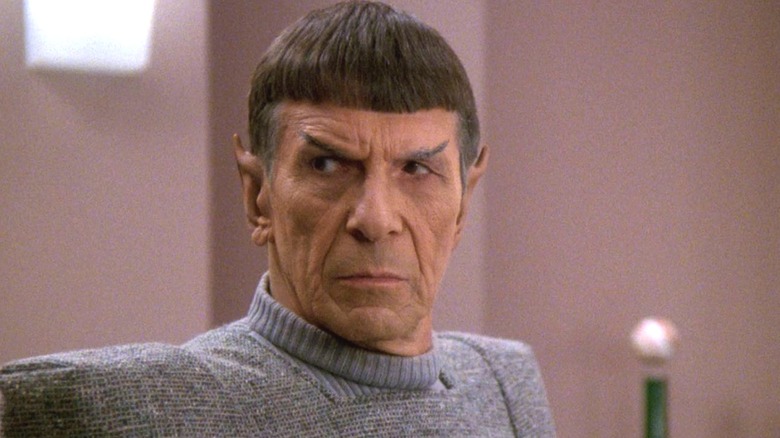
Unification refers to the movement—spearheaded most famously by Ambassador Spock—to bring these two disparate cultures back together. This movement posited that the separation was an artificial wound in the Vulcanoid soul that needed to be healed for both species to reach their full potential.
Chronology: From the Time of Awakening to the 32nd Century
The history of the Vulcan-Romulan schism is a timeline of radical shifts, beginning in Earth’s equivalent of the 4th Century and stretching into the distant future of the 32nd Century.
The Schism (Circa 300-400 AD)
Ancient Vulcan was a world of "stone and fire," populated by a species of extreme emotional volatility and violent impulses. As they approached the brink of self-annihilation via primitive nuclear weapons, a philosopher named Surak emerged. He preached that the only way to save the species was the total suppression of emotion in favor of logic.
While many embraced Surak’s "Time of Awakening," a significant minority rejected this path. Known in Vulcan lore as "those who march beneath the raptor’s wings," these dissenters chose exile over the "slavery" of logic. They left Vulcan in sub-light sleeper ships, embarking on a perilous journey through space that would eventually lead them to the twin planets of Romulus and Remus.
The Earth-Romulan War (2156–2160)
For centuries, the Romulans remained a myth to the burgeoning interstellar community. During the mid-22nd century, the Romulan Star Empire engaged in a brutal war with Earth and its allies. Crucially, because the war was fought entirely with nuclear missiles and without visual communication, the humans (and even the Vulcans) remained unaware that the Romulans were offshoots of the Vulcan race.
The Revelation: "Balance of Terror" (2266)
The secret was finally revealed during a skirmish between the USS Enterprise, commanded by James T. Kirk, and a Romulan Bird-of-Prey. When the Romulan commander’s image appeared on the viewscreen, the bridge crew was stunned to see a man who looked exactly like their First Officer, Spock. This revelation sparked immediate bigotry within the crew and set the stage for a century of Cold War-style tension between the Federation and the Romulan Empire.
Spock’s Underground Movement (The 2360s)
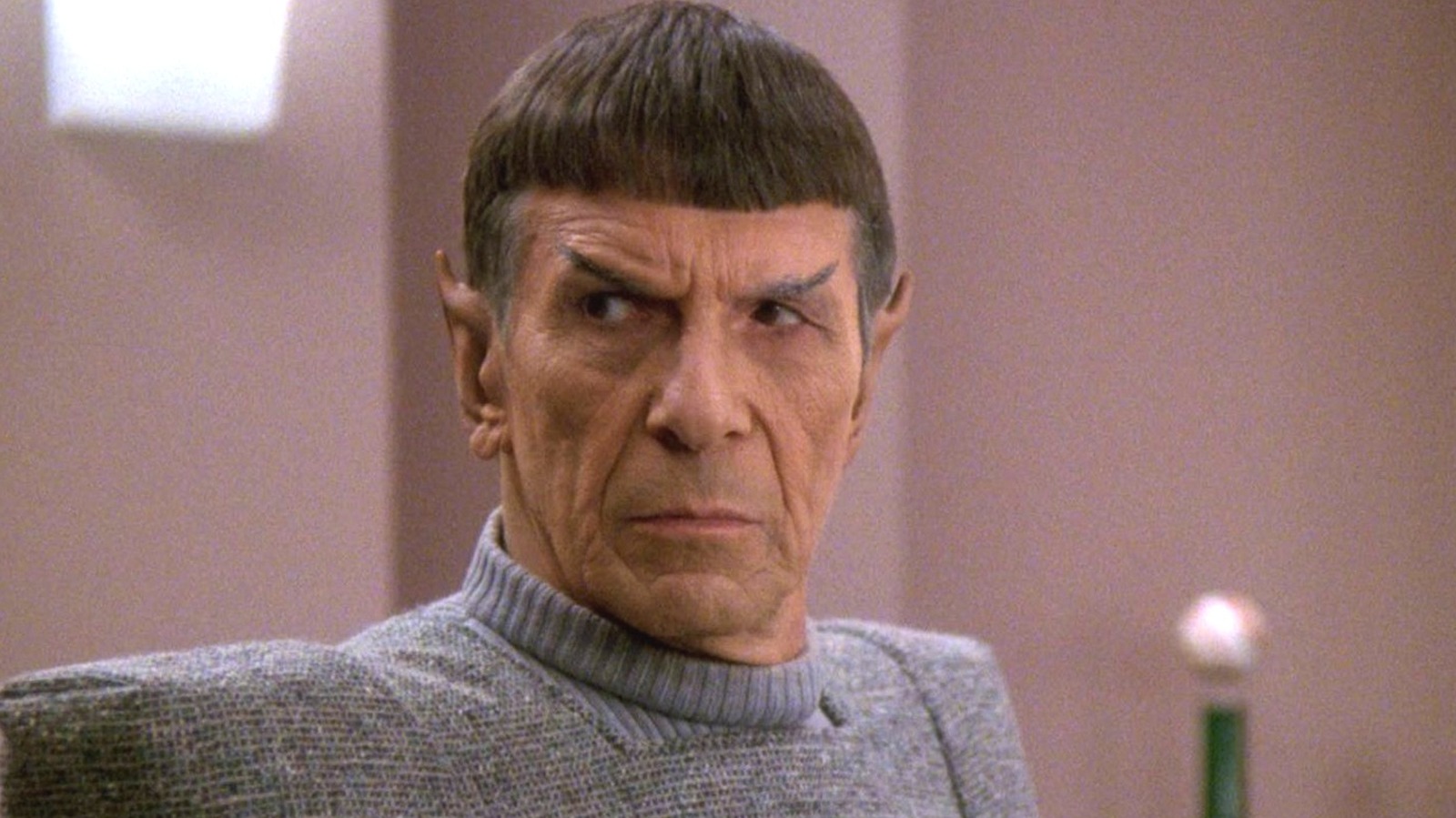
In the Star Trek: The Next Generation two-parter "Unification," it is revealed that Ambassador Spock had vanished from the Federation to live as an underground dissident on Romulus. He sought to nurture a growing pro-Vulcan movement among the Romulan youth, who were increasingly dissatisfied with the oppressive secrecy of the Empire. Though the Romulan government attempted to use Spock’s mission as a "Trojan Horse" to invade Vulcan, the seeds of cultural exchange were planted.
The Cataclysm and Ni’Var (2387–3189)
The destruction of the Romulan sun in 2387 (as seen in the 2009 Star Trek film and Star Trek: Picard) served as the tragic catalyst for true unification. With their homeworld gone, the Romulan refugees had nowhere to turn. Over the following centuries, the survivors eventually returned to Vulcan.
By the 32nd Century, as depicted in Star Trek: Discovery, the two peoples had fully reunified on the planet, which they renamed Ni’Var. This name, derived from an ancient Vulcan musical term meaning "two points of view," signifies a society that finally balanced Surak’s logic with the Romulan heritage of passion.
Supporting Data: Biological and Cultural Divergence
While the two species share a common ancestor, two millennia of separation led to distinct differences that complicated the Unification movement.
- Physiological Drift: In the TNG episode "The Enemy," it is noted that there are subtle ribosomal differences between Vulcan and Romulan tissues, making medical procedures like blood transfusions between the two difficult without specific genetic compatibility.
- The Romulan Mind: Unlike Vulcans, who have spent centuries honing telepathic abilities (such as the Mind Meld), Romulans generally do not practice telepathy. It is unclear if they lost the biological capacity or simply the cultural discipline required to use it.
- The Zhat Vash Factor: Recent historical data from Star Trek: Picard suggests that a core reason for the Romulans’ intense secrecy was the Zhat Vash’s discovery of "The Admonition," a message left by ancient synthetics. This secret kept Romulans culturally isolated and xenophobic, creating a massive psychological barrier to reuniting with the logic-driven, scientifically curious Vulcans.
Official Responses: Political Resistance to the Dream
Unification was rarely a popular idea among the ruling classes of either world.
- The Vulcan High Command: In the 22nd century, the Vulcan High Command was often elitist and viewed Romulans as "lost" or "primitive" because of their emotional nature. Even by the 24th century, many Vulcan traditionalists viewed the idea of Romulans returning as a threat to the stability of their logical society.
- The Romulan Senate: For the Empire, Unification was viewed as an existential threat. The state relied on the suppression of dissent; the introduction of Vulcan philosophy—which encourages individual discipline and the questioning of authority through logic—was seen as a "mind virus" that could topple the Emperor.
- The United Federation of Planets: Starfleet’s stance was one of cautious optimism tempered by security concerns. While the Federation valued the peace that Unification would bring, they feared that a Vulcan-Romulan alliance might withdraw from the Federation to form a new, neutral superpower—a fear that eventually came true when Ni’Var temporarily withdrew from the Federation in the 32nd century.
Implications: The Legacy of Spock and the Future of Peace
The story of Unification is, at its heart, the story of Spock’s greatest gamble. He realized that logic alone was not enough to save a galaxy; it required the "emotional" courage to seek peace with an enemy.
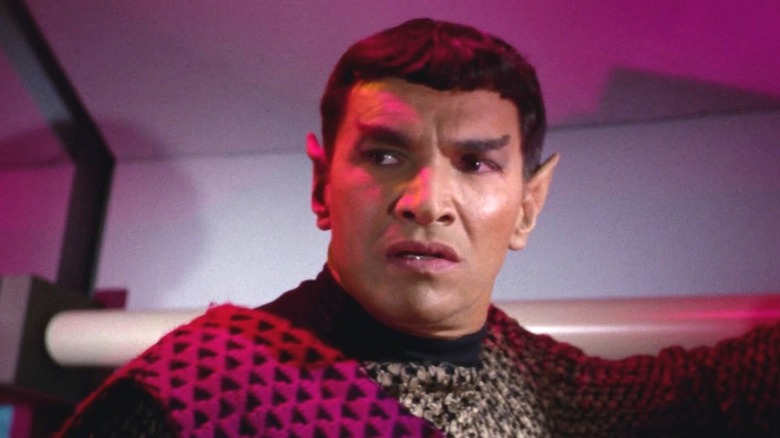
The implications of Unification are profound for the Star Trek universe. It represents the ultimate triumph of diplomacy over war. When Vulcans and Romulans finally merged to form Ni’Var, they created a society that was arguably more stable and resilient than either had been individually. The Vulcans gained a sense of purpose and a connection to their ancestral passion, while the Romulans gained the stability and peace that had eluded them during their imperial era.
Furthermore, Unification serves as a meta-commentary on real-world geopolitics. It suggests that reunification—much like the fall of the Berlin Wall or the end of long-standing civil conflicts—is a slow, agonizing process that requires the death of old prejudices. The fact that it took nearly a thousand years from Spock’s first efforts to the reality of Ni’Var underscores the franchise’s "long game" approach to social progress.
In the end, the relationship between Vulcans and Romulans is a mirror held up to humanity. It asks whether we are defined by our past conflicts or by our future potential. By choosing to become Ni’Var, the children of Vulcan and Romulus proved that even after two thousand years of silence and blood, the logic of peace is the most powerful force in the galaxy.