‘Chica Checa’ Review: Šimon Holý’s Karlovy Vary Competition Entry Is Worthy but Clumsy
Karlovy Vary, Czech Republic — The Karlovy Vary International Film Festival (KVIFF) has long served as a prestigious gateway for Central and Eastern European cinema, balancing avant-garde experimentation with culturally significant narratives. This year, the spotlight in the Crystal Globe competition fell on Chica Checa, the fourth feature film from prolific young Czech director Šimon Holý. While the film’s placement in a major international competition suggests a high-concept arthouse pedigree, the work itself has sparked a nuanced debate regarding the direction of contemporary Czech cinema, the representation of LGBTQ+ identities in rural settings, and the tension between "commercial crowd-pleasers" and "festival-grade" filmmaking.
Main Facts: A Story of Domestic Transition
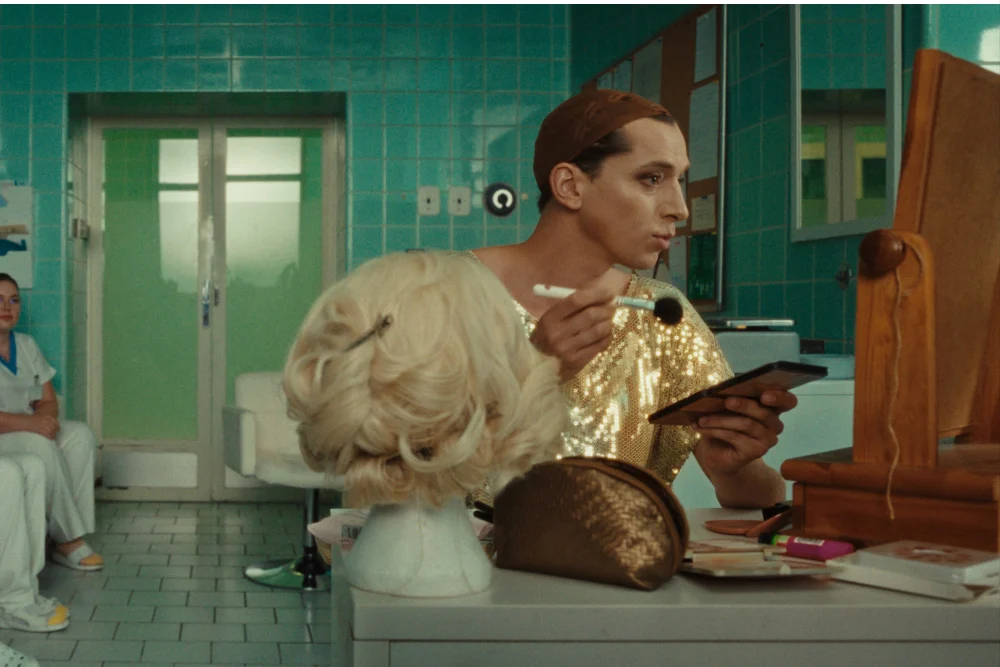
Chica Checa follows the life of Zdena (portrayed by Pavla Tomicová), a middle-aged woman living a quiet, somewhat isolated existence in a sprawling family home within a traditional Czech village. Her days are largely defined by the emotional weight of caring for her ailing mother and the lingering shadow of her late husband. The narrative engine is ignited by two primary catalysts: an offer from a wealthy urbanite to purchase her family estate and the unexpected return of her son, Lukáš (Jan Cina), who has been living in France.
The film attempts to weave together several "momentous" life events—the potential loss of a family home, a late-in-life coming-out story, and the introduction of drag culture to a small-town environment. However, director Šimon Holý makes a distinct stylistic choice to "lower the temperature" of these conflicts. Rather than leaning into the inherent drama of a generational clash, Holý presents a world where optimism is the default setting and resolution is never far from reach.
Chronology: From Concept to the Crystal Globe
The journey of Chica Checa reflects Šimon Holý’s rapid ascent in the Czech film industry. Having previously explored themes of intimacy and modern relationships in films like Mirrors in the Dark and And Then There Was Love…, Holý has established himself as a director interested in the psychological interiority of his characters.
- Development and Casting: The film was conceived as a vehicle to explore the "middle-aged experience" in the Czech Republic, casting Pavla Tomicová, a beloved figure in local television and film, to anchor the project.
- Production Aesthetics: During filming, the production team opted for a visual style that critics have described as leaning toward a "TV-level" aesthetic, utilizing garish costume designs and occasional wide-lens cinematography that deviates from the typical somber palette of European festival cinema.
- Festival Selection: The film was selected for the Crystal Globe competition at the 58th Karlovy Vary International Film Festival. This selection placed Chica Checa alongside rigorous international dramas, immediately framing it as a work of significant artistic intent.
- Premiere and Reception: Upon its premiere, the film received a polarized response. While local audiences found comfort in its "relentless positivity," international critics noted a disconnect between its "middlebrow" execution and its "edgy" subject matter.
Supporting Data: Formal Inconsistencies and Performance Registers
Critics and industry analysts have pointed to several technical and narrative "clunkiness" factors that define Chica Checa. These data points suggest a film caught between two identities:
- Narrative Inconsistencies: The script frequently refers to Zdena’s social isolation and her "refusal to socialize" since her husband’s death. However, the visual evidence contradicts this, showing the character attending dances and house parties early in the film.
- Tonal Friction: There is a marked discrepancy in the acting styles of the two leads. Pavla Tomicová employs an "intensely expressive" and "mannered" performance style, characterized by wide-eyed wonder. In contrast, Jan Cina delivers a naturalistic performance as Lukáš, creating a "disjointed awkwardness" when the two share the screen.
- The "Educational" Tone: Several key scenes—most notably the coming-out sequence—have been described as "wooden" or "contrived." When Lukáš reveals his career as a drag queen in response to Zdena’s use of a homophobic slur, the film shifts into a mode that resembles an educational video rather than a lived-in drama.
- Resolution Speed: Unlike traditional dramas where conflict builds to a crescendo, Chica Checa resolves major arguments (such as the coming-out confrontation) by the following morning, suggesting a narrative philosophy where characters are "too nice" to sustain anger.
Official Responses: Director and Festival Perspectives
While official reviews have been critical of the film’s "will-this-do" filmmaking, the festival organizers and the director have offered a different perspective on the film’s purpose.
The Festival’s Stance: KVIFF programmers often include films like Chica Checa to showcase the breadth of local production. By placing a "commercial crowd-pleaser" in the main competition, the festival signals support for the local industry’s ability to tackle modern social issues (like LGBTQ+ rights) within a format that is accessible to a broad, non-specialist audience.
Šimon Holý’s Intent: Though Holý has not responded directly to specific criticisms of the film’s "gaucheness," his body of work suggests a desire to normalize marginalized identities. By presenting a world where a mother’s love "always overcomes deeply ingrained intolerance," Holý appears to be offering a "soft" version of progressivism—one that prioritizes social harmony over the harsh realities of homophobia.
Implications: The Future of "Safe" Representation
The release and reception of Chica Checa carry significant implications for the future of Czech cinema and the broader landscape of LGBTQ+ storytelling in Eastern Europe.
1. The "Middlebrow" Trap:
The film highlights a growing trend in European cinema where "edgy" topics (drag queens, coming out) are packaged in "safe," middlebrow formats. While this may help normalize these topics for conservative audiences, it risks trivializing the actual struggles faced by the LGBTQ+ community. By making the resolution "easy," the film may inadvertently suggest that homophobia is a minor hurdle that can be solved with a "sunny disposition."
2. The Commercial vs. Arthouse Divide:
Chica Checa serves as a case study for the tension between domestic commercial success and international critical acclaim. In the Czech Republic, Pavla Tomicová’s performance is likely to draw significant crowds, as she remains a major box-office draw. However, for international festivals, the film’s lack of formal rigor and "clunky" storytelling may signal a decline in the "Czech New Wave" spirit of innovation.
3. The Danger of "Relentless Positivity":
The film’s greatest implication lies in its "relentless positivity." There is a "thin line," as noted by critics, between a "worthwhile impulse" to show positive representation and the "glib idea" that systemic intolerance can be erased by motherly meekness. If cinema moves toward a model where conflict is flatlined for the sake of comfort, it may lose its power to reflect the true complexity of human experience.
4. Visual Language in Modern Cinema:
The technical criticisms—specifically the "garish" costumes and "inexplicable" lens choices—suggest a shift toward a "television aesthetic" in feature filmmaking. As streaming services and television production standards influence independent cinema, the distinction between the "big screen" experience and "small screen" convenience continues to blur.
Conclusion
Chica Checa remains a fascinating, if flawed, addition to Šimon Holý’s filmography. It is a film that wants to be both a revolutionary statement on rural acceptance and a cozy afternoon watch for the very people who might harbor the prejudices it seeks to dismantle. Whether this "low-temperature" approach to drama is a revolutionary act of normalization or a missed opportunity for meaningful dialogue remains a subject of intense debate as the film moves from the festival circuit to general release. For now, it stands as a testament to the current state of Czech cinema: earnest, accessible, but perhaps a bit too eager to ensure that, in the end, "all will be fine."