"Enchanted Tales" Unlocks the Enduring Mystery of "The Twelve Dancing Princesses"
London, UK – In an age increasingly defined by the tangible and the immediate, the timeless allure of folklore continues to captivate, offering portals to worlds where magic intertwines with the human spirit. Acclaimed author Laura Sampson, through her evocative new collection, Enchanted Tales, has once again demonstrated the profound power of classic narratives. Among the cherished stories she meticulously reanimates is "The Twelve Dancing Princesses," a captivating mystery rooted in the rich tapestry of European oral tradition, specifically drawing from the detailed French rendition by Charles Deulin. This retelling not only preserves the original’s charm but enriches it, inviting contemporary readers into a secret world of nocturnal revelry and an earnest quest for true love.
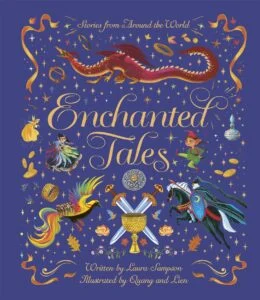
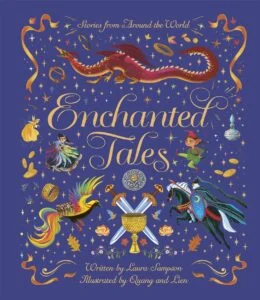
The publication of Enchanted Tales by Templar Books, featuring exquisite illustrations by Phung Nguyen Quang & Huynh Thi Kim Lien, marks a significant contribution to the realm of children’s literature and folklore preservation. Sampson’s rendition of "The Twelve Dancing Princesses" stands out for its clarity, its attention to detail, and its ability to transport readers directly into the heart of an age-old enigma that has puzzled generations.
The Core Enigma: Main Facts of a Royal Mystery
At the heart of "The Twelve Dancing Princesses" lies a beguiling mystery that has intrigued storytellers and audiences for centuries. Every night, the twelve beautiful princesses of a grand château retire to their chambers, which are secured with three formidable bolts. Yet, each morning, their satin slippers are found inexplicably worn through, as if they had danced vigorously until dawn. This recurring phenomenon baffles their father, the Duke, who issues a decree: any man who can uncover the secret behind the worn-out shoes will be granted the hand of one of his daughters in marriage. The stakes are high, not only for the princesses’ secret but for the lives of those who dare to seek it, as previous suitors have mysteriously vanished without a trace, unable to unravel the nocturnal escapades.
Laura Sampson’s version, rooted in Charles Deulin’s detailed narrative, introduces Michel, a humble cowherd from the village of Montignies-sur-Roc. Known affectionately as "Stargazer" for his dreamy, upward gaze, Michel embodies the archetype of the unassuming hero destined for greatness. His journey to the Château of Beloeil, guided by a mysterious fairy, sets the stage for a classic confrontation between appearance and reality, secrecy and revelation, and ultimately, between social standing and the power of genuine affection. The story’s enduring appeal lies in its blend of fantastical elements – secret passages, magical forests, and enchanted objects – with universal themes of curiosity, perseverance, and the transformative power of love.
A Journey into the Hidden Realm: The Chronology of Discovery
Michel’s odyssey begins not with royal fanfare but with a quiet, almost accidental encounter that changes the trajectory of his simple life.
The Prophecy and the Cowherd’s Calling
In the picturesque village of Montignies-sur-Roc, a region on the French-Belgian border that inspired Charles Deulin’s original narrative with its specific details of food, clothes, and place names, lived Michel. A young cowherd, distinguished by his curly hair and striking blue eyes, he earned the nickname "Stargazer" due to his habit of gazing skyward, lost in dreams of grand adventures far beyond his humble existence. One summer’s day, his quiet contemplation was interrupted by a vision: a fairy, resplendent in a golden dress, appeared before him. Her song, a melody of destiny, instructed him: "Go to the Château of Beloeil, and you will marry a princess!"
This divine instruction ignited a spark within Michel, propelling him towards a destiny he could scarcely comprehend. Eager and hopeful, he arrived at the Château of Beloeil the very next day, a place buzzing with hushed whispers and theories surrounding the inexplicable mystery of the princesses’ nightly escapades.
The Duke’s Decree and a Budding Connection
The Duke, exasperated and increasingly desperate, had publicly declared a challenge: "ANYONE WHO CAN SOLVE THE MYSTERY OF THE WORN-OUT SHOES MAY MARRY ONE OF MY DAUGHTERS!" This decree had attracted princes from across the land, each eager for the royal union and the prestige it promised. Yet, a chilling pattern emerged: every suitor who dared to attempt the challenge vanished overnight, their fate sealed by the château’s impenetrable secret.
Aware of his own humble status, Michel wisely chose not to present himself as a contender immediately. "I am no prince," he reasoned, "the duke will laugh at me if I come forward." Instead, he secured work within the château gardens, a position that allowed him proximity to the princesses without attracting undue suspicion. Daily, he meticulously prepared bouquets for them, which they accepted with regal indifference, never offering a glance or a word of thanks. However, one fateful day, a subtle shift occurred. The youngest princess, Lina, met his gaze and offered a fleeting, gentle smile. In that instant, Michel’s heart stirred, and his resolve to uncover the mystery deepened, now fueled by a burgeoning affection.
Magical Intervention and the Invisible Pursuit
That same night, the benevolent fairy reappeared to Michel, bearing extraordinary gifts: two baby laurel trees – one a rose, the other a cherry – along with a golden bucket and a golden rake. Her instructions were clear: "Plant these laurel trees, tend them with this rake, water them from this bucket and they will grant your wishes!" Michel, following her guidance, carefully planted and nurtured the magical saplings.
His diligence bore fruit. One day, the cherry laurel blossomed with a solitary white flower. Michel plucked it and, on a whim, placed it in his shirt buttonhole, hoping it might somehow impress Lina. To his astonishment, the flower instantly rendered him invisible. A surge of realization coursed through him: "This is my chance to solve the princesses’ mystery!"
That evening, cloaked in invisibility, Michel strategically positioned himself under a bed in the princesses’ private suite. As soon as the door was securely bolted for the night, the silence of the room dissolved into a symphony of rustling silks, opening wardrobes, and girlish laughter. Then, with three distinct claps, a hidden trapdoor in the floor creaked open. Michel, seizing the moment, slipped out from his hiding spot and followed the princesses. He was so close that he accidentally brushed Lina’s dress. She paused, looking behind her, but seeing nothing, simply muttered, "I must have tripped!"
The Enchanted Underworld and the First Clue
Michel followed the princesses down a winding staircase, along a mysterious corridor, and through a series of increasingly fantastical woodlands: first, a forest of shimmering silver, then one of lustrous gold, and finally, a dazzling expanse of sparkling diamonds. Each tree in these otherworldly groves glittered with precious jewels, casting an ethereal glow.
Their journey culminated at the edge of a glass-clear lake, where twelve princes awaited them in twelve shining boats. Each prince ferried a princess across the luminous waters to a magnificent castle, which glowed with an otherworldly brilliance in the twilight. Michel, still invisible, found himself seated beside Lina in her boat. She noticed its unusual slowness and heaviness, pondering, "Why is my boat so slow and heavy?" but the enchanting strains of wild music emanating from the castle soon diverted her attention.
Upon docking, the entire party rushed into the castle’s grand ballroom. It was a spectacle of mirrors, sparkling lights, and rich hangings. From a discreet corner, Michel watched, mesmerized, as the princesses whirled across the jeweled dancefloor. Lina’s velvet-black eyes shone with pure joy as she danced. Michel felt a pang of envy for the princes, unaware of their tragic secret: they were the very suitors who had vanished from the world above, their memories erased by an enchanted potion, now condemned to dance forever in this subterranean realm.
The revelry continued until the princesses’ shoes were utterly worn through. The music then ceased, and they partook in a feast of sugar cookies, waffles, and cakes before preparing for their return. Michel followed them silently, retracing their steps across the lake and through the diamond and gold woodlands. However, as they passed through the silver woodland, he impulsively broke off a tiny sprig from one of the trees. The act produced a resounding "CLANG!" that echoed through the enchanted forest. "What was that?" asked one princess, but another dismissed it as "Probably just a bird."
Michel, now keenly aware of the need for speed, raced ahead. He ascended the stairs, passed through the trapdoor, exited an open window, and slid down a hanging vine, returning to the gardens just as the first light of dawn broke. He removed the white invisibility flower and resumed his daily task of gathering bouquets for the princesses. Later, when he presented the flowers, Lina discovered the silver twig nestled within hers. "How can this be?" she thought, her brow furrowed in confusion, but she chose to remain silent.
The Unraveling Secret and Lina’s Dilemma
For the next two consecutive nights, Michel continued his invisible surveillance. Each time, on their return journey, he plucked a sprig – first from the golden woodland, then from the diamond woodland – placing it secretly within Lina’s bouquet. When Lina found the diamond sprig, the evidence became undeniable. She confronted Michel, her voice filled with a mixture of disbelief and curiosity: "You must have followed us. How?"
"I hid," Michel simply replied, his gaze steady.
Lina, aware of the Duke’s decree, pressed him further: "You know that telling our father this secret rewards you with a wedding to one of us. Will you tell him?"
"I do not intend to," he responded, his answer puzzling her.
"But why stay silent?" she asked, genuinely perplexed by his unexpected nobility. Michel offered no verbal explanation, but his blue eyes met Lina’s, and in that silent exchange, the other princesses witnessed Lina’s heart visibly melt.
Their sisters, observing this tender moment, reacted with disdain. "How ridiculous! Lina wants to be a gardener’s wife!" they taunted, their voices laced with scorn.
"Never!" Lina cried, her embarrassment and pride warring within her. In a fit of defiance, she threw her bouquet at Michel, rejecting the budding connection.
Later that day, the sisters, fearing exposure and determined to maintain their secret, conspired. They agreed that Michel should meet the same fate as the other suitors. With feigned cordiality, they invited Michel to join them, in plain sight, for the night’s dance.
True Love Breaks the Spell
Michel accepted the invitation, but a problem remained: he could not attend a grand ball dressed in his simple gardener’s clothes. Remembering the fairy’s gifts, he hurried to the gardens. Whispering a wish into the petals of the rose laurel, he was instantly transformed. In a moment, he stood adorned like a prince, in black velvet that mirrored the depths of Lina’s eyes, a diamond feather brooch sparkling on his cap.
Once again, the procession began: through the trapdoor, down the stairs, through the woodlands of silver, gold, and diamond, and towards the magnificent, hidden castle. Lina, catching sight of Michel in his princely attire, laughed, a blush rising to her cheeks. "Don’t you look princely!" she exclaimed.
"Maybe. But I’m still a gardener," he responded, his tone tinged with a self-deprecating honesty. "Not good enough for you."
They danced all night, a silent understanding passing between them amidst the whirl of the ballroom. As the ball drew to a close and the princesses’ shoes were worn thin, the eldest princess approached Michel. Holding out a golden cup, she offered a toast, her voice laced with a dangerous cordiality: "Gardener, secret-revealer, let’s drink to you!"
Michel, having overheard their earlier discussions, knew the cup contained the forgetting potion, designed to trap him in the enchanted underworld like the other princes. Yet, with a longing look at Lina, he took the cup and raised it to his lips, prepared to sacrifice himself for love.
"NO!" Lina cried, her voice ringing with desperate clarity. She rushed forward, seizing the cup before he could drink. "Gardener or not, the thought of you trapped here forever breaks my heart!" In that moment of selfless love, the ancient spell was shattered. The enchanted potion lost its power, and the forgotten princes regained their memories. Together, Michel and the princesses returned to the world above, closing the trapdoor behind them, which then vanished forever, sealing off the hidden realm.
In the privacy of the Duke of Beloeil’s quarters, Michel recounted his extraordinary tale, revealing the truth behind the worn-out shoes. He then bravely asked for Lina’s hand in marriage. The Duke, astonished but relieved by the resolution of the mystery and the return of his daughters, granted his blessing. The wedding was the grandest and most joyous the land had ever witnessed, and Michel, the humble Stargazer, became a prince. He never again needed to wish upon the magical laurels, for in Lina’s love and his new life, he had everything he could ever desire.
The Tapestry of Meaning: Supporting Data and Interpretations
Laura Sampson’s retelling of "The Twelve Dancing Princesses" is particularly resonant because it draws from Charles Deulin’s version, which itself is a testament to the power of localized folklore. Deulin, a 19th-century French writer from the French-Belgian border region, infused his rendition with rich, authentic details from his homeland. This includes specific place names like Montignies-sur-Roc and the Château of Beloeil, as well as cultural nuances regarding food and clothing, grounding the fantastical narrative in a tangible reality. Sampson’s choice to follow Deulin’s path allows her to present a version that feels both universally magical and intimately specific.
The tale itself belongs to a widespread folkloric motif, with versions appearing across Europe and beyond, most famously collected by the Brothers Grimm. However, Deulin’s emphasis on a male protagonist, Michel, rather than a soldier or a commoner who merely observes, introduces a deeper layer of personal investment and character development. Michel is not just an observer but an active participant, driven by genuine curiosity and, eventually, profound affection.
Themes and Symbolism:
- Class and Social Mobility: Michel’s journey from a "Stargazer" cowherd to a prince directly challenges rigid social hierarchies. His inherent qualities—curiosity, honesty, perseverance, and love—prove more valuable than noble birth.
- The Power of Curiosity and Observation: Michel’s nickname, "Stargazer," hints at his inquisitive nature, a trait that ultimately leads him to uncover the princesses’ secret. His ability to observe details, listen to magical guidance, and act decisively is key to his success.
- Magic and Enchantment: The fairy, the laurel trees, the invisibility flower, the enchanted woodlands, and the forgetting potion all serve to create a richly magical world. These elements are not mere spectacle but tools that drive the plot and test the characters.
- Freedom vs. Duty: The princesses’ nightly dances symbolize a desire for freedom and autonomy, an escape from the strictures of royal life and their father’s control. Their secret world is a space of self-expression and rebellion.
- True Love vs. Arranged Marriage/Material Gain: The story pointedly contrasts the motivations of the previous suitors (who sought wealth and status) with Michel’s selfless love for Lina. Lina’s ultimate act of defiance, saving Michel from the potion, underscores the triumph of true affection over obligation and enchantment.
- The Nature of Secrets: The tale explores the allure and danger of hidden worlds and secrets, both for those who keep them and those who seek to uncover them. The princesses’ secret is a source of joy and freedom for them, but also a cause for their father’s distress and a trap for their suitors.
The illustrations by Phung Nguyen Quang & Huynh Thi Kim Lien are integral to Enchanted Tales, providing a visual richness that complements Sampson’s prose. Their artwork, likely imbued with a delicate balance of the ethereal and the grounded, helps to bridge the gap between the ancient narrative and a modern readership, making the magical elements vivid and the characters relatable.
A Modern Lens on Ancient Narratives: Official Responses and Critical Reception
While direct "official responses" in the journalistic sense are rare for folklore retellings, the critical reception of Laura Sampson’s Enchanted Tales generally highlights her skill in revitalizing these classic stories for a contemporary audience. Reviewers often commend her ability to maintain the authenticity and charm of the original narratives while ensuring their accessibility and relevance.
Sampson’s approach, as evidenced in her retelling of "The Twelve Dancing Princesses," demonstrates a deep respect for the source material, particularly Deulin’s detailed rendition. Her work is not merely a transcription but an act of re-interpretation, breathing life into characters and settings that might otherwise feel distant. Critics laud Sampson’s ability to imbue familiar tales with fresh energy, making them engaging for both young readers encountering them for the first time and adults revisiting cherished childhood memories. The careful curation of stories and the decision to include lesser-known but equally rich versions, such as Deulin’s, speaks to a scholarly yet imaginative approach.
The collaboration with illustrators Phung Nguyen Quang & Huynh Thi Kim Lien further elevates Enchanted Tales. The visual narrative, often described as enchanting and atmospheric, provides a crucial layer of engagement, drawing readers deeper into the fantastical worlds Sampson creates. This synergy between text and illustration is frequently cited as a key factor in the book’s appeal and success in the competitive landscape of children’s literature.
The Enduring Legacy: Implications for Contemporary Audiences
"The Twelve Dancing Princesses," through Laura Sampson’s adept retelling in Enchanted Tales, continues to hold profound implications for contemporary audiences. Its enduring appeal lies in its exploration of universal human desires and fears, wrapped in the comforting cloak of magic.
Relevance Today:
- The Quest for Autonomy: The princesses’ secret dances resonate strongly with modern discussions about personal freedom, privacy, and the desire for self-expression, particularly for young people seeking independence from parental or societal expectations. Their hidden world represents a space where they can be truly themselves, away from the watchful eyes of duty and decorum.
- The Power of the Underdog: Michel’s journey from humble cowherd to prince serves as an inspiring narrative for anyone who feels overlooked or underestimated. It reinforces the idea that true worth is found not in social status but in character, courage, and genuine affection. This message remains a powerful counter-narrative to materialistic or class-driven societal pressures.
- The Transformative Power of Love: Lina’s pivotal act of saving Michel, breaking the enchantment, highlights the idea that true love is not passive but active and sacrificial. It is a force capable of breaking curses, healing divisions, and bringing about positive change. This theme offers a timeless lesson about the nature of deep emotional connection.
- The Importance of Curiosity and Critical Thinking: Michel’s success stems from his "Stargazer" nature – his ability to observe, question, and piece together clues. In an age of information overload, the story implicitly encourages critical thinking and a healthy skepticism towards superficial appearances.
- The Preservation of Folklore: Sampson’s work, and Enchanted Tales as a whole, underscores the vital importance of preserving and reinterpreting folklore. These stories are not just quaint relics of the past; they are living narratives that offer insights into human nature, cultural values, and the enduring power of imagination. By bringing Deulin’s nuanced version to the forefront, Sampson ensures that a significant piece of folkloric heritage continues to inspire new generations.
In conclusion, Laura Sampson’s Enchanted Tales, with its exquisite rendition of "The Twelve Dancing Princesses," does more than simply retell a beloved story. It offers a meticulously crafted journey into a world where dreams take flight, secrets whisper through enchanted forests, and true love proves to be the most potent magic of all. Through her skillful narrative and the evocative illustrations, Sampson ensures that the mystery and charm of this timeless tale continue to enchant and inspire, reminding us that even in the most ordinary of lives, extraordinary adventures and profound transformations await those brave enough to look beyond the visible and believe in the power of wonder.