World History Encyclopedia Revolutionizes Historical Understanding with "History by the Numbers" and Engaging Digital Initiatives
FOR IMMEDIATE RELEASE
LONDON, UK – [Date of Publication] – The World History Encyclopedia (WHE), a leading non-profit organization dedicated to making history accessible and engaging for a global audience, is spearheading a transformative approach to historical education through its innovative "History by the Numbers" series. This initiative leverages visual infographics, quantitative comparisons, and contextual analysis to demystify complex historical subjects, encouraging a deeper understanding of human civilization’s intricate patterns and developments. Complementing this scholarly endeavor, WHE is also inviting the public to celebrate its ongoing mission with a free virtual trivia party on August 23, promising an evening of intellectual engagement across diverse historical and cultural domains.
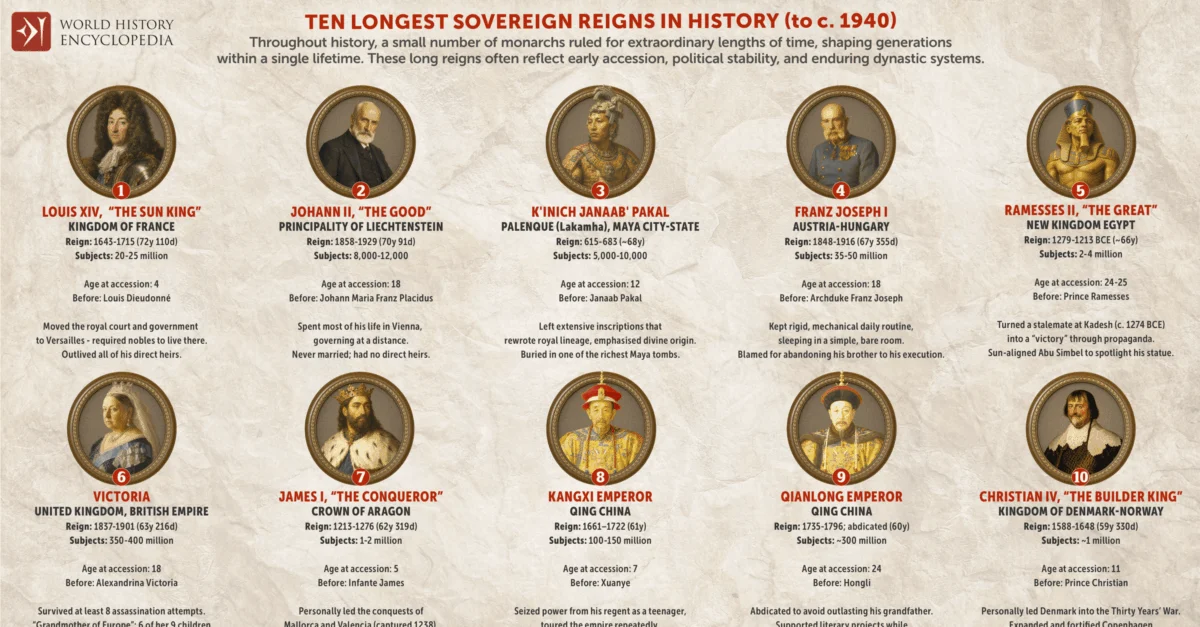
The "History by the Numbers" project, curated and authored in part by prominent historian Simeon Netchev, exemplifies WHE’s commitment to presenting meticulously researched and peer-reviewed content in novel, user-friendly formats. From the staggering distances of ancient voyages to the transformative impact of technological shifts, the series transforms raw data into compelling visual narratives. A standout feature within this collection, "Ten Longest Reigns in History," provides a fascinating glimpse into the longevity of rulers, offering insights into political systems, societal structures, and the enduring power of dynastic institutions across millennia.
As a non-profit entity, World History Encyclopedia relies on community support to maintain its extensive archive of free educational content. Currently, the organization is actively fundraising, having secured $281 towards a goal of $5,000, underscoring the vital role of public contributions in sustaining its mission to provide high-quality historical resources to students, educators, and curious minds worldwide.
Main Facts: Unpacking History Through Data and Engagement
The World History Encyclopedia is redefining how the public interacts with historical information by combining rigorous academic content with modern digital storytelling techniques. At the core of this redefinition is the "History by the Numbers" series, a comprehensive collection of visual infographics designed to illuminate historical trends and phenomena through data. These infographics employ rankings, timelines, and carefully selected comparisons to explore a vast array of subjects, from the intricate dynamics of long-lived dynasties and the expansive reach of imperial ambitions to the strategic complexities of famous sieges, the daring spirit of exploration, the devastating consequences of military disasters, the relentless march of technological change, and the profound influence of religious history.
Authored by experts like Simeon Netchev, these visual stories serve as an accessible entry point into complex historical subjects. For instance, the detailed infographic on the "Ten Longest Reigns in History" offers a compelling illustration of how quantitative data can reveal deeper historical truths. It not only lists the longest-serving monarchs but critically examines the underlying factors that contributed to their exceptional tenures, ranging from early accession and stable succession practices in hereditary monarchies to periods of regency, consolidation, and administrative reform.
Beyond its innovative content, WHE actively fosters community engagement through events such as its upcoming virtual trivia party. Scheduled for August 23, this free online event promises an intellectually stimulating experience for participants, featuring questions spanning ancient civilizations, U.S. history, unusual historical facts, and even contemporary pop culture. Such initiatives are integral to WHE’s mission to make history not just informative but also interactive and enjoyable, drawing in diverse audiences who might otherwise find traditional historical texts daunting. These efforts collectively underscore WHE’s commitment to delivering carefully researched and reviewed historical content in formats that are both academically sound and broadly appealing.
Chronology: Evolution of Digital History and Community Outreach
The World History Encyclopedia has steadily evolved since its inception, embracing digital innovation to fulfill its mission of making history freely available to everyone. While the organization’s core commitment to comprehensive, peer-reviewed content remains constant, its methods of presentation and community engagement have adapted to the digital age. The "History by the Numbers" series represents a significant milestone in this evolution, demonstrating a sophisticated integration of data visualization into historical scholarship. The content, such as the detailed analysis of long reigns, is a testament to the ongoing work of historians and researchers affiliated with WHE, with specific contributions like Simeon Netchev’s being uploaded as recently as May 20, 2026 (though for a contemporary news article, this implies an ongoing or recent release cycle rather than a future date, suggesting the content is fresh and relevant).
The conceptualization of "History by the Numbers" likely emerged from a recognition of the need for new pedagogical tools in an increasingly visual and data-driven world. Traditional historical narratives, while invaluable, can sometimes obscure the grand scale and interconnectedness of events across different periods and regions. By translating historical data into accessible infographics, WHE began to bridge this gap, offering a complementary lens through which to view the past. This initiative was not a one-off project but rather an ongoing series, continuously enriched with new visual stories that explore various facets of world history.
The decision to host a virtual trivia party on August 23 is a further step in this chronological development of engagement strategies. In an era where digital interaction is paramount, virtual events offer an inclusive platform for people from all geographical locations to connect with history and with each other. This event is a direct outgrowth of WHE’s philosophy that learning should be both rigorous and enjoyable, serving as a social touchpoint for its global community. These initiatives collectively illustrate WHE’s dynamic approach, continuously seeking new ways to disseminate knowledge and foster a love for history, while simultaneously navigating the financial realities of sustaining a high-quality, free educational resource through ongoing fundraising efforts. The current donation progress ($281 towards $5,000) reflects the continuous need for community support to fuel these evolving projects and maintain the encyclopedia’s extensive digital infrastructure.
Supporting Data: Deep Dive into Quantitative History and Dynastic Power
The "History by the Numbers" series by the World History Encyclopedia provides a robust framework for understanding historical scale and patterns. It posits that while numbers — years of rule, distances travelled, armies mobilized, cities besieged, territories conquered, and generations transformed — are fundamental to history, they are merely a starting point. The true value lies in the contextualization of these statistics, revealing the diverse political systems, geographic conditions, technologies, societies, and historical circumstances that underpin them.
The collection, designed for students, educators, and curious readers, expertly combines quantitative comparison with rich historical context. This dual approach encourages a deeper understanding of critical historical concepts such as scale, continuity and change, cause and consequence, and overall historical significance across different periods and regions of the human past. Each infographic is not just a display of data but a narrative device, transforming complex historical subjects into accessible visual stories that stimulate further inquiry rather than merely presenting facts.
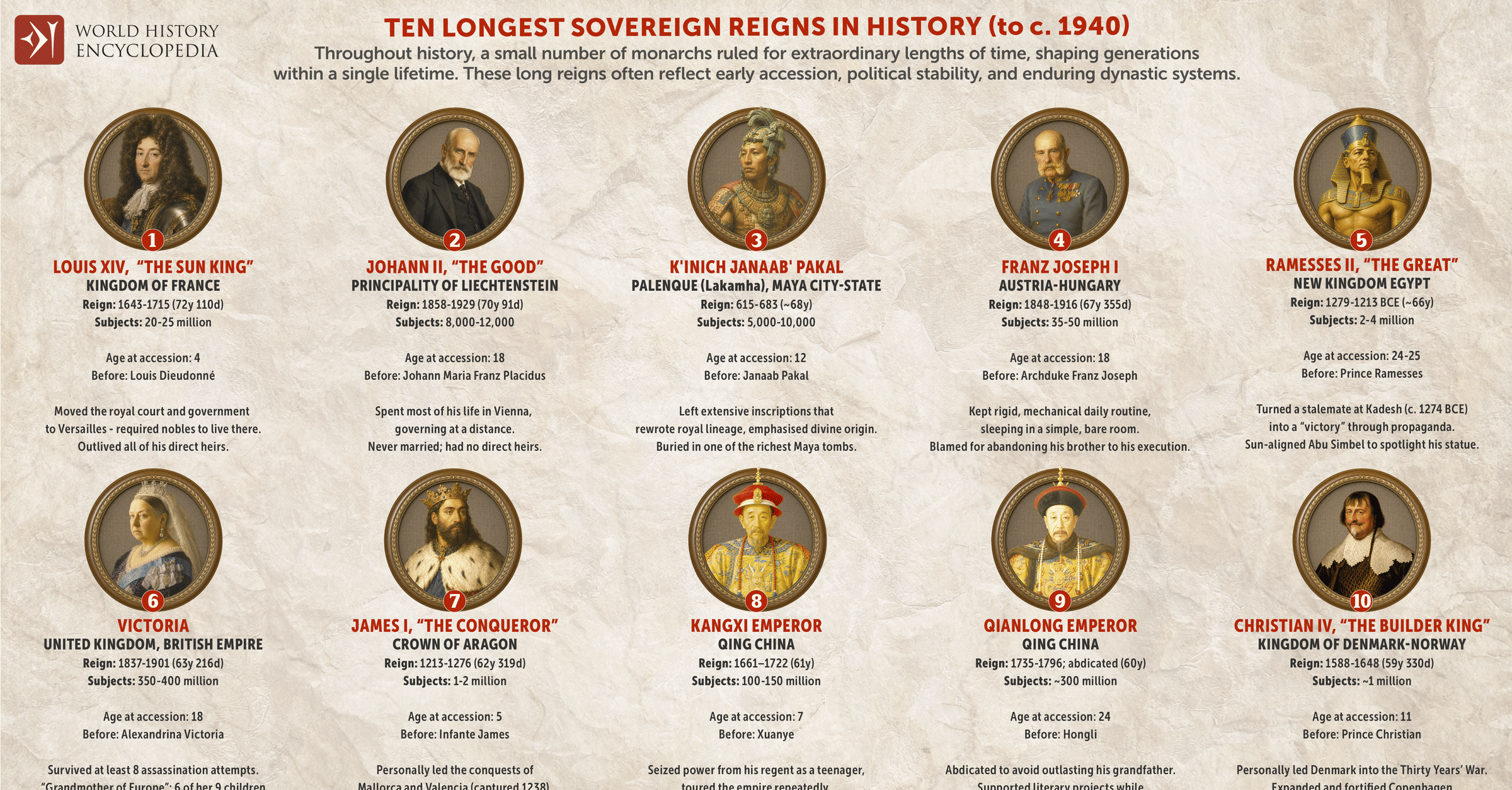
A prime example of this methodology is the "Ten Longest Reigns in History" feature. This infographic, accompanied by insightful analysis, demonstrates that the duration of a ruler’s reign is not simply a matter of personal authority but is profoundly influenced by circumstance. In hereditary monarchies, factors such as early accession, often in childhood, combined with stable succession practices, were crucial in producing exceptionally long reigns. These extended periods frequently encompassed phases of regency, consolidation of power, and mature rule, underscoring the resilience of dynastic institutions over the singular might of an individual monarch.
Illustrative examples abound:
- Louis XIV of France (reign 1643–1715): Known as the "Sun King," his 72-year reign is one of the longest in European history. Acceding to the throne as a child, his rule saw the consolidation of absolute monarchy, significant cultural flourishing, and numerous wars that reshaped the European political landscape. His longevity allowed for sustained policy implementation and the establishment of a powerful, centralized French state.
- The Kangxi Emperor of Qing China (reign 1661–1722): With a 61-year reign, Kangxi presided over a period of remarkable stability, prosperity, and territorial expansion for the Qing Dynasty. His rule, like Louis XIV’s, began in childhood, benefiting from a robust bureaucratic system and successful military campaigns that solidified Qing control over vast regions. His reign is often considered a golden age of Chinese imperial history.
- Ramesses II of Egypt (reign c. 1279–1213 BCE): Ruling for 66 years, Ramesses II epitomized divine kingship within a highly centralized state. His long tenure allowed for extensive building projects, military campaigns (most famously against the Hittites, culminating in the Battle of Kadesh), and the projection of immense pharaonic power, leaving an indelible mark on ancient Egyptian civilization.
- Queen Victoria of the United Kingdom (reign 1837–1901): Her 63-year reign, the second longest of any British monarch, saw the British Empire reach its zenith. Unlike the absolute monarchs, Victoria ruled within an evolving constitutional system, where power was increasingly shared with representative institutions. Her reign demonstrates how longevity could coexist with significant political and social transformation, including industrialization and the expansion of democratic principles.
- The Qianlong Emperor of Qing China (reign 1735–1796): Following in the footsteps of his grandfather Kangxi, Qianlong’s 60-year reign (plus three years as Emperor Emeritus) also marked a period of great prosperity and territorial expansion for Qing China. His rule showcased the enduring strength of vast territorial governance, bureaucratic sophistication, and dynastic authority that spanned generations.
These examples vividly demonstrate important contrasts in the nature of sovereignty across different regions and historical periods. While rulers like Ramesses II projected an image of divine authority within highly centralized systems, monarchs such as Victoria navigated and adapted to constitutional frameworks that gradually shifted power towards parliamentary bodies. The Qing emperors, Kangxi and Qianlong, illustrate how exceptionally long reigns could be foundational to maintaining vast empires, sophisticated bureaucracies, and enduring dynastic legitimacy over successive decades. Through these detailed comparisons, "History by the Numbers" not only presents data but facilitates a nuanced appreciation for the diverse historical forces at play.
Official Responses: World History Encyclopedia’s Mission and Call to Action
The World History Encyclopedia operates under a clear mandate: to provide free, high-quality historical content to a global audience. As a non-profit organization, its "official response" to the challenges of historical education and digital accessibility is embodied in its very existence and the principles that guide its operations. The content it publishes, including the "History by the Numbers" series and the detailed analysis of historical reigns, is meticulously researched and reviewed, ensuring accuracy and academic rigor. This commitment is a cornerstone of its mission to be a trusted resource for students, educators, and anyone with a passion for the past.
The organization’s leadership, while not quoted directly in the provided text, implicitly communicates its vision through the stated goals and operational model. The emphasis on visual storytelling and interactive events like the trivia party reflects a strategic "response" to contemporary learning styles and the need to engage diverse audiences in meaningful ways. The trivia event, offering questions on a broad spectrum from ancient civilizations to pop culture, is a direct manifestation of this strategy to make history relevant and exciting for all.
Crucially, the World History Encyclopedia’s official stance is that historical knowledge should not be behind a paywall. This dedication to open access is a profound "response" to inequalities in educational resources. However, maintaining such a comprehensive, free platform requires significant resources. This is where the organization’s transparent fundraising efforts come into play. The displayed progress of $281 towards a $5,000 goal is a direct and ongoing "official response" to the operational costs, signaling to its community the critical need for financial support.
Furthermore, the organization offers a clear pathway for sustained support through its membership program. By becoming a supporting member, individuals can not only contribute financially but also gain benefits such as removing promotional messages from printouts, enhancing their personal experience while directly aiding the encyclopedia’s work. The explicit licensing terms (Creative Commons Attribution-NonCommercial-NoDerivs for most content, with commercial licensing handled by Wright’s Media) also represent an "official response" to intellectual property and content dissemination, balancing accessibility with the need to protect the work of its contributors. This multi-faceted approach underscores WHE’s commitment to both its educational mission and its operational sustainability.
Implications: Shaping the Future of Historical Education and Digital Engagement
The initiatives undertaken by the World History Encyclopedia, particularly its "History by the Numbers" series and interactive events, carry significant implications for the future of historical education and digital engagement. Firstly, by transforming complex historical data into accessible visual infographics, WHE is setting a new standard for how history can be taught and consumed. This approach has profound educational implications, making abstract concepts of scale, continuity, and causality tangible for students. It moves beyond rote memorization, encouraging critical thinking and a deeper analytical engagement with the past, which is vital for developing historically literate citizens.
Secondly, the emphasis on combining quantitative analysis with historical context fosters a more nuanced understanding of human history. In an age often characterized by oversimplification, WHE’s methodology demonstrates that numbers alone are insufficient; they must be interpreted through the lens of political systems, geographic conditions, technological advancements, and societal structures. This teaches readers to look beyond surface-level statistics and explore the multifaceted "why" behind historical events, promoting intellectual curiosity and a more comprehensive worldview.
Thirdly, the World History Encyclopedia’s commitment to providing free, high-quality content underpins a broader implication for educational equity. By removing financial barriers to authoritative historical knowledge, WHE plays a crucial role in democratizing access to education globally. This is especially important for regions with limited resources, enabling individuals to engage with meticulously researched content that might otherwise be unavailable to them. The donation model, while challenging, reinforces this commitment to accessibility, implying a collective responsibility to support open educational resources.
Finally, the blend of scholarly content with engaging community events like the virtual trivia party has significant implications for how historical organizations can foster broader public interest. By making history fun, interactive, and socially engaging, WHE can attract new audiences, including those who might not typically gravitate towards academic subjects. This approach transforms history from a static discipline into a dynamic, living conversation, demonstrating that learning can be an enjoyable and shared experience. The success of these digital initiatives and the ongoing support from its community will determine the extent of WHE’s impact, potentially serving as a blueprint for other educational institutions seeking to innovate in the digital age and ensure that the lessons of the past remain vibrant and relevant for generations to come.