The Scranton Paradox: Rainn Wilson on Why ‘The Office’ Could Not Exist in the Modern Cultural Climate
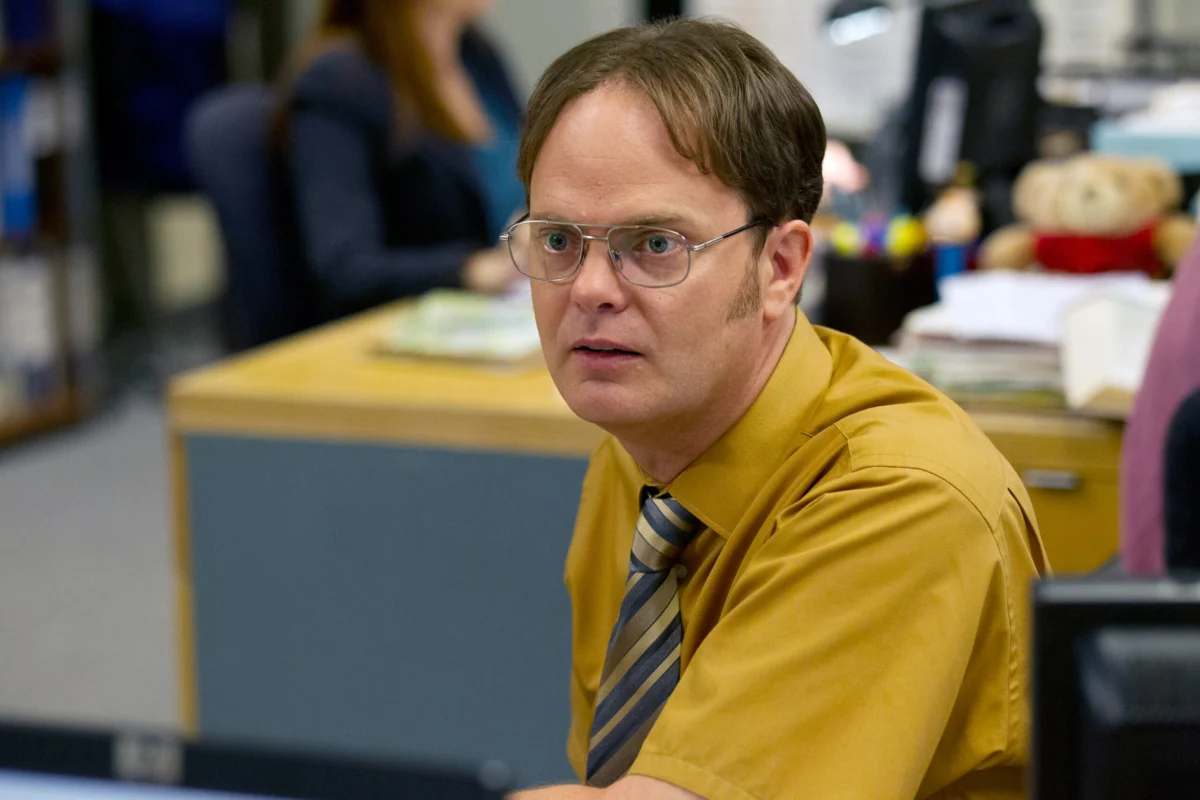
The fluorescent-lit hallways of Dunder Mifflin Paper Company may still be a sanctuary for millions of streaming viewers, but according to one of its lead architects, the show’s brand of "jaw-dropping" humor would likely never clear today’s developmental hurdles. Rainn Wilson, the actor who immortalized the socially inept, beet-farming assistant (to the) regional manager Dwight Schrute, recently offered a candid assessment of the show’s legacy, suggesting that the very elements that made The Office a global phenomenon would render it "unmakeable" in 2026.
Speaking with Fox News Digital, Wilson joined a growing chorus of comedic veterans who believe the pendulum of cultural sensitivity has swung to a point where the "politically incorrect" satire of the mid-2000s would be deemed too risky for modern networks. His comments come at a pivotal moment for the franchise, following the launch of the sequel series The Paper and a broader industry-wide debate over the limits of cringe comedy.
Main Facts: The "Inappropriate" Brilliance of Dwight and Michael
Wilson’s critique centers on the fundamental lack of self-awareness displayed by the show’s central characters. For nine seasons, The Office thrived on the friction between Michael Scott’s (Steve Carell) desperate need for validation and his complete inability to navigate social, racial, or gender-based boundaries. Dwight Schrute, meanwhile, served as a rigid, often authoritarian foil whose views on everything from animal husbandry to workplace hierarchy were frequently archaic and offensive.
"I do feel like you couldn’t make ‘The Office’ today," Wilson told Fox News Digital. "I think that would be too hard to be as politically incorrect as the show was. And I do kind of miss that."
Wilson argued that the show "milked" the characters’ ignorance for comedic gold, but he expressed doubt that modern audiences—or the executives who greenlight content—would accept the premise of "cluelessness" as a valid defense for the characters’ actions. He specifically highlighted that while the show intentionally painted Michael and Dwight as "idiots" to justify their behavior, that satirical shield might not hold up in a more scrutinized social media landscape.
This isn’t the first time Wilson has voiced these concerns. In a previous appearance on "The Last Laugh" podcast, he described certain scenes as "horrific" when viewed through a contemporary lens. He noted that the show’s DNA was built around "clueless, insensitive, racist, sexist people," which he argued mirrored the flaws of the United States. Without the freedom to portray those flaws through a comedic lens, Wilson suggests, the show’s satirical bite would be neutralized.
A Chronology of Cringe: From Scranton to the Digital Age
To understand Wilson’s perspective, one must look at the evolution of The Office from a risky British adaptation to a cornerstone of American pop culture.
- 2005–2013: The Original Run. The Office debuted on NBC as a mid-season replacement. While it struggled initially, it eventually found its footing by leaning into "cringe comedy." During this era, the show pushed boundaries with episodes like "Diversity Day," where Michael Scott forces his employees to participate in a race-based guessing game.
- 2013–2020: The Netflix Renaissance. After its series finale, The Office became the most-watched show on Netflix. This period saw a new generation—Gen Z—discover the show. Interestingly, despite the shift in cultural norms, the show’s popularity surged, though certain episodes (like "Dwight Christmas" featuring a character in Zwarte Piet makeup) were eventually edited or removed from streaming platforms.
- September 2025: The Launch of ‘The Paper’. Peacock premiered a sequel series, The Paper, starring Domhnall Gleeson and Sabrina Impacciatore. Set in a struggling Midwestern newspaper office, the show serves as a spiritual successor. While it features Oscar Nuñez (reprising his role as Oscar Martinez), critics have noted that its tone is significantly more "careful" than its predecessor.
- 2026: The Current Reflection. With The Paper renewed for a second season, Wilson’s comments serve as a retrospective on how much the industry has changed in the thirteen years since the original show ended.
Supporting Data: Analyzing the "Jaw-Dropping" Offensiveness
Wilson’s argument is supported by specific instances in the show that have become flashpoints for modern debate. During his podcast appearance, he pointed to the Season 3 episode "A Benihana Christmas" as a prime example of humor that would likely be vetoed in a modern writers’ room.
In the episode, Michael Scott and Andy Bernard (Ed Helms) bring two waitresses of Asian descent back to the office Christmas party. Unable to tell them apart, Michael uses a Sharpie to mark one of the women’s arms so he can identify her.
"It’s jaw-droppingly kind of horrific," Wilson admitted. "They’re clueless and in their cluelessness they’re racist and insensitive, and they’re always saying the wrong thing. And that’s Michael, Dwight, and Andy—and Kevin for that matter."
The "cluelessness" Wilson refers to is the engine of the show’s satire. The joke was never meant to be at the expense of the marginalized groups, but rather at the expense of the characters’ profound ignorance. However, Wilson’s point is that the distinction between "satirizing a racist" and "airing racist content" has become increasingly blurred in the public eye.
According to data from various streaming platforms and social media sentiment analysis, while The Office remains a "top 10" perennial favorite, the discourse surrounding it has shifted. Younger viewers often engage with the show through a "problematic fave" lens, acknowledging the humor while simultaneously critiquing the systemic biases the show portrays.
Official Responses and the Evolution of Comedy
Wilson is not alone in his assessment. Steve Carell, who played Michael Scott, famously told Esquire in 2018 that he didn’t think a reboot would work. "The whole idea of that character, Michael Scott, as he’s based on inappropriate behavior—I mean, he’s certainly not a model boss," Carell said. "A lot of what is depicted on that show is completely inappropriate—that’s the point, isn’t it? But I just don’t know how that would admit of now."
Mindy Kaling, who served as both a writer and the actor behind Kelly Kapoor, shared similar sentiments during an interview with Good Morning America. Kaling suggested that most of the characters would likely be "canceled" in today’s environment and that the writers would have to approach the material with a much higher degree of caution.
In contrast, Greg Daniels, the creator of the American version of The Office, has taken a more nuanced approach. While he acknowledged the changing landscape, he didn’t shy away from expanding the universe with The Paper. However, the production of the sequel involved a significantly different vetting process. Producers for the new series have reportedly emphasized a "modern workplace" dynamic that focuses more on the absurdity of the media industry rather than the transgressive interpersonal behavior that defined the original series.
Peacock, the streaming home for the franchise, has not officially commented on Wilson’s specific remarks but has continued to lean heavily into the "Office" brand, suggesting that while the content might need to evolve, the format remains a goldmine.
Implications: The Future of Satire in a Hyper-Aware Era
Wilson’s comments raise a fundamental question for the future of entertainment: Can satire survive if it is not allowed to be offensive?
The "inappropriate" humor Wilson misses was a tool used to expose the petty, narcissistic, and often bigoted undercurrents of the American corporate world. If writers are too afraid to portray these negative traits for fear of being misunderstood, the result may be a more "sanitized" form of comedy that lacks the ability to speak truth to power or reflect reality.
Furthermore, the "Wilson Doctrine"—the idea that you can’t make The Office today—highlights a growing divide in the comedy world. On one side are the traditionalists who believe that "nothing should be off-limits" in the name of humor. On the other are those who argue that comedy must evolve to avoid punching down at historically marginalized groups.
The success of The Paper will likely serve as the ultimate test of this theory. If the sequel can achieve the same cultural resonance as the original without relying on "jaw-droppingly horrific" moments, it may prove Wilson wrong. However, if it fails to capture the same magic, it may confirm his suspicion: that the "cluelessness" of Dwight and Michael was a lightning-in-a-bottle moment that the current cultural climate simply cannot replicate.
As The Office continues to live on in syndication and memes, Wilson’s reflections serve as a reminder of a specific era in television history—one where the cringe was the point, and the "idiot" was the mirror. Whether that mirror has been permanently shattered by the weight of modern social standards remains a subject of intense debate among creators and fans alike.