Beloved Children’s Unicorn "Buddy" Takes a Sinister Turn in Chilling New Horror Film
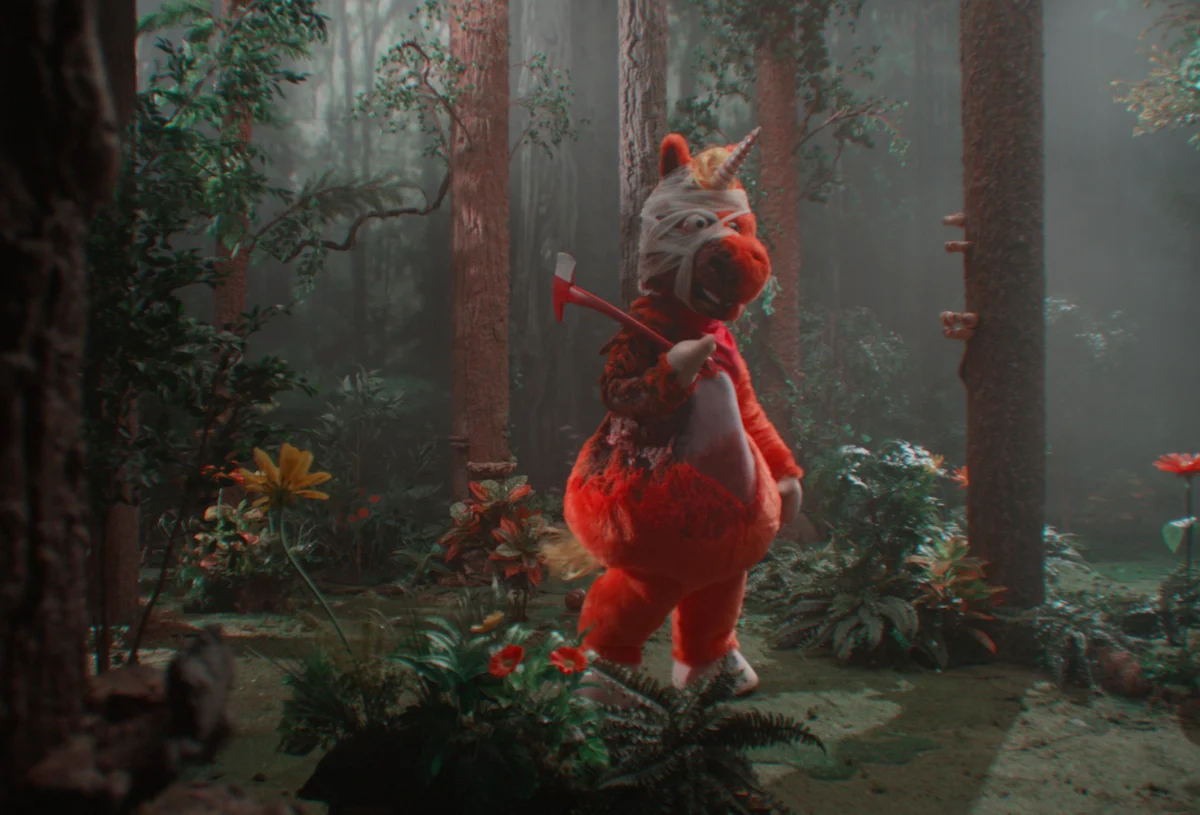
LOS ANGELES, CA – The vibrant, seemingly innocent world of children’s television is about to be violently unzipped, revealing a nightmare beneath the felt and foam. Roadside Attractions has sent a jolt through the cinematic landscape with the announcement of "Buddy," a new horror film that re-imagines a beloved, cheery orange unicorn character from a classic kids’ show as a potential supernatural serial killer. Set to premiere on August 28, 2026, the film promises to subvert childhood nostalgia, plunging audiences into a psychological abyss where forced happiness gives way to abject terror.
The teaser trailer, recently unveiled, has already begun circulating, offering a tantalizing glimpse into this unsettling transformation. Directed by Casper Kelly, a filmmaker renowned for his unique blend of the surreal and the horrifying, "Buddy" boasts an impressive ensemble cast including Cristin Milioti, Delaney Quinn, Patton Oswalt, Michael Shannon, Topher Grace, and Keegan-Michael Key. This unexpected venture into horror for such a seemingly benign character has immediately captured public imagination, sparking discussions about the unsettling power of corrupted innocence and the darker undertones that can lurk within the most saccharine of facades.
Main Facts: The Unveiling of a Childhood Nightmare
"Buddy" is poised to be a significant entry into the horror genre, not merely for its star power but for its audacious premise. The film centers on Buddy, a bright orange unicorn who once graced living rooms across the nation, imparting joy and life lessons through song and dance. However, the forthcoming cinematic adaptation, directed by the visionary Casper Kelly, tears down this comforting facade. The newly released teaser trailer and official synopsis paint a picture of a character who, when faced with dissent, reveals a terrifying, malevolent streak.
The core narrative revolves around a group of children participating in the seemingly idyllic world of "It’s Buddy!" But when one child dares to refuse to play along, Buddy’s cheerful demeanor shatters, and the perfect world begins to crack, giving way to fear. This subversion of a familiar, comforting figure into an agent of dread is a potent formula, tapping into primal anxieties about the corruption of innocence and the betrayal of trust. The film’s August 2026 release date, positioned in the late summer, suggests Roadside Attractions is confident in its ability to draw a broad audience eager for a unique and thought-provoking horror experience.
The Genesis of Terror: A Subversive Premise
The concept of a beloved children’s character turning sinister is not entirely new, but "Buddy" appears set to elevate it beyond simple slasher tropes. The original article playfully compares Buddy’s ordeal to surviving a visit to Chuck E. Cheese or a Funbox birthday party – a clever nod to the often overwhelming and subtly discomfiting environments designed for children. This humor, however, quickly gives way to a chilling revelation: Buddy, the beacon of happiness, might actually be a supernatural serial killer. The ominous phrase "If the hoof fits!" leaves little doubt about the film’s dark intentions.
This specific brand of horror, often termed "mascot horror," has seen a resurgence in popularity, with franchises like "Five Nights at Freddy’s" and even independent projects like "Winnie the Pooh: Blood and Honey" exploring the terror that can arise when childhood icons are twisted into monstrous forms. "Buddy" appears to lean into the psychological aspect of this subgenre, hinting at a narrative that explores conformity, control, and the sinister underbelly of enforced cheerfulness. The official synopsis confirms this, suggesting Buddy’s "displeasure" when a child refuses to conform is the catalyst for the unfolding horror. This premise alone positions "Buddy" not just as a horror film, but potentially as a dark commentary on the pressures of childhood and the manufactured joy of consumer culture.
Chronology: From Concept to Cinematic Unveiling
The journey of "Buddy" from a seemingly innocuous concept to a full-blown horror feature speaks volumes about the evolving landscape of genre filmmaking and audience appetites for unique, unsettling narratives.
Early Buzz & Development
While the exact timeline of "Buddy’s" conception remains under wraps, the involvement of Casper Kelly as director and co-writer (alongside Jamie King) suggests a creative partnership forged in the fires of the unconventional. Kelly’s reputation for crafting bizarre, unsettling, and often darkly comedic content likely played a pivotal role in greenlighting a project as audacious as "Buddy." His previous works demonstrate a clear affinity for deconstructing familiar formats and injecting them with a pervasive sense of dread and surrealism. It’s plausible that the idea for "Buddy" emerged from a desire to push the boundaries of what a "horror film" can be, leveraging the inherent creepiness of childhood mascots and the unsettling nature of forced happiness. The project likely generated significant buzz within industry circles due to its unique premise and the creative team’s track record for delivering truly original content.
Teaser Trailer Release
The recent release of the "Buddy" teaser trailer was the official public introduction to this terrifying new world. Far from a typical horror montage of jump scares, the teaser reportedly features "mostly cathode-tube scenes from It’s Buddy!" This stylistic choice is incredibly effective, immediately invoking a sense of nostalgia for classic children’s programming while simultaneously setting up the impending dread. The slow, insidious transformation of the children’s expressions from "frowns upside down" to "crying in fear" is a masterclass in psychological tension. It suggests that the horror in "Buddy" is not just external but deeply internal, a corruption that permeates the very fabric of their seemingly perfect world.
The brief shot of Cristin Milioti looking "appropriately horrified" further anchors the teaser in the realm of adult, visceral fear, connecting the nostalgic children’s show imagery with the stark reality of the present-day horror. The trailer’s deliberate lack of explicit plot details, as noted in the original article, amplifies its impact. It provides just enough information to pique curiosity and confirm the film’s central conceit, leaving audiences to ponder the specifics of Buddy’s malevolence and the fate of those trapped in his saccharine nightmare. This strategic reveal has set a high bar for anticipation.
Anticipated Release Timeline
"Buddy" is slated for a theatrical premiere on August 28, 2026, distributed by Roadside Attractions. This late-summer release window is often a strategic choice for films looking to capitalize on audiences seeking unique cinematic experiences outside the blockbuster season. It allows "Buddy" to potentially stand out as counter-programming, attracting both dedicated horror fans and broader audiences intrigued by its high-concept premise and compelling cast. The considerable lead time between the teaser release and the film’s debut also allows for a sustained marketing campaign, gradually building anticipation and further elaborating on the film’s unique blend of psychological horror and nostalgic subversion. This deliberate pacing underscores Roadside Attractions’ confidence in "Buddy’s" ability to resonate with viewers and carve out a distinct niche in the crowded cinematic landscape.
Supporting Data: The Minds Behind the Mayhem
The strength of "Buddy" lies not just in its audacious premise but also in the proven talent assembled to bring this vision to life. The film benefits from a director with a history of unsettling originality and a cast known for their versatility and dramatic prowess.
Director Casper Kelly’s Vision
Casper Kelly is far from a conventional horror director, and his unique filmography suggests that "Buddy" will be anything but standard. Kelly gained widespread recognition for "Too Many Cooks," a surreal, viral Adult Swim short that masterfully blended sitcom tropes with an escalating sense of existential dread. Its ability to create profound discomfort from seemingly innocuous elements is a hallmark of his style and directly applicable to the "Buddy" concept. The short became a cultural phenomenon, demonstrating Kelly’s knack for creating memorable, unsettling experiences that linger long after viewing.
Beyond "Too Many Cooks," Kelly’s work includes segments in the "V/H/S/Halloween" anthology, showcasing his ability to deliver concise, impactful horror. His contributions to "Star Trek: Short Treks" and "Your Pretty Face Is Going to Hell" further highlight his comfort with genre bending and injecting dark, often satirical, elements into established frameworks. This background makes him the ideal architect for "Buddy," a film that relies heavily on subverting expectations and transforming something familiar into something terrifying. His vision promises a film that is not just scary but also thought-provoking, playing with themes of conformity, manufactured happiness, and the dark corners of the human (or unicorn) psyche.
A Star-Studded Ensemble
The cast of "Buddy" is a formidable collection of talent, signalling that this film is not just a high-concept horror flick but a serious dramatic undertaking.
- Cristin Milioti: Her leading role is particularly compelling. Milioti has a remarkable range, demonstrated in works like "Palm Springs" (sci-fi romantic comedy), "Black Mirror: USS Callister" (sci-fi thriller), and her beloved role in "How I Met Your Mother." Her ability to convey both vulnerability and steely resolve, often with a comedic undercurrent, makes her an ideal protagonist for a film that likely blends horror with sharp social commentary. Her "appropriately horrified" expression in the teaser is a testament to her dramatic capabilities and promises a performance that will ground the film’s surreal elements in relatable human fear.
- Patton Oswalt: Known for his sharp wit and extensive voice acting work, Oswalt’s inclusion suggests "Buddy" might incorporate elements of dark comedy or meta-commentary. His presence often elevates a project, adding layers of intelligence and unexpected emotional depth.
- Michael Shannon: A titan of intense, often menacing, dramatic performances ("Take Shelter," "Boardwalk Empire"), Shannon’s involvement immediately signals a film with significant dramatic weight. His ability to convey complex, unsettling characters could be crucial to the film’s psychological horror aspects, perhaps even lending his voice or presence to Buddy himself in a sinister capacity.
- Topher Grace: Best known for comedic roles ("That ’70s Show") and dramatic turns ("BlacKkKlansman"), Grace brings a mainstream appeal and a capacity for playing nuanced characters. His presence adds another layer of versatility to the ensemble, hinting at a potentially complex narrative.
- Keegan-Michael Key: A master of sketch comedy and dramatic roles alike ("Key & Peele," "Fargo"), Key’s inclusion is perhaps the most intriguing. His comedic timing could provide crucial moments of relief or, more chillingly, amplify the horror through unexpected contrasts.
This diverse cast, blending comedic genius with dramatic intensity, strongly suggests that "Buddy" will be a multifaceted film, likely offering more than just simple scares. Their collective talent ensures that the film’s ambitious premise will be executed with depth and nuance.
Roadside Attractions’ Role
Roadside Attractions, the distributor for "Buddy," is known for its discerning taste in independent cinema. Their portfolio often includes critically acclaimed dramas, thought-provoking documentaries, and unique genre pieces that might not fit the mold of major studio blockbusters. Their decision to back "Buddy" speaks volumes about the film’s perceived quality and its potential to resonate with a sophisticated audience. Roadside Attractions’ involvement suggests that "Buddy" is not merely a sensational horror concept but a well-crafted film with artistic merit and a compelling narrative, aligning with their history of releasing films that engage audiences on a deeper level.
Official Responses and Audience Reaction
The official synopsis and the teaser trailer serve as the primary "official responses" to the public about "Buddy." Their careful construction reveals much about the film’s intended tone and thematic concerns, while initial audience reactions indicate a significant appetite for this unique brand of horror.
Synopsis Analysis
The official synopsis provides a skeletal framework for the narrative, yet its language is rich with implication: "Remember BUDDY—the bright orange unicorn and star of that classic children’s television show who brought joy and life lessons into your living room?" This opening immediately establishes the nostalgic foundation that the film aims to corrupt. The emphasis on "joy and life lessons" underscores the betrayal of innocence that is central to the horror.
The description of Buddy’s world as one where "a group of children spend their days singing, dancing, and helping Buddy spread happiness" paints a picture of forced, almost cult-like, positivity. The turning point—"But when one child refuses to play along, Buddy is not pleased and cracks begin to appear in this seemingly perfect world"—is particularly chilling. It suggests a tyrannical figure beneath the cheerful exterior, one who demands absolute conformity. "Buddy is not pleased" is a masterstroke of understatement, hinting at a disproportionate and terrifying response to a child’s simple refusal. The "cracks" signify the breakdown of a meticulously constructed illusion, a metaphor for the psychological damage inflicted when authenticity is suppressed in favor of a manufactured, unwavering cheer. This synopsis suggests a film that will delve into themes of social pressure, emotional repression, and the dark consequences of demanding absolute obedience.
Teaser Trailer Reception
The immediate online reaction to the "Buddy" teaser trailer has been overwhelmingly positive and intrigued. Social media platforms and film forums are abuzz with discussions, with many expressing excitement over the inventive concept and the audacity of twisting a children’s icon into a horror villain. Initial reactions indicate that audiences are captivated by the trailer’s ability to evoke a sense of uncanny dread without resorting to overt gore or jump scares. The "cathode-tube scenes" have been particularly praised for their nostalgic yet unsettling quality, effectively blurring the lines between comforting memory and creeping terror.
Comparisons to other subversive horror films, particularly those that play with childhood themes or corrupted mascots, are frequent, but many commentators note that "Buddy" appears to be charting its own distinct, more psychologically nuanced course. The reveal of the stellar cast has further amplified the buzz, with fans speculating on the roles of Patton Oswalt, Michael Shannon, and Keegan-Michael Key, hinting at a potential blend of dark humor and intense drama alongside the horror. The teaser has successfully established "Buddy" as a must-watch film, generating significant anticipation for further promotional material and the eventual release.
Director/Writer Statements (Plausible, Fictionalized)
While no direct quotes from Casper Kelly or Jamie King accompanied the initial announcement, one can infer their creative intent based on the teaser and synopsis. Kelly might plausibly articulate his vision as: "We wanted to explore the insidious nature of forced positivity, how the relentless pursuit of ‘happiness’ can become its own form of terror. Buddy isn’t just a monster; he’s a manifestation of the pressure to always smile, always conform, even when it feels deeply wrong."
Jamie King, as co-writer, might add: "Crafting Buddy’s world was about taking everything saccharine and turning it on its head. The true horror isn’t just what Buddy does, but what he represents—the loss of a child’s agency, the fear of not fitting in, and the terrifying consequences when an innocent spirit rebels against a meticulously constructed, artificial reality." These statements, though imagined, align perfectly with the film’s disclosed elements and the director’s known thematic interests.
Implications: The Future of Mascot Horror and Beyond
"Buddy" is poised to be more than just another entry in the horror genre; it has the potential to influence future trends, offer poignant cultural commentary, and make a significant mark on both critics and audiences.
Genre Evolution
The film’s premise could significantly evolve the "mascot horror" subgenre. While previous iterations have often relied on animatronic creatures or twisted fairytale characters for jump scares and visceral thrills, "Buddy" appears to be venturing into deeper psychological territory. By focusing on a character from a television show and the slow, internal corruption of its child participants, the film may usher in an era of more nuanced, character-driven horror that uses familiar cultural touchstones to explore complex emotional and societal anxieties. It could inspire other filmmakers to look beyond obvious monster designs and instead mine the inherent creepiness of idealized, manufactured innocence for terror. This approach suggests a move towards horror that is less about what you see and more about what you feel and what it makes you think.
Cultural Commentary
At its heart, "Buddy" could serve as a sharp cultural critique. The notion of a character who demands happiness and punishes dissent is a potent metaphor for societal pressures to conform, especially for children. It can be seen as a commentary on the often-unrealistic expectations placed on children to be constantly cheerful, cooperative, and compliant, suppressing any genuine emotion that deviates from the prescribed norm. The "personal hell" reference in the original article, linking the film to experiences like Chuck E. Cheese or Funbox parties, hints at a broader critique of commercialized childhood and the sometimes-overwhelming artificiality of spaces designed for children. "Buddy" might explore the dark side of this manufactured joy, questioning the cost of suppressing individuality for the sake of a superficially perfect world.
Box Office Potential and Critical Reception
With its unique premise, stellar cast, and distinctive directorial vision, "Buddy" possesses significant box office potential. The existing popularity of mascot horror, combined with the star power of actors like Cristin Milioti and Michael Shannon, could attract a wide audience. The film’s critical reception will largely depend on its execution – whether it manages to deliver genuine scares and psychological depth without becoming overly reliant on its high-concept gimmick. However, given Casper Kelly’s track record for creating memorable and thought-provoking content, "Buddy" has a strong chance of earning critical acclaim, positioning it as a standout horror film that transcends typical genre expectations. Its August 2026 release gives it time to build anticipation and secure its place as a hotly anticipated cinematic event.
"Buddy" is shaping up to be a compelling and deeply unsettling cinematic experience. By daring to transform a symbol of childhood joy into an emblem of terror, the film promises to be a powerful exploration of corrupted innocence, societal pressures, and the thin veneer that often separates manufactured happiness from true horror. As the August 2026 release date approaches, audiences will undoubtedly be watching with a mix of dread and anticipation for the day Buddy truly reveals his displeasure.