"Physical Magic" Charms SPFBO Judges with Fresh Vision and Deep Humanity
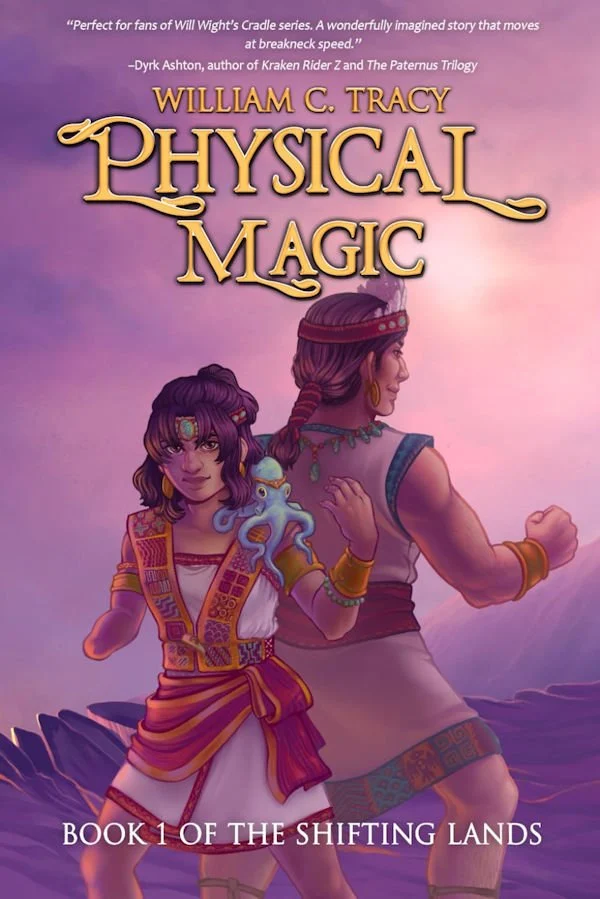
A captivating blend of Pacific Island-inspired fantasy, a compelling disabled protagonist, and nuanced magical systems, "Physical Magic" has emerged as a standout contender in the rigorous Self-Published Fantasy Blog-Off (SPFBO) competition, earning high praise from judges for its innovative worldbuilding and profound emotional depth.
As Round One of the 11th annual SPFBO draws to a close, with the highly anticipated finalist announcement slated for June 26th, Tracy’s "Physical Magic" has distinguished itself as a novel that boldly steps away from conventional fantasy tropes. Its unique cultural tapestry, inclusive character portrayals, and thoughtful exploration of self-worth have resonated deeply with the judging panel, signaling a refreshing direction for the genre.
A Heroine Forged in Adversity: The Core Narrative of "Physical Magic"
At the heart of "Physical Magic" lies the poignant journey of Silluka, a young woman born with only one arm in a society where physical perfection is intrinsically linked to spiritual power. Her limb difference prevents her from performing the exacting motions required to summon the favor of the gods, condemning her to the margins of her community. This initial premise immediately establishes a powerful conflict, both external and internal, for the protagonist.
The narrative quickens when Silluka, caught in an act of desperation, is forced to undergo a test of her powers. Her inevitable failure leads to the devastating loss of her village citizenship, branding her an outcast. This profound personal setback becomes the crucible for her transformation. In a desperate attempt to reclaim her standing, Silluka tries to steal a badge of citizenship from the enigmatic Elder Quilqi. This fateful encounter, however, opens a portal to an entirely different path – one that promises a new way to access the powers of the gods, guided by the Elder and an extraordinary octopus-like technological wizard who worships their own eldritch divinities.
Time, however, is a luxury Silluka does not possess. A looming catastrophe threatens her coastal town: a new island is rapidly approaching, preceded by deadly hurricanes and devastating tidal waves. The village’s traditional protectors – the gods and their godlike storm warriors – prove insufficient when a mysterious, formidable creature breaches their defenses. This creature is merely the vanguard of a terrifying, fast, and deadly species poised to invade the larger island, forcing the entire village to flee inland.
Amidst this existential threat, Silluka is burdened not only by her outcast status but also by the failing abilities of her beloved brother, Ichu. To safeguard herself, her family, and her entire village, Silluka must embark on an arduous journey of self-discovery. She must overcome the deep-seated stigma and self-doubt that have plagued her life, expand her understanding of the world beyond her village’s confines, and ultimately, master the unconventional path of "Physical Magic."
A World Apart: Cultural Depth and Imaginative Inventions
The SPFBO judges were unanimous in their praise for the novel’s distinctive setting and imaginative worldbuilding. Julia, one of the judges, highlighted how the story "immediately stood out… because of its setting. It is clearly not drawing from the usual Western medieval fantasy toolbox. Instead, the world feels inspired by island-based cultures of the Pacific, with gods tied to storms and survival, and communities that must eventually move on when their land can no longer sustain them." This sense of impermanence, she notes, imbues the book with a "distinct atmosphere that feels both fresh and unsettling."
Maureen further elaborated on the "delightful part of this book" being its worldbuilding, commending Tracy’s meticulous creation of "martial arts forms and their elemental affinities, and the societies of the islands." The interplay of culture and societal roles, from village elder to the marginalized, seamlessly contributes to the larger narrative. The plot itself is driven by the dynamic geography of "various archipelago islands crashing up against each other occasionally," a phenomenon that sets the stage for the Huaca people’s perilous migration away from a formidable group they refer to as "Turtlemen," navigating twisters and volcanoes.
Adding a unique flavor to this rich tapestry are the octopus-like artificers, who Julia found to be "one of my favorite additions to the story." Their "dialogue and banter are genuinely fun, and their enthusiasm for inventing all the things adds humor and a slightly strange, inventive edge to the world." Eva recounted a particularly amusing interaction involving one of these creatures and their "translation circlet," which required percussive maintenance: "‘Excuse! This is my workshop! Translation circlet is rotten kelp.’ They took it off again. Smack. ‘Still under torture.’ Smack. ‘Construction.’" These moments of levity provide a welcome contrast to the inherent dangers and serious themes explored in the novel.
The Nuance of Growth: Silluka’s Internal and External Battles
A significant strength of "Physical Magic" lies in its sensitive and realistic portrayal of Silluka’s personal growth. Julia lauded the book’s commitment to exploring Silluka’s "internalizing the belief that she is useless." She observed that the protagonist’s journey is not a sudden leap to capability but a gradual process of "slowly questioning the story she has been told about herself." This focus on internal validation, where Silluka "needs to prove her worth to herself first," resonated deeply with the judge, who emphasized that "the change does not come easily, and it does not come all at once."
Adawia, while appreciating the story, noted a minor "niggling issue" where the protagonist’s cleverness was often "told" rather than "shown." However, she strongly affirmed Silluka’s "extraordinary courage—even ‘under fire’," suggesting that this quality could have been amplified. This distinction highlights the multifaceted nature of Silluka’s character, showcasing her bravery as a defining trait even as her intellectual prowess is sometimes described rather than explicitly demonstrated.
The society around Silluka is depicted as inherently flawed, predicated on the belief that "only the strong and magically capable deserve to survive and move on." Julia praised the book for not fully excusing this rigid belief system, nor for offering a facile resolution. Instead, the shifts in thinking among some characters are portrayed as "tentative rather than magically fixed," lending a realistic texture to the societal critique.
The Art of Motion: A Technical Yet Accessible Magic System
The magic system in "Physical Magic" garnered particular attention for its blend of technicality and accessibility. EG noted that the story offers a "fun adventure that is great for those who love a technical system of magic with lots of rules," acknowledging that while it delves into "lots of detail," the overall narrative remains entertaining.
Julia elaborated on the system’s presentation, describing it as "familiar in concept" but elegantly executed. Instead of being bogged down by "pages of technical explanation," the magic, which involves performing "chayus" (forms, sets, kata) to appeal to gods for elemental power, focuses on core principles like "balance, stance, dexterity, and intention." This approach makes it "easy to grasp without feeling shallow."
Crucially, the book subtly challenges the notion of physical perfection as a prerequisite for divine power. Julia appreciated that it "gently suggests physically perfect movement might not be the only way to access the power of the gods, which ties in well with its broader themes." This aligns with Silluka’s journey, making her eventual mastery of "Physical Magic" a testament to ingenuity and adaptability rather than a miraculous physical transformation.
An element that often presents a narrative tightrope walk in fantasy is the introduction of assistive tools for disabled characters. Julia addressed this directly, expressing her general wariness of anything that "risks turning into a magical cure for disability." However, she found the assistive tool in "Physical Magic" to be handled thoughtfully, feeling "more like an aid than a miracle fix, especially because it opens possibilities for people with many different kinds of bodies and conditions, not just one." This nuanced portrayal underscores the book’s commitment to genuine inclusivity rather than simplistic solutions.
Weaving Inclusivity: Queerness as an Organic Element
"Physical Magic" stands out for its quiet yet powerful commitment to inclusion, particularly in its portrayal of queer identities. Julia highlighted this as "another quiet strength of this book," noting the "casual, matter-of-fact queerness of the world felt natural and meaningful."
Silluka’s brother, Ichu, is openly bisexual, moving "naturally between relationships with different genders," a fact that is presented without any societal judgment or remark. Silluka herself is also described as being attracted to more than one gender, though her lack of relationships is thoughtfully tied to her "internalized belief that she is not worthy," rather than a lack of interest. While only a "faintest hint of something possibly developing for her," it never overshadows the main narrative. Julia specifically connected this organic representation to the author’s own identity, noting that "The author openly identifies as bi/pan as well, which probably helped this aspect being written so organically and well." This authentic representation further enriches the novel’s diverse tapestry.
Judges’ Reflections: Pacing, Minor Hiccups, and Audio Experience
While the overall reception was overwhelmingly positive, judges offered a few minor observations. Maureen found the pacing "okay, although the whole start/stop parts of the voyage felt a bit clunky." Julia noted "one small worldbuilding hiccup early on involving how citizenship tokens are handled," which briefly pulled her out of the story, though she clarified it "never becomes a real plot issue and was easy to move past." These minor points, however, did not significantly detract from the immersive experience, with Maureen stating, "Immersion was terrific. I was in a hurry to get back to the story when I’d set it aside."
Julia also shared her experience with the audiobook narration, which she initially found slightly disjointed due to pauses at commas feeling "almost as long as full stops." However, she adjusted to the rhythm and praised the thoughtful casting of the narrator, who is queer, uses they/them pronouns, and is Native Hawaiian, making them a "fitting casting for this story."
The Road Ahead: SPFBO and the Future of Fantasy
"Physical Magic" is clearly positioned as the beginning of a larger series, a fact acknowledged by several judges. Julia noted that while it "clearly sets up a larger series, with much more to come, it still felt satisfying on its own," speaking to its successful balance of standalone narrative and overarching worldbuilding. Maureen echoed this sentiment, expressing certainty that "there are more surprises in subsequent books and I believe I’ll be picking them up to see if I’m right."
As the SPFBO contest nears its critical juncture, "Physical Magic" stands as a testament to the vibrant and evolving landscape of self-published fantasy. Its strong emotional core, distinctive setting, and inclusive approach offer a refreshing departure from traditional narratives, providing a powerful example of how diverse voices and perspectives can enrich the genre.
The SPFBO competition, a crucial platform for independent authors, continues to unearth hidden gems like "Physical Magic." It provides invaluable exposure and validation, allowing innovative stories to reach wider audiences. The journey of "Physical Magic" through SPFBO not only highlights the talent of its author but also signals a growing appetite among readers for narratives that challenge conventions, celebrate diversity, and offer deeply human stories within fantastical realms.
Readers are encouraged to explore "Physical Magic" and other SPFBO semi-finalists. What didn’t resonate with one judge might be precisely the story another is seeking. The official SPFBO website (https://mark—lawrence.blogspot.com/2026/01/spfbo-11-phase-1.html) provides comprehensive information on the contest and participating books, while details on the judging panel—Adawia Asad, Eva Geraghty, Evelyn Grimald “E.G.” Stone, Julia Kitvaria Sarene, Karen Lucia, Kerry Smith, Kit Caelsto, Maureen Neuman, Robert Max Freeman, Sara Rosevear, Sherry Cammer, Stacey Markle, Tianna Twyman, and Yaniv Rosenfeld Cohen—can be found on the Fantasy-Faction website (https://fantasy-faction.com/2026/the-11th-annual-spfbo-11-introductions-book-list).
The anticipation builds for Friday’s announcement, but regardless of the outcome, "Physical Magic" has already left an indelible mark as a thoughtful, inclusive fantasy with a strong emotional core and a protagonist whose struggle with self-worth feels honest and earned, setting a high bar for contemporary fantasy literature.