Godzilla Faces Thermonuclear Reckoning in "Minus Zero" Teaser: A Deep Dive into Toho’s Next Kaiju Epic
The cinematic world is abuzz once more with the terrifying roar of Japan’s most iconic kaiju. Following the monumental success of Godzilla Minus One, director Takashi Yamazaki is set to unleash Godzilla Minus Zero, a direct sequel that promises to escalate the stakes dramatically. A recently released, albeit brief, teaser has sent shockwaves through the fan community, revealing Godzilla not merely menacing a cityscape, but facing the unimaginable: a thermonuclear strike. This development signals a profound and potentially devastating turn in the narrative, hinting at humanity’s desperate and morally fraught struggle against the colossal force of nature.
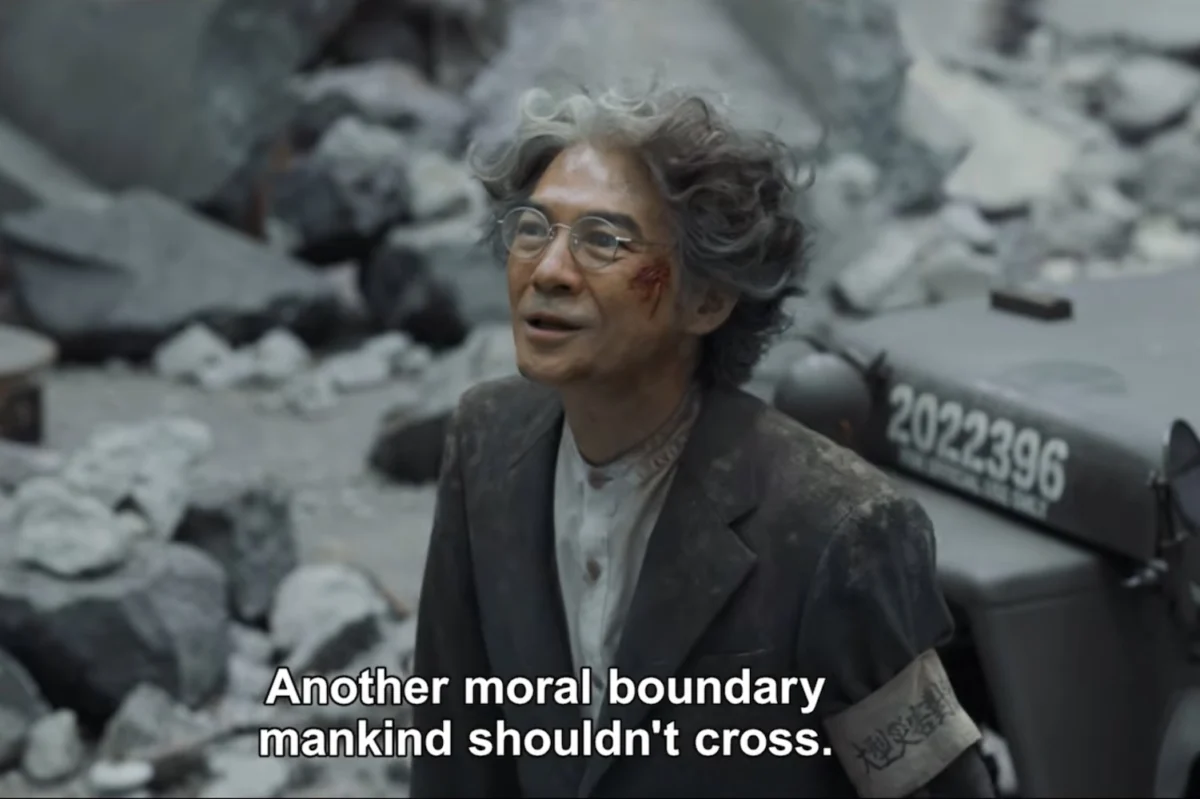
The teaser’s sparse dialogue offers chilling insights into the film’s central conflict. A male voice gravely intones, "I speculate Godzilla can withstand even a thermonuclear strike," immediately raising questions about the monster’s invincibility and humanity’s ultimate recourse. This is swiftly followed by another voice, burdened with ethical trepidation, stating, "Another moral boundary mankind shouldn’t cross." The juxtaposition of these lines underscores the perilous and ethically ambiguous territory Godzilla Minus Zero intends to explore, pushing both the creature and its human adversaries to their absolute limits.
This sequel arrives with immense expectations, tasked with following a film that not only became the highest-grossing Japanese Godzilla movie in history but also garnered unprecedented critical acclaim, culminating in an Academy Award for Best Visual Effects. With Godzilla Minus Zero confirmed to pick up just two years after its predecessor, in the tumultuous landscape of 1949 Japan, and shot specifically for the immersive IMAX format, audiences are bracing for an even more visceral and emotionally resonant kaiju experience. The film is slated for a U.S. theatrical release on November 6, inviting viewers to once again confront the profound terror and poignant humanity that defines Toho’s latest Godzilla saga.
Main Facts: The Nuclear Threat and Return of Yamazaki’s Vision
The core revelation from the Godzilla Minus Zero teaser is undeniably the depiction of Godzilla enduring a nuclear attack. This image immediately conjures the franchise’s historical roots, with Godzilla himself being a metaphor for the atomic bomb and its devastating aftermath. To witness humanity, even in a fictional post-war Japan, resort to such extreme measures against the creature they inadvertently helped create, signals a narrative of heightened desperation and profound moral crisis. The brief glimpse of Godzilla facing this ultimate weapon serves as a stark reminder of the immense power the monster wields and the existential threat it represents.
The dialogue accompanying this visual reinforces the gravity of the situation. The initial speculation that Godzilla might withstand a thermonuclear strike is not merely a statement of power but an ominous foreshadowing of humanity’s potential defeat and the limitations of its most destructive technologies. This raises the terrifying possibility that mankind’s most formidable weapon could prove futile, leaving them vulnerable and without conventional defenses.
Equally impactful is the subsequent line, "Another moral boundary mankind shouldn’t cross." This single sentence encapsulates a central thematic pillar of the Minus series: the ethical quandaries inherent in humanity’s response to an overwhelming threat. It suggests that even in extremis, there are lines that, once breached, may lead to unforeseen and catastrophic consequences, not just for Godzilla, but for the very soul of humanity. This echoes the philosophical depth that elevated Godzilla Minus One beyond a mere creature feature.
At the helm of this ambitious sequel is Takashi Yamazaki, reprising his roles as writer, director, and visual effects supervisor. Yamazaki’s singular vision was instrumental in crafting the critical and commercial triumph of Godzilla Minus One, where his mastery of visual storytelling blended seamlessly with profound character drama. His return ensures a consistent aesthetic and thematic direction, promising to maintain the high bar set by its predecessor. The confirmation that Godzilla Minus Zero was specifically shot for IMAX, a departure from Minus One, implies an even grander scale of destruction and an enhanced immersive experience designed to fully capitalize on the kaiju’s immense presence.
The film’s succinct synopsis offers a crucial temporal and narrative anchor: it "picks up in 1949, two years after the tumultuous events of Godzilla Minus One, and continues the story of the Shikishima family as they face an all-new calamity." This confirms a direct continuation of the human storyline, centering on Koichi Shikishima (Ryunosuke Kamiki), the former kamikaze pilot haunted by his past, and his wife Noriko (Minami Hamabe). Their survival and continued struggle against a new, presumably more powerful, Godzilla will form the emotional core of the film, allowing audiences to reconnect with characters who have already endured unimaginable hardship. The U.S. release date of November 6 positions the film for a significant late-year cinematic impact.
Chronology: From Post-War Devastation to Renewed Calamity
The narrative timeline established by Takashi Yamazaki’s Godzilla series is meticulously crafted to immerse audiences in a specific, harrowing period of Japanese history. Godzilla Minus One was set in a Japan grappling with the immediate aftermath of World War II, specifically in 1947. This was a nation utterly devastated, its cities in ruins, its populace traumatized, and its morale shattered. Against this backdrop of national tragedy and personal loss, Godzilla emerged, not as a symbol of destruction to a prosperous nation, but as an additional, seemingly insurmountable, force of nature preying on an already broken populace. The film masterfully intertwined the personal struggles of Koichi Shikishima, a kamikaze pilot wrestling with survivor’s guilt and PTSD, with the broader national trauma inflicted by Godzilla. The "Minus One" in the title implicitly referred to this state of being, where a nation already at its lowest point was plunged even further into despair by the kaiju’s arrival.
The critical and commercial reception of Godzilla Minus One was nothing short of phenomenal. Released in Japan in late 2023 and subsequently in the U.S. and globally, it quickly became a cultural phenomenon. Its breathtaking visual effects, combined with a deeply moving human story, resonated with audiences and critics alike. It achieved the remarkable feat of becoming the highest-grossing Japanese Godzilla film ever, a testament to Yamazaki’s vision. Its crowning achievement was the Academy Award for Best Visual Effects, an unprecedented win for a Japanese production in that category, firmly establishing Yamazaki’s team among the global elite of VFX practitioners. This triumph not only brought immense prestige to Toho but also demonstrated the global appetite for a Godzilla film that prioritized both spectacle and poignant storytelling.
Godzilla Minus Zero is set to continue this compelling narrative thread, picking up in 1949, two years after the events of Minus One. This temporal leap is significant. By 1949, Japan would still be in the arduous process of reconstruction, both physically and psychologically. The initial shock and devastation of the war would have given way to the slow, painstaking effort of rebuilding lives and communities. The Shikishima family, having survived Godzilla’s initial rampage, would presumably have begun to piece together their existence, perhaps finding a fragile sense of normalcy amidst the ongoing national recovery. This two-year interval allows for character development and the establishment of a new, albeit still precarious, status quo before the "all-new calamity" strikes.
The continuity of the Shikishima family’s story is central to the sequel’s promise. Koichi Shikishima and Noriko, portrayed by Ryunosuke Kamiki and Minami Hamabe respectively, represent the enduring human spirit in the face of overwhelming odds. Their personal journey, scarred by war and kaiju attack, offers a relatable entry point into the larger conflict. The return of these characters suggests that Godzilla Minus Zero will maintain the human-centric narrative that defined its predecessor, grounding the fantastical kaiju action in deeply personal stakes. This chronological progression allows the filmmakers to explore the lasting psychological scars of trauma and the relentless nature of survival in a world constantly threatened by the unknown.
Supporting Data: Yamazaki’s Oscar-Winning Vision, Historical Context, and IMAX Scale
The foundation of Godzilla Minus Zero‘s highly anticipated release rests firmly on the groundbreaking achievements of Godzilla Minus One. Takashi Yamazaki’s dual role as director and visual effects supervisor on Minus One was pivotal to its success. This integrated approach allowed for an unprecedented synergy between narrative and spectacle, ensuring that the visual effects served the story rather than merely dominating it. The result was a Godzilla that felt terrifyingly real, a force of nature rendered with meticulous detail and an oppressive sense of scale. The film’s Academy Award for Best Visual Effects was a historic win, not just for Japanese cinema but for the kaiju genre itself. It validated Yamazaki’s innovative techniques and proved that a relatively modest budget (by Hollywood standards) could produce world-class visual artistry when guided by a singular creative vision. This Oscar win significantly elevated the global profile of Toho’s Godzilla series, setting a new benchmark for kaiju filmmaking.
The decision to feature Godzilla enduring a thermonuclear strike in Minus Zero is loaded with profound historical and thematic resonance, particularly for a Japanese production. The original Godzilla, born from the nuclear anxieties of post-WWII Japan, has always been an allegory for the horrors of atomic warfare. To bring this theme back to the forefront, especially in a film set just four years after the bombings of Hiroshima and Nagasaki, intensifies this connection. The "thermonuclear strike" mentioned in the teaser pushes the stakes beyond conventional atomic bombs, reflecting the escalation of nuclear capabilities in the real world during the Cold War era. This narrative choice forces both the characters and the audience to confront the ultimate destructive power of humanity’s own creation, turning Godzilla into a mirror reflecting humanity’s capacity for self-annihilation. The moral implications of deploying such a weapon, particularly for a nation that suffered its consequences, add layers of tragic irony and ethical complexity to the conflict.
The setting of 1949 Japan further enriches the narrative’s historical tapestry. This period was characterized by immense hardship, a nation under Allied occupation, struggling with economic recovery, food shortages, and the psychological burden of defeat. While initial reconstruction efforts would be underway, the scars of war were still fresh and deeply felt. The return of Godzilla, or a new "calamity" in this context, would not just be an external threat but a further assault on a populace already at its breaking point. It emphasizes the "Minus" aspect of the series, where every new challenge pushes a struggling nation further into an abyss of despair. This historical grounding allows for a compelling exploration of resilience, community, and the human will to survive against seemingly insurmountable odds.
The casting of Ryunosuke Kamiki as Koichi Shikishima and Minami Hamabe as Noriko provides a strong human anchor for the colossal kaiju action. Kamiki’s portrayal of Shikishima in Minus One was lauded for its nuanced depiction of a man grappling with deep-seated trauma, guilt, and the fight for redemption. His character arc, from a haunted survivor to a reluctant hero, was central to the film’s emotional impact. Hamabe’s Noriko provided a vital counterpoint, embodying hope, resilience, and the fragile possibility of a future. Their return ensures continuity in the emotional narrative, allowing audiences to continue their journey with characters who have already earned their empathy. Their story becomes a microcosm of Japan’s broader struggle for recovery and hope amidst recurring disaster.
Finally, the announcement that Godzilla Minus Zero was "shot for IMAX" is a significant technical upgrade from its predecessor. While Godzilla Minus One utilized traditional cinematic aspect ratios, optimizing for IMAX implies a deliberate choice to maximize visual grandeur and immersion. IMAX cameras capture images with far greater resolution and detail, which translates to a more breathtaking and encompassing viewing experience on large-format screens. For a kaiju film, this means Godzilla’s immense scale, the devastation he wreaks, and the sheer spectacle of a thermonuclear blast will be rendered with unparalleled clarity and impact. This decision underscores Toho’s commitment to delivering a premium cinematic event, leveraging the best available technology to bring Yamazaki’s terrifying vision to life.
Official Responses and Toho’s Strategic Vision
While direct "official responses" in the form of detailed statements from Toho or Takashi Yamazaki regarding Godzilla Minus Zero‘s plot specifics are sparse, the very existence and meticulous development of the film, coupled with strategic marketing, speak volumes about the studio’s vision and confidence. The swift greenlighting of Minus Zero following Godzilla Minus One‘s unexpected global triumph is a clear indication that Toho recognized the immense artistic and commercial value of Yamazaki’s interpretation of the iconic monster.
The "Minus" branding itself is a deliberate official statement. It signifies a distinct continuity that delves into Godzilla’s origins as a force of post-war devastation, emphasizing humanity’s vulnerability and the creature’s primal terror. This direction is a strategic departure from some of the more heroic or complex portrayals of Godzilla in other franchises, officially positioning this series as a return to the character’s darker, allegorical roots. The decision to set Minus Zero just two years after its predecessor, and to continue the story of the Shikishima family, further solidifies this continuity, indicating a commitment to developing a cohesive narrative universe centered on human drama amidst kaiju catastrophe.
Toho’s decision to entrust Takashi Yamazaki with both the writing and directing, as well as the crucial visual effects supervision, for the sequel is an official endorsement of his unique auteurial vision. After Godzilla Minus One‘s Oscar win, Yamazaki is now globally recognized as a master of both storytelling and spectacle. This trust allows for a singular, uncompromised artistic direction, which is rare in big-budget franchise filmmaking. It suggests that Toho is prioritizing artistic integrity and a strong directorial voice over a committee-driven approach, a strategy that clearly paid dividends with Minus One.
Furthermore, the explicit declaration that Godzilla Minus Zero was "shot for IMAX" is a significant strategic move. This isn’t merely a technical detail; it’s an official statement of intent to deliver a premium theatrical experience. It signals to audiences that this film is designed to be seen on the biggest possible screen, capitalizing on Godzilla’s inherent cinematic grandeur. For Toho, it’s a way to differentiate Minus Zero in a competitive cinematic landscape and to reaffirm the monster’s status as a theatrical event. This decision reflects a careful consideration of global exhibition trends and a desire to maximize the film’s impact and box office potential.
The release of the teaser itself, with its shocking reveal of a thermonuclear strike and poignant dialogue snippets, serves as an official communication strategy. It’s designed to generate maximum buzz, provoke discussion, and reinforce the themes of human desperation and moral ambiguity that are central to the "Minus" series. The choice to include lines like "I speculate Godzilla can withstand even a thermonuclear strike" and "Another moral boundary mankind shouldn’t cross" is a deliberate attempt by the filmmakers to telegraph the film’s thematic depth and the escalating stakes, ensuring that audiences understand this is not merely a repeat of Minus One but an evolution of its core ideas.
Implications: Escalating Stakes, Moral Quandaries, and the Future of Toho’s Kaijuverse
The implications of the Godzilla Minus Zero teaser and its associated details are far-reaching, touching upon thematic depth, character arcs, the future of the franchise, and its place in global cinema.
Escalating Stakes and Thematic Resonance: The most immediate implication of Godzilla facing a thermonuclear strike is a dramatic escalation of stakes. If humanity’s ultimate weapon proves ineffective, it suggests an almost insurmountable challenge, pushing the narrative into truly apocalyptic territory. This re-emphasizes Godzilla’s role as an unstoppable force, a primal terror beyond conventional human understanding and control. The dialogue, "Another moral boundary mankind shouldn’t cross," carries immense weight. It implies that humanity, in its desperation, might be willing to sacrifice its own ethical principles, potentially unleashing horrors far worse than Godzilla himself, or suffering unforeseen consequences. This deepens the film’s philosophical underpinnings, moving beyond a simple monster movie to a profound meditation on human nature, hubris, and the devastating cycle of violence. For Japan, a nation that experienced the atomic bomb, this thematic exploration is particularly poignant and powerful.
The Shikishima Family’s Enduring Trauma: The continuation of the Shikishima family’s story implies a relentless cycle of trauma and survival. Koichi and Noriko, having already endured the horrors of war and Godzilla’s initial attack, now face another, perhaps even greater, "calamity." This suggests that the "Minus" series is deeply invested in the psychological toll of such repeated devastation. How will they cope with renewed terror? Will their fragile hope for a peaceful life be utterly shattered? Their journey becomes a potent symbol of resilience, loss, and the eternal human quest for peace amidst chaos. The film will likely explore the long-term effects of living in a world perpetually threatened by a force beyond comprehension.
The Future of Toho’s Godzilla Universe: The success of Godzilla Minus One and the rapid development of Minus Zero signal a robust and exciting future for Toho’s standalone Godzilla continuity. This series has carved out a distinct niche, focusing on a terrifying, destructive Godzilla deeply rooted in Japanese post-war anxieties, a stark contrast to the more heroic or environmentalist interpretations seen elsewhere. If Minus Zero replicates its predecessor’s success, it could pave the way for an expanded universe of "Minus" films, exploring different periods of Japanese history or other kaiju within this grounded, horrific framework. This allows Toho to maintain creative control over its flagship character and offer a unique, adult-oriented vision of Godzilla that resonates globally.
Impact on the Kaiju Genre and Japanese Cinema: Godzilla Minus One‘s Oscar win and Minus Zero‘s IMAX production elevate the kaiju genre and Japanese cinema on the global stage. It demonstrates that these films are not merely niche entertainment but can compete at the highest levels of international filmmaking, both artistically and technically. This success encourages more ambitious, high-quality productions from Japan, potentially inspiring other studios to invest in mature, character-driven genre films. It challenges the perception that only Hollywood can produce visually spectacular blockbusters, proving that innovative storytelling and technical prowess can come from anywhere.
The IMAX Experience and Visual Spectacle: The decision to shoot for IMAX has significant implications for the audience experience. It promises an even more immersive and breathtaking visual spectacle, where Godzilla’s immense scale and destructive power will be felt with visceral impact. This commitment to a premium viewing format underscores the filmmakers’ intent to deliver not just a story, but an unforgettable cinematic event. It also sets a new bar for how future kaiju films, both Japanese and international, might approach visual presentation, pushing for greater detail and scale in their depictions of colossal creatures.
In conclusion, Godzilla Minus Zero is poised to be more than just a sequel; it’s a profound continuation of a critically acclaimed narrative that promises to push thematic boundaries and deliver unparalleled cinematic spectacle. By confronting Godzilla with a thermonuclear strike and exploring the moral quandaries of such an act, Takashi Yamazaki is once again inviting audiences to grapple with the terrifying power of the kaiju and the enduring resilience—and potential pitfalls—of the human spirit. The stage is set for another unforgettable chapter in the saga of Japan’s most iconic monster.