"The Worst Survive": A Frenetic Dive into a Gritty Retro-Future Dystopia
FOR IMMEDIATE RELEASE
New Oak City, 2042 – In a literary landscape often saturated with tales of valiant heroes and clear-cut villains, a new voice emerges from the wreckage, promising a brutal, exhilarating, and morally ambiguous journey. Phil Williams’ highly anticipated novel, The Worst Survive, set to release on July 28th, plunges readers headfirst into a vividly imagined retro-future dystopia, offering a relentless ride through a world where survival is the only currency and heroes are a forgotten myth. Early access reviews hail it as a potent blend of Mad Max, Blade Runner, and Dredd, solidifying its position as a must-read for aficionados of dark, gritty speculative fiction.
Main Facts
The Worst Survive introduces a bleak yet captivating vision of 2042, where the remnants of America are fractured into a lawless "American Remnant" governed by ruthless gangs and corporate entities like "New Industry." At the heart of this chaos is Scully, an English ex-soldier turned mercenary, whose only desires are a steady supply of alcohol and enough coin to navigate the treacherous daily grind. He’s a man defined by his scars, his cynicism, and an almost pathological aversion to anything that smacks of idealism or societal betterment.
Book Overview
Phil Williams, an author increasingly recognized for his distinctive voice in speculative fiction, crafts a narrative that is both an homage to classic dystopian tropes and a fresh, unflinching exploration of human resilience—or depravity—under extreme duress. The Worst Survive is not merely a story of survival; it’s a character study wrapped in a high-octane action thriller, pushing the boundaries of traditional hero archetypes. The novel is published by a publisher focused on genre fiction (implied, as is common with ARCs) and is poised to make a significant impact upon its official release.
Setting the Stage: New Oak City, 2042
The year is 2042, and the world has gone to hell in a handbasket, specifically the American Remnant. New Oak City, the primary setting, is a sprawling, corrupted metropolis where the rule of law is a distant memory, replaced by the iron fist of various gangs and the insidious influence of "New Industry politics." The environment is a character in itself: a sprawling wasteland punctuated by pockets of desperate humanity, where infrastructure is crumbling, resources are scarce, and violence is an ever-present threat. This "retro-future" aesthetic suggests a blend of advanced technology with a decayed, almost analogue feel, creating a world that feels both familiar and terrifyingly alien. It’s a place where moral compromises are a daily necessity, and hope is a luxury few can afford.
The Protagonist: Scully, the Unlikely Anti-Hero
Scully is far from your typical protagonist. He’s an Englishman, a veteran of unnamed conflicts, whose current profession involves navigating the criminal underworld as a hired gun. His defining characteristics are his drinking problem, his perpetually irritable demeanor, and a profound disinterest in the grander schemes of the world. "Scully just wants a drink and enough coin for another round," the initial synopsis declares, succinctly capturing his immediate, tangible motivations. He possesses "barely a noble bone in his vicious body," yet beneath the layers of cynicism, brutality, and foul-mouthed swagger, there lies a fierce, if selectively applied, loyalty. He’s a man who has seen too much, lost too much, and now operates purely on instinct and self-preservation, making him both repulsive and compelling. His body count is said to make "most heroes blush," painting a vivid picture of his effectiveness and ruthlessness.
The Central Conflict: Protecting the Spark of Hope
The catalyst for Scully’s reluctant involvement in something larger than himself comes in the form of a bar encounter—a classic setup that quickly spirals into life-or-death stakes. He’s hired to protect Laine Faergrowe, a scientist who is no ordinary "mark." Faergrowe represents something profoundly dangerous and equally profound in this desolate future: "a little piece of hope." What this hope entails—whether it’s a scientific breakthrough, a political solution, or something else entirely—is the central mystery driving the plot. This very hope, however, makes Faergrowe a prime target, with "so many people want[ing] him dead." Scully, despite his protestations and self-serving nature, finds himself the only one capable of safeguarding this fragile beacon in a world determined to extinguish it. The consequences of this particular encounter are described as "soil-your-pants big," promising a narrative rife with high-stakes danger and escalating tension.
Chronology
The narrative of The Worst Survive is designed to be an immediate, visceral experience, dropping the reader directly into the maelstrom of New Oak City. It eschews gentle introductions, opting instead for a rapid-fire immersion into Scully’s chaotic existence.
The Inciting Incident: A Deal in the Dark
The story kicks off in a dive bar, a quintessential setting for illicit dealings in any dystopian narrative. This isn’t just any bar; it’s "the sort of place people go to hire help with those things," referring to the various dangers and power struggles that plague the American Remnant. Scully, nursing a drink and his cynicism, is approached with an offer that initially seems too good to refuse: "a lot of drinking money." This financial incentive, appealing directly to Scully’s base desires, is enough to pull him into a mission far more complex and perilous than he could have anticipated. His initial reluctance, rooted in his disinterest in "New Industry politics, gang wars or science projects that could change the world," quickly gives way to the irresistible lure of cold, hard cash.
The Unfolding Narrative: A Whirlwind of Uncertainty
Once Scully commits, the pace never relents. The reviewer notes, "Some books ease you in. This one drops you straight into the wreckage and dares you to keep up." The protection of Laine Faergrowe quickly becomes a frantic chase across New Oak City, forcing Scully to confront the very elements he sought to avoid. The narrative is not just about protecting Faergrowe; it’s about Scully’s interactions with his "ragtag bar-family" and a widening circle of individuals whose loyalties are constantly shifting. Characters like Lena, who is "kidnapped and dragged along for the ride," embody this pervasive uncertainty, leaving both Scully and the reader to question whether she is "a hostage, an ally, or running her own game entirely." This constant state of flux, where "nobody gets to sit still in one box for long," adds layers of intrigue and unpredictability to the already frenetic plot.
Key Events & Challenges: Navigating the Wasteland
As Scully endeavors to protect Faergrowe, he is thrust into a relentless series of confrontations. The "frenetic ride" is characterized by "colourful gangs," each with their own territorial claims and brutal methods, and a "madcap mystery" that deepens with every violent encounter. The stakes are "ever-mounting," transforming a simple protection detail into a sprawling saga of survival against overwhelming odds. The fight scenes are described as "thick and fast," indicating a constant state of peril and adrenaline-fueled action. Scully’s skills as a hired gun are tested repeatedly against an array of adversaries, from organized crime syndicates to desperate individuals. The journey is less a linear path and more a series of desperate maneuvers through a morally bankrupt landscape.
Climax and Resolution: Cracking the Bigger Picture
While the review avoids specific spoilers, it hints at a significant payoff by the narrative’s conclusion. "By the end the job’s done and the bigger picture’s cracked wide open," it states, suggesting that the initial mystery surrounding Laine Faergrowe and his "hope" is resolved, but also that the implications of this resolution extend far beyond Scully’s immediate concerns. This phrasing implies a satisfying conclusion to the immediate conflict while potentially setting the stage for future installments or expanding the reader’s understanding of the dystopian world Williams has crafted. The journey culminates not just in the completion of a mission, but in a deeper revelation about the state of their shattered society.
Supporting Data
The strength of The Worst Survive lies not only in its plot and characters but also in the author’s execution and the rich tapestry of its influences.
Critical Acclaim and Anticipation
The early review from Julia Kitvaria Sarene of Fantasy Faction serves as a strong endorsement, generating considerable anticipation for the novel’s public release. Her "lucky enough to get an ARC" status highlights the exclusivity of this early read and the publisher’s confidence in the book’s appeal. Given the comparisons to iconic dystopian works like Mad Max, Blade Runner, and Dredd, the book is likely to attract a wide readership already familiar with and fond of these gritty, action-oriented futures. This early positive feedback suggests that Williams has successfully tapped into a vein of reader desire for dark, uncompromising narratives featuring complex anti-heroes.
Author’s Style and Voice: Hard-Boiled and Unflinching
Phil Williams’ writing style, as evidenced by the review, is defined by its immediacy, intensity, and a distinctive hard-boiled voice. Scully’s narration is central to this, characterized by his "mouth on him" and a "running commentary" that is both crude and insightful. The reviewer initially found Scully’s perspective challenging, particularly his comments on women, acknowledging it as "more a me thing than a book thing." However, this very aspect is crucial to establishing Scully’s authentic, unvarnished persona. "It’s his voice, not the author’s," emphasizes the deliberate crafting of a character who is far from politically correct, but whose internal monologue provides a raw, unfiltered lens through which to view the dystopian world. The prose is designed to keep the reader off-balance, reflecting the chaotic nature of Scully’s existence. The embedded quotes illustrate this blunt, often darkly humorous tone, highlighting the casual brutality and gallows humor that permeates the narrative.
Genre Blending and Influences
The comparisons to Mad Max, Blade Runner, and Dredd are not merely superficial; they point to a skillful synthesis of various dystopian subgenres. From Mad Max, Williams likely draws the post-apocalyptic wasteland aesthetic, the desperate struggle for resources, and the visceral, vehicular action. The "colourful gangs" and the general lawlessness echo the Australian outback’s savage beauty. Blade Runner suggests a cyberpunk influence, perhaps in the urban decay of New Oak City, the blend of advanced and decaying technology, and a pervasive sense of moral ambiguity that blurs the lines between humanity and something less. Dredd implies a focus on brutal, uncompromising justice (or injustice), extreme violence, and a hyper-stylized depiction of a future where order is maintained through brute force, often by morally compromised figures. By weaving these elements together, Williams creates a dystopian tapestry that feels both familiar in its individual threads and fresh in its overall design.
Thematic Depth: Survival, Hope, and Morality
Beyond the thrilling action, The Worst Survive delves into profound thematic territory. The title itself, "The Worst Survive," is a poignant commentary on the nature of existence in a broken world. It challenges the romantic notion of "survival of the fittest," suggesting instead that those most capable of adapting to moral degradation and embracing ruthlessness are the ones who endure. The character of Scully embodies this perfectly: a "bastard you end up rooting for anyway," not because he’s good, but because he’s effective and, in his own twisted way, loyal to his chosen few. The "piece of hope" represented by Laine Faergrowe introduces a critical counterpoint to the pervasive despair, forcing both Scully and the reader to grapple with the value of idealism in a pragmatic, brutal reality. The narrative explores the blurred lines between hero and villain, victim and perpetrator, asking what it truly means to be human when humanity itself is under siege.
Official Responses
While direct "official responses" from the author or publisher are not explicitly provided in the initial review, we can infer their intentions and the reviewer’s professional assessment.
Reviewer’s Perspective: Julia Kitvaria Sarene
Julia Kitvaria Sarene, the reviewer for Fantasy Faction, brings a wealth of experience to her analysis. As a former bookseller of 21 years and a devoted fantasy enthusiast, her insights are grounded in a deep understanding of reader preferences and literary trends. Her review is characterized by both enthusiasm and a critical eye. She highlights the book’s immersive quality, stating it "drops you straight into the wreckage and dares you to keep up." Her initial struggle to "warm to Scully" due to his "running commentary on women" is an honest and valuable observation, demonstrating that she approaches the text with her own sensibilities while ultimately recognizing the character’s narrative purpose. Her eventual appreciation for the "loyal, sharp, protective man underneath the swagger" speaks to Williams’ ability to craft a complex, evolving character. Sarene also provides practical feedback on the pacing, noting the "fight scenes came thick and fast, maybe a touch too thick for me since I don’t read action scene by scene," which serves as useful guidance for potential readers regarding the book’s intensity. Her concluding thought, that Scully is "the kind of bastard you end up rooting for anyway," encapsulates the novel’s unique appeal.
Author’s Intent: Challenging Conventions
Based on the novel’s description and the reviewer’s observations, Phil Williams’ intention appears to be multifaceted. He aims to deliver a high-octane, relentlessly paced action thriller that doesn’t shy away from violence or moral ambiguity. He deliberately constructs an anti-hero in Scully, challenging readers to find empathy or at least fascination in a character who defies conventional heroic traits. Williams seems keen to explore the darker facets of human nature in a post-cataclysmic world, using the dystopian setting as a canvas for themes of survival, loyalty, and the corrupting influence of power. His style is designed to be immersive and impactful, prioritizing the raw, visceral experience of his characters over polished prose or comfortable narratives. The explicit language and brutal descriptions are not gratuitous but serve to build a convincing and uncompromising world.
Publisher’s Positioning: Highlighting Genre Appeal
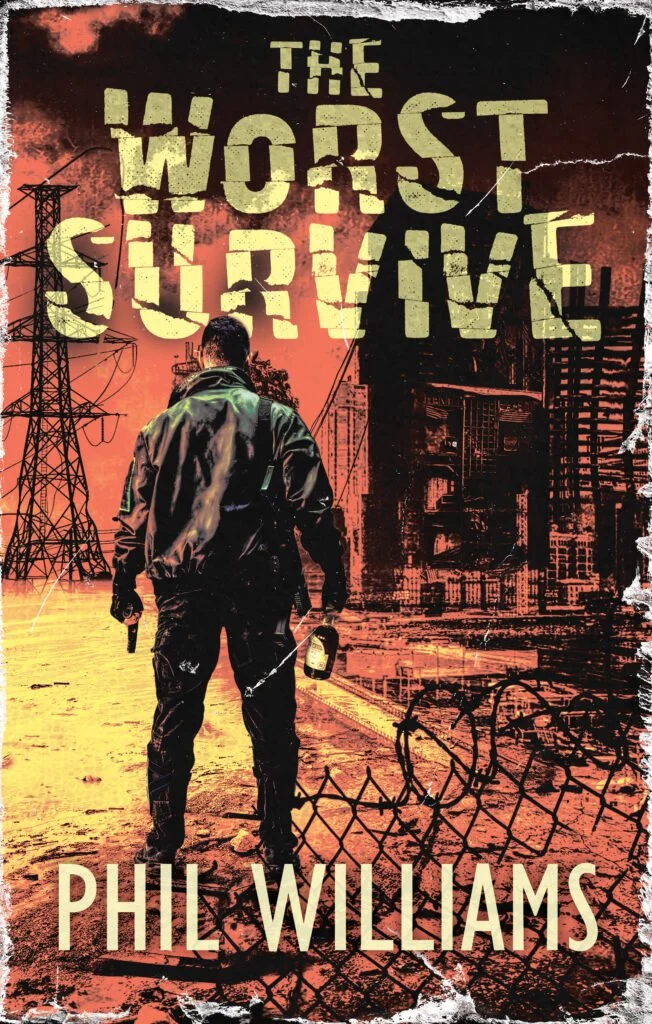
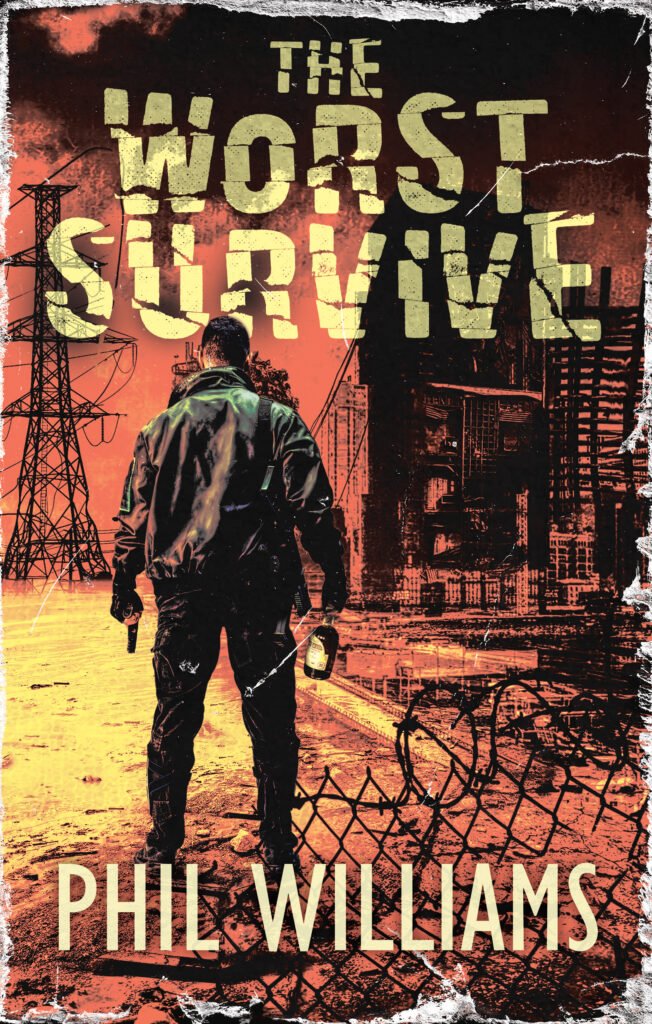
The implied publisher’s strategy for The Worst Survive would undoubtedly center on its strong genre appeal. Marketing efforts would likely emphasize the "Mad Max meets Blade Runner meets Dredd" comparisons, targeting fans of gritty sci-fi, cyberpunk, and post-apocalyptic fiction. The focus would be on the book’s fast pace, intense action, and its compelling, albeit morally grey, protagonist. The release date of July 28th positions it as a strong summer read, perfect for those seeking an escapist yet thought-provoking adventure. The use of ARCs and early reviews is a standard tactic to build buzz and establish credibility within the target readership. The striking cover art (as seen in the provided image) also plays a crucial role in visually communicating the book’s tone and genre.
Implications
The Worst Survive carries significant implications for both its genre and its potential readership, suggesting a powerful and enduring impact.
Impact on the Dystopian Genre
In a genre that continues to evolve, The Worst Survive appears poised to contribute to the ongoing conversation about humanity’s future. By leaning into the "retro-future" aesthetic and the specific blend of influences, Williams offers a fresh take on familiar tropes. The novel’s unapologetic portrayal of violence and its commitment to a truly anti-heroic protagonist may push the boundaries of what readers expect from dystopian fiction, encouraging a more nuanced exploration of morality and survival. It could inspire other authors to embrace grittier narratives and more complex character arcs, moving beyond simplistic good-versus-evil dichotomies that sometimes plague the genre. Its success could solidify a niche for intensely character-driven, action-packed dystopias that don’t pull their punches.
Reader Experience and Target Audience
The book is clearly tailored for a specific audience: readers who crave high-octane action, moral ambiguity, and immersive world-building. Those who appreciate the visceral thrills of films like Mad Max: Fury Road or the philosophical bleakness of Blade Runner will likely find themselves at home in New Oak City. Readers who enjoy protagonists like Joe Abercrombie’s Logen Ninefingers or Richard K. Morgan’s Takeshi Kovacs—characters whose brutal pragmatism is tempered by flashes of unexpected loyalty or vulnerability—will find a kindred spirit in Scully. The fast pace and "thick and fast" fight scenes will appeal directly to those who read for adrenaline and excitement. Conversely, readers seeking gentle narratives, clear moral lines, or traditional heroic journeys may find the book’s intensity and Scully’s abrasive personality challenging. The review’s call to action, "Strap yourself in for a bloody good/bad time!" perfectly encapsulates the tumultuous yet ultimately rewarding experience awaiting its target audience.
Future Prospects and Authorial Trajectory
The review’s comment that "the bigger picture’s cracked wide open" by the end strongly suggests that The Worst Survive is not a standalone novel but the beginning of a series. This opens up exciting possibilities for further exploration of New Oak City, the American Remnant, and the global implications of Laine Faergrowe’s "hope." A successful launch could establish Phil Williams as a significant voice in modern dystopian and action-oriented speculative fiction. His ability to create such a compelling, albeit flawed, character like Scully, combined with a richly detailed and dangerous world, bodes well for the longevity of this potential series. Readers will undoubtedly be eager to see how Scully’s journey continues and what further moral compromises he might have to make to survive—and perhaps even thrive—in this brutal future.
Broader Commentary: Reflecting Contemporary Anxieties
Beyond its entertainment value, The Worst Survive taps into contemporary anxieties about societal collapse, corporate overreach, and the resilience of the human spirit in the face of overwhelming adversity. The "American Remnant" and the dominance of "New Industry politics" resonate with modern concerns about political fragmentation and unchecked corporate power. The struggle for "hope" in a desolate world reflects a pervasive yearning for solutions to complex global problems. By presenting a protagonist who is deeply flawed yet undeniably effective, Williams invites readers to consider what true heroism might look like in a world where traditional virtues have eroded, and whether the "worst" among us are, paradoxically, the most equipped to navigate such a future. It’s a compelling narrative that holds a mirror to some of our deepest fears and fascinations with a world on the brink.
In conclusion, The Worst Survive is poised to deliver a powerful punch to the literary world, offering a relentlessly engaging and thought-provoking journey into a future that is both terrifying and undeniably captivating. Readers seeking an uncompromising, action-packed dystopian thriller with a truly memorable anti-hero need look no further.