Forging a New World Order: The Birth of the United Nations and its Sister Institutions
Main Facts
The devastating Second World War (1939-1945), a conflict of unprecedented scale and brutality, compelled global leaders to envision a new international architecture designed to prevent future catastrophes. From 1941 to 1945, a series of pivotal Allied conferences laid the groundwork for a more peaceful and cooperative world. The culmination of these efforts was the establishment of the United Nations (UN), alongside other crucial international bodies such as the International Monetary Fund (IMF), the World Bank (initially the International Bank for Reconstruction and Development, IBRD), and the International Court of Justice (ICJ). These institutions were conceived to foster global cooperation, facilitate free trade, and provide vital aid to war-ravaged and developing nations. The overarching hope was that from the ashes of the greatest global conflict, a robust framework for lasting peace and collective security could finally emerge. This ambitious undertaking represented a profound shift in international relations, moving away from isolationism and power politics towards a shared responsibility for global stability and prosperity.
Chronology
The journey to the United Nations was a complex tapestry woven through wartime diplomacy, strategic alliances, and a collective determination to learn from past failures.
The Shadow of the League of Nations
The concept of a global political body dedicated to peace was not new. Following the First World War (1914-1918), the League of Nations was founded in January 1920, born from the Treaty of Versailles and championed by US President Woodrow Wilson. Headquartered in Geneva, the League aimed to provide a forum for 44 member states to resolve disputes peacefully, promoting collective security whereby an attack on one member would be met with unified action, initially economic sanctions, then military force if necessary. Beyond security, it sought to foster international cooperation in economic and social spheres, particularly in health and communications.
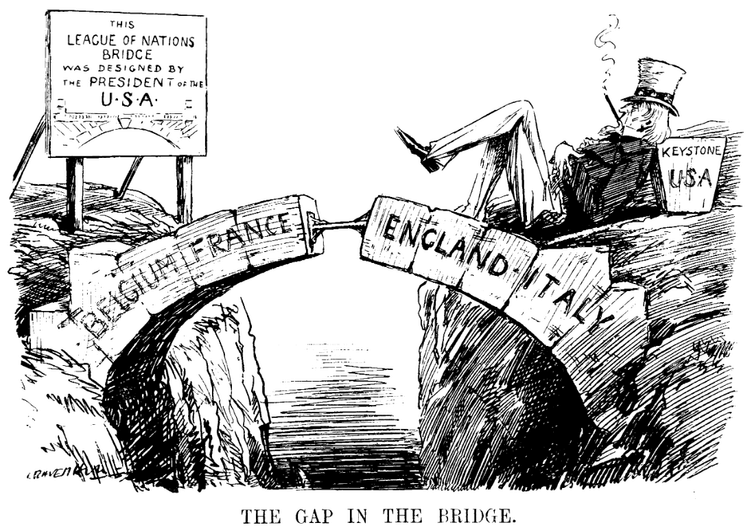
However, the League of Nations was plagued by fundamental weaknesses that ultimately undermined its effectiveness. Perhaps the most crippling blow was the absence of the United States, whose Senate, dominated by isolationist sentiment post-war, refused to ratify the Treaty of Versailles and thus prevented American membership. Without the political and economic weight of the US, the League lacked crucial authority. Moreover, it consistently failed to decisively address direct challenges to international peace, such as Japan’s invasion and occupation of Manchuria in China in 1931 and Italy’s conquest of Abyssinia (modern Ethiopia) in 1935. These failures demonstrated the limitations of collective security without the full commitment of major powers and a mechanism for enforcement. Consequently, member states increasingly reverted to bilateral treaties and military solutions, marginalizing the League by 1939 and paving the way for the Second World War. The architects of the UN meticulously studied these shortcomings, determined to build a more resilient and inclusive successor.
Early Seeds of Cooperation: The Atlantic Charter (1941)
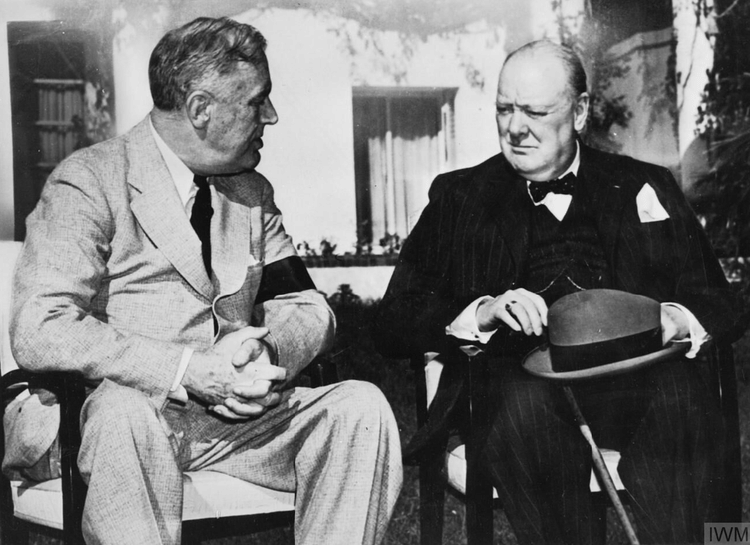
Even amidst the raging global conflict, the vision for a post-war order began to take shape. A significant early step was the signing of the Atlantic Charter on August 14, 1941, by US President Franklin D. Roosevelt and British Prime Minister Winston Churchill. This declaration, made before the US formally entered the war, outlined a set of principles for a better future world, echoing some of Wilson’s Fourteen Points. It proclaimed the right of all peoples to self-determination, equal access to trade and raw materials, freedom from want and fear, and the abandonment of the use of force. Critically, it also hinted at the necessity of "a wider and permanent system of general security," laying the conceptual groundwork for an international organization. The Atlantic Charter was a powerful statement of shared values and goals, signaling a commitment by the leading democratic powers to establish a new order based on cooperation rather than conquest, and setting a moral tone for the Allied cause.
Formalizing the Vision: United Nations Declaration (1942) and Moscow (1943)
The concept gained further momentum with the United Nations Declaration of January 1, 1942. Signed by the US, UK, USSR, and China, along with 22 other nations, this document marked the first official use of the term "United Nations" to refer to an international cooperative body. It committed the signatories to the principles of the Atlantic Charter and pledged their full cooperation in the war effort against the Axis powers. This declaration underscored a growing consensus among the Allied powers that victory against fascism must be accompanied by the creation of a stable, peaceful post-war world.
This commitment was reinforced by the Four-Power Declaration signed in Moscow on October 30, 1943. Here, representatives from the US, UK, USSR, and China explicitly reiterated their intent to establish "a general international organization, based on the principle of the sovereign equality of all peace-loving states, and open to membership by all such states, large and small, for the maintenance of international peace and security." This declaration was crucial, particularly in securing Soviet endorsement for the idea, a vital step given the USSR’s burgeoning global influence.
The Tehran Conference: Securing Soviet Buy-in (1943)
The first meeting of the "Big Three" – Roosevelt, Churchill, and Soviet Premier Joseph Stalin – at the Tehran Conference in November-December 1943, was instrumental in solidifying the future international organization. While much of the conference focused on military strategy, Roosevelt and Churchill skillfully persuaded a initially reluctant Stalin to commit to participating in a future global body dedicated to perpetuating world peace. Stalin’s agreement, albeit cautious, was a monumental diplomatic achievement, ensuring that the nascent UN would include all the major victorious powers, a critical lesson learned from the League of Nations’ failure to enlist the United States. The discussions touched upon the need for a strong executive body, hinting at the future Security Council.
Rebuilding the Global Economy: The Bretton Woods Conference (1944)
The economic underpinnings of lasting peace were addressed at the United Nations Monetary and Financial Conference, held at Bretton Woods, New Hampshire, from July 1 to 22, 1944. Delegates from 44 states gathered, driven by the belief that economic stability, free trade, and the absence of protectionist tariffs were essential prerequisites for preventing future conflicts, a direct response to the economic nationalism and instability of the 1930s that many believed contributed to WWII. The conference was largely shaped by the ideas of British economist John Maynard Keynes and US Treasury Assistant Harry Dexter White.
The Bretton Woods Agreement established two foundational institutions. The International Monetary Fund (IMF), which began operations in December 1945 with 22 participating countries, was designed to stabilize international exchange rates and facilitate the expansion of world trade. It would act as a central bank for nations, helping states correct imbalances in their international payments and prevent competitive devaluations, thus removing a key source of economic tension. Alongside the IMF, delegates created the International Bank for Reconstruction and Development (IBRD), soon to be known as the World Bank. Capitalized with an initial $10 billion, the IBRD’s primary mandate was to finance the reconstruction of war-torn Europe and Asia, and to provide aid for the economic development of poorer nations. This represented a radical shift towards institutionalized global economic cooperation. Not all nations fully embraced the decisions; the USSR, Haiti, Liberia, and New Zealand initially declared they would not be bound by the conference’s outcomes, foreshadowing future ideological divisions.
Crafting the UN’s Blueprint: The Dumbarton Oaks Conference (1944)
Following Bretton Woods, the Dumbarton Oaks Conference, held at Harvard University from August 21 to October 7, 1944, meticulously hammered out the detailed blueprint for the United Nations. Delegates from 39 states convened in two phases – first the US, UK, and USSR, then the US, UK, and China – to define the structure and functions of the proposed organization. The conference produced a comprehensive text, divided into 12 chapters, outlining the principal organs of the UN. It proposed a Security Council with executive powers for maintaining international peace and security, and a General Assembly comprising all member states for broader deliberation. It also established the framework for an International Court of Justice to resolve legal disputes between nations. The discussions at Dumbarton Oaks were critical in translating the broad principles into a concrete organizational structure, although key issues like the veto power in the Security Council remained contentious and unresolved at this stage.
The Yalta Agreement: Finalizing the Security Council (1945)
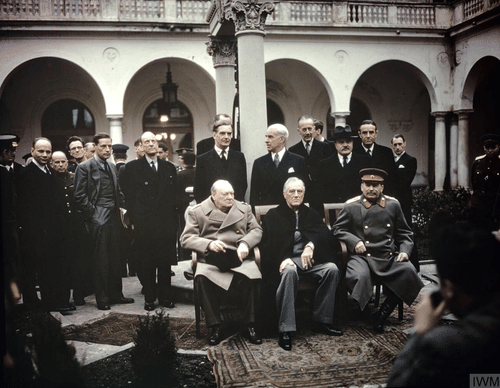
The critical issue of the Security Council’s voting structure, particularly the contentious veto power, was resolved at the Yalta Conference, held from February 4-11, 1945. Meeting once again, Roosevelt, Churchill, and Stalin faced the challenge of ensuring the participation of all major powers, particularly the Soviet Union, which was wary of being outvoted by Western democracies. A significant compromise was reached: the "Big Five" (US, UK, USSR, China, and France, the latter reluctantly accepted by Stalin) would become permanent members of the Security Council, each possessing a right of veto over substantive decisions. This concession was vital to securing Soviet commitment to the UN, though it immediately raised concerns among smaller nations about the disproportionate power wielded by the permanent members. Yalta thus solidified the core executive mechanism of the future UN, albeit with an inherent power imbalance reflecting the realities of post-war geopolitics.
The Birth of a New Era: The San Francisco Conference (1945)
The final act in the creation of the United Nations Organization (UNO) unfolded at the San Francisco Conference, formally known as the United Nations Conference on International Organization, from April 25 to June 26, 1945. The conference proceeded despite the profound shock of President Roosevelt’s death on April 12. His successor, Harry S. Truman, decisively committed to the conference, stating, "it was what Roosevelt had wanted, and it had to take place if we were going to keep the peace." Truman’s opening speech emphatically declared, "We can no longer permit any nation, or group of nations, to attempt to settle their arguments with bombs and bayonets," setting a firm tone for the gathering.
Representatives from 50 countries participated, diligently working to draft and adopt the United Nations Charter. The Charter, signed on June 26, established the UN Security Council with its five permanent members (US, USSR, UK, China, and France) and their right of veto. The initial Soviet demand for a veto over even discussing an issue was softened to a veto only once an issue was being debated. Six non-permanent members would join the council on a rotating basis. While smaller states expressed dissatisfaction with the veto power, it was widely acknowledged that without it, neither the US nor the USSR would have joined, effectively dooming the organization from the outset. All signatories could send a five-person delegation to the General Assembly, where each member held a single vote. This conference marked the official transition from concept to concrete reality, signifying a collective commitment to a new era of international relations.
Supporting Data
Institutional Architecture: The UN’s Organs
The United Nations was structured around six principal organs, each with distinct but complementary functions:
- The General Assembly: The main deliberative body, comprising all member states, each with one vote. It discusses a wide range of international issues and makes recommendations, but its resolutions are generally non-binding.
- The Security Council: Tasked with maintaining international peace and security. It has the power to impose sanctions, authorize peacekeeping missions, and even authorize military action. It consists of 15 members: five permanent members (China, France, Russia, the United Kingdom, and the United States) with veto power, and ten non-permanent members elected for two-year terms.
- The Economic and Social Council (ECOSOC): Coordinates the economic and social work of the UN and its specialized agencies, focusing on issues like development, human rights, and humanitarian aid.
- The Trusteeship Council: Established to oversee the transition of colonial territories to self-governance or independence (ceased operations in 1994).
- The International Court of Justice (ICJ): The principal judicial organ of the UN, based in The Hague, settling legal disputes between states.
- The Secretariat: The UN’s administrative arm, headed by the Secretary-General, carrying out the day-to-day work of the organization.
Economic Foundations: IMF and World Bank Mandates
The Bretton Woods institutions were designed to address the root causes of economic instability that had contributed to the interwar period’s crises:
- International Monetary Fund (IMF): Its primary mandate was to promote international monetary cooperation, secure financial stability, facilitate international trade, promote high employment and sustainable economic growth, and reduce poverty around the world. It achieves this by monitoring the global economy, providing financial assistance to member countries facing balance of payments problems, and offering technical assistance and training.
- International Bank for Reconstruction and Development (IBRD)/World Bank: Its initial capital of $10 billion was a significant sum for post-war reconstruction. Its mandate quickly expanded beyond rebuilding war-torn economies to include long-term development assistance for developing countries, focusing on infrastructure, health, education, and poverty reduction through loans and grants.
Membership and Early Challenges
The UN Charter was signed by 50 nations in San Francisco. Poland, not represented at the conference, signed it later, bringing the total to 51 original member states. This represented a significantly broader and more inclusive membership than the League of Nations at its inception. However, early challenges included the contentious inclusion of pro-fascist Argentina, while pro-Communist Poland was initially excluded, highlighting the political compromises inherent in forming such a vast international body.
Official Responses
Overcoming Isolationism: US Ratification
A pivotal moment demonstrating the shift in global outlook was the ratification of the UN Charter by the United States Senate. Unlike its rejection of the League of Nations, the Senate overwhelmingly approved the UN Charter by a vote of 89 to two. This decisive action signaled America’s firm commitment to international engagement and multilateralism, a profound lesson learned from the failures of isolationism in the interwar period. President Truman hailed the Senate’s decision, commenting that "The action of the Senate substantially advances the cause of world peace," recognizing the historical significance of the move. This strong endorsement from the most powerful nation at the time was critical for the UN’s legitimacy and operational capacity.
The Veto Power Debate
The inclusion of the veto power for the five permanent members of the Security Council was a contentious but ultimately unavoidable compromise. Smaller states voiced strong objections, arguing that it granted undue power to a select few and could paralyze the Council’s ability to act against aggression if a permanent member or its ally was involved. However, the "Big Five" (especially the US and USSR) insisted on the veto as a non-negotiable condition for their participation. Their rationale was rooted in sovereignty: they would not commit their military or economic resources to actions they fundamentally disagreed with. This pragmatic compromise, though often criticized for its potential to hinder effective action, was essential for securing the participation of the world’s most powerful nations, thereby giving the UN a level of authority and reach that the League of Nations lacked.
Initial Global Reception
The formation of the UN was met with a mixture of immense hope and cautious skepticism. Many viewed it as humanity’s best chance to prevent another global war, a tangible symbol of collective aspiration for peace and cooperation. Leaders like Truman articulated a clear vision of the UN as an indispensable instrument for international stability. However, seasoned diplomats and cynical politicians harbored doubts, questioning whether powerful states would truly relinquish parts of their sovereignty to an international body. They posited that national self-interest would inevitably continue to drive world politics, potentially rendering the UN a glorified debating society. The early days of the Cold War would soon put these conflicting perspectives to the test, as ideological divides began to strain the very fabric of the new organization.
Implications
A New Paradigm for Global Governance
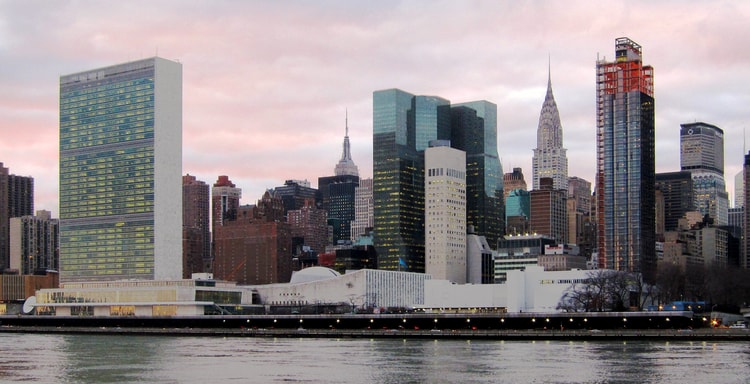
The establishment of the United Nations and its sister institutions marked a profound shift in the paradigm of international relations. It moved beyond the traditional balance-of-power politics that had dominated for centuries, towards an ambitious system of collective security and multilateral cooperation. While not a world government, the UN provided an unprecedented framework for dialogue, dispute resolution, and coordinated action on a global scale. Its Charter enshrined principles of sovereignty, non-interference, and the peaceful settlement of disputes, alongside the promotion of human rights and international law. This new architecture aimed to create a stable international environment conducive to economic prosperity and social progress, recognizing the interconnectedness of peace, security, and development.
Enduring Legacy and Future Challenges
Over nearly eight decades, the United Nations has evolved into a truly global organization, expanding from its initial 51 members to 193 sovereign states today. Its mandate has broadened significantly beyond maintaining peace and security to encompass a vast array of global issues, including humanitarian aid, sustainable development, climate change, disease eradication, and the protection of human rights. Specialized agencies like UNICEF, WHO, UNESCO, and the World Food Programme operate under its umbrella, impacting millions of lives daily.
Despite its successes, the UN faces ongoing challenges. The veto power in the Security Council continues to be a point of contention, often leading to paralysis on critical issues when permanent members’ interests diverge. Geopolitical rivalries, particularly during the Cold War and in contemporary multipolar dynamics, have frequently tested the UN’s ability to act decisively. Reforms to its structure, particularly the Security Council, are continually debated. Nevertheless, the UN remains an indispensable forum for international diplomacy, a critical provider of humanitarian assistance, and a leading advocate for human rights and sustainable development. It embodies the enduring hope that nations can, through cooperation, address shared challenges and build a more peaceful and prosperous future.
United Nations Day: A Global Commemoration
The official activation of the United Nations on October 24, 1945, is celebrated annually as United Nations Day. This global observance serves as a reminder of the organization’s founding principles and its ongoing mission to foster international peace and security, develop friendly relations among nations, promote cooperation in solving international problems and respecting human rights, and act as a harmonizing focal point for all nations in achieving these aims. The first meeting of the UN General Assembly was held on January 10, 1946, followed by its first resolution on January 24, calling for the peaceful use of atomic energy and the elimination of atomic weapons – a poignant reflection of the world’s fresh wounds and its deepest fears. Two weeks later, on January 17, the Security Council convened for the first time, signaling the dawn of a new era in global governance, firmly building upon the lessons learned from history’s most devastating conflict.