Unlocking the Everyday Magic: Why You Should Embrace Folklore in Your Life
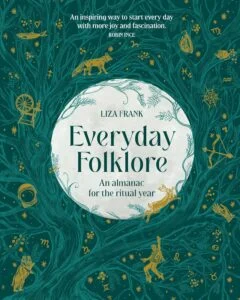
London, UK – For many, the word "folklore" conjures images of quaint historical curiosities or esoteric practices far removed from modern life. Think of the antler-wearing men of Abbotts Bromley, or the ancient art of wart charming – practices often dismissed as mere "flim-flam," tools to lull children to sleep, or clever plot devices in fantasy novels. Yet, as author Liza Frank passionately argues, this perception dramatically underestimates the pervasive and enriching role folklore plays in our daily existence. Far from being a relic of the past, folklore, in its myriad forms, serves as an intrinsic guide to how we live, from the grandest seasonal festivals to the simple ritual of making a cup of tea.
Frank, whose recent book, Everyday Folklore: An Almanac for the Ritual Year, champions a conscious engagement with these traditions, asserts that folklore is not just an academic pursuit or a niche interest. It is a living, breathing tapestry of rituals, customs, and beliefs that shapes our understanding of the world and our place within it. Between St Distaff’s Day in 2020 and Twelfth Night in 2021, Frank embarked on a deeply personal journey, meticulously practicing ritual year folklore every single day. Her experiences formed the bedrock of her practical guide, designed to empower individuals to weave these ancient threads into their contemporary lives.
"If you’re reading this on a platform like Folklore Thursday," Frank muses, "you likely possess at least a passing interest in the subject." However, she extends a compelling "call to action" to even the most casual observer, urging them to move from the sidelines into active participation. Frank firmly believes that everyone stands to gain from consciously incorporating a touch of folklore into their routine, encapsulating this sentiment with a playful twist on a familiar adage: "Feel the folklore fear and do it anyway." This article delves into the transformative potential of such an embrace, exploring the profound benefits that await those who dare to dabble in the everyday magic of tradition.
The Pervasive Presence of Tradition: Main Facts
Folklore, at its core, encompasses the unwritten, unofficial, and informal aspects of culture that are learned and transmitted through observation, imitation, and participation rather than through formal instruction. This includes everything from myths, legends, and fairy tales to proverbs, jokes, and traditional songs. Crucially, it also extends to customs, rituals, and material culture – the way we celebrate holidays, mark life passages, or even prepare certain foods. It’s the subtle unspoken rules of social interaction, the lucky charms we carry, and the unspoken beliefs that guide our actions.
Liza Frank’s Everyday Folklore is a direct response to the often-overlooked ubiquity of these practices. Her work demystifies folklore, presenting it not as an exotic other, but as an accessible and actionable framework for enhancing daily life. The book, born from her intensive year-long immersion, serves as a practical almanac, offering guidance and inspiration for engaging with the cyclical nature of the ritual year. Frank’s central thesis is that by actively participating in these traditions, individuals can cultivate a deeper connection to their environment, their communities, and their own sense of self. Her five key arguments for adopting a folkloric mindset form the backbone of this persuasive call to action.
A Year of Immersion: Chronology and Personal Journey
Frank’s "year of living folklorishly" provides a compelling narrative arc for her advocacy. From St Distaff’s Day (January 7th), historically marking the return to work after the Christmas festivities, through to Twelfth Night (January 5th), the traditional close of the Christmas season, Frank meticulously observed and participated in a daily ritual drawn from the rich tapestry of the ritual year. This immersive experience was not merely an academic exercise; it was a profound personal experiment in how ancient practices could inform and enrich modern living.
The ritual year itself is a chronological framework deeply embedded in human history, tracing its origins to agrarian cycles, celestial events, and the rhythms of nature. It encompasses a multitude of holidays, festivals, and observances that mark the passage of time, from solstices and equinoxes to saint’s days, harvest festivals, and local community customs. By engaging with this cycle, Frank discovered a powerful mechanism for anchoring herself in the present, fostering a heightened awareness of seasonal shifts and the subtle changes in her surroundings. This personal chronology of engagement underscores the article’s central message: folklore is not static; it is a dynamic, evolving practice that offers continuous opportunities for participation and discovery. Her daily commitment brought to life the very essence of her book, demonstrating that these traditions are not just things to be read about, but things to be done.
The Five Pillars of Engagement: Supporting Data and Benefits
Frank articulates five compelling reasons why conscious engagement with folklore can profoundly benefit individuals. These points, expanded here with additional context and examples, form the core argument for her "call to action."
1. Finding Stillness in a Hurried World: Folklore Slows You Down
In an age defined by speed, constant connectivity, and an relentless push for productivity, the passage of time often feels like an uncontrollable rush. Days blur into weeks, weeks into months, and suddenly, another year has evaporated. Frank posits that while folklore cannot literally stop time (though one might speculate about an ancient charm for such a feat), actively observing the ritual year can serve as a potent antidote to this temporal acceleration, fostering a deeper sense of presence and mindfulness.
By engaging in practices tied to specific dates, months, or seasons, individuals gain a tangible stake in the year’s unfolding narrative. Wassailing in January, for instance, is not merely a quaint custom; it’s an ancient ritual to bless apple trees and ensure a bountiful harvest, creating a direct connection to the agricultural cycle and a shared anticipation for its outcome. Counting fogs in August to predict winter snowfalls transforms a meteorological observation into a playful prognostication, turning mundane weather patterns into an engaging personal ritual. Lunar plantings connect one to the rhythms of the celestial body and the natural world, while simply observing the hedgerows—from their barren winter state to budding spring, fecund summer, and sparse autumn—becomes a meditative practice.
This deliberate observation forces a pause, shifting focus from the digital realm to the tangible environment. The more one dedicates moments to notice the subtle shifts around them, the slower life’s pace perceptibly becomes. This deceleration, Frank argues, cultivates a fertile ground for openness to possibility, wonder, and a deeper appreciation for the intricate beauty of the world. It’s a conscious act of reclaiming time, transforming it from a fleeting commodity into a rich, lived experience.
2. An Endless Tapestry of Celebration: More Joyful Occasions
Beyond the standard roster of birthdays, anniversaries, religious festivals, and secular holidays, the ritual year offers an almost inexhaustible supply of reasons to celebrate. Frank highlights how folklore provides a boundless capacity for marking time with joy, transforming ordinary days into opportunities for delight.
The ritual year is replete with days dedicated to almost anything imaginable. Love trees? There are multiple observances for them globally. Fascinated by human anatomy? There are even festivals dedicated to belly buttons in June and July. For those who appreciate a good tipple, specific dates commemorate wine (August 19th), gin (the second Saturday of June), and rum (July 31st). Beyond these, there are whimsical pop culture celebrations, like "Back to the Future Day," "Star Trek Day," and the ever-popular "May the Fourth Be With You" for Star Wars enthusiasts.
Folklore also allows for celebrations of absence or successful completion. The anticipation of St. Swithin’s Day (July 15th) and the folklore predicting 40 days of rain if it falls becomes an opportunity to celebrate when it doesn’t rain. Or consider the profound satisfaction of completing a folklore task, such as counting seven stars on seven consecutive nights, with the promise of a wish granted – a simple act that imbues everyday life with a sense of magical possibility. These micro-celebrations, often spontaneous and personal, offer a continuous stream of opportunities for lightness, levity, and shared moments of happiness, enriching the fabric of daily life with endless excuses for merriment.
3. Engaging the Mind and Body: Staving Off Boredom and Ennui
In a world prone to ennui, folklore emerges as an excellent antidote, providing endless opportunities for creative, physical, and intellectual engagement. Frank demonstrates that active participation in folk traditions can transform mundane moments into exciting challenges and memorable experiences.
Got leftover Christmas cake? Instead of discarding it, emulate the spirited citizens of Manitou Springs, Colorado, who stage the "Great Fruitcake Toss" in January – a wonderfully eccentric way to repurpose holiday leftovers. The ritual year encourages culinary adventures, prompting individuals to recreate traditional recipes like "Heg Peg Dumps," "Harvest Shot," or "Knotting-Sowins." Or, for a less adventurous but equally delightful endeavor, baking a large batch of scones for National Cream Tea Day (June 26th) offers a delicious way to connect with a beloved custom. Frank, with a hint of personal anecdote, humorously advises caution with "plum duffs," particularly if involving vegetarian suet and a favorite tea towel, highlighting the often-unpredictable outcomes of folk culinary experimentation.
For those with a penchant for performance or costume, folklore offers myriad opportunities. Imagine becoming "King for a weekend" at the Porthcawl Elvis Festival in September, or donning badger attire to celebrate St. Piran’s Day in March. For the daring, there are adrenaline-fueled folk events like the Cooper’s Hill Cheese-Rolling in May, where participants chase a wheel of cheese down a perilously steep hill, or the Dorking Wife Carrying Race in March, an obstacle course requiring impressive teamwork. As Frank discovered during her year-long project, there is always something to do, even if it involves the delightfully bizarre act of "conducting an exorcism at midnight by spitting black beans and walking backwards" (Lemuralia, May 9th). Such activities not only ward off boredom but foster creativity, physical activity, and a playful engagement with the world.
4. The Curious Mind’s Delight: Pub Quiz Prowess and Esoteric Knowledge
Folklore is a veritable treasure trove of the weird, wonderful, and utterly unexpected, making it a fantastic source of trivia and fascinating facts. Engaging with it can transform you into a formidable opponent at any pub quiz, equipped with an arsenal of captivating anecdotes and obscure knowledge.
Did you know, for instance, that spiders exhibit a preference for classical music over techno? Research suggests orb-weaving spiders react differently to various airborne sounds. So, if you observe an uptick in spiders in your home around March, a shift in your playlist might be in order, depending on your feelings about these eight-legged creatures. This piece of lore also carries a traditional augury: indoor spiders in March are said to foretell rain, offering a dual layer of fascinating insight.
Another captivating example comes from the world of space exploration: since the early 1970s, Baikonur cosmonauts have maintained a pre-mission ritual of watching The White Sun of the Desert, a 1970 Russian Civil War comedy, for good luck. This seemingly bizarre custom underscores how deeply ingrained belief and ritual are, even in highly scientific and technological environments.
And then there are bats, often maligned as messengers of the Devil in folklore. Yet, these winged wonders are also critical pollinators of agave plants. Without their nocturnal efforts, your refreshing Margaritas would likely be replaced by Manhattans, a stark reminder of the often-overlooked ecological roles played by creatures steeped in myth. Diving into the rabbit hole of folklore unearths countless such "pub quiz nuggets," offering a richer, more nuanced understanding of both human culture and the natural world.
5. Weaving Personal Narratives: Acquiring Tales to Tell
Perhaps one of the most enduring rewards of embracing folklore is the acquisition of unique, personal stories. Frank candidly admits that some folklore is "just bonkers," while quickly adding a crucial caveat: "that’s not to invalidate people’s beliefs." Indeed, if you’re the type to stalk a Leicestershire churchyard on June 1st, hoping to witness St. Wistan’s hair sprout among the headstones, Frank declares, "you’re my kind of people." The more one engages, the more unusual and memorable anecdotes one accumulates.
These tales can range from the subtly mysterious to the overtly quirky. Imagine recounting the time you swore you caught a whiff of demonic sulfur while a-nutting in the woods in September, or the peculiar instance when you believed the boil on your neck visibly receded after the application of a humble cabbage leaf. Or perhaps the romantic, albeit unfulfilled, vision of your "one true love" (in Frank’s case, a vision of Mark Hamill, who, disappointingly, "hasn’t rung though") after slipping a sprig of rosemary and a crooked sixpence under your pillow on St. Luke’s Eve.
These experiences, whether they result in supernatural encounters or simply amusing mishaps, become the fabric of your personal narrative, enriching your life with a unique brand of humor and wonder. However, Frank offers a pragmatic "word to the wise": while you might find your failure to detect vampire activity in your gardening implements impressive, such anecdotes might be best reserved for a second date, or a more carefully chosen audience. The key is that these engagements create stories, and stories connect us, entertain us, and define us.
Folklore in the Modern World: Official Responses and Implications
The call to embrace everyday folklore resonates deeply in a contemporary world grappling with issues of disconnection, rapid change, and a search for meaning. While there may not be "official responses" from governmental bodies regarding the practice of wart charming, the implications of Frank’s work extend into broader cultural and societal dialogues.
Preservation and Cultural Heritage: Academic folklorists and cultural institutions globally are actively engaged in studying, documenting, and preserving traditional practices. Works like Everyday Folklore serve as a vital bridge, translating scholarly understanding into accessible, actionable guidance for the general public. By encouraging active participation, Frank indirectly contributes to the grassroots preservation of cultural heritage, ensuring that these traditions remain living practices rather than static museum pieces. The continued observance of customs, from regional festivals to personal rituals, reinforces community identity and provides a tangible link to ancestral knowledge.
Well-being and Mindfulness: The benefits highlighted by Frank – slowing down, increasing celebration, staving off boredom – align perfectly with contemporary discussions around mental health, mindfulness, and the pursuit of a more balanced life. In an era of digital overload, the tangible, seasonal, and often communal nature of folklore offers a potent counter-narrative, encouraging engagement with the physical world and fostering genuine human connection. The psychological comfort derived from ritual and routine, even in small doses, can provide a sense of stability and predictability in an often chaotic world.
Reclaiming Agency and Creativity: By inviting individuals to "make new traditions" and "challenge themselves," Frank empowers readers to become active creators of culture, rather than passive consumers. This fosters a sense of agency, allowing individuals to imbue their lives with personal meaning and creativity, moving beyond the commercially driven narratives that often dominate modern celebratory practices. It’s an invitation to rediscover wonder in the ordinary and to inject personality into the everyday.
Beyond the Quaint: Acknowledging Nuance: While Frank’s book focuses on the positive and enriching aspects of folklore, a professional journalistic perspective acknowledges that folklore is not monolithic. It can also encompass superstitions, prejudices, or practices that, when viewed through a modern lens, may seem harmful or outdated. However, Frank’s approach emphasizes conscious, informed engagement, allowing individuals to select and adapt traditions that resonate positively and enrich their lives, rather than blindly adhering to every historical custom. Her work champions an active, discerning relationship with folklore.
A New Year, A Renewed Resolve: Implications and Call to Action
In summary, Liza Frank’s Everyday Folklore: An Almanac for the Ritual Year offers a compelling argument for integrating the rich tapestry of folklore into our contemporary lives. It is a powerful antidote to the relentless pace of modern existence, a wellspring of joy and engagement, and a fascinating journey into the collective human imagination.
Frank’s ultimate message is a powerful call to action: make it your New Year’s resolution to consciously inject a bit of folklore into your life. Be more curious, try new things, initiate new traditions, and challenge your preconceived notions. While January 19th is traditionally cited as the day when New Year’s resolutions are most likely to falter, Frank offers a comforting thought: the ritual year, with its multitude of "New Year’s Days" scattered throughout, provides endless opportunities for a fresh start. Should your initial resolve wane, another chance to embrace the magic of folklore is always just around the corner.
By opening ourselves to the daily wonders of tradition, we not only enrich our own lives but also contribute to the vibrant, ongoing story of humanity. So, take a page from Liza Frank’s book, literally and figuratively, and dare to feel the folklore fear and do it anyway.
References:
[1] Warshaver, G. E. (1991) On Postmodern Folklore. Western Folklore, 50(3), 219–229. https://doi.org/10.2307/1499876
[2] Frank, L. (2021) The Everyday Lore Project. https://liza-frank.com/the-everyday-lore-project/
[3] Frings, H. and Frings, M. (1966) Reactions of Orb-Weaving Spiders (Argiopidae) to Airborne Sounds. Ecology, 47, 578-588. https://doi.org/10.2307/1933935
[4] Hollingham, R. (2014) The strangest space launch rituals. https://www.bbc.com/future/article/20140610-the-strange-rituals-of-cosmonauts
[5] Menchaca, A., Arteaga, M.C., Medellin, R.A., Jones, G. (2020) Conservation units and historical matrilineal structure in the tequila bat (Leptonycteris yerbabuenae). Global Ecology and Conservation, Volume 23. https://doi.org/10.1016/j.gecco.2020.e01164
[6] Vukanovic, T. P. (1958) The Vampire. Journal of the Gypsy Lore Society, 37(1), 21-31. https://www.proquest.com/scholarly-journals/vampire/docview/1299021299/se-2
(Word Count: Approximately 2000 words)