The Enduring Legacy of Ninurta: From Plow to Pantheon’s Champion
Ancient Mesopotamia, a land of shifting sands and mighty rivers, gave birth to a pantheon of deities whose influence shaped civilizations for millennia. Among them stands Ninurta, a hero-god whose multifaceted nature—from agricultural benefactor to fearsome warrior—mirrored the evolving societies that worshipped him. Identified variously as Ningirsu, Pabilsag, and even the biblical Nimrod, Ninurta embodies the complex interplay of power, protection, and provision that characterized the spiritual landscape of the Sumerian and Akkadian peoples.
Main Facts: A Deity of Dualities
Ninurta first emerged in the early 3rd millennium BCE as an agrarian deity, a local patron god of the Sumerian towns of Girsu (as Ningirsu) and Larak (as Pabilsag). His initial role was intrinsically linked to the fertile crescent’s lifeblood: irrigation and bountiful harvests. However, as the city-states of Mesopotamia grew in ambition and militarization, engaging in relentless campaigns of conquest against one another, Ninurta’s divine portfolio underwent a profound transformation.
Scholar Stephen Bertman eloquently captures this shift:
"Ninurta began his divine career as a god of irrigation and agriculture. In fact, ‘The Instruction of Ninurta’ is the title of an ancient Sumerian ‘farmer’s almanac.’ But with the rise of imperialism he was transformed into a young and vigorous god of war." (124)
This evolution solidified his identity as the Sumerian and Akkadian hero-god of war, hunting, and the south wind. Despite his increasingly aggressive persona, Ninurta maintained associations with healing and protection, often invoked in magical spells to ward off danger, demons, and disease. This duality is further reflected in his familial connections: typically the son of the supreme god Enlil and the earth goddess Ninhursag, though some narratives name Ninlil as his mother. His primary consort was Gula, the revered goddess of healing, who was in earlier inscriptions known as Bau, goddess of dogs.
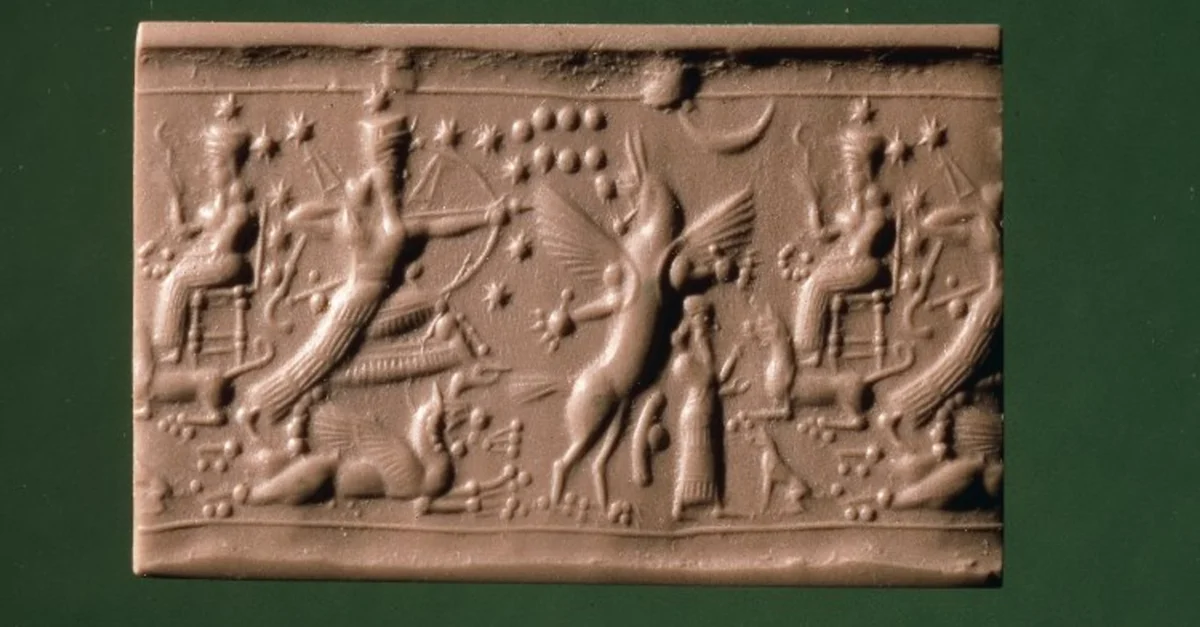
Iconographically, Ninurta is most frequently depicted as a formidable warrior, sometimes with magnificent upraised wings, armed with a bow and arrow, and wielding his legendary mace, Sharur—a sentient weapon capable of speech and reason. Babylonian art often portrays him dynamically, standing or running atop a mythical scorpion-tailed lion-beast, a testament to his raw power. Yet, remarkably, even as late as 1500 BCE, vestiges of his agricultural origins persisted, showing him as a complex individual, capable of immense feats but also prone to mortal flaws, balancing martial prowess with the nurturing aspects of growth and harvest.
Chronology: A God’s Millennia-Long Transformation
Ninurta’s journey through the Mesopotamian pantheon spans nearly three millennia, reflecting the dynamic political and cultural shifts of the ancient Near East.
- Early 3rd Millennium BCE: Ninurta’s genesis begins in Sumer as Ningirsu ("Lord of Girsu") and Pabilsag. He is primarily an agricultural deity, revered in local cults for his role in irrigation and fertility. This period predates the widespread militarization that would later redefine his character.
- Late 3rd Millennium BCE – Early 2nd Millennium BCE: The rise of powerful city-states and their escalating conflicts gradually reshaped Ninurta’s image. By the reign of Gudea of Lagash (2144-2124 BCE), a ruler famed for his piety, Ningirsu was already a prominent god, as evidenced by the Gudea Cylinders, which detail the construction of Ningirsu’s temple. By the 2nd millennium BCE, Ningirsu had firmly established himself as a god of war, a role prominently featured in early versions of The Epic of Anzu. The name "Ninurta," whose etymology remains debated but was known by circa 2600 BCE, gradually superseded Ningirsu in broader Mesopotamian consciousness, though the older name persisted in Sumerian contexts.
- Mid-2nd Millennium BCE: The "Instruction of Ninurta," the world’s first farmer’s almanac, dating between 1700 and 1500 BCE, provides crucial insight into his enduring connection to agriculture. This text, imbued with divine authority, underscores that even as his warrior aspect grew, his foundational role as a provider was not entirely forgotten.
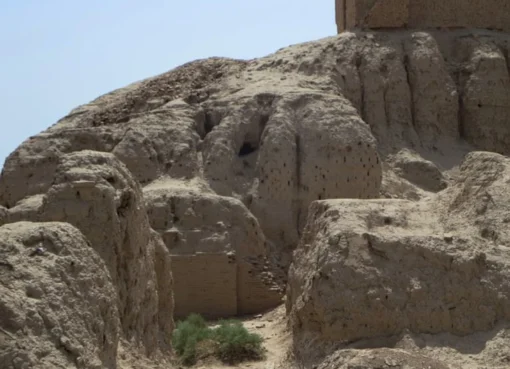
- Neo-Assyrian Empire (c. 911–612 BCE): This era marked the zenith of Ninurta’s veneration as a martial deity. The Assyrians, a highly militaristic society, adopted Ninurta as the son of their supreme national god, Assur. Kings like Tukulti-Ninurta I (1244-1208 BCE) explicitly invoked his name and power in battle, attributing their conquests to his divine favor. Ashurnasirpal II (884-859 BCE) famously dedicated his new capital city, Kalhu (modern Nimrud), to Ninurta, constructing a magnificent temple and towering ziggurat in his honor. Seals from this period even depict Assur as a winged disc with Ninurta’s name beneath, suggesting a near-equal status.
- Decline and Resurgence within Assyria: During the reign of Sargon II (722-705 BCE), Ninurta’s prestige temporarily waned as the king favored Nabu, the god of writing and wisdom. However, his successors, Esarhaddon (681-669 BCE) and Ashurbanipal (668-627 BCE), reinstated Ninurta’s prominence, frequently mentioning him in royal inscriptions and prayers.
- Fall of Empires (612 BCE): With the catastrophic collapse of the Neo-Assyrian Empire at the hands of a coalition of Medes, Babylonians, Persians, and Scythians, the great cities like Nineveh, Kalhu, and Ashur were sacked, and the statues and temples of their gods, including Ninurta, were destroyed. This marked the end of his official cult, but not his influence.
Supporting Data: Myths, Artifacts, and Sacred Texts
Ninurta’s dynamic character is best understood through the rich tapestry of Mesopotamian mythology, complemented by archaeological discoveries and ancient texts.
The Epic of Anzu: Champion of the Cosmos
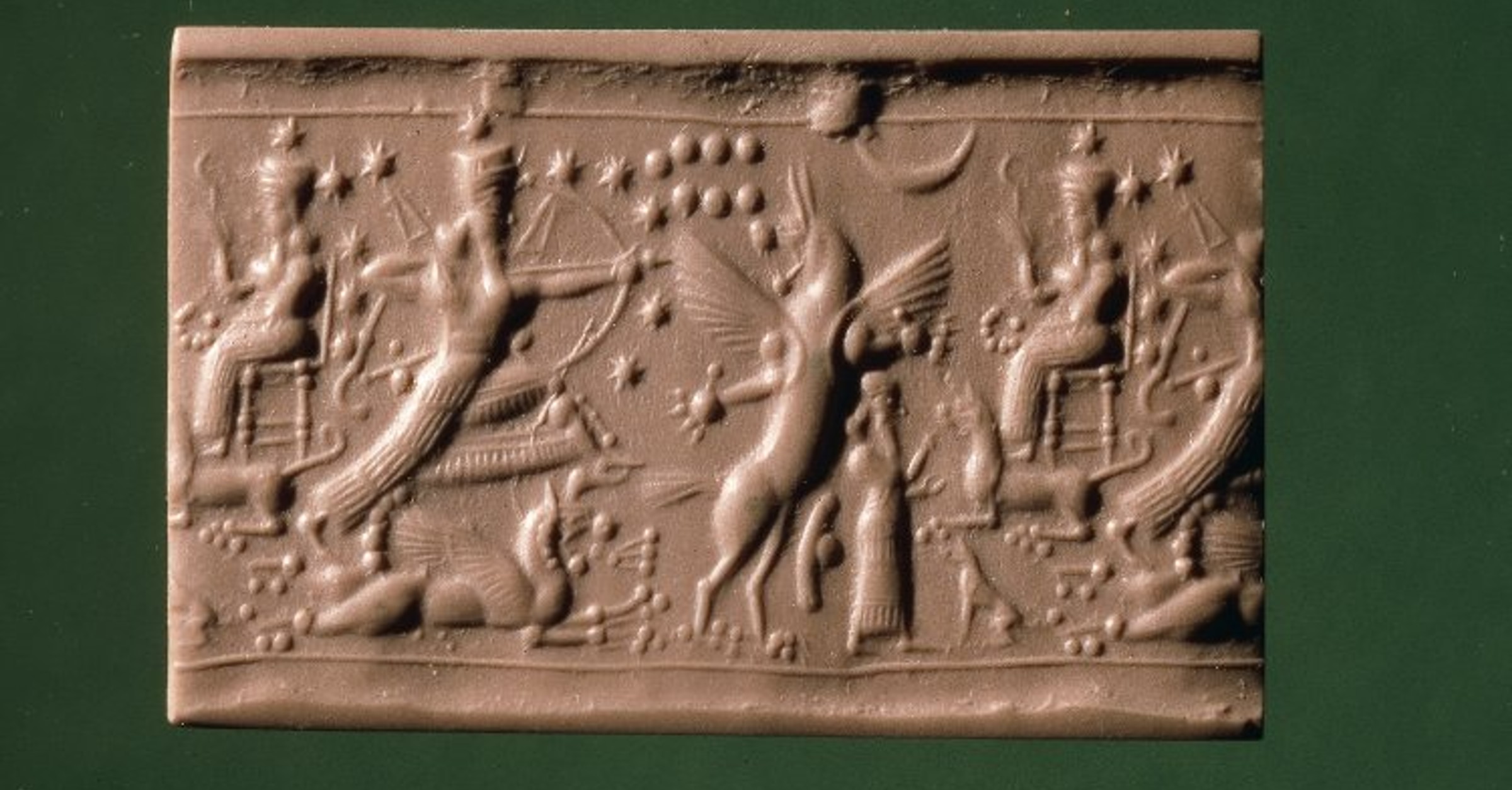
One of the most pivotal myths featuring Ninurta is The Epic of Anzu (also known as The Defeat of Zu). This epic recounts the grave crisis brought upon the gods when the monstrous Anzu bird, a divine creature of immense size, audacious and cunning, steals the Tablets of Destiny from Enlil while he is washing his face. These tablets, inscribed with the fates of both gods and mortals, represented the ultimate source of cosmic authority and legitimacy. Without them, the very order of the universe was threatened.
While other gods cowered, only Ninurta bravely stepped forward to reclaim the stolen artifacts. His pursuit of Anzu was fraught with peril. The Tablets of Destiny possessed the power to reverse causality, causing Ninurta’s arrows to disintegrate mid-flight, reverting to their raw components: cane, feathers, and stone. His bow itself transformed back into wood, and the bowstring into a sheep. Driven back, Ninurta did not despair. He invoked the mighty south wind, a force of nature under his command, which tore the Anzu bird’s wings from its body, sending it plummeting to the earth. Ninurta then decisively slit Anzu’s throat, restoring the Tablets of Destiny to Enlil and re-establishing cosmic order. This myth firmly cemented his reputation as a divine champion against chaos.
Lugale: The Exploits of Ninurta – Reshaping the World
The Sumerian poem Lugale ("The Exploits of Ninurta") further expands on his heroic deeds, showcasing his role not just as a destroyer of evil but as a creator of landscapes. Here, Ninurta confronts the monstrous demon Asag (or Agag), a personification of sickness and disease, dwelling in the underworld. The conflict is instigated by Ninurta’s own sentient mace, Sharur, which functions as a wise counselor and hype man, urging its master to battle by extolling his strength and promising an easy victory.
Ninurta, though initially daunted and described as "fleeing like a bird" before Asag’s army of rock monsters and rebellious plants, is rallied by Sharur’s encouragement, reminding him of past glories and the fame awaiting him. Ninurta unleashes his full power, wielding Sharur, his great bow, and other weapons to utterly destroy Asag and his monstrous host.
However, Asag’s defeat inadvertently unleashes a new catastrophe: the primeval waters of the underworld, previously held in check by the demon and his followers, surge forth, threatening to flood the land and render it barren. In a remarkable act of terraforming, Ninurta gathers the corpses of his enemies, piling them up to form a great wall that contains the destructive waters. He then raises these piles higher, creating a mountain to permanently seal off the underworld waters and prevent future deluges. Finally, he harnesses the waters of the River Tigris, guiding them to irrigate the land, bringing life and fertility back. The poem concludes with a vivid depiction of the restored bounty:
"Behold, now, everything on earth/Rejoiced afar at Ninurta, the king of the land/The fields produced abundant grain/The vineyard and orchard bore their fruit/The harvest was heaped up in granaries and hills/The lord made mourning to disappear from the land/he made happy the spirit of the gods." (Kramer, 152)
His mother, Ninmah ("Magnificent Queen"), descends from heaven to celebrate his victory. Ninurta dedicates the newly formed mountain of stone to her, renaming her Ninhursag ("Lady of the Mountain"). The goddess Nisaba, patron of writing, then appears to record Ninurta’s triumph and Ninhursag’s new name, underscoring the vital role of written tradition in preserving divine narratives.
The Slain Heroes: A Prototypical Hero
Another myth, The Slain Heroes, depicts Ninurta’s battles against a bizarre assortment of adversaries: the Six-Headed Wild Ram, the Palm-Tree King, the Strong Copper, the Seven-Headed Snake, and even inanimate objects like the Magillum Boat, which ferried souls to the underworld. These successive trials and victories, overcoming diverse and symbolic foes, are widely considered to be a significant precursor to the later Greek myth of Heracles’ Labors, demonstrating Ninurta’s foundational role in the archetype of the monster-slaying hero.
Ninurta and the Turtle: A Lesson in Humility
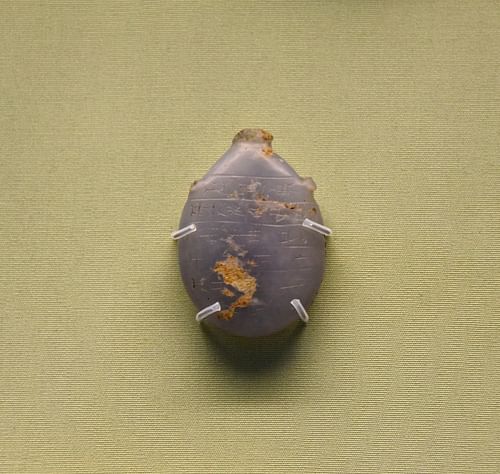
Not all of Ninurta’s tales portray him as an infallible champion. In Ninurta and the Turtle, his pride, much like that of Heracles, leads to a humbling experience. Set after his triumphs over Anzu and Asag, the story sees Ninurta being honored by Enki, the god of wisdom and waters, at his abode in Eridu. Enki praises Ninurta’s victories and his return of the Tablets of Destiny, but Ninurta, inflated by his achievements, desires even greater glory, setting his sights on "the whole world."
Perceiving his son’s hubris, Enki cunningly fashions a giant turtle and releases it behind the hero. The turtle bites and grips Ninurta’s ankle, and in their struggle, digs a colossal pit into which both fall. Enki then looks down into the pit, where the turtle gnaws on Ninurta’s feet, and mockingly asks, "You who made great claims – how will you get out now?" Though the tablet is broken, the clear intent was to humble Ninurta, forcing him to acknowledge his limitations and accept praise with gratitude rather than unending ambition.
The "Instruction of Ninurta": Divine Agricultural Wisdom
The "Instruction of Ninurta," discovered on a clay tablet dating to between 1700 and 1500 BCE, is perhaps the most unique piece of "supporting data." It is a farmer’s almanac, a practical guide to agricultural activities throughout the year. Samuel Noah Kramer highlights the sophistication of Sumerian agriculture:
"Some of the more far-reaching technological achievements of the Sumerians were connected with irrigation and agriculture. The construction of an intricate system of canals, dikes, weirs, and reservoirs demanded no little engineering skill and knowledge. Surveys and plans had to be prepared which involved the use of leveling instruments, measuring rods, drawing, and mapping. Farming, too, had become a methodical and complicated technique requiring foresight, diligence, and skill. It is not surprising, therefore, to find that the Sumerian pedagogues had compiled a ‘farmer’s almanac’ that consisted of a series of instructions to guide a farmer throughout his yearly agricultural activities." (104-105)
The text begins colloquially, "In days of yore a farmer instructed his son…," offering detailed advice on soil preparation, planting, bird deterrence, and harvesting. Yet, its conclusion reveals its true authority: "These are the instructions of Ninurta, son of Enlil. O Ninurta, trustworthy farmer of Enlil, your praise is good." By attributing this essential manual to Ninurta, his ancient agricultural role was not only acknowledged but elevated with divine imprimatur, lending immense weight and credibility to the wisdom contained within.
Official Responses: Royal Patronage and Cultic Devotion
The veneration of Ninurta transcended mere myth, becoming deeply intertwined with political power and royal legitimacy throughout Mesopotamian history.
Early Patronage: Gudea and the Foundations of Piety
Even in his earlier incarnation as Ningirsu, the god garnered significant royal patronage. Gudea of Lagash (2144-2124 BCE), a ruler renowned for his devotion, dedicated himself and his city to Ningirsu. His successor, Ur-Ningirsu, even adopted the god’s name, a common practice to signify divine favor and strengthen legitimacy. The Gudea Cylinders, two magnificent terracotta cylinders dating to circa 2125 BCE, provide the longest known Sumerian text, detailing Gudea’s dream-inspired construction of Ningirsu’s temple—a monumental act of piety that showcased the god’s central role in the city’s spiritual and civic life.
The Assyrian Imperial Cult: Ninurta as a Pillar of Power
It was the Neo-Assyrian Empire, however, that elevated Ninurta to an unparalleled position of state-sponsored reverence. The Assyrian kings, masters of military expansion, found in Ninurta the perfect embodiment of their martial ideals.
- Tukulti-Ninurta I (1244-1208 BCE): This powerful king not only adopted Ninurta’s name but explicitly credited the god with his spectacular military victories and successful reign. His very name, "My Trust is in Ninurta," was a declaration of allegiance and a claim to divine endorsement for his conquests.
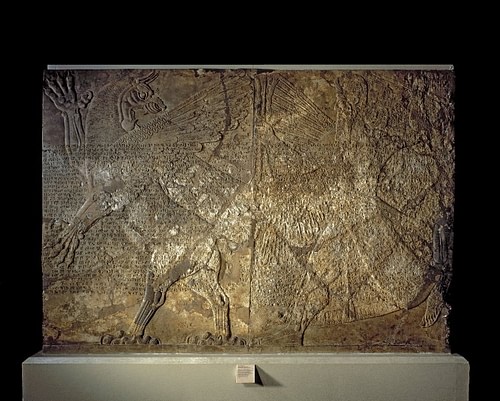
- Ashurnasirpal II (884-859 BCE): Ashurnasirpal II, a visionary and ruthless ruler, took Ninurta’s veneration to new heights. He established Kalhu (Nimrud) as his new capital, undertaking the massive project of building a grand Temple of Ninurta as his first priority. The temple walls were adorned with intricate reliefs depicting the god’s triumphs, most famously the scene of Ninurta battling the Anzu bird. This temple was not merely a place of worship but a vital social hub, offering aid to the poor, orphans, and homeless, and providing employment for laborers, thus integrating the god’s cult deeply into the fabric of daily life and governance. The accompanying towering ziggurat dedicated to Ninurta became a landmark, its fame reaching far beyond Mesopotamia’s borders.
- Other Assyrian Kings: Tiglath-Pileser I (1115-1076 BCE) and Adad Nirari II (912-891 BCE) were among many other Assyrian monarchs who honored Ninurta, invoking his name for protection and military success.
- Fluctuations in Imperial Favor: While Ninurta remained a significant deity, his standing could fluctuate with royal preference. Sargon II (722-705 BCE), for instance, built his new capital Dur-Sharrukin and favored Nabu, the god of writing and wisdom, who was also considered a son of Assur. This temporarily diminished Ninurta’s prestige. However, under Sargon’s successors, Esarhaddon (681-669 BCE) and Ashurbanipal (668-627 BCE), Ninurta was again elevated, frequently invoked in official inscriptions and prayers, reaffirming his importance to the Assyrian state. The queens of the empire continued to be buried at Kalhu, even when the capital moved, highlighting the enduring reverence for the city and its patron god.
Implications: A Lasting Influence on Culture and History
Ninurta’s story, evolution, and cult left an indelible mark on the ancient world, with implications stretching beyond the Mesopotamian empires.
The Biblical Connection: Nimrod and Calah
One of the most fascinating implications is Ninurta’s potential connection to the biblical figure of Nimrod. The Bible describes Nimrod as "a mighty hunter" and credits him with founding several cities, including Calah (Genesis 10:8-12), which is identified with Kalhu. The name "Nimrod," later corrupted to "Nimrud," became synonymous with the city of Kalhu in the 19th and 20th centuries, when archaeologists first explored its ruins.
While some scholars have speculated that Nimrod might be Tukulti-Ninurta I, this theory is largely unsupported. Ashurnasirpal II’s extensive dedication of Kalhu to Ninurta, including the construction of his grand temple and ziggurat, makes a far more compelling case for the later Hebrew scribes associating the city and its founder with the god Ninurta, whose name likely morphed into Nimrod in their traditions. This cultural transmission underscores the pervasive fame of Ninurta and his primary cult center.
Influence on Western Mythology: Heracles and the Hero Archetype
The narratives of Ninurta’s heroic deeds bear striking resemblances to the later Greek myths of Heracles (Roman Hercules). His successive trials against monstrous foes in The Slain Heroes, his triumph over cosmic chaos, and even his occasional struggles with hubris (as seen in Ninurta and the Turtle) directly parallel elements of the Heraclean cycle. This suggests a direct or indirect transmission of heroic archetypes and narrative structures from Mesopotamia to the nascent mythologies of Greece and Rome, illustrating Ninurta’s role as a foundational figure in the development of the "hero" concept in Western civilization.
Reflecting Societal Evolution: From Farmer to Fighter
Ninurta’s transformation from an agricultural deity to a war god offers a profound insight into the societies that worshipped him. His evolution mirrors the shift in Mesopotamian civilization itself—from early agrarian communities focused on survival and sustenance to increasingly urbanized and militarized empires driven by conquest and expansion. The enduring presence of his agricultural aspects, even amidst his martial glorification, speaks to a collective memory of fundamental human needs and the continuous balance between creation and destruction. He represents the ideal king: one who could secure bountiful harvests through irrigation and protect his people through military might.
The Power of Written Word and Divine Authority
The "Instruction of Ninurta" highlights the immense power attributed to writing in ancient Mesopotamia. By imbuing a practical guide with divine authority and attributing it to a powerful god like Ninurta, the Sumerians not only ensured its adherence but also underscored the sacredness of knowledge and the practical application of divine wisdom for human prosperity. Nisaba’s act of recording Ninurta’s triumph in Lugale further emphasizes the belief that writing preserved divine moments and ensured their eternal remembrance, shaping cultural values and historical understanding.
Enduring Legacy
The ultimate fall of the Neo-Assyrian Empire in 612 BCE led to the destruction of Ninurta’s temples and the cessation of his official cult. However, his influence, woven into the fabric of myth and legend, continued to resonate. Ninurta stands as a testament to the dynamic nature of ancient religious belief, a deity whose identity adapted to the changing needs and aspirations of his worshippers, leaving an enduring imprint on the narratives and cultural consciousness of subsequent civilizations. He remains a powerful symbol of a god who could both sow the seeds of life and wield the weapons of war, a complex figure perfectly suited to the turbulent yet fertile lands of ancient Mesopotamia.