Jolt Physics Leaps Forward with 5.6 Release: Introducing Advanced Hair Simulation and More
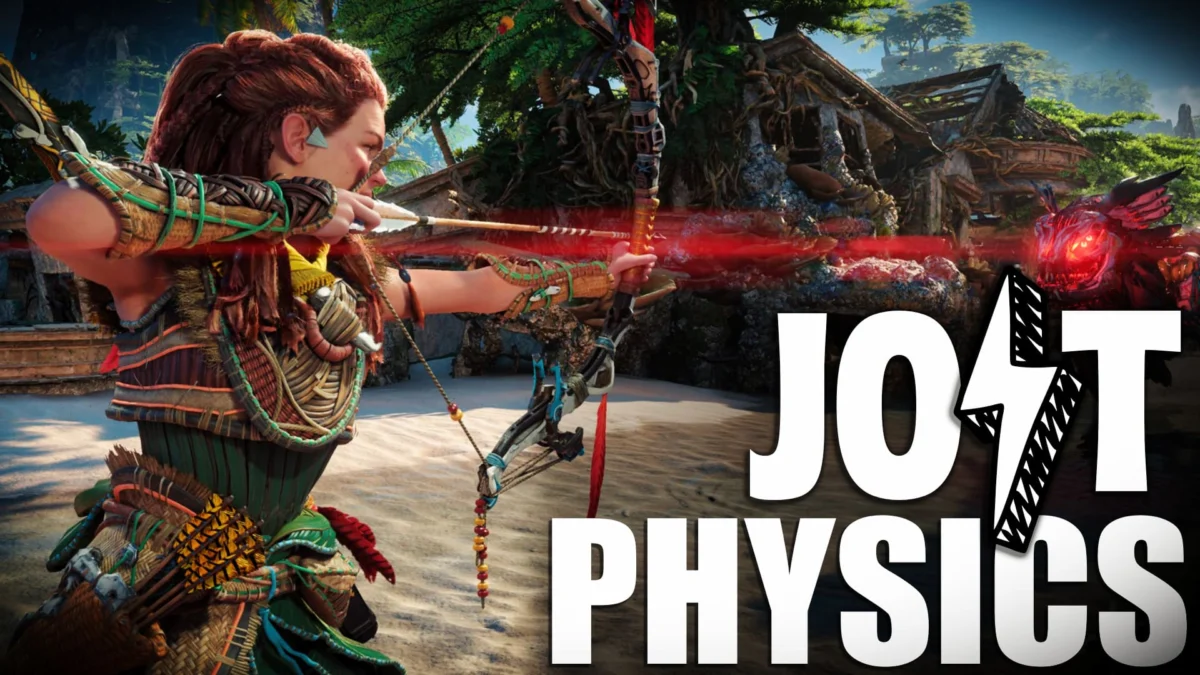
[City, State] – [Date] – In a significant stride for the world of game development and simulation, Jolt Physics has unveiled its latest iteration, version 5.6. This powerful, free, and open-source cross-platform physics engine, already a cornerstone for numerous game engines and AAA titles, introduces a raft of new features, headlined by a groundbreaking hair simulation system. The release comes hot on the heels of the recent debut of Box3D physics, signaling a dynamic period of innovation in the field.
Jolt Physics has established itself as a go-to solution for developers seeking robust and efficient physics simulations. Its adoption by prominent open-source game engines like Godot and GDevelop, alongside its integration into commercially successful AAA titles such as Horizon Forbidden West, Death Stranding 2, and X4, underscores its versatility and reliability. The 5.6 release promises to further cement Jolt’s position by enhancing its capabilities and opening new avenues for visual and interactive realism.
A Leap in Realism: The Star of the Show – Hair Simulation
The most compelling addition in Jolt Physics 5.6 is undoubtedly its new hair simulation system. This feature represents a significant advancement in achieving realistic visual effects for characters, a critical element in modern game development and visual media. Previously, achieving convincing hair dynamics often required specialized middleware or complex custom solutions, frequently leading to performance bottlenecks or limitations in artistic control.
Jolt’s new system aims to streamline this process, offering an integrated and efficient approach to simulating the intricate movement and interaction of hair strands. This not only enhances the visual fidelity of characters but also opens up possibilities for more dynamic and believable character animations. Imagine characters in a virtual world reacting to wind with natural, flowing hair, or experiencing combat with hair that dynamically moves and collides with the environment. The implications for immersion and storytelling are substantial.
While the technical specifics of the hair simulation system are detailed in the official release notes, the core innovation lies in its ability to efficiently handle a large number of interacting strands. This likely involves advanced algorithms that balance computational cost with visual accuracy, ensuring that the simulation is both performant enough for real-time applications and visually convincing. The ability to simulate the physics of individual strands, their collective behavior, and their interaction with external forces like gravity, wind, and character movement is a complex undertaking, and Jolt’s foray into this domain is a testament to its growing capabilities.
Expanding the Toolkit: Additional Enhancements in Jolt Physics 5.6
Beyond the headline-grabbing hair simulation, Jolt Physics 5.6 brings a suite of other notable improvements designed to bolster performance, expand functionality, and refine the developer experience. These enhancements collectively contribute to making Jolt an even more potent and versatile physics engine.
While specific details on every single improvement are best gleaned from the official release notes, it is common for physics engine updates to focus on several key areas:
- Performance Optimizations: Continuous refinement of core algorithms and data structures is crucial for any physics engine. Jolt 5.6 likely includes optimizations that lead to faster simulation speeds, reduced CPU usage, and improved memory management. This is particularly important for complex scenes with many rigid bodies and intricate interactions, allowing developers to push the boundaries of what’s possible without sacrificing frame rates. These optimizations could manifest in areas like broad-phase collision detection, narrow-phase collision resolution, or the solver itself.
- New Features and Functionality: The introduction of new physics primitives, constraint types, or simulation capabilities can significantly broaden the engine’s applicability. For instance, updates might include more sophisticated joint types for complex mechanical assemblies, improved character controller implementations, or enhanced support for soft body dynamics.
- API Improvements and Usability: A well-designed API is paramount for developer productivity. Jolt 5.6 may introduce cleaner, more intuitive API calls, better error handling, or improved documentation. This can make it easier for developers to integrate Jolt into their projects, debug issues, and leverage its full potential.
- Bug Fixes and Stability Enhancements: As with any software release, a significant portion of the update will undoubtedly be dedicated to addressing bugs and improving the overall stability and reliability of the engine. This ensures a more robust and predictable experience for developers, reducing the likelihood of unexpected crashes or simulation artifacts.
A Chronology of Progress: The Evolution of Jolt Physics
Jolt Physics has steadily built a reputation for excellence since its inception. Its journey from an ambitious open-source project to a widely adopted industry-standard physics engine is a compelling narrative of dedicated development and community support.
The engine’s initial focus was on providing a high-performance, multithreaded rigid body physics simulation. Early versions established a strong foundation in core physics principles, emphasizing efficiency and scalability. As the project matured, its feature set expanded, incorporating more advanced concepts and catering to a wider range of use cases.
The integration of Jolt into major open-source game engines like Godot marked a significant milestone, exposing the engine to a vast community of developers and fostering further adoption. Simultaneously, its inclusion in AAA commercial projects validated its capabilities for demanding, large-scale productions. This dual presence in both the indie and AAA sectors speaks volumes about Jolt’s adaptability and power.
The release of version 5.6, with its ambitious hair simulation system, represents a new chapter in Jolt’s evolution. It demonstrates a commitment to pushing the envelope of visual realism, a trend that is increasingly shaping player expectations in the gaming landscape. This move into more specialized simulation areas, like hair dynamics, suggests a strategic expansion of Jolt’s core competencies, moving beyond traditional rigid body mechanics to encompass more complex and nuanced physical phenomena.
Supporting Data and Community Impact
The success and continued development of Jolt Physics can be attributed to several factors, including its open-source nature, its robust performance, and the active engagement of its developer community.
- Open Source Advantage: Being open-source means Jolt benefits from a global community of developers who can contribute code, report bugs, and suggest improvements. This collaborative model often leads to faster innovation and a more resilient codebase compared to proprietary solutions. The availability of the source code also allows developers to tailor the engine to their specific needs or to gain a deeper understanding of its inner workings.
- Performance Benchmarks: While specific benchmarks for Jolt Physics 5.6 are yet to be widely published, previous versions have consistently demonstrated competitive or superior performance in various physics simulations. This emphasis on efficiency is a key selling point for developers working with resource-constrained platforms or aiming for high frame rates in complex scenes.
- Industry Adoption: The fact that Jolt is powering physics in titles like Horizon Forbidden West and Death Stranding 2 is powerful testament to its capabilities. These games represent the pinnacle of visual fidelity and interactive complexity, and their reliance on Jolt underscores its ability to meet the most stringent industry demands.
Official Responses and Developer Insights
The release of Jolt Physics 5.6 was accompanied by official announcements and, in many cases, detailed explanations from the lead developers. The primary source for in-depth information is typically the Jolt Physics GitHub repository and its associated release notes.
The announcement of the hair simulation system, in particular, has generated considerable excitement within the game development community. Developers are eager to explore its potential for creating more lifelike characters and dynamic environments. The video demonstration accompanying the release serves as a crucial tool for showcasing the system’s capabilities and providing a visual understanding of its implementation.
While direct quotes from the Jolt Physics development team regarding this specific release might not be immediately available in general news coverage, the public nature of their GitHub repository allows for a transparent view of their development process. Developers often engage in discussions on forums and issue trackers, providing insights into their design choices and future plans.
Implications for the Future of Game Development and Simulation
The release of Jolt Physics 5.6, especially with its advanced hair simulation, has several significant implications for the future of game development and other simulation-intensive fields:
- Enhanced Character Realism: The ability to simulate realistic hair movement will undoubtedly lead to more immersive and believable characters in video games, animated films, and virtual reality experiences. This can elevate the emotional impact of narratives and deepen player engagement.
- Democratization of Advanced Features: By making powerful features like hair simulation available through an open-source engine, Jolt is empowering a wider range of developers, including independent studios and individual creators, to achieve a level of visual sophistication previously only accessible to large, well-funded teams.
- New Design Possibilities: The availability of robust physics simulation for elements like hair can inspire new gameplay mechanics and environmental interactions. Imagine games where the wind plays a more significant role in gameplay, or where character appearance dynamically changes based on physical conditions.
- Cross-Industry Applications: While focused on gaming, the advancements in Jolt Physics can also find applications in other fields that require sophisticated physical simulations, such as robotics, scientific visualization, and virtual prototyping. The ability to accurately model the dynamics of complex deformable objects has broad utility.
- Continued Innovation in Physics Engines: The competitive landscape of physics engines is constantly evolving. Jolt’s proactive development, particularly in areas like hair simulation, pushes other engines to innovate and expand their own capabilities, ultimately benefiting the entire industry.
In conclusion, Jolt Physics 5.6 represents a substantial leap forward, demonstrating the engine’s ongoing commitment to pushing the boundaries of what’s possible in physics simulation. The introduction of its sophisticated hair simulation system, coupled with a range of other enhancements, positions Jolt as an even more indispensable tool for developers striving for unparalleled realism and interactivity in their creations. The open-source nature of Jolt ensures that these advancements will continue to be accessible, fostering innovation and creativity across the global development community.