
The Renaissance of the Algorithmic Brush: Jacob Holster and the Rise of Painterly AI Aesthetics
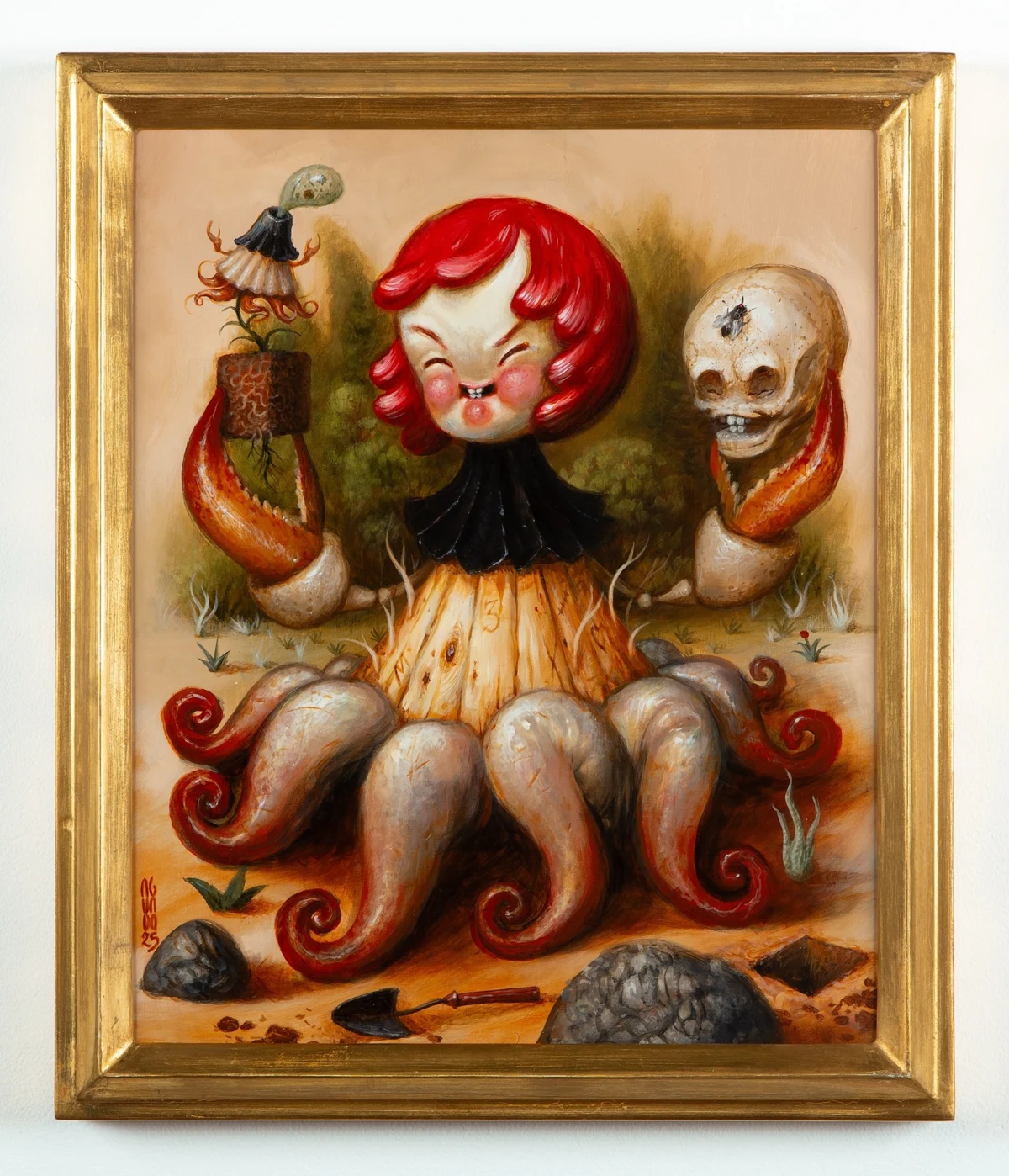
In the rapidly evolving landscape of generative media, where the prevailing trend often veers toward the hyper-realistic, the clinical, and the unnervingly "uncanny," a new movement is beginning to take root. This movement seeks to reclaim the digital space for the tactile, the textured, and the profoundly human. At the forefront of this shift is Jacob Holster—known to the digital art community as @bandyquantguy—an artist and academic whose work challenges the very definition of "artificial" in artificial intelligence.
Holster’s work serves as a refreshing counterpoint to the glossy, plasticized renders that dominate modern social media feeds. By blending his background in music education and academic research with cutting-edge generative tools, Holster has pioneered a style that bridges the gap between the 19th-century oil painting and the 21st-century neural network.
Main Facts: Defining the "Paint World" Aesthetic
Jacob Holster is not merely an "AI prompter"; he is an Assistant Teaching Professor of Music Education at Penn State University. This academic foundation is critical to understanding his output. His research examines the convergence of artificial intelligence, pedagogy, and creative practice, asking fundamental questions about how technology can enhance, rather than replace, the human impulse to create.
His most recognized project, the "Paint World" series, is an ongoing exploration of motion and texture. Unlike the high-definition, cinematic style favored by many AI filmmakers, Holster’s work—exemplified in pieces like Le Voyage [Paint World 28] and Recipe for Consciousness [Paint World 38]—features warm, vibrant colors and a visible "brushstroke" quality.
The aesthetic is characterized by:
- Tactile Texture: Visuals that evoke the physical sensation of impasto or oil-on-canvas.
- Humanistic Narrative: A focus on internal states, consciousness, and the "human terrain."
- Sonic Integration: Leveraging his musical expertise to create a holistic sensory experience where sound and image are inextricably linked.
Chronology: From Pedagogy to the Digital Canvas
The trajectory of Jacob Holster’s career reflects a broader shift in how academia views generative technology.

The Academic Foundation
Before becoming a viral presence on platforms like Instagram and YouTube, Holster’s focus was primarily on the mechanics of learning and music. At Penn State, his work involves dissecting the creative process. This background provided him with a unique vantage point: he views AI models not as "magic boxes" that produce art, but as pedagogical tools that can be "taught" to express specific artistic sensibilities.
The Emergence of @bandyquantguy
As generative AI tools like Midjourney, Runway, and Sora began to proliferate, Holster started experimenting with their limits. While the majority of users were pushing for more detail and higher resolution, Holster moved in the opposite direction. He sought the "blur," the "grain," and the "mistake"—the very elements that make traditional art feel alive. This led to the creation of his online persona, @bandyquantguy, where he began archiving his experiments under the "Paint World" banner.
The "Paint World" Evolution (2023–Present)
The series began as short, looping experiments but quickly evolved into more complex narrative structures. By early 2024, Holster’s work had gained significant traction within the "NeuroSurrealist" community—a group of artists dedicated to using AI to explore the subconscious. His short film, Art Is Human Terrain [Paint World 33], marked a turning point, showcasing a sophisticated level of control over temporal consistency and emotional resonance that few other AI artists had achieved.
Supporting Data: The Mechanics of Painterly AI
To understand why Holster’s work is significant, one must look at the technical "status quo" of AI art. Most generative models are trained on vast datasets of photography and digital art, leading to a "default" style that is often described as "soullessly perfect."
Breaking the Default
Holster’s "Paint World" series utilizes custom workflows—likely involving Stable Diffusion, ControlNet, and advanced video synthesis tools—to override these defaults. By injecting specific "noise" into the generation process and using "style transfer" techniques that prioritize texture over edge-detection, Holster achieves a visual language that feels traditional.
The Role of Music and Sound
As a Professor of Music Education, Holster understands that rhythm and frequency influence visual perception. In wait for the blue boat [Paint World 18], the pacing of the visual transformations is synchronized with the auditory landscape. This is not a secondary thought; it is a core component of his "Human Terrain" philosophy. Data from the broader AI art market suggests that multi-sensory AI experiences—those that treat audio and video as a single unit—have higher engagement and retention rates than silent or stock-music-backed clips.

Official Responses and Academic Context
The reception of Holster’s work at Penn State and within the wider academic community highlights a growing acceptance of AI as a legitimate medium for high-level research and expression.
The Penn State Perspective
At Penn State University, the integration of AI into the curriculum is a subject of intense study. Holster’s dual role as a researcher and practitioner allows the university to lead by example. His work demonstrates that AI does not have to be a "shortcut"; it can be a rigorous extension of pedagogical theory.
The "Human Terrain" Concept
In academic circles, "Human Terrain" often refers to the social, ethnographic, and cultural aspects of a population. Holster repurposes this term for his art. His official stance—reflected in his teaching and his films—is that the "terrain" of art is fundamentally human. Technology is merely the vehicle used to traverse it. This perspective has been echoed by other digital theorists who argue that the value of AI art lies not in the algorithm, but in the "curatorial intent" and "human steering" of the artist.
Implications: The Future of Post-Hyperrealism
The success of Jacob Holster’s aesthetics signals a broader shift in the digital art world. We are moving away from the "novelty phase" of AI—where the goal was simply to see what the machine could do—and into the "expressive phase," where the machine is a subservient tool to a specific vision.
1. The Death of Hyper-Realism as a Metric
For years, the "quality" of digital art was measured by how close it could get to a photograph. Holster’s work suggests that as hyper-realism becomes "cheap" (i.e., easy to generate with a single prompt), the value of art will return to the "painterly" and the "abstract." The "imperfection" of a brushstroke becomes a luxury good in a world of perfect pixels.
2. Pedagogy and the "Prompt Engineer"
Holster’s work at Penn State suggests that the future of arts education will involve a heavy focus on "algorithmic literacy." Students will need to learn how to communicate with AI models to extract specific textures and emotions. Holster is essentially writing the textbook for this new form of creative education through his visual experiments.

3. Ethical and Humanistic AI
By branding his work as "Human Terrain," Holster offers a philosophical defense against the fear of AI replacing artists. His work emphasizes that the sensibility—the warmth, the nostalgia, the choice of a specific shade of blue—is a human choice. This humanistic approach to AI provides a roadmap for how the creative industries can adopt these tools without losing their identity.
Conclusion: A New Visual Language
Jacob Holster (@bandyquantguy) has done more than just create beautiful videos; he has carved out a new aesthetic niche that honors the past while embracing the future. In the "Paint World" series, the clinical coldness of the computer is replaced by the warmth of a digital hearth.
As we look toward the future of generative media, Holster’s work stands as a testament to the fact that the most powerful thing about artificial intelligence is the "human" behind the "intelligence." Whether he is teaching the next generation of music educators at Penn State or rendering the next chapter of his "Human Terrain," Holster remains a vital voice in the conversation about what it means to be an artist in the age of the algorithm.
Where to Explore His Work:
- Instagram: @bandyquantguy
- YouTube: Jacob Holster
- Academic Profile: Penn State University, Department of Music Education


Leave a Comment