The Architect’s Defiance: George Lucas Reaffirms His Vision Amidst Decades of Star Wars Fandom Volatility
In the sprawling, often contentious history of modern cinema, few figures command as much reverence—and occasional frustration—as George Lucas. The creator of Star Wars has spent nearly half a century navigating the turbulent waters of a global fanbase that is as passionate as it is protective. In a revealing new interview, Lucas has once again doubled down on the creative philosophy that defined his tenure: a staunch refusal to cater to the whims of the audience or the sterile data of focus groups. His recent remarks not only defend the most maligned elements of the Prequel Trilogy but also serve as a pointed critique of the franchise’s current trajectory under Disney’s stewardship.
Main Facts: The "A Rabbit’s Foot" Interview and the Jar Jar Defense
The catalyst for this renewed conversation is an interview with A Rabbit’s Foot, in which George Lucas reflected on his legacy and the cyclical nature of fan backlash. Lucas was characteristically blunt regarding his distaste for corporate-driven creative decisions. "I don’t like focus groups," Lucas stated firmly. "The audience doesn’t know what they want to see."
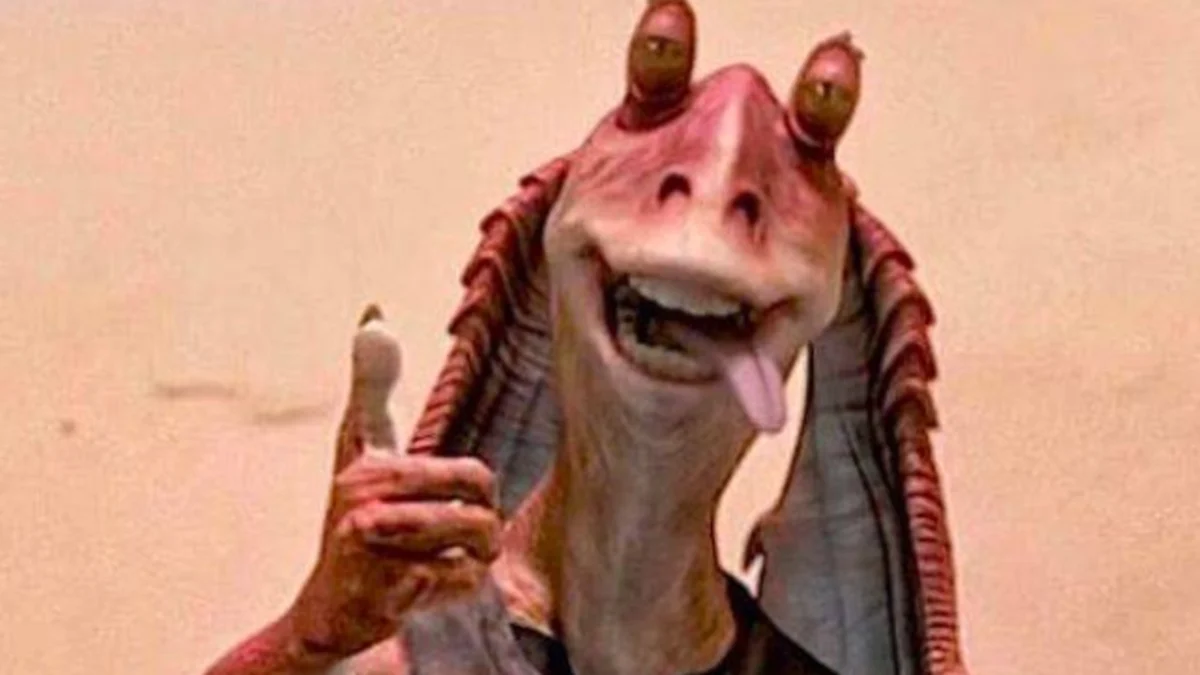
The core of Lucas’s argument rests on the 1999 release of Star Wars: Episode I – The Phantom Menace and the introduction of Jar Jar Binks. The character, a Gungan voiced and performed via motion capture by Ahmed Best, became a lightning rod for criticism. Critics and older fans at the time accused Lucas of "ruining" the franchise with a character they deemed overly juvenile and irritating.
However, Lucas notes that this pattern of rejection followed by eventual acceptance is a hallmark of the Star Wars experience. He pointed out that the very elements now considered "iconic" were once the targets of the same vitriol. According to Lucas, the critics who were children when the original trilogy debuted grew up to be the adults complaining that the prequels were "children’s films." He dismissed these complaints with a mocking imitation of the vocal minority: "Oh, that’s terrible. Jar Jar Binks is terrible!"
Lucas’s defense is rooted in a fundamental truth about his vision: Star Wars was always intended for children. By focusing on the next generation of fans rather than the nostalgia of the previous one, Lucas argued that he secured the franchise’s longevity—a strategy he believes the current leadership at Lucasfilm has struggled to replicate.
Chronology: A History of Backlash and Redemption
To understand Lucas’s perspective, one must look at the timeline of Star Wars controversies, which suggests that "fan outrage" is a tradition as old as the Force itself.
1977–1980: The Droid Dilemma
In the early days of the original trilogy, there was significant internal and external pressure regarding the droids. Lucas recalls a "huge push" to remove C-3PO or significantly alter the dynamic of the droid duo. Critics initially viewed them as distractions from the "serious" space opera elements. Today, R2-D2 and C-3PO are the literal face of the brand.
1983: The Ewok Insurgency
The release of Return of the Jedi saw the first major "adult" backlash against Lucas’s perceived "kiddie" sensibilities. The Ewoks, primitive forest dwellers who helped defeat the Empire, were dismissed as "merchandising ploys" and "teddy bears." Yet, for the children of the 80s, the Ewoks were heroes, and they remain a beloved staple of the lore for that generation.
1999–2005: The Prequel Era and Jar Jar Binks
This period marked the peak of fan toxicity. The backlash against Jar Jar Binks was not merely critical; it was personal. The intense negativity had a profound impact on actor Ahmed Best, who recently revealed in the Disney+ documentary Light & Magic that the harassment led to a period of suicidal ideation. Throughout this, Lucas remained Best’s staunchest supporter, insisting that the character would be vindicated by time.
2012–Present: The Disney Transition and the Prequel Renaissance
After selling Lucasfilm to Disney in 2012, the "Prequel Generation" came of age. The children who grew up with Jar Jar, Anakin Skywalker, and the Clone Wars took over the cultural conversation. This led to a massive re-evaluation of the prequels, culminating in the "Prequel Renaissance" that has seen actors like Hayden Christensen and Ewan McGregor return to universal acclaim.
Supporting Data: The Success of the Prequel Legacy
The data suggests that Lucas’s "children-first" strategy paid off in terms of brand endurance. While the initial critical reception of the prequels was mixed, their long-term impact has been the primary engine for Star Wars content for the last decade.
- The Clone Wars Factor: The animated series Star Wars: The Clone Wars, which heavily featured prequel-era characters and politics, became one of the most successful animated shows in history. It bridged the gap between the films and solidified the prequel era as the foundation for modern Star Wars storytelling.
- Ahmed Best’s Redemption: In The Mandalorian Season 3 (2023), Ahmed Best returned to the franchise not as Jar Jar, but as Jedi Master Kelleran Beq. The response was overwhelmingly positive, with fans celebrating his return in a "redemption arc" that mirrored the fandom’s own maturation.
- Market Shifts: The "Prequel Renaissance" has translated into massive merchandise and streaming success. Characters like Ahsoka Tano (introduced in the prequel-era animation) now lead their own live-action series, proving that the foundation Lucas built—despite the 1999 backlash—is what currently sustains the Disney+ ecosystem.
Official Responses and Creative Friction
Lucas’s recent comments also highlight a long-standing friction between his creative philosophy and Disney’s corporate approach. Lucas famously referred to the Disney-era leadership as "white slavers" in a 2015 interview (a comment he later apologized for), but his underlying criticism remained: Disney was playing it too safe.
Lucas criticized The Force Awakens (2015) for its heavy reliance on nostalgia, noting that it didn’t "dare to do anything new." When Lucasfilm did attempt a bold departure with Rian Johnson’s The Last Jedi (2017), the resulting fan backlash caused the studio to pivot sharply. The subsequent film, The Rise of Skywalker (2019), was widely viewed as a frantic attempt to appease every segment of the audience—a "creative by committee" approach that Lucas explicitly despises.
While Lucasfilm President Kathleen Kennedy has frequently spoken about the "balancing act" of honoring the past while moving forward, Lucas’s interview suggests he views "balancing" as a form of creative cowardice. To Lucas, the filmmaker’s job is to lead the audience, not follow them.
Implications: The Future of Star Wars and the 50th Anniversary
As Star Wars approaches its 50th anniversary in 2027, the franchise stands at a crossroads. The recent box office performance and the "diminishing returns" of nostalgia—as seen in the fluctuating interest in some Disney+ spin-offs—suggest that the audience may finally be weary of looking backward.
The "Relaunch" and Shawn Levy’s Starfighter
The industry is looking toward Shawn Levy’s upcoming Starfighter project (and other films in development) as a potential "relaunch" for the franchise. The implication of Lucas’s advice is clear: for these films to succeed, they must stop catering to the 40-year-old fan’s desire for "adult" grit and instead capture the imagination of a new generation of ten-year-olds.
The Lesson of the "Master"
The legacy of Jar Jar Binks serves as a cautionary tale for modern studios. Had Lucas listened to the focus groups in 1999, he might have erased the very elements that a whole generation of fans now holds dear. By sticking to his vision, he created a multi-generational bridge.
The current leadership at Lucasfilm faces a choice. They can continue to pivot based on social media sentiment and "nostalgia-bait," or they can embrace the Lucas doctrine: trust the filmmaker, ignore the focus groups, and understand that Star Wars is, at its heart, a myth for the next generation.
Conclusion
George Lucas’s mockery of his critics 27 years later is more than just a "told-you-so" moment; it is a fundamental statement on the nature of art in a franchise-dominated world. While the prequels may not have been the films older fans expected in 1999, they provided the "launchpad" for the modern era of the saga. As the franchise looks toward its next 50 years, the creator’s defiant stance serves as a reminder that the most enduring stories are rarely the ones that give the audience exactly what they think they want. In the galaxy far, far away, it seems the "maker" still has the final word.