Charting the Uncharted: Helen Scales Dives Deep into the Future of Our Oceans
Main Facts
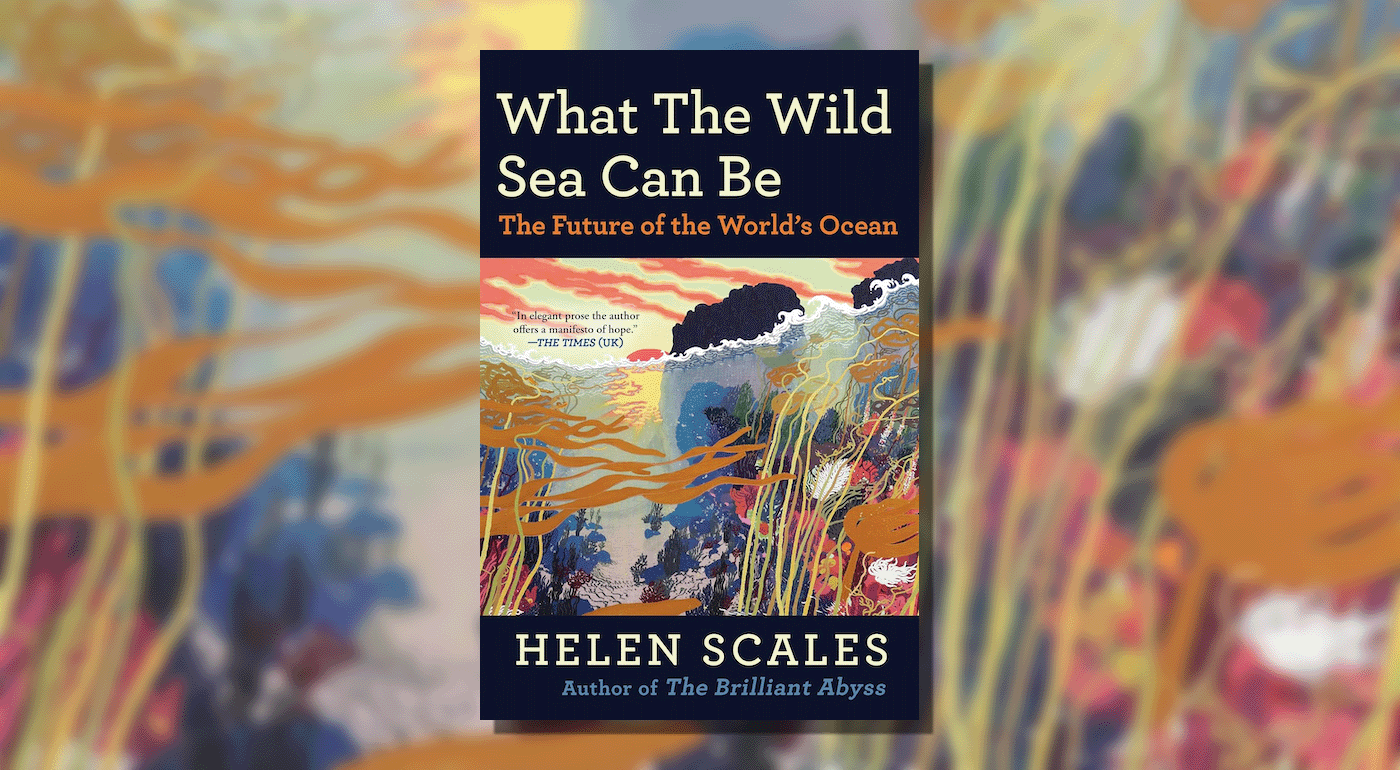
In a compelling exploration of marine ecosystems and their precarious future, Dr. Helen Scales’ latest book, What the Wild Sea Can Be: The Future of the World’s Oceans, offers a critical examination of humanity’s impact on the deep blue. Reviewed recently by the "Seeds of Story" column on Reactor Magazine, a platform dedicated to identifying non-fiction inspirations for speculative fiction, Scales’ work is lauded as an essential resource for understanding the complex interplay between climate change, pollution, overfishing, and emerging solutions. The book serves as both a sobering census of current climate impacts and an optimistic speculation on the restorative potential of concerted conservation efforts, providing fertile ground for imaginative narratives about our planet’s watery future.
Scales, a distinguished marine biologist and nature writer, extends her expertise beyond individual species or habitats to dissect the multifaceted human pressures on the global ocean. Each chapter meticulously details a specific human impact, elucidating the intrinsic value and vulnerability of the affected marine systems, alongside ongoing efforts to mitigate harm. The book’s comprehensive approach, spanning from the ocean’s deep geological past to speculative technological futures, underscores a central, urgent message: the future of the wild sea is not predetermined but lies in the choices we make today.
The Ocean’s Shifting Tides: Helen Scales Explores the Future of Our Seas
A Comprehensive Census of Change
Dr. Helen Scales, with a career rooted in marine biology, translates her scientific acumen into accessible and engaging nature writing. Her previous works have delved into the fascinating lives of seahorses, seashells, and deep-sea creatures. In What the Wild Sea Can Be, Scales casts a wider net, focusing on humanity’s systemic impacts on the ocean. The book’s structure is designed to guide readers through the intricate web of marine life, the threats it faces, and the innovative solutions being developed. For each challenge, Scales provides a foundational understanding of the ecosystem, its ecological significance, the specific dangers it confronts, and the conservation initiatives striving to protect it.
Echoes of Deep History
Scales masterfully sets the stage by anchoring her discussion in the ocean’s vast geological history. She reminds us that Earth’s aquatic environments have undergone dramatic transformations over aeons, long before human influence. A vivid example is the flourishing of twenty-five thousand species of trilobites during the Cambrian and Ordovician periods. These ancient arthropods thrived, utilizing the influx of eroding land minerals to construct robust exoskeletons and crystalline eyes. Their eventual demise, culminating in the end-Permian extinction, was foreshadowed by millennia of vulnerability due to ice age cooling and the loss of shallow inland seas, long before the advent of predatory fish. This historical perspective is crucial, serving a dual purpose: it highlights the ocean’s inherent dynamism and resilience to natural change, while also delivering a stark warning about the dramatic and often irreversible collapse of once-robust ecosystems, even without direct human intervention. This chronological sweep provides a vital context for understanding the unprecedented scale and speed of current anthropogenic changes.
Anthropocene Assaults: Threats to Marine Ecosystems
Climate Change and Displaced Life
The Anthropocene era has introduced a new magnitude of threats to the global ocean, primarily driven by climate change. Rising atmospheric carbon dioxide levels are warming the waters and increasing their acidity, forcing marine species to abandon their traditional habitats in search of more hospitable conditions. This displacement, however, is not a simple relocation of entire ecosystems. Scales meticulously explains the ecological complexities: there is no guarantee that a species will migrate alongside its essential food sources, or find adequate shelter and protection from predators in new territories. This ecological mismatch creates cascading failures throughout marine food webs, leading to significant biodiversity loss and ecosystem destabilization. The intricate balance refined over millions of years is rapidly unraveling under the pressure of global climate shifts.
The Silent Scourge of Pollution
Beyond thermal and chemical shifts, the ocean grapples with a deluge of pollution, most notably microplastics and persistent organic pollutants. These contaminants infiltrate marine food chains, interfering with growth, health, and fertility across species. Scales provides a poignant example with orcas, which face severe reproductive challenges. As apex predators, orcas accumulate pollutants from their prey, a process known as bioaccumulation. These harmful chemicals are then further concentrated in their massive blubber layers, which, while essential for insulation and energy storage, become repositories for toxins. This combination renders them highly vulnerable. Scales also clarifies a common misconception regarding plastic pollution: despite public focus on items like plastic straws, a staggering 80% of ocean plastics originate from land-based sources, emphasizing the need for comprehensive waste management strategies rather than isolated bans.
Overfishing: A Technological Tide
The relentless pursuit of seafood by humanity constitutes another profound stressor on oceanic ecosystems. Scales argues that the problem extends beyond the sheer volume of fish consumed; it is exacerbated by technologically advanced hunting methods. Industrial fishing techniques, such as longlines stretching for miles with thousands of baited hooks, dramatically increase the speed and quantity of catch while simultaneously contributing to high levels of "bycatch" – the incidental capture of non-target marine fauna, including endangered species. Furthermore, destructive practices like bottom trawling involve dragging heavy nets across the seafloor, devastating delicate habitats like coral gardens and seamounts, and releasing sequestered carbon. Many of these methods also inadvertently contribute to microplastic pollution through the degradation of fishing gear. The technological arms race in fishing has pushed many species to the brink, fundamentally altering marine biodiversity and productivity.
Charting a Course for Recovery: Solutions and Controversies
Rewilding and Restoration
Despite the formidable challenges, Scales highlights numerous promising solutions and areas of hope. Some interventions require broad, systemic change, such as banning single-use plastics or transitioning from fossil-fuel-based plastics to biodegradable alternatives. Others are more targeted and localized, demonstrating immediate and significant benefits. The rewilding of sea otters, for instance, has dramatically revitalized coastal kelp forests. Historically decimated by overhunting in the 20th century, sea otter populations play a crucial role in controlling sea urchin populations. Unchecked urchins can decimate young kelp, thereby destroying vital habitats for a diverse array of marine life, including sea dragons, giant cuttlefish, sea hares, and wobbegong sharks. The burgeoning kelp forests, in turn, offer protection to otters from sharks expanding their territories in warming waters and act as a natural barrier against otter migration. Beyond biodiversity benefits, kelp forests are powerful carbon sinks, drawing down an estimated 18 megatons of CO2 annually, and effectively absorbing nutrient runoff that otherwise fuels harmful algal blooms and mass die-offs.
The Promise and Peril of Marine Reserves
Scales also champions the establishment and, critically, the stringent enforcement of fishery reserves. She cautions against "paper parks"—ostensible oases where illegal fishing can paradoxically be higher than in unregulated waters, a phenomenon epitomized by the ironic nickname for the International Convention for the Conservation of Atlantic Tunas: "the International Conspiracy to Catch All Tunas." However, Scales also points to significant successes, such as the recovery of the bluefin tuna fishery due to sufficiently strong controls. In well-managed "no-take" marine reserves, fish populations recover and thrive, often with positive spillover effects into adjacent fishing grounds, proving that effective conservation can also support sustainable livelihoods.
Emerging Frontiers: High-Tech Solutions and Ethical Debates
The book concludes by delving into emerging controversies, bold proposals, and areas ripe for wild speculation. The growing demand for batteries has spurred interest in deep-sea mining of polymetallic nodules, igniting fierce debates over the massive ecosystem disruption such operations would cause. Counteracting this, innovative companies are developing saline-based batteries that bypass the need for these deep-sea metals entirely. Efforts to clean up the Great Pacific Garbage Patch face challenges akin to fishing technologies, risking significant bycatch. A shift towards aquaculture for food security is observed, yet it raises concerns about the over-harvesting of krill to feed farmed fish.
Scales also explores intriguing, if sometimes controversial, last-ditch compromises: the creation of "coral libraries" where fragments of heat-tolerant corals are stored in climate-controlled repositories, awaiting cooler seas. Dubious possibilities, though potentially transformative, include blockchain-based tracking for seafood sustainability, AI-based tailored reef restoration, and lab-grown fish meat—currently prohibitively expensive and energy-intensive. Amidst these high-tech gambles, Scales reminds readers of obvious wins, such as the restoration and management of coastal wetlands, which offer crucial ecosystem services like storm protection and nurseries for marine life. The overarching message is clear: if we confront these problems seriously and embrace diverse solutions, the future of the sea, though uncertain, holds many possibilities for a truly wild recovery.
A Critic’s Compass: Navigating Perspectives and Omissions
While Scales’ book is undeniably informative and engaging, the reviewer from "Seeds of Story" offers several critical observations, particularly regarding its philosophical underpinnings and omissions.
Beyond Human-Centric Views
The reviewer notes that for a book with "wild" in its title, What the Wild Sea Can Be sometimes falls short of truly embracing a non-human-centric perspective. Scales advocates for fishing treaties that value species for their intrinsic worth, yet the reviewer points out the absence of discussion on the "Rights of Nature" movement. This legal framework, which grants ecosystems and species legal personhood, could provide robust mechanisms for treaties to genuinely incorporate non-human perspectives. The book, in its focus on mitigating human harm, implicitly maintains a separation between humans and nature, rather than exploring a more integrated coexistence, as seen in Robert Macfarlane’s Is a River Alive? This limitation is particularly evident in the discussion of no-take reserves, where the suggestion of a long-term, natural human role in these ecosystems, beyond mere mitigation, is conspicuously absent. The underlying sentiment seems to be that while humans can work to reduce their negative impact, it would have been preferable if they were never involved at all.
The Unsung Wisdom of Indigenous Knowledge
A more significant critique highlights the book’s treatment of Indigenous relationships with the ocean. While Scales respectfully uses Indigenous place names and quotes Indigenous activists at the periphery of international treaties, the reviewer argues that the book almost entirely overlooks the pivotal role Indigenous knowledge could play in ocean preservation. Beyond a passing mention of the Siuslaw people’s kinship with otters or an Aotearoan no-take zone inspiring a Scottish counterpart, there’s a lack of deep engagement with traditional fishing techniques, their proven effects on ecosystem health (à la Robin Wall Kimmerer’s Braiding Sweetgrass), or the potential problems arising from excluding Indigenous communities from their ancestral ocean-tending grounds. Basic examples of how ancient wisdom meets modern science in marine conservation are readily available, making this omission a missed opportunity to present a more holistic and culturally rich vision for ocean stewardship.
Furthermore, the reviewer notes the surprising absence of any mention of Elinor Ostrom, the Nobel laureate who famously disproved the "tragedy of the commons" theory. Ostrom’s groundbreaking research on effective common-pool resource management, including fisheries, offers invaluable insights into how communities can sustainably govern shared resources, a perspective highly relevant to the book’s themes of cooperative conservation and enforcement.
Despite these frustrations, the book remains a treasure trove of fascinating information. The reviewer learned about tiger and great white sharks venturing to Cape Cod, the invasive lionfish appearing on menus, the breeding of heat-tolerant coral, the plight of orcas, and even cetaceans ramming yachts. Scales introduces readers to mass radiations (the opposite of extinctions!), the terrifying "Aristotle’s lanterns" of urchins, and the sparkling "Elvis worms." Crucially, Scales conveys a profound understanding that meaningful change requires the involvement of all community members—fishers, divers, scientists—and that durable agreements necessitate accounting for everyone’s needs.
Seeds of Speculation: Inspiring Future Narratives
For writers of speculative fiction, What the Wild Sea Can Be offers a fertile ground of ideas, pushing beyond conventional tropes and encouraging imaginative leaps.
Redefining Alien Life: Lessons from the Deep
The book’s rich descriptions of marine biology provide an unparalleled source for conceptualizing non-humanoid aliens, moving beyond the familiar "cat-girl" or anthropomorphic animal archetypes. Imagine, for instance, a species modeled after a sand tiger shark, grappling with the fraught relationship with a twin and the ghostly presence of siblings cannibalized before birth. Or consider a civilization built around the equivalents of deep-sea hydrothermal vents, where life congregates around rare, hazardous hubs, echoing the distribution of stars in a galaxy. The ocean’s bizarre and diverse inhabitants—from the luminous to the crushing-depth dwellers—offer endless possibilities. We already have "space whales"; Scales’ work inspires the creation of "space octopuses," "space otters," and even "space coral," each bringing unique biologies, psychologies, and societal structures to alien narratives. The reviewer’s own creative work, involving "uplifted octopodes" minimizing harm from polymetallic nodule mines, is a direct offshoot of this inspiration.
Dynamic Futures: New Roles in Ocean Stewardship
Scales’ insights into the challenges of marine reserves offer potent narrative opportunities. The ocean’s fluidity means boundaries are constantly shifting, habitats changing, and species migrating. This necessitates "responsive" reserves with regulations that adapt in real time. Such a future opens up a wealth of fascinating new jobs and dramatic storylines: individuals tasked with tracking ecological changes, predicting species movements, and redirecting threats in real time. This could involve mundane tasks like advising ships to alter course to protect whales, or more direct—and potentially dramatic—confrontations with illegal activities or emerging environmental crises.
Furthermore, Scales’ call for a "techno-centric transformation on par with the industrialization of agriculture" for reef restoration presents another compelling seed. While the reviewer expresses skepticism about near-term robotics achieving the precision needed to replant delicate coral polyps without damage, this very challenge sparks imaginative inquiry. What would such a future look like? Could advanced AI, bio-engineering, or perhaps even sentient, "uplifted octopuses" be the key to large-scale, intricate reef restoration? These scenarios offer rich potential for stories exploring technological innovation, ecological ethics, and the evolving relationship between humanity and the wild sea.
Further Depths: A Guide to Aquatic Exploration
For those inspired to delve deeper into oceanic themes, a cornucopia of non-fiction and fiction awaits:
-
Non-Fiction:
- Elliot Rappaport’s Reading the Glass: A Captain’s View of Weather, Water, and Life on Ships: A blend of maritime adventure and meteorological explanation.
- Sy Montgomery’s The Soul of an Octopus: A Surprising Exploration into the Wonder of Consciousness: A profound dive into the intelligence and sentience of octopuses, a direct inspiration for the reviewer’s "uplifted octopodes."
- Elizabeth Kolbert’s Under a White Sky: The Nature of the Future: An essential read for brainstorming the complex tradeoffs inherent in geoengineering.
- Warren Belasco’s Meals to Come: A History of the Future of Food: Explores the future of seafood consumption and production, from ocean to table.
-
Fiction:
- James Cambias’ A Darkling Sea: Features a compelling alien seafloor vent ecosystem, rich in imaginative biology.
- Shelby Van Pelt’s Remarkably Bright Creatures and Ray Nayler’s The Mountain in the Sea: Both explore the fascinating concept of sapient octopuses.
- Diane Duane’s Deep Wizardry: Notable for its excellent portrayal of a shark character within a magical narrative.
- Nnedi Okorafor’s Lagoon: Begins with a swordfish’s perspective and evolves into a wonderfully weird and awesome alien encounter.
- Mira Grant’s Rolling in the Deep and Into the Drowning Deep: Both works demonstrate a deep appreciation for marine biology, particularly when that biology is trying to eat you.
The boundless depths of the ocean continue to inspire wonder, fear, and urgent calls to action. Helen Scales’ What the Wild Sea Can Be is a powerful testament to this enduring fascination, offering both a clear-eyed assessment of the challenges and a hopeful vision for the future. By engaging with such works, both scientists and storytellers can contribute to a deeper understanding and a more imaginative stewardship of our planet’s most vital resource.
Share your own aquatic story recommendations in the comments!