Mahershala Ali Confirms Definitive Exit from Marvel’s Troubled ‘Blade’ Reboot, Signaling a Major Setback for the MCU
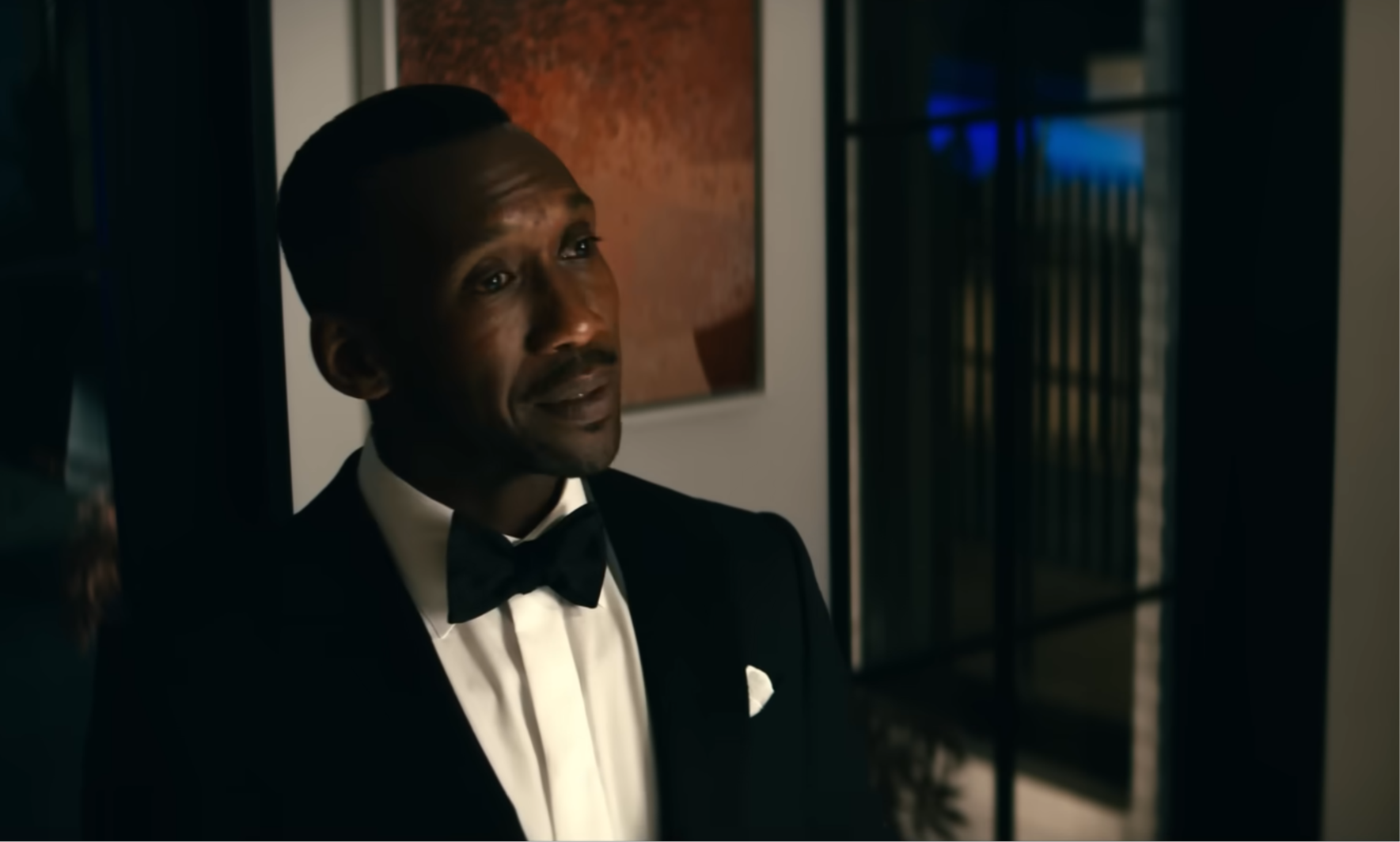
Hollywood, CA – In a candid and unequivocal statement, Academy Award-winning actor Mahershala Ali has confirmed his departure from Marvel Studios’ long-troubled Blade reboot, effectively ending a five-year association with the project that has been plagued by creative turbulence and production delays. Ali’s announcement, made during a recent interview, casts a significant shadow over the future of the Daywalker in the Marvel Cinematic Universe and underscores the escalating challenges faced by the comic giant in bringing its highly anticipated properties to the screen.
Ali’s definitive exit follows years of speculation and reports of behind-the-scenes turmoil, marking a poignant moment for a film once hailed as a cornerstone of Marvel’s Phase Five. His departure, openly articulated and seemingly without lingering sentiment, forces Marvel Studios to re-evaluate its approach to a character deeply embedded in superhero lore and leaves fans questioning the fate of one of its most enigmatic heroes.
The Actor’s Candid Confession
The revelation came during an interview with Derek Lawrence for GQ, where Ali was directly questioned about the progress of the Blade project. His response was stark and unambiguous: "Not with me."
Ali elaborated on his decision, stating, "For whatever reason, that project is not for me. If they wanted to do it, we would’ve done it. So I have to move on, and I have moved on." His words convey a sense of finality and a clear demarcation from a project that has lingered in development hell. The actor, known for his discerning choice of roles and commitment to artistic integrity, also expressed a clear desire to put the Blade questions behind him, effectively redirecting the burden of explanation back to Marvel Studios. "I feel ready to move on from the Blade questions. Those questions are for them. They didn’t want to do it, so they should answer that question."
This frankness from a typically reserved performer speaks volumes about the extent of the issues that have beset the Blade production. It suggests a prolonged period of stagnation and potentially unresolvable creative differences that ultimately led to Ali deciding that his time and talent were better served elsewhere. For an actor of Ali’s caliber, whose resume boasts critically acclaimed performances in projects like Moonlight, Green Book, and True Detective, walking away from a high-profile Marvel role is a significant move, indicative of fundamental problems that could not be reconciled.
A Troubled Chronology: Blade’s Perilous Path
The journey of Marvel’s Blade reboot, with Mahershala Ali at its helm, has been a saga of dashed hopes and persistent roadblocks, serving as a stark illustration of the complexities inherent in modern blockbuster filmmaking, particularly within a sprawling cinematic universe.
The Grand Announcement
The initial announcement of Mahershala Ali as Blade at San Diego Comic-Con in 2019 was met with rapturous applause and overwhelming excitement. It was a moment of triumph for Marvel, signaling a bold new direction for the character first popularized on screen by Wesley Snipes. Ali’s casting was universally praised, seen as a prestige pick that would bring gravitas and a fresh perspective to the vampire hunter. His presence alone seemed to guarantee a sophisticated, gritty take on the Daywalker, promising to elevate the character beyond its previous iterations. Fans envisioned Ali, with his intense gaze and commanding presence, perfectly embodying the stoic, conflicted hero.
A Glimmer of Hope: The Eternals Cameo
Anticipation was further stoked when Ali made a voice-only cameo at the end of 2021’s Eternals, speaking to Kit Harington’s Dane Whitman (Black Knight). This subtle yet impactful introduction served as an official integration of Blade into the MCU, hinting at his imminent live-action debut and setting the stage for future supernatural narratives. However, what was meant to be a tantalizing preview ultimately became the sole extent of Ali’s involvement in the Blade universe, a fact that now, in retrospect, feels increasingly ironic and melancholic.
The Revolving Door of Talent
The subsequent years saw the Blade project descend into a cycle of creative flux. The search for a coherent vision proved elusive, leading to a constant rotation of writers and directors, each bringing their own perspectives only to ultimately depart.
- Stacy Osei-Kuffour was initially tapped to pen the script, signaling a potential new voice for the character.
- Bassam Tariq, known for his indie film Mogul Mowgli, was announced as the first director. His attachment sparked hope for a unique, character-driven approach. However, Tariq eventually left the project in September 2022, reportedly due to scheduling conflicts, though creative differences were widely rumored.
- Following Tariq’s exit, a search for a new director led to Yann Demange, acclaimed for his work on Lovecraft Country and ’71. Demange joined the project in November 2022, bringing a fresh wave of optimism. Yet, in May 2024, news broke that Demange had also parted ways with the film, marking another significant setback.
Beyond these directorial changes, reports indicated a parade of screenwriters attempting to crack the Blade narrative. Names such as Justin Jordan, Michael Starrbury, Nic Pizzolatto (creator of True Detective, which notably starred Ali), and Eric Pearson were all reported at various stages to have taken a pass at the script. This constant retooling of the screenplay, without a consistent directorial vision to anchor it, likely contributed to the project’s inability to gain momentum. Sources close to the production suggested that multiple drafts struggled to find the right balance between horror, action, and the character’s unique place within the MCU’s broader supernatural landscape.
Behind-the-Scenes Struggles
The challenges extended beyond just creative talent. In a telling anecdote from 2023, Variety reported that period-appropriate costumes originally intended for Blade were purchased by the production of another film, Sinners. This unusual transaction suggested that Blade‘s production was far from imminent and that prepared assets were being repurposed, a clear indicator of stalled progress and uncertainty. The film’s removal from Marvel’s 2024 release schedule cemented its precarious status, leaving its future indeterminate. The constant delays, coupled with reports of a script that was reportedly as short as 90 pages with minimal action sequences, painted a picture of a project struggling to define itself.
Supporting Data and Context: The MCU’s Shifting Landscape
The unraveling of the Blade reboot with Mahershala Ali cannot be viewed in isolation. It reflects broader trends and challenges confronting the Marvel Cinematic Universe in its post-Infinity Saga era.
Marvel’s Phase 4/5 Challenges
Since the monumental success of Avengers: Endgame, the MCU has entered a period of experimentation and expansion, but also one marked by increasing scrutiny and mixed critical reception. Films like Ant-Man and the Wasp: Quantumania and The Marvels underperformed at the box office and received lukewarm reviews, prompting questions about "superhero fatigue" and the quality control within Marvel’s prolific output. The rapid pace of content creation across films and Disney+ series has sometimes led to accusations of rushed productions and diluted storytelling. The Blade saga, with its prolonged development issues, fits into this narrative of a franchise grappling with how to maintain its creative edge and audience engagement.
The Weight of Expectations
The character of Blade carries a significant legacy. Wesley Snipes’ portrayal in the late 90s and early 2000s cemented him as a formidable cinematic hero, a rarity for comic book adaptations of that era. Any new iteration, especially within the MCU, faces the immense pressure of honoring that legacy while simultaneously forging a new path. Mahershala Ali, with his dramatic chops, was seen as the ideal choice to navigate this challenge, offering a more nuanced, perhaps darker, interpretation. The inability to move forward with him suggests that the internal struggle to define this new Blade was perhaps too great, failing to meet the high expectations placed upon it by both the studio and the fans.
The "Soft Reboot" Dilemma
Marvel has also been navigating the complex task of introducing characters and concepts that existed outside the main MCU continuity, or refreshing existing ones. The multiverse saga has opened doors for "soft reboots" and alternate versions of heroes. However, the Blade project was meant to be a fresh start within the existing MCU framework, directly integrating a horror element that has been slowly seeping into the franchise. The continuous delays may indicate a struggle to organically weave Blade’s dark, R-rated potential into the largely family-friendly MCU, or to establish a consistent tone that satisfied all stakeholders.
Budgetary and Production Realities
The sheer scale of Marvel productions means that delays carry significant financial implications. Reshoots, extended pre-production, and the constant rewriting of scripts lead to ballooning budgets and scheduling nightmares. The "Sinners" costume anecdote is a small but telling detail about how a project’s inertia can have tangible, costly consequences. The removal from the release schedule indicates a pause to reassess, a luxury that only a studio of Marvel’s immense resources can afford, but one that still signals deeper structural issues.
Official Responses and Accountability
While Mahershala Ali has been remarkably direct in his statements, Marvel Studios has maintained a more guarded public posture regarding the Blade situation, though key figures have acknowledged the difficulties.
Kevin Feige’s Admission
Earlier this month, Marvel Studios boss Kevin Feige offered a rare glimpse into the studio’s internal sentiment during an appearance on the Happy Sad Confused podcast. He openly confessed, "I am feeling like a gigantic loser and failure that we didn’t get off the ground with Mahershala." This unusually candid admission from the notoriously optimistic and strategic Feige highlights the depth of disappointment and frustration within Marvel over the failure to launch Blade with Ali. It suggests genuine regret over the lost opportunity and perhaps an acknowledgment of the internal missteps that led to this outcome. Feige’s choice of words indicates a personal investment in Ali’s casting and a recognition of the significant talent that was unable to be utilized.
Silence from Marvel
Beyond Feige’s statement, Marvel Studios has largely remained silent on the specifics of Blade‘s creative woes or Ali’s departure. This lack of detailed explanation is typical of the studio, which prefers to control narratives and present a united front. However, in this instance, the silence only amplifies the perception of deep-seated issues that the studio is unwilling or unable to publicly address. It leaves fans and industry observers to speculate about the exact nature of the creative clashes, the script problems, and the logistical hurdles that ultimately proved insurmountable for Ali’s involvement.
Industry Perspectives
Industry analysts and journalists often point to a confluence of factors when major projects collapse in Hollywood. Creative differences between a director, writer, and studio are common, but when compounded by high expectations and the demands of a shared universe, they can become intractable. The struggle to balance a director’s unique vision with the overarching MCU narrative, coupled with the pressure to deliver a compelling script that justifies a substantial budget, often leads to stalemates. For a character like Blade, whose essence is rooted in mature, dark themes, finding a suitable tone that resonates with Marvel’s established brand while satisfying the artistic inclinations of talents like Ali, Demange, or Tariq, might have been the ultimate challenge.
Implications for Blade and the MCU
Mahershala Ali’s departure marks a critical juncture for the Blade property and carries broader implications for the Marvel Cinematic Universe as it navigates its next phase.
The Future of Blade
The most immediate question is: what now for Blade? Marvel faces several difficult choices:
- Recasting: The most probable path is to recast the role. However, finding an actor with the same gravitas and fan appeal as Ali will be a formidable task. A new actor would also have to contend with the shadow of Ali’s unfulfilled potential, as well as Snipes’ iconic portrayal.
- Shelving the Project: Given the extensive delays and creative struggles, Marvel might opt to put Blade on indefinite hold, allowing time for a complete creative reset and a fresh approach. This would be a significant blow to fans eager to see the character return.
- A Different Direction: A new iteration of Blade might emerge with a fundamentally different tone, perhaps leaning more into the supernatural horror elements or finding a way to integrate him more seamlessly into other MCU storylines, like Doctor Strange or the upcoming Midnight Suns-esque properties. The original announcement of Ali brought an immediate sense of prestige; a recast would likely need to find a new angle to generate similar excitement.
Impact on Mahershala Ali’s Career
For Mahershala Ali, this departure is unlikely to derail his career. If anything, it reinforces his reputation as an actor who prioritizes artistic fulfillment and will not compromise his craft for a paycheck or a high-profile franchise role if the vision isn’t there. He is already a two-time Oscar winner and a highly sought-after talent. Freed from the Blade commitment, Ali is now available to pursue other diverse and challenging roles that align with his artistic ambitions, further solidifying his standing as one of Hollywood’s most respected actors.
Broader MCU Lessons
The Blade saga offers several crucial lessons for Marvel Studios. It highlights the importance of:
- Clear Vision from the Outset: The repeated changes in writers and directors suggest a lack of a cohesive, foundational vision for the project.
- Talent Retention: Attracting top-tier talent like Ali is one thing; retaining them by providing a stable and creatively satisfying environment is another.
- Patience vs. Pacing: While Marvel has built its empire on a rapid production schedule, the Blade experience might force a re-evaluation, suggesting that sometimes a slower, more deliberate approach is necessary to ensure quality and coherence, especially for complex characters.
- Managing Expectations: The enthusiasm generated by Ali’s casting also amplified the disappointment when the project faltered.
The Fan Perspective
For the legions of Marvel fans, Ali’s exit is a profound disappointment. The idea of him as Blade was an exciting prospect, promising a gritty, mature addition to the MCU. The continuous delays had already tested their patience, but this definitive announcement is a significant blow. It leaves them in a state of uncertainty, wondering if and when they will ever see the Daywalker properly integrated into the cinematic universe, and whether any future iteration can live up to the promise that Ali’s casting once held.
Conclusion
Mahershala Ali’s confirmation of his exit from Marvel’s Blade reboot marks the end of an era for a project that held immense promise but ultimately succumbed to prolonged creative stagnation. His candid words underscore the deep-seated issues that have plagued the production, reinforcing the narrative of a studio grappling with its post-Infinity Saga identity. Kevin Feige’s admission of "failure" highlights the significant internal disappointment over this lost opportunity.
While Ali himself moves on to undoubtedly more creatively fulfilling endeavors, the future of Blade in the MCU remains shrouded in uncertainty. Whether Marvel will recast the iconic vampire slayer, or if the project will be shelved indefinitely, remains to be seen. What is undeniably clear, however, is the profound loss for fans and the broader cinematic landscape of not witnessing Mahershala Ali, an actor of unparalleled talent and gravitas, don the leather and wield the blade against the forces of darkness. His departure serves as a potent reminder that even for the most dominant force in Hollywood, not every highly anticipated venture is destined to see the light of day.