Classics of Science Fiction at the 2026 Worldcon
The convention, scheduled to take place from August 27–31 at the Anaheim Convention Center and its surrounding hotels, marks a significant return to Southern California for Worldcon. Amidst the flurry of high-tech exhibits, Hugo Award ceremonies, and modern media panels, Hertz’s "Classics" series seeks to anchor the weekend in the foundational texts of the genre.
Main Facts: A Trio of Foundational Texts
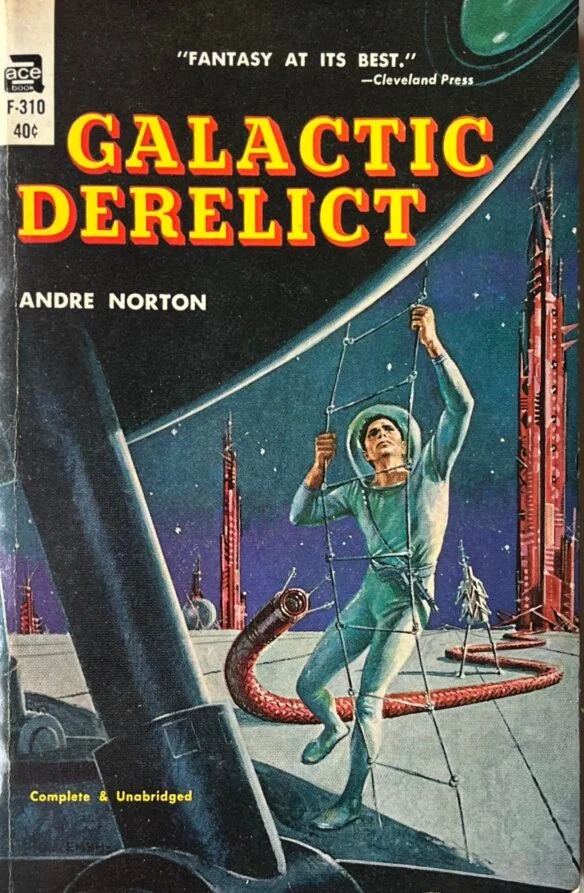
The 2026 iteration of the Classics program will focus on three seminal works from the mid-20th century: Robert A. Heinlein’s Sixth Column (1949), Andre Norton’s Galactic Derelict (1959), and A.E. Van Vogt’s Slan (1951).
Hertz, a long-standing figure in science fiction fandom known for his nuanced appreciation of the "Golden Age," defines a classic as "a work that survives its own time." According to Hertz, these books remain relevant not because of the currents that originally sustained them, but because they possess an intrinsic value that reveals itself anew to each generation of readers.
The discussions are designed to be participatory, inviting attendees to examine how these stories—once staples of the pulp era—read in the 21st century. The selection reflects a diverse cross-section of the era’s themes: the intersection of science and bureaucracy, the awe of alien archaeology, and the isolation of the "super-powered" individual.
Chronology: The Road to LAcon V
The announcement of these discussions comes at a critical juncture in the planning of LAcon V. Historically, the Los Angeles area has been a frequent and celebrated host for Worldcon, with the "LAcon" moniker carrying significant prestige in the community.
- 1946 (Pacificon I): The first Worldcon held in Los Angeles following World War II.
- 1972 (LAcon I): Established the tradition of large-scale Southern California conventions.
- 1984, 1996, and 2006: Subsequent LAcons (II, III, and IV) cemented the region as a hub for both the literary and cinematic wings of the genre.
- Present Day: As the 84th Worldcon (LAcon V) approaches, the organizing committee (the "concom") is currently in the high-pressure "scrambling" phase of logistics, managing the complex needs of thousands of international visitors and hundreds of programming hours.
Hertz’s announcement serves as a grassroots confirmation of programming, even as official scheduling remains in flux. His intent is to ensure that, regardless of the final logistical grid, the intellectual heart of the convention—the books—remains a priority.
Supporting Data: Analyzing the Selected Works
To understand the significance of these discussions, one must look at the specific historical and literary weight of the chosen novels.

Robert A. Heinlein: Sixth Column (1949)
Originally serialized in Astounding Science Fiction under the title The Day After Tomorrow, this novel was based on a premise by editor John W. Campbell. It follows a small group of American scientists who use "super-science" to stage a rebellion against an occupying force.
Hertz highlights a specific point of modern contention: the book’s racial politics. While often criticized for its "Yellow Peril" tropes—common in 1940s pulp—Hertz points toward Chapter 12 and the character of Frank Mitsui. The discussion at LAcon V will likely grapple with whether the book is a relic of its era’s prejudices or an early attempt to subvert them through the lens of individual merit and "ingenuity beating bureaucracy."
Andre Norton: Galactic Derelict (1959)
Andre Norton, the "Grand Dame of Science Fiction," was a pioneer for women in a male-dominated field. Galactic Derelict is the second book in her Forerunner series, a sequence that fundamentally shaped the "ancient aliens" and "space archaeology" tropes.
The novel is notable for its protagonist, Travis Fox, an Apache archaeologist. By centering an Indigenous character in a story about high-tech alien artifacts, Norton challenged the Eurocentric norms of 1950s SF. Hertz notes that the book’s strength lies in its sensory detail—detailing what is perceived as much as what is thought—and its alignment with Theodore Sturgeon’s famous adage that "science fiction is knowledge fiction."
A.E. Van Vogt: Slan (1951)
Slan is perhaps the definitive "mutant" novel of the Golden Age. It tells the story of Jommy Cross, a telepathic human (a Slan) hunted by a "normal" population that fears his kind. The book gave rise to the famous fannish catchphrase, "Fans are Slans," reflecting the sense of intellectual isolation felt by many early readers.
Hertz suggests that Van Vogt’s work is often overlooked for its "poetry" because the reader is so caught up in the breakneck pace of the intrigue and the "undaunted protagonist." The LAcon V discussion will likely explore Van Vogt’s unique "fix-up" style and the psychological depth of his characters’ internal monologues.
Official Responses and Logistical Challenges
As of this writing, the LAcon V organizing committee has not officially confirmed the specific time slots or room assignments for the SF Classics discussions. Hertz noted in his announcement that the committee is "so busy scrambling they can hardly breathe," a common state for organizers of a convention of this magnitude.
Worldcons are volunteer-run, non-profit events. The sheer scale of coordinating the Anaheim Convention Center—a venue that also hosts massive commercial events like NAMM and WonderCon—presents a Herculean task for the staff.

Despite the lack of an official schedule, Hertz has assured prospective participants that the sessions will proceed. "We’ll hold our discussions anyway," he stated, indicating that if formal rooms are not assigned, the group may move to the "media as can be managed," including hotel lobbies or informal gathering spaces. This reflects a long-standing tradition in science fiction fandom: the "fringe" or "guerrilla" programming that often occurs alongside the official events.
Implications: Why the Classics Matter in 2026
The inclusion of these specific titles at LAcon V highlights a broader tension within the science fiction community: the balance between honoring the past and embracing the future.
In recent years, Worldcon has faced internal debates regarding the legacy of "Golden Age" authors. Some argue that the genre should move past works that contain dated social perspectives, while others, like Hertz, argue that these works are essential for understanding the evolution of human imagination.
By choosing books that address race (Sixth Column), Indigenous identity (Galactic Derelict), and the "othering" of minorities (Slan), Hertz is not merely offering a nostalgic look back. He is inviting a rigorous interrogation of how the genre’s roots continue to feed its modern branches.
Furthermore, the focus on "ingenuity beating bureaucracy" and "struggling with alien technology" resonates with contemporary concerns. In an era of rapid AI development and complex global systems, the 1950s obsession with how the individual manages overwhelming technological change feels remarkably prescient.
Conclusion for Attendees
For those attending LAcon V, the SF Classics discussions offer a rare opportunity for slow, contemplative engagement in an otherwise high-energy environment. Hertz’s call to "come to as many as you like" emphasizes the inclusive, intellectual spirit that has defined Worldcon for 84 years.
As the convention dates approach, fans are encouraged to re-read these three works—not as museum pieces, but as living documents. Whether they are viewed as masterpieces, flawed historical artifacts, or prophetic visions, they remain, as Hertz suggests, "worthwhile for themselves."
Details regarding the final locations and times will be posted on community hubs such as File 770 and the official LAcon V social media channels as they become available. For now, the message to the "Slans" of the world is clear: the classics are waiting, and the discussion is just beginning.