Uncanny Magazine Podcast Unveils Episode 71A: A Journey Through Speculative Fiction and Poetic Depths
FOR IMMEDIATE RELEASE
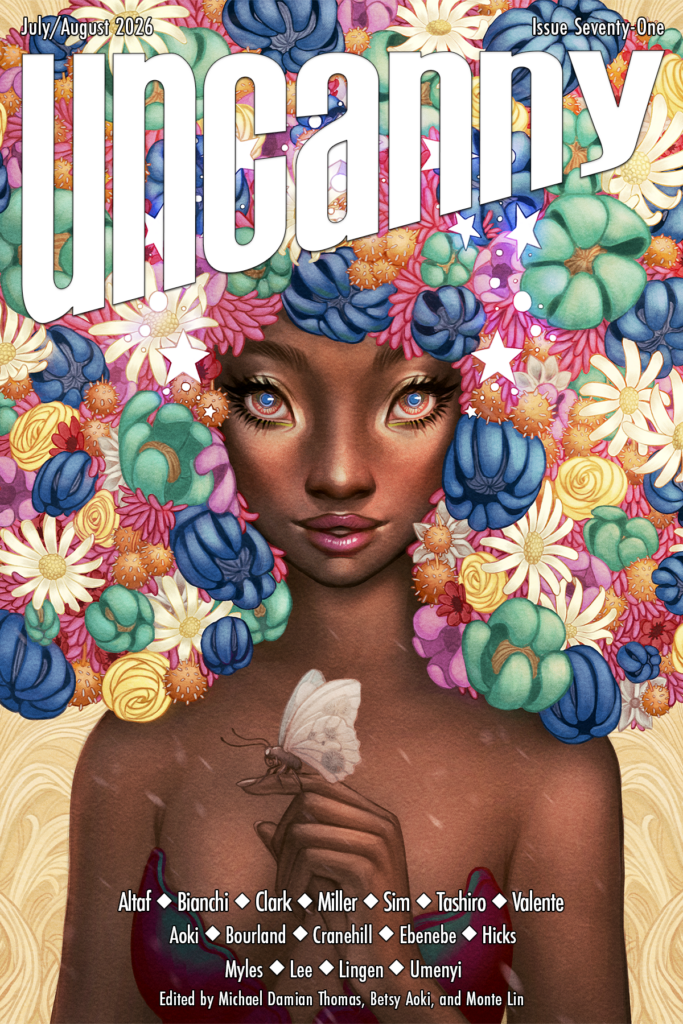
Urbana, IL – [Current Date] – Uncanny Magazine, the acclaimed digital magazine of science fiction and fantasy, has released Episode 71A of its award-winning podcast, offering listeners a compelling blend of prose, poetry, and insightful conversation. Hosted by Michael Damian Thomas, the episode features a poignant short story by Tia Tashiro, a evocative poem by Chisomaga Umenyi, and an in-depth interview with Tashiro, delving into the creative process behind her work. This latest installment reaffirms Uncanny Magazine‘s commitment to delivering high-quality speculative fiction in an accessible audio format, further solidifying its position as a vanguard in the genre.
Main Facts: A New Chapter in Audio Storytelling
Episode 71A of the Uncanny Magazine Podcast is now available for streaming and download, presenting a carefully curated selection of original works from contemporary speculative fiction authors and poets. The episode opens with an introduction by Michael Damian Thomas, the magazine’s celebrated Publisher and Editor-in-Chief, setting the stage for an immersive auditory experience.
The core of this release lies in its featured content:
- Story: "Leavetaking" by Tia Tashiro, a narrative brought to life by the seasoned vocal talents of Erika Ensign. Tashiro’s work is known for its nuanced characterizations and exploration of complex themes, and "Leavetaking" promises to be a deeply moving piece.
- Poem: "Instructions for Becoming Fire" by Chisomaga Umenyi, read with profound sensitivity by Matt Peters. Umenyi’s poetry frequently explores themes of transformation, identity, and resilience, making this an anticipated contribution to the episode.
- Interview: An exclusive conversation between Michael Damian Thomas and Tia Tashiro, offering listeners a rare glimpse into the inspiration, challenges, and artistry behind "Leavetaking." These interviews are a hallmark of the Uncanny podcast, providing invaluable context and enriching the listener’s appreciation of the featured works.
The podcast’s production excellence is maintained by the dedicated team of Erika Ensign and Steven Schapansky, collectively known as The Uncanny Podcats, ensuring a polished and engaging listening experience. The episode is underscored by original music from Null Device, used with permission, which contributes to the podcast’s distinctive atmospheric quality.
This release, copyrighted © 2026 by Michael Damian Thomas, marks another significant contribution to the burgeoning landscape of audio fiction, inviting both long-time fans and new listeners to explore the imaginative realms Uncanny Magazine consistently delivers.
Chronology: The Evolution of Uncanny and Its Audio Frontier
The Uncanny Magazine Podcast is a vital extension of Uncanny Magazine, a publication that has rapidly ascended to prominence within the speculative fiction community since its inception. Founded on a mission to publish "genre-bending stories and poetry by authors from diverse backgrounds, including disabled, POC, and LGBTQIA creators," Uncanny Magazine quickly garnered critical acclaim and a devoted readership. Its journey began as a response to a desire for more inclusive and innovative voices in science fiction and fantasy, and it has since become a beacon for quality and diversity.
The magazine itself has been a consistent recipient of the genre’s highest honors. Its editorial vision, under the stewardship of Michael Damian Thomas, has led to numerous accolades, including the prestigious Locus Award. Individually, Michael Damian Thomas has accumulated an astonishing nine Hugo Awards, a British Fantasy Award, a World Fantasy Award, and a Parsec Award in his various roles associated with Uncanny Magazine. These awards are not merely trophies; they are testaments to the magazine’s profound impact on the genre, its consistent quality, and its dedication to fostering a vibrant and representative speculative fiction landscape.
The Uncanny Magazine Podcast emerged as a natural evolution of the magazine’s digital presence, recognizing the growing demand for audio content. Launched to provide an auditory companion to the print/digital issues, the podcast began featuring audio versions of select stories and poems, along with exclusive author interviews. Over its 70-plus episodes, it has cultivated a reputation for high production values and captivating content, mirroring the magazine’s commitment to excellence. The podcast has become an integral part of the Uncanny experience, making its stories and poetry accessible to a wider audience and providing a deeper engagement with the creators.
Michael Damian Thomas’s career chronology further illuminates the podcast’s strong foundation. Prior to his pivotal role at Uncanny Magazine, Thomas served as the Managing Editor of Apex Magazine from 2012-2013, a period during which he was also a Hugo Award finalist. His editorial prowess extends to co-editing the Hugo Award finalist essay anthology Queers Dig Time Lords (Mad Norwegian Press, 2013) with Sigrid Ellis, and the acclaimed anthology Glitter & Mayhem (Apex Publications, 2013) with John Klima and Lynne M. Thomas. His collaborative spirit and keen eye for compelling narratives were further demonstrated in The Best of Uncanny (Subterranean Press, 2019), a Locus Award finalist co-edited with Lynne M. Thomas, which showcased the magazine’s early highlights.
Beyond print, Thomas is a veteran of the podcasting world. He was a contributor to the SF Squeecast podcast, collaborating with luminaries such as Elizabeth Bear, Paul Cornell, Seanan McGuire, Lynne M. Thomas, and Catherynne M. Valente. He also contributed to Down and Safe – Blake’s 7 podcast alongside Amal El-Mohtar, Scott Lynch, and L.M. Myles. Currently, he serves as the Content Editor of the popular It’s Storytime with Wil Wheaton podcast, demonstrating his enduring commitment to audio storytelling and his multifaceted expertise in the medium. This rich background provides a robust framework for the continued success and influence of the Uncanny Magazine Podcast.
Supporting Data: The Pillars of Uncanny‘s Success
The enduring appeal and critical success of Uncanny Magazine and its podcast are built upon several key pillars: the quality of its curated content, the caliber of its contributors, and the dedication of its production team.
Tia Tashiro, the author of "Leavetaking," represents the fresh, compelling voices that Uncanny Magazine champions. While specific details about "Leavetaking" are yet to be fully revealed, Tashiro’s inclusion in an Uncanny issue signals a story of depth and imaginative power, often characterized by a blending of genre elements with profound emotional resonance. Stories published in Uncanny frequently push the boundaries of traditional speculative fiction, exploring social issues, personal struggles, and the human condition through fantastic lenses. The interview with Thomas offers an invaluable layer of insight, allowing listeners to connect directly with the author’s vision and the intricate process of crafting such a narrative. This direct engagement fosters a stronger appreciation for the art form and the stories themselves.
Chisomaga Umenyi, with "Instructions for Becoming Fire," contributes to the podcast’s commitment to showcasing speculative poetry. Uncanny Magazine has long been lauded for its inclusion of poetry, recognizing its unique ability to condense complex ideas and emotions into potent, evocative language. Umenyi’s title suggests themes of metamorphosis, resilience, and perhaps even defiance, elements that resonate strongly within the speculative fiction community. The decision to include a poem in each episode reinforces the podcast’s artistic breadth and its mission to celebrate all forms of imaginative storytelling.
The narrators, Erika Ensign and Matt Peters, are crucial to the podcast’s success. Erika Ensign is not only a gifted narrator but also a key producer of the podcast, highlighting her dual role in shaping the auditory experience. Her ability to embody characters and convey emotional nuances brings stories like "Leavetaking" to vivid life. Matt Peters’s narration of the poem is equally vital; interpreting poetry aloud requires a particular sensitivity to rhythm, emphasis, and emotional subtext, skills Peters undoubtedly possesses. The quality of narration is paramount in audio fiction, and Uncanny consistently employs talent that elevates the written word to an auditory art form.
The production team, Erika Ensign and Steven Schapansky (The Uncanny Podcats), are the unsung heroes behind the scenes. Their meticulous work in editing, sound design, and mastering ensures that each episode meets the highest professional standards. A well-produced podcast is not just about clear audio; it’s about creating an immersive soundscape that complements the narrative, minimizes distractions, and enhances the overall listening pleasure. The judicious use of music from Null Device further enhances this immersion, providing atmospheric transitions and thematic backing without overshadowing the spoken word. This commitment to technical excellence is a significant factor in the podcast’s consistent critical acclaim and listener loyalty.
Furthermore, Michael Damian Thomas’s personal history, particularly his role as a full-time caregiver for his late daughter, Caitlin, who had Aicardi syndrome, subtly informs his work. While not explicitly stated in the podcast, his resilience, empathy, and dedication in his personal life undoubtedly translate into his professional endeavors, fostering a publication and podcast that prioritize compassion, understanding, and the exploration of diverse human experiences. His ability to balance profound personal challenges with such prolific professional output speaks volumes about his character and commitment to the speculative fiction community.
Official Responses: Uncanny’s Enduring Vision
While the provided article does not contain direct quotes from Michael Damian Thomas or other Uncanny Magazine representatives regarding Episode 71A specifically, the consistent messaging and actions of the magazine over the years serve as an "official response" to its mission and goals. The very existence of Episode 71A is an official statement of continuity, quality, and commitment to its audience.
Uncanny Magazine has always positioned itself as a space for "genre-bending stories and poetry by authors from diverse backgrounds." Each podcast episode, including 71A, is a direct manifestation of this vision. The selection of Tia Tashiro’s "Leavetaking" and Chisomaga Umenyi’s "Instructions for Becoming Fire" aligns perfectly with the magazine’s editorial philosophy of showcasing innovative narratives and powerful poetic voices. The inclusion of an author interview further underscores the magazine’s dedication to engaging with the creative process and providing context for the works it presents.
Michael Damian Thomas, as the Publisher and Editor-in-Chief, has consistently articulated the magazine’s core values through its content and its public presence. His numerous awards are not just personal accolades but reflect the collective achievement of Uncanny Magazine in fostering a welcoming and intellectually stimulating environment for speculative fiction. The podcast, under his editorial guidance, serves as a crucial outreach tool, making these stories accessible to a global audience, irrespective of their reading habits.
The copyright notice for 2026, while a small detail, signifies the ongoing nature of Uncanny Magazine‘s operations and its long-term vision. It subtly communicates an expectation of continued output and a commitment to future contributions to the speculative fiction genre, both in print and audio formats. In essence, every new episode, every new story, and every new poem published by Uncanny is an official reaffirmation of its mission to explore the fantastic, challenge perspectives, and celebrate the rich tapestry of human imagination.
Implications: The Broader Impact of Audio Speculative Fiction
The release of Uncanny Magazine Podcast Episode 71A carries significant implications for the speculative fiction genre, the audio storytelling landscape, and the broader cultural conversation.
Firstly, it underscores the continued vitality and relevance of audio fiction. In an increasingly digital and on-demand world, podcasts have emerged as a powerful medium for consuming literature. For speculative fiction, where world-building and narrative immersion are paramount, the auditory experience can be particularly enriching, allowing listeners to visualize complex settings and characters through the power of sound and narration. Uncanny Magazine‘s consistent output of high-quality audio content contributes significantly to the legitimization and growth of this format within literary circles.
Secondly, Uncanny Magazine‘s commitment to diversity and inclusion, reflected in its choice of authors and themes, has far-reaching implications. By featuring writers like Tia Tashiro and Chisomaga Umenyi, the podcast actively promotes voices that might be underrepresented in more traditional publishing avenues. This not only enriches the genre with fresh perspectives and narratives but also fosters a more inclusive community where readers and listeners from all backgrounds can find stories that resonate with their experiences. The interview segments further empower these authors, giving them a platform to discuss their work and connect with their audience directly.
Thirdly, the podcast serves as an essential discovery tool. For many, podcasts are a gateway to new authors, genres, and even entire magazines. Episode 71A, with its accessible format, can introduce listeners to Uncanny Magazine itself, encouraging them to explore its extensive back catalog of stories, poems, and essays. This cross-pollination between audio and print/digital formats is crucial for sustaining a vibrant literary ecosystem.
The sustained success of Uncanny Magazine and its podcast, evidenced by its numerous awards and the extensive professional history of Michael Damian Thomas, signals a healthy and evolving speculative fiction landscape. It demonstrates that there is a strong audience for intellectually stimulating, emotionally resonant, and imaginatively rich stories. The dedication of individuals like Thomas, Erika Ensign, and Steven Schapansky to not only publish but also meticulously produce and present these works ensures that the genre continues to innovate and captivate.
Finally, the long-term implications point to a future where literary consumption is increasingly multimodal. Podcasts like Uncanny‘s are not replacing traditional reading but complementing it, offering alternative entry points and enhancing engagement. As technology continues to evolve, the demand for high-quality audio adaptations and original audio content is only expected to grow. Uncanny Magazine, through its podcast, is not just participating in this trend; it is actively shaping it, setting a high bar for excellence in audio speculative fiction and ensuring that the wondrous stories of tomorrow are heard by all.
In conclusion, Uncanny Magazine Podcast Episode 71A is more than just another release; it is a testament to the enduring power of storytelling, the transformative potential of audio, and the unwavering vision of a publication dedicated to exploring the boundless frontiers of imagination. Listeners are encouraged to tune in and embark on this latest journey into the uncanny.