The Enigmatic "Queen of the Night": Unraveling Mesopotamia’s Most Mysterious Masterpiece
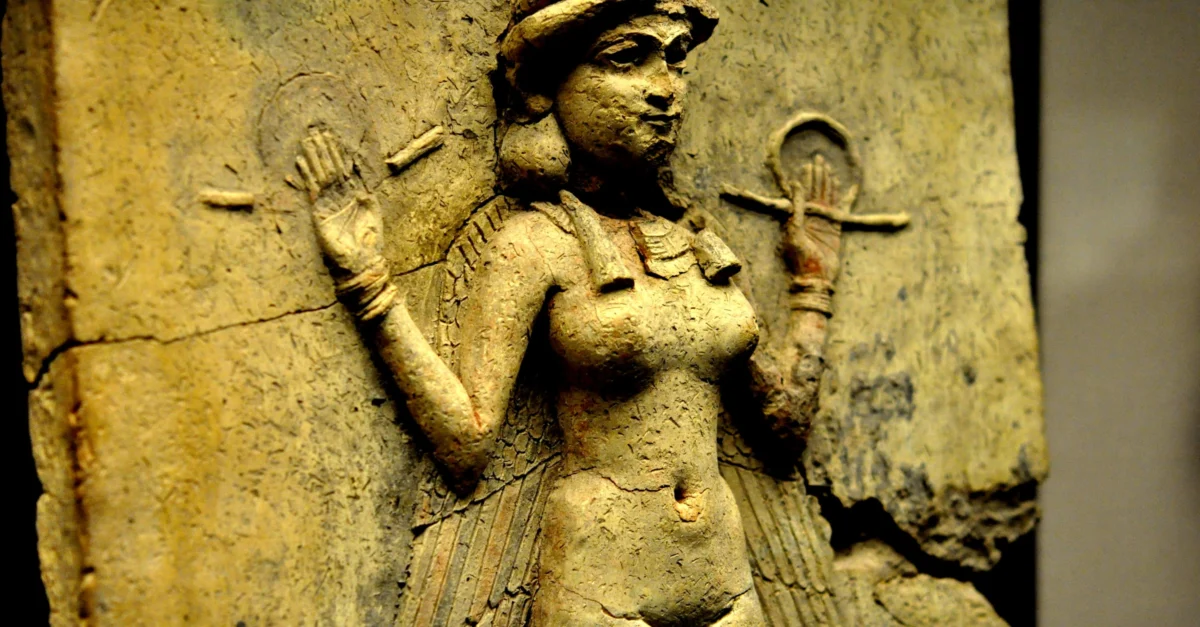
London, UK – Standing majestically within the hallowed halls of the British Museum, a singular terracotta plaque commands attention, its ancient gaze fixed on visitors across millennia. Known today as "The Queen of the Night," or more formally, the "Burney Relief," this high-relief baked clay plaque is a masterpiece of Old Babylonian art, yet its origins, purpose, and the identity of the captivating figure it depicts remain shrouded in an enduring mystery. Measuring 19.4 inches (49.5 cm) high, 14.5 inches (37 cm) wide, and 1.8 inches (4.8 cm) thick, this artifact offers a rare and powerful glimpse into the sophisticated religious and artistic landscape of southern Mesopotamia, modern-day Iraq, dating back to the reign of the legendary King Hammurabi (1792-1750 BCE).
Unveiling the Artifact: Main Facts and Iconography
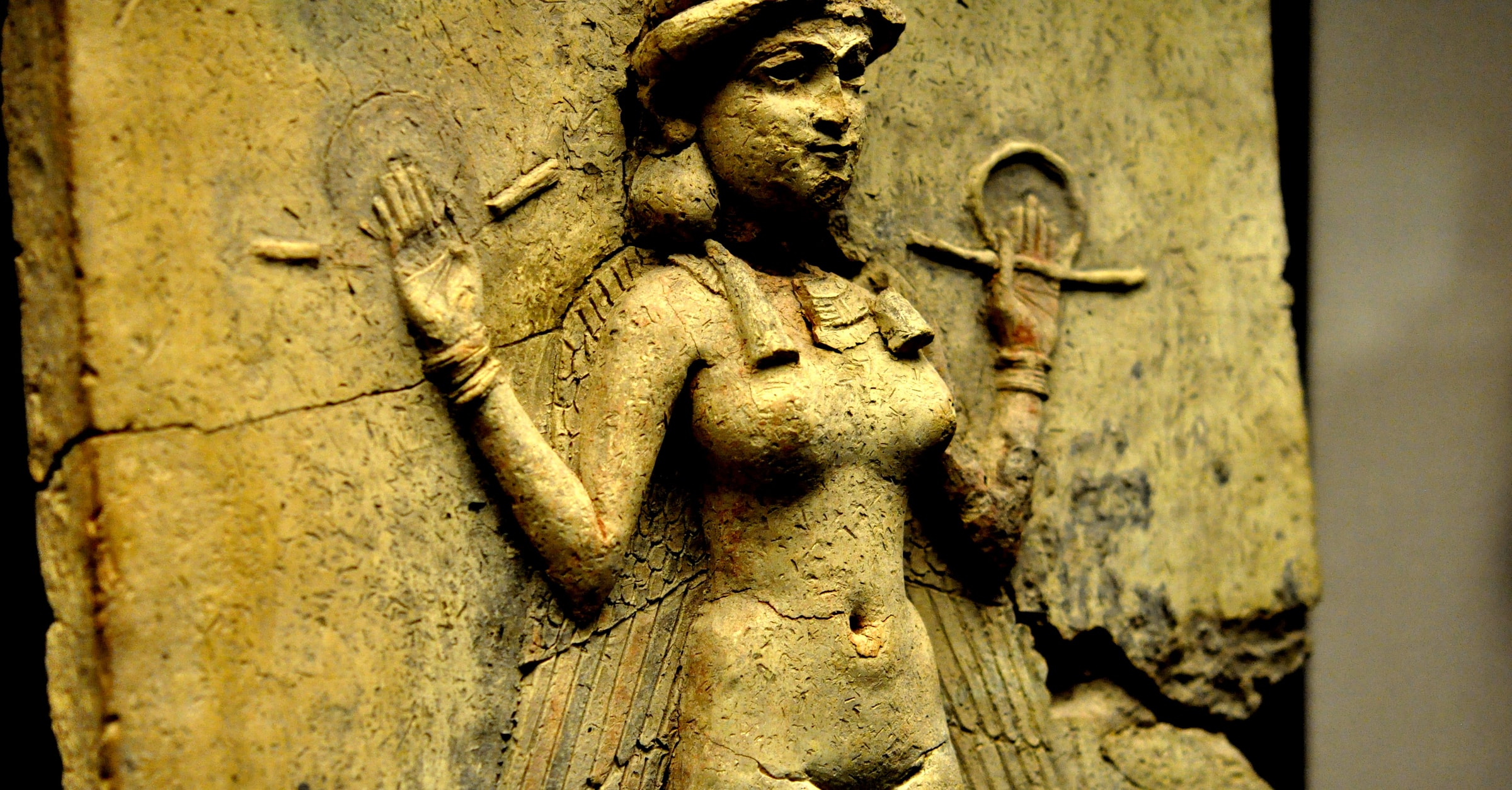
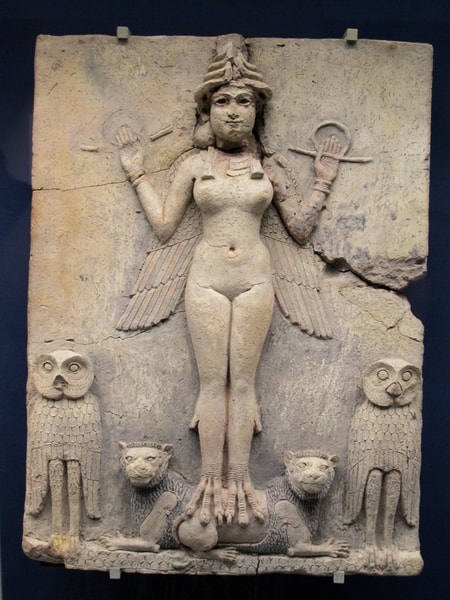
At the heart of the relief is a striking, naked winged woman, depicted frontally, her powerful form flanked by two majestic owls. She stands poised on the backs of two reclining lions, their bodies turned away from each other. The figure’s divine status is unequivocally conveyed through a distinctive horned headdress, a hallmark of Mesopotamian deities. In her raised hands, she grasps the sacred rod-and-ring symbols, emblems of authority and justice often associated with divine rulers.
Beyond these overt symbols, more subtle, yet equally potent, iconographic details abound. The woman’s legs taper dramatically into bird talons, which appear to grip the lions’ backs with fierce resolve, and a dew claw is visible on her calves, further emphasizing her avian characteristics. Along the base of the plaque, a motif representing mountains hints at a specific, elevated terrain. The figure’s wings, notably, point downwards, a detail that scholars suggest carries significant symbolic weight, possibly linking her to the underworld.
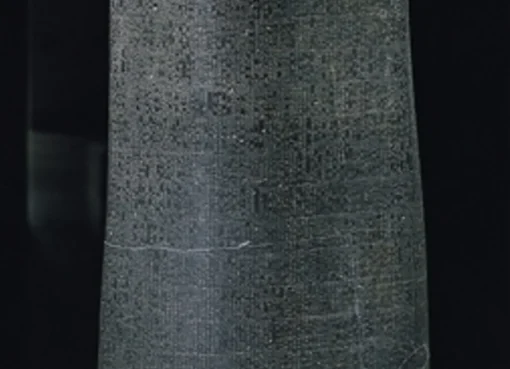
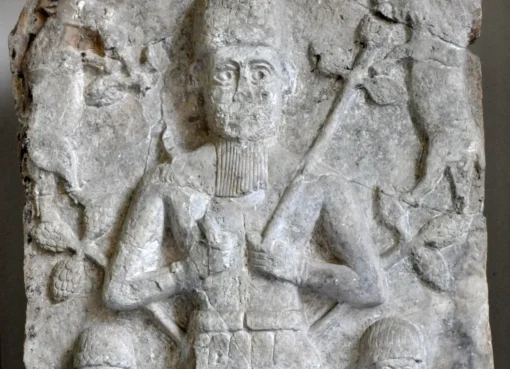
The exceptional craftsmanship and technical prowess evident in the relief strongly suggest its creation during the Old Babylonian period, specifically contemporary with Hammurabi’s reign. This dating is supported by stylistic similarities with other pivotal works from this era, most notably the famous diorite stele of Hammurabi’s laws and the equally significant piece known as The God of Ur. These comparisons underscore the relief’s importance not just as an artistic achievement but as a product of a highly refined cultural period.
The Material and Its Significance
The plaque was fashioned from clay, meticulously mixed with chaff to provide structural integrity and prevent cracking during the firing process. The decision to fire the piece in an oven, rather than merely sun-dry it, is a crucial indicator of its perceived importance. In ancient Mesopotamia, where timber was a scarce and precious resource, the fuel required for firing clay objects was not expended lightly. Only the most significant works of art and architecture, destined for longevity and high esteem, received such treatment. This suggests the "Queen of the Night" was not a mere decorative item but an object imbued with profound religious or cultural significance.
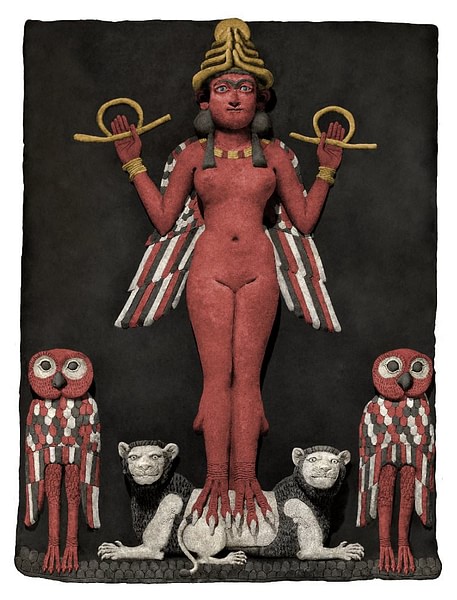
Analysis has also revealed traces of its original vibrant polychromy. The background was painted a deep black, providing a dramatic contrast to the figures. The woman herself and the flanking owls were rendered in red, while the lions were painted white with distinctive black manes. Furthermore, the rod-and-ring symbols, the woman’s necklace, and her elaborate headdress were once gilded with gold, enhancing their divine aura and making the entire piece a dazzling spectacle. Although these colors have largely faded over the centuries, their faint remnants still offer a glimpse into the plaque’s initial grandeur.
The Journey Through Time: Chronology of Discovery and Acquisition
The modern history of the "Queen of the Night" is almost as convoluted and intriguing as its ancient origins. Unlike artifacts meticulously unearthed by archaeological expeditions, this relief surfaced without a recorded provenance, having been removed from southern Iraq sometime between the 1920s and 1930s. Its journey to London began with its acquisition by a Syrian antiquities dealer, from whom it eventually came to the attention of Captain Sydney Burney.
Sydney Burney and the British Museum’s Initial Hesitation
Sydney Burney, a veteran of the English Army during World War I and a prominent figure in the London art scene, serving as president of the Antique Dealers Association, purchased the plaque after the British Museum had, perhaps regrettably in hindsight, passed on the initial offer to acquire it. In 1936, the "Burney Relief," as it was then known, gained public prominence when it was featured in the Illustrated London News, highlighting its status as a prized possession within Burney’s private collection.
When Burney acquired the plaque, it was far from its current pristine state; it was broken into three main pieces with several smaller fragments. However, through careful restoration, it was largely reassembled, revealing the remarkably intact image we see today. Prior to its public debut and Burney’s acquisition, the relief underwent rigorous authentication, with analyses conducted in 1933 and formal authentication in 1935, confirming its antiquity and artistic merit.
The Queen’s Rebirth and Royal Acquisition
Following Burney’s ownership, the plaque changed hands twice more before the British Museum finally recognized its unparalleled significance. In 2003, after decades of being a private treasure, the museum acquired the relief for a substantial sum of 1,500,000 pounds, a price considerably higher than what was initially requested in 1935. This acquisition marked a turning point in the artifact’s public life and its scholarly examination.
It was around this time that the "Burney Relief" officially adopted its evocative modern name: "The Queen of the Night." This designation was inspired by the dark black pigment of its original background, combined with the iconography suggestive of the underworld—specifically, the downward-pointing wings and the talon-like feet. It is crucial to note that "The Queen of the Night" is a contemporary label, chosen for its descriptive power and symbolic resonance, rather than an ancient designation. The plaque’s original name, and indeed its precise function, remain unknown, adding another layer to its profound mystery. This lack of archaeological context, while frustrating for scholars, also underscores the challenges inherent in interpreting artifacts that arrive in collections without proper scientific excavation records.
Scholarly Investigations: Supporting Data and Interpretations
The process of crafting the "Queen of the Night" was a sophisticated one, as elucidated by Dr. Dominique Collon, a distinguished curator at the British Museum. She describes the relief’s creation as beginning with "clay pressed into a mould and allowed to dry in the sun…the figure was made from fairly stiff clay which was folded and pushed into a specially shaped mould, with more clay added and pressed in behind to form the plaque." This intricate method ensured that "the Queen’s figure is an integral part of the plaque and was not added to it later."
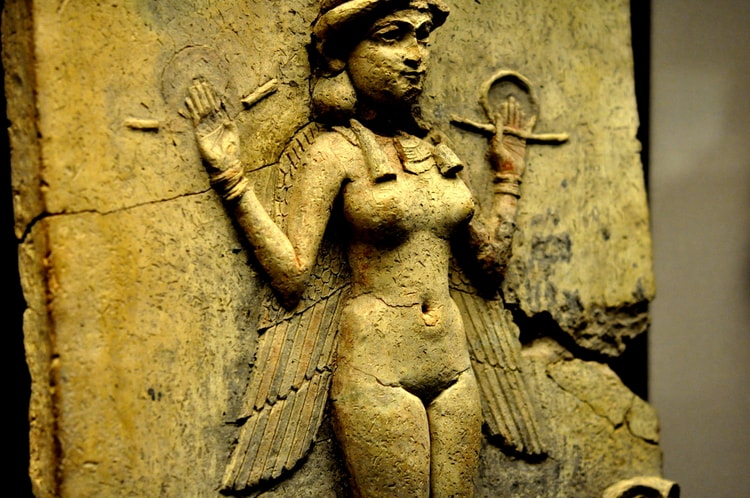
After the initial moulding and drying, the plaque was carefully removed. Details were then meticulously carved into the "leather-hard clay," and the surface was smoothed—a process still visible in certain areas, particularly near the figure’s navel. The edges were then precisely trimmed with a knife before the entire piece was subjected to the intense heat of an oven. This detailed process highlights the exceptional skill and artistic intention behind the creation of the relief, confirming its status as a high-quality, deliberately crafted object.
Unraveling the Goddess’s Identity: A Contentious Debate
Perhaps the most compelling and persistently debated aspect of the "Queen of the Night" is the identity of the deity it portrays. The motif of the nude female figure was prevalent in Mesopotamian art from prehistoric times, as scholar Jeremy Black notes, appearing first as hand-made figurines and later, in the second millennium BCE, as mould-impressed plaques. While these figures often suggested fertility, Black cautions against a universal "mother goddess" interpretation. The specific iconography of the "Queen of the Night" points to a divine or powerful entity, but which one? Three primary candidates have been proposed: Inanna (Ishtar), Lilith, and Ereshkigal.
Inanna/Ishtar: The Goddess of Love and War
Inanna, the Sumerian goddess of love, beauty, sex, desire, fertility, war, and political power (later known as Ishtar in Akkadian), might seem a natural fit for a plaque potentially encouraging fertility. Indeed, the horned headdress, the rod-and-ring symbols, and the necklace could align with her divine attributes. The historian Thorkild Jacobsen initially championed Inanna’s identification, citing the figure’s frontality, the rod-and-ring symbol, the necklace, and the presence of lions.
However, many scholars, including Dr. Collon, dispute this identification. Collon points out that Inanna is "associated with one lion, not two," and that the rod-and-ring symbol and necklace were common divine attributes, "worn or held by any goddess." Crucially, Inanna is almost universally depicted in ancient Mesopotamian art in profile, never frontally as the "Queen of the Night" is. Furthermore, while owls have been mentioned in some myths related to Inanna, they are not a primary part of her established iconography. The 1936 Illustrated London News caption, which read "Ishtar…the Sumerian goddess of love, whose supporting owls present a problem," vividly encapsulates this inconsistency. The mountain range motif, too, does not exclusively point to Inanna.
Lilith: The Demon of the Night
The identification with Lilith, a figure more prominent in later Hebrew tradition, is also fraught with inconsistencies. While some scholars, like Rafael Patai in The Hebrew Goddess, have argued for Lilith based on visual similarities—a nude, winged figure with owl-feet, standing on lions, holding a ring and rod—this interpretation faces significant challenges. Patai links the plaque to the Lilith mentioned in the Sumerian poem Gilgamesh and the Huluppu Tree, suggesting it depicts a powerful "goddess who tames wild beasts and, as shown by the owls on the reliefs, rules by night."
However, in Mesopotamian tradition, Lilith corresponds to the lilitu, a class of female demons, and the ardat lili, who were dangerous seductresses. The lilu were male counterparts, preying on pregnant women, new mothers, and infants. Jeremy Black’s observation that "Evil gods and demons are only very rarely depicted in art, perhaps because it was thought that their images might endanger people" strongly argues against a high-quality plaque like the "Queen of the Night" being a representation of a lilitu. Moreover, the specific type of owls associated with the lilitu are not necessarily those depicted on the relief. The elaborate divine headdress, necklace, and rod-and-ring symbols are also inconsistent with the depiction of a mere demon, regardless of its power. While the mountain range could suggest the wilderness Lilith supposedly inhabited, the overall context strongly argues against this interpretation.
Ereshkigal: The Queen of the Great Below
The third and increasingly favored candidate is Ereshkigal, Inanna’s elder sister and the formidable Queen of the Great Below, the land of the dead. Her name, meaning "Lady of the Great Place," directly refers to her dominion over the underworld. A compelling body of evidence supports this identification.
Crucially, the downward-pointing wings, a prominent feature of the "Queen of the Night," were a common iconographic device throughout Mesopotamia to signify a deity or spirit associated with the underworld. Ereshkigal’s realm, as described in Mesopotamian mythology, was a dark and inescapable place where the dead, often depicted as naked or winged like birds, wandered. The Queen on the plaque is depicted nude, a detail resonating with Ereshkigal’s famous portrayal in the poem Inanna’s Descent to the Underworld, where she is described as "naked…Her breasts were uncovered. Her hair swirled around her head like leeks."
Furthermore, unlike Inanna, Ereshkigal is not known to have been exclusively depicted in profile; her frontal, static, and immutable pose on the plaque could signify her ultimate judgment as "Queen of the Underworld where ‘fates were determined’," as Dr. Collon notes. Collon also suggests that "As a goddess, Ereshkigal was entitled to the horned headdress and the rod-and-ring symbol," and that her supreme authority might even justify her holding two such symbols. The mountain range along the base of the plaque could represent Ganzir, Ereshkigal’s palace, which was believed to be located in the eastern mountains of the underworld. The owls, with their nocturnal habits and association with darkness, and the powerful lions, symbolizing supremacy over all living things, could all logically be linked to the Queen of the Dead.
Despite these strong correlations, a definitive identification remains elusive because, as Dr. Collon candidly admits, "No definite connection with Ereshkigal can be made as she has no known iconography: her association with death made her an unpopular subject." This lack of comparative imagery means that while Ereshkigal is the most fitting candidate based on existing evidence, the mystery persists.
Original Placement and Function: Theories and Evidence
Without archaeological context, the original placement and purpose of the "Queen of the Night" are also subjects of scholarly speculation. The historian Thorkild Jacobsen famously suggested the plaque might have been part of a shrine in a brothel, drawing on the concept of sacred prostitution thought to have been practiced in Mesopotamia. However, Dr. Collon counters this, observing that "if this were so, it must have been a very high-class establishment, as demonstrated by the exceptional quality of the piece."
Collon’s own theory posits that the plaque would have been hung on a mud-brick wall, likely within an enclosure. She theorizes that when the mud-brick structure eventually collapsed, the fired terracotta plaque, being far more durable, would have remained relatively intact. The fact that this delicate yet robust piece has survived for over 3,000 years strongly supports the idea that it was buried relatively early after the building housing it fell or was abandoned. This burial would have protected it from the ravages of the elements and the destructive hands of vandals, preserving it for future generations to ponder.
Broader Implications and Enduring Questions
The "Queen of the Night" is more than just an ancient artifact; it is a profound cultural statement, a window into the complex belief systems of one of the earliest civilizations. Its intricate iconography speaks volumes about how Mesopotamians perceived their deities, the forces of nature, and the mysteries of life and death. The very act of crafting such a detailed and potent image underscores the importance of visual representation in conveying religious narratives and power structures.
The Ethics of Acquisition and Lost Context
The convoluted acquisition history of the "Queen of the Night" also raises significant ethical questions that resonate deeply within the museum world today. As an unexcavated piece, its removal from Iraq without proper archaeological documentation means that invaluable contextual information—such as its exact find spot, associated artifacts, and stratigraphic layers—has been permanently lost. This loss profoundly impacts our ability to definitively interpret its function and identity. Museums, including the British Museum, now operate under much stricter ethical guidelines regarding provenance, but the "Queen of the Night" serves as a powerful reminder of past practices and the ongoing challenges of interpreting objects divorced from their original context. It compels us to consider the balance between preserving and studying artifacts and respecting their origin and cultural heritage.
The Allure of the Unknown
Ultimately, the "Queen of the Night" embodies the enduring allure of the unknown. Despite centuries of study and sophisticated analytical techniques, its core mysteries—its true name, its precise purpose, and the definitive identity of its powerful female figure—remain unsolved. This ambiguity, far from diminishing its value, enhances its mystique and ensures its continuing relevance. It stands as a testament to the gaps in our knowledge of ancient civilizations, prompting ongoing research, debate, and public fascination.
Conclusion: An Immortal Enigma
For over three millennia, the "Queen of the Night" has gazed out from her terracotta frame, a silent witness to the ebb and flow of human history. From the ancient workshops of Babylonia to the modern galleries of the British Museum, her journey is a saga of artistic mastery, scholarly intrigue, and unresolved questions. She is a masterpiece of early Mesopotamian art, a rare and invaluable example of Old Babylonian terracotta work, and a potent symbol of the enduring human quest to understand our distant past. While her true identity may forever elude us, the "Queen of the Night" remains an immortal enigma, continually challenging our assumptions and inviting us to delve deeper into the rich, complex tapestry of ancient civilizations. Her presence is a powerful reminder that some of history’s most compelling stories are often told through its most profound and beautiful silences.